
Abstract
Adult ADHD is conceptualized as a disorder of age-inappropriate behavior that occurs because of maldevelopment of 2 related neuropsychological domains. The neuropsychological symptoms seen in adults with ADHD may be explained by deficits in executive function, which can be broadly defined as a set of neurocognitive processes that allow for the organization of behavior across time so as to attain future goals. Executive function is comprised of 2 broad domains: inhibition and metacognition. Inhibition encompasses the ability to inhibit motor, verbal, cognitive, and emotional activities. In turn, deficits in inhibition contribute to deficits in the development of 4 aspects of executive function in the domain of metacognition, which include nonverbal working memory, verbal working memory, planning and problem-solving, and emotional self-regulation. Understanding the ways in which deficits in executive function contribute to the symptoms of ADHD can help in differentiating ADHD from disorders that share similar characteristics.
(J Clin Psychiatry 2010;71[7]:e17)
From the Department of Psychiatry, Medical University of South Carolina, Charleston, and the Department of Psychiatry, SUNY Upstate Medical University, Syracuse, New York.
doi:10.4088/JCP.9066tx1c
Find more articles on this and other psychiatry and CNS topics:
The Journal of Clinical Psychiatry
The Primary Care Companion for CNS Disorders
From the Editors

Are you a healthcare provider?
Add your NPI to personalize your JCP experience.
Overview of Adult ADHD
The DSM-IV-TR1 conceptualizes ADHD in both children and adults as a developmental disorder that results in age-inappropriate symptoms of hyperactivity/impulsivity and inattention. However, the gross motor hyperactivity referred to in the DSM-IV-TR declines steeply with age2 and is not generally present in adults. Instead, impaired verbal, cognitive, and motor inhibition is expressed as impulsiveness; adults with ADHD may interrupt others when talking, talk excessively, make impulsive decisions, disregard future consequences, and have difficulty deferring gratification. They may be impulsive emotionally as well, which may manifest as being impatient and easily frustrated or quick to anger. Not only are emotions more quickly and strongly aroused for these individuals compared with others, but adults with ADHD have difficulty self-regulating their emotions to make them more appropriate over time.
The brain mediates different kinds of attention (eg, arousal, alertness, and divided attention), and sustained attention, or persistence toward goals, is most commonly affected in adults with ADHD. To sustain action toward a future goal, a person must be able to resist distractions or, once distracted, hold the original task in mind until the new task is completed and then re-engage with the original task. Adults with ADHD instead move from activity to activity, leaving behind a series of uncompleted tasks in both their vocational and their personal lives.
Executive Function and ADHD
The neuropsychological symptoms seen in adults with ADHD may be explained by deficits in executive function.3,4 Executive function can be broadly defined as a set of neurocognitive processes that allow for the organization of behavior across time so as to attain future goals and thereby increase individual long-term welfare. Executive function is composed of 2 domains: inhibition and metacognition (AV 1).
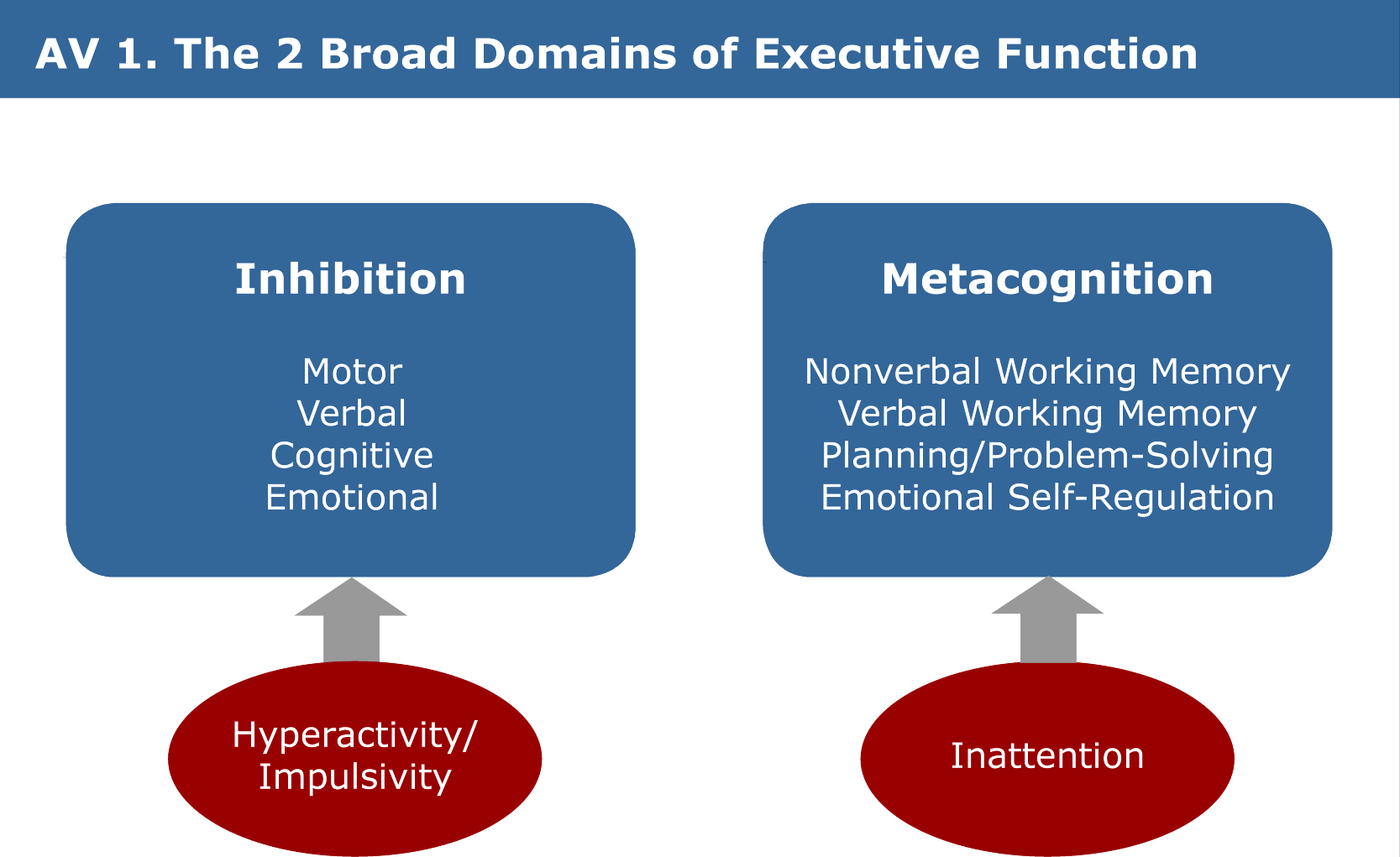
Inhibition. Inhibition encompasses a broad area of functioning that refers to the ability to inhibit motor, verbal, cognitive, and emotional activities. Deficits in response inhibition affect impulse control and delay of gratification, so the hyperactive/impulsive dimensions of ADHD can be seen as a subset of symptoms due to deficits of the larger executive function of inhibition. Deficits in inhibition contribute to deficits in the development of the 4 aspects of metacognition.
Metacognition. The domain of metacognition is composed of nonverbal working memory, verbal working memory, planning and problem-solving, and emotional self-regulation. Deficits in metacognition are responsible for the symptoms that present as inattention in adults with ADHD.
Nonverbal working memory refers to the frontal lobe function of holding information in mind that guides ongoing performance, ie, remembering a particular goal and the steps needed to achieve it. Verbal working memory is the internalization of speech, which, among other things, affords individuals the means to exert control over themselves. Individuals with ADHD have been shown to have impairments in nonverbal and verbal working memory,5 so that, for example, when they are distracted from a task, their working memory is lost, making it difficult to re-engage and then finish the task.
Planning and problem-solving involve the ability to manipulate the information that is being held in working memory. This ability allows a person to formulate and even mentally test new ideas in order to plan the most efficient means of completing tasks to accomplish a goal, and then adjust that plan if obstacles are encountered.
As noted, emotional impulsivity is an aspect of impaired inhibition; however, self-regulation of emotion is a function of the metacognitive domain. That is, once an emotion is elicited, an individual must be able to moderate the emotion to make it more acceptable to others and more consistent with individual goals and welfare. The ability to self-regulate emotions contributes to self-motivation (ie, the ability to persist across time toward future goals even without immediate positive reinforcement).
Neuropsychological Tests Vs Rating Scales of Executive Functioning
Neuropsychological tests can detect deficits in executive functioning, and abnormal scores on these tests are good predictors of ADHD. However, normal scores on these same tests are poor predictors of the absence of ADHD.6 This seeming paradox—that ADHD is an executive function disorder and yet most individuals with ADHD show no impairment on neuropsychological tests of executive functioning—may be explained by several factors. For instance, the tests may not be sensitive enough to detect mild cognitive impairments, or the individuals being tested may be compensating for executive impairments through alternative cognitive resources.7 Also, neuropsychological tests may not fully examine each executive function; many take only a few minutes to complete and cannot demonstrate impairments over time.
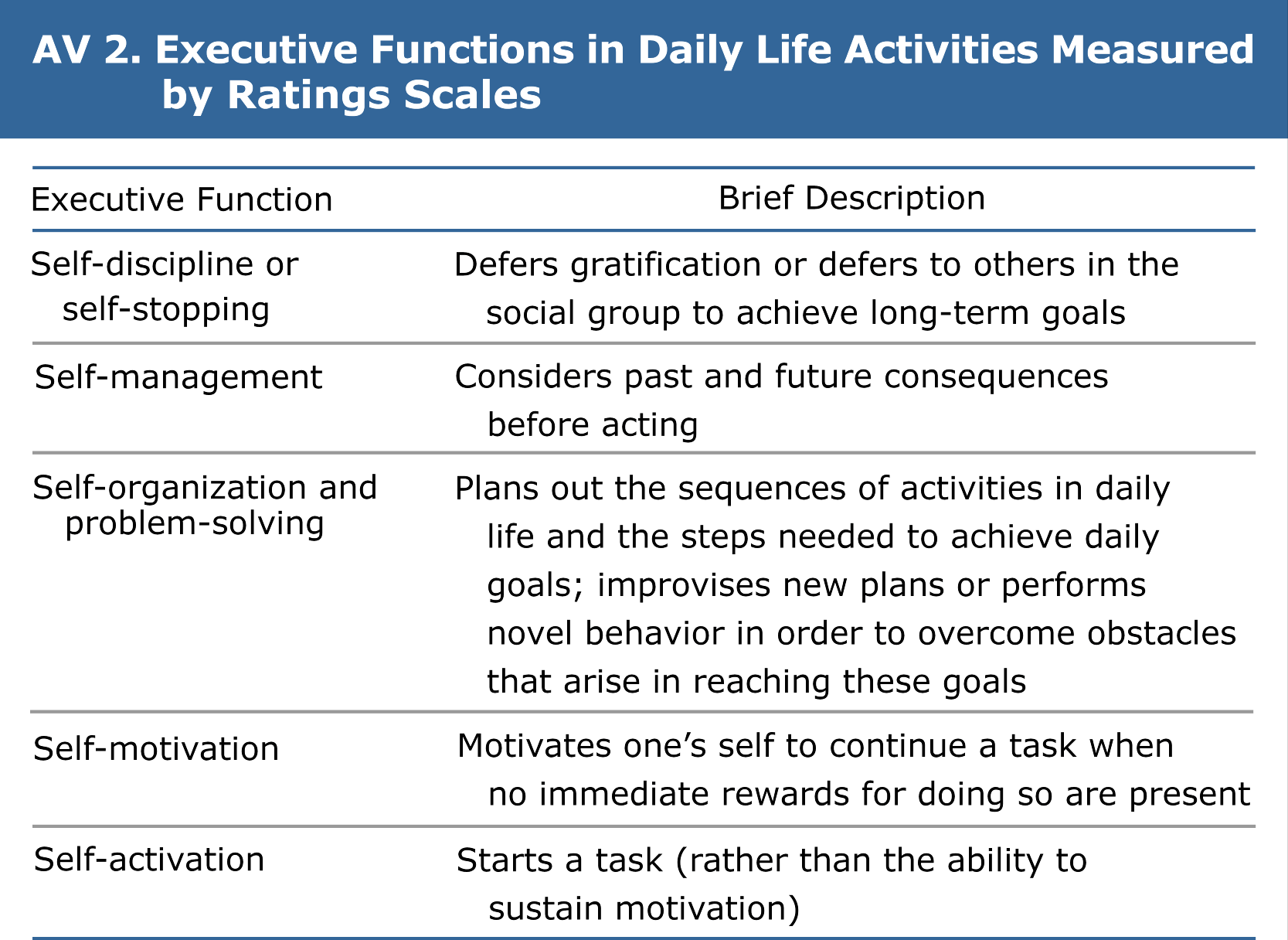
However, self-rating scales, which assess a different level of executive functioning than the neurocognitive processes measured by testing, can be useful in diagnosing and evaluating the course of ADHD in individuals.8 Rating scales address the 5 dimensions of executive function that occur in daily life activities, which are (1) self-stopping or self-discipline, (2) self-management in relation to time, (3) self-organization and problem-solving, (4) self-motivation, and (5) self-activation (AV 2). The majority of adults with ADHD will have impairments in all 5 of these executive functions in relation to daily life activities. For more information regarding self-rating scales, see “Monitoring Adults With ADHD: A Focus on Executive and Behavioral Function” by Lenard A. Adler, MD.
Differential Diagnosis of Adult ADHD
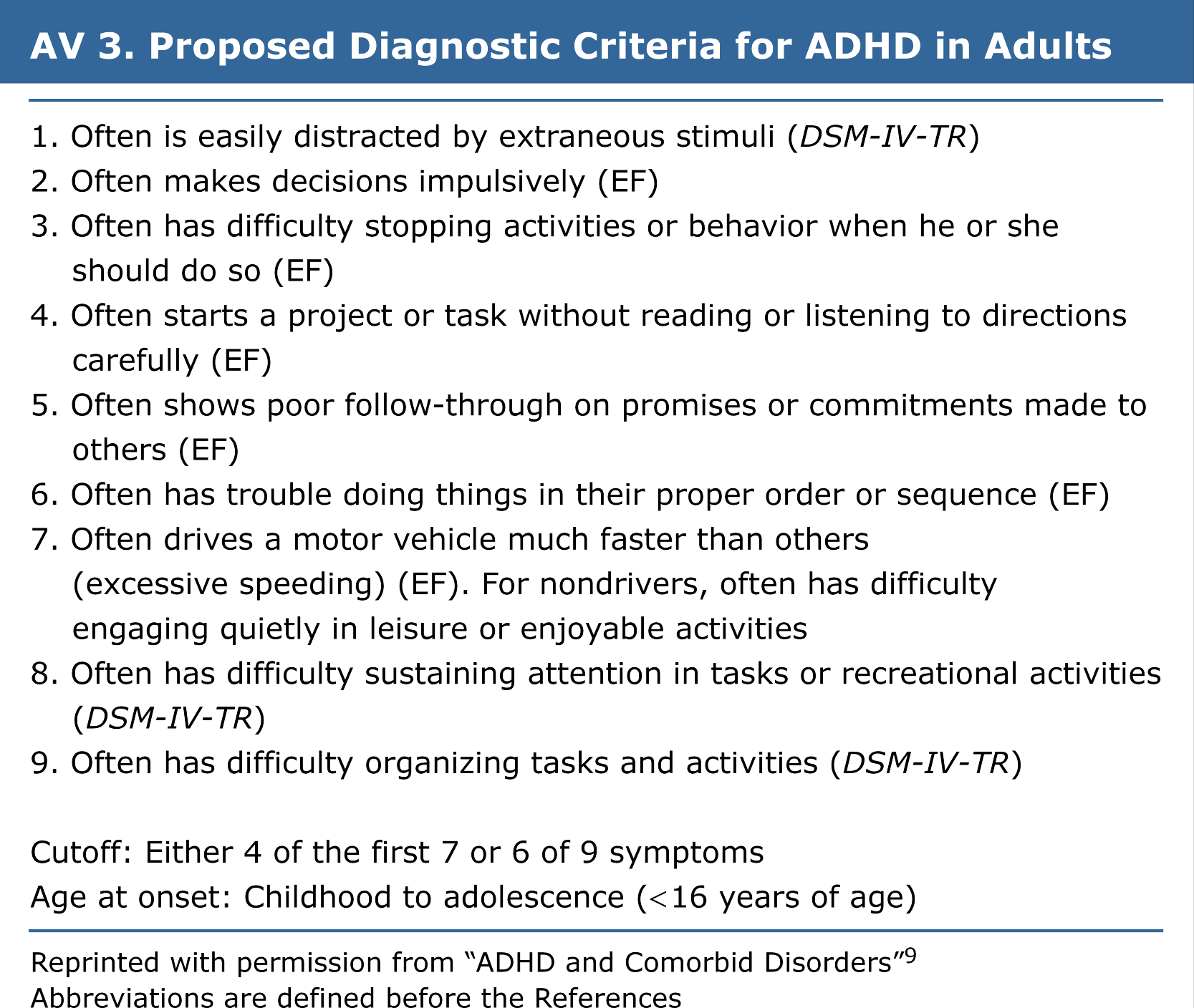
The current DSM-IV-TR1 criteria for ADHD were developed for diagnosing children, but modifications to the criteria for diagnosing ADHD in adults have been proposed (AV 3).9 These proposed criteria emphasize the symptoms caused by deficits in executive function in relation to the daily activities of adults.
When assessing a patient for adult ADHD, certain symptoms and characteristics can differentiate the diagnosis from other disorders.3,4 First, ADHD has one of the earliest onsets of any psychiatric disorder. More than half of adults with ADHD will have the onset of symptoms by 7 years of age, with the balance having an onset by 16 years of age.4 This feature differentiates ADHD from anxiety disorders, depression, and bipolar disorder, which generally begin in late adolescence to early adulthood or even later.
Adult ADHD is more a disorder of inhibition and self-regulation than a disorder of inattentiveness, which is a nonspecific symptom caused by many psychiatric disorders. Problems with inhibition of behavioral, verbal, and emotional impulsiveness will be evident. Additionally, ADHD affects all 5 executive functions in daily life activities, while other disorders are unlikely to do so or do so less broadly. Clinicians should focus on an individual’s ability to plan, organize, self-motivate, and effectively manage themselves in relation to time.
Clinicians should also look for a chronic course of symptoms for ADHD, whereas anxiety disorders, depression, and bipolar disorder are episodic in nature. Adults with ADHD do not have periods when they are symptom-free, although impairment may fluctuate with situational demands.
Although hyperactivity is of little diagnostic value by adulthood, a subjective sense of restlessness (eg, a feeling that ideas are constantly shifting across the mind or a need to be busy) is common.2 This symptom should be differentiated from the flight of ideas or pressured speech seen in bipolar disorder or schizophrenia, as the ideas in adults with ADHD are not bizarre or irrational. Signs of hyperactivity, such as seat restlessness and fidgeting with hands and feet, are actually associated with anxiety disorders, not ADHD, in adults.
Adult ADHD can be differentiated from other disorders that cause problems with working memory, such as autistic spectrum disorders, anxiety disorders, depression, and bipolar disorder, owing to the episodic nature of the interference from these disorders. Additionally, these disorders are not associated with impaired inhibition, with the exception of bipolar disorder during a manic episode (which is episodic, not chronic). Working memory and other aspects of executive function decline with age, but a late onset would differentiate decline, such as that seen in perimenopause, from the early-onset deficits seen in ADHD.
Both ADHD and mood disorders are associated with emotional problems. The emotional problems that adults with ADHD experience can be characterized as a problem in the top-down management of rational emotions, ie, the emotions are normal and not capricious or labile but seem childish in that the individual does not suppress them. In mood disorders, the emotion-generating structures of the brain are dysregulated, making the individual’s emotions abnormally severe and labile and possibly even irrational, overwhelming the executive system’s efforts to self-regulate them.
Psychiatric Comorbidity With ADHD
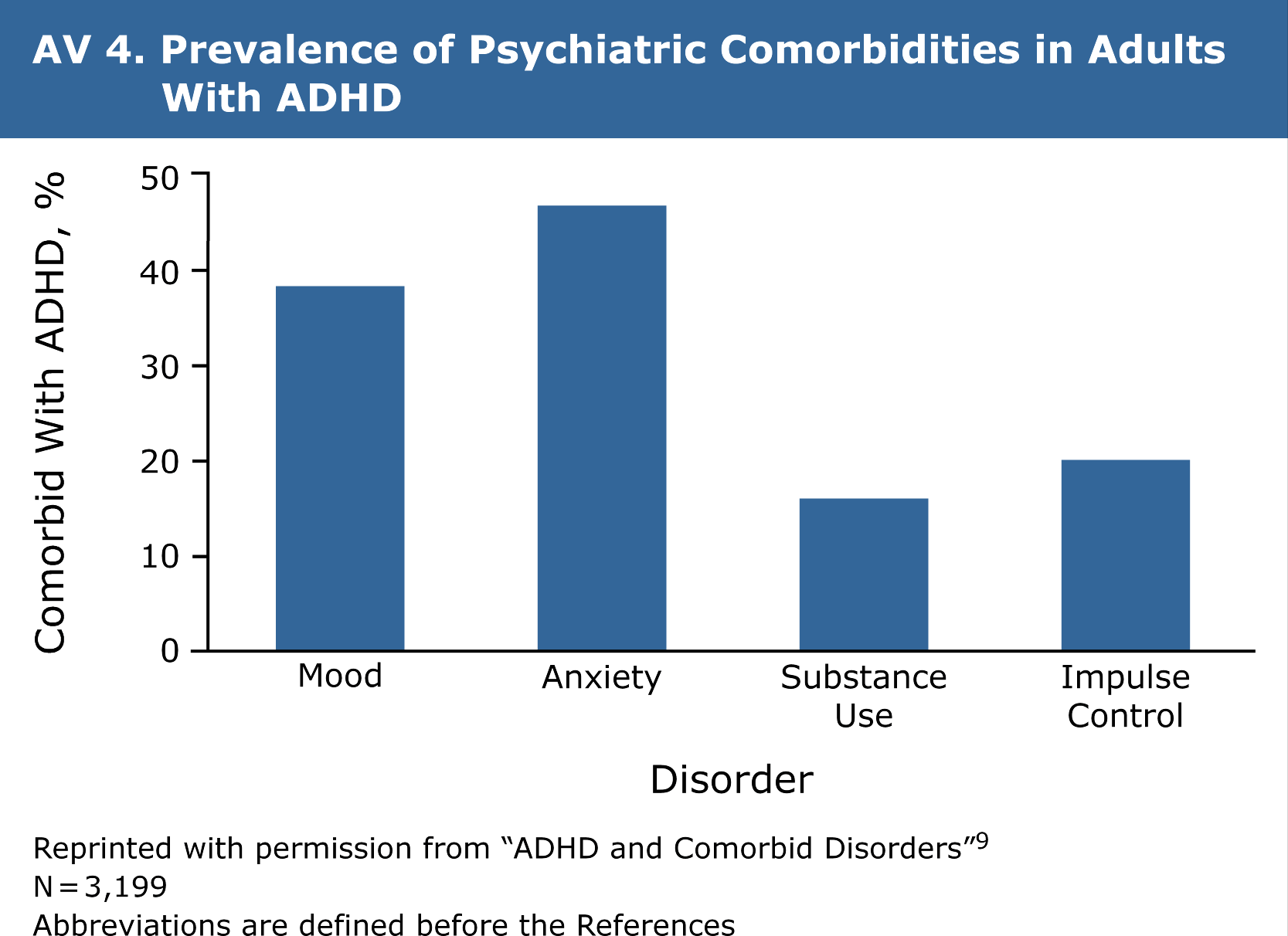
The majority of adults with ADHD have a comorbid disorder, and more than half have 2 or more comorbid disorders.10,11 Common psychiatric comorbidities with ADHD include oppositional defiant, conduct, antisocial personality, substance use, anxiety, and mood disorders (AV 4).9,12 Diagnosing comorbidities may be difficult because ADHD symptoms may conceal other symptoms, such as those of anxiety or learning disabilities, just as severe depressive or substance use symptoms may obscure ADHD symptoms. As adults are more likely to seek treatment for problems associated with a comorbid disorder than for symptoms of ADHD, patients diagnosed with commonly comorbid disorders should also be assessed for ADHD. Effectively treating symptoms of ADHD will not only improve the patient’s quality of life but may help in resolving the comorbid psychiatric disorder.11
For Clinical Use
- Recognize that ADHD has an early onset (often before the age of 7 years) and is a chronic, unremitting developmental disorder characterized by symptoms of inattention and hyperactivity/impulsivity
- When assessing for ADHD, use rating scales to measure disruption in executive functioning across time in daily activities, such as self-discipline, time management, self-organization, and self-motivation
- Distinguish ADHD from disorders with similar features, and assess patients with ADHD for common psychiatric comorbidities and vice versa
Abbreviations
ADHD = attention-deficit/hyperactivity disorder
DSM-IV-TR = Diagnostic and Statistical Manual of Mental Disorders, Fourth Edition, Text Revision
EF = executive function
References
- American Psychiatric Association. Diagnostic and Statistical Manual of Mental Disorders, Fourth Edition, Text Revision. Washington, DC: American Psychiatric Association; 2000.
- Weyandt LL, Iwaszuk W, Fulton K, et al. The internal restlessness scale: performance of college students with and without ADHD. J Learn Disabil. 2003;36(4):382–389.
- Barkley RA. Attention-Deficit Hyperactivity Disorder: Handbook for Diagnosis and Treatment. 3rd ed. New York, NY: Guilford Press; 2005.
- Barkley RA, Murphy KR, Fischer M. ADHD in Adults: What the Science Says. New York, NY: Guilford Press; 2008.
- Rapport MD, Alderson RM, Kofler MJ, et al. Working memory deficits in boys with attention-deficit/hyperactivity disorder (ADHD): the contribution of central executive and subsystem processes. J Abnorm Child Psychol. 2008;36(6):825–837.
- Lovejoy DW, Ball JD, Keats M, et al. Neuropsychological performance of adults with attention deficit hyperactivity disorder (ADHD): diagnostic classification estimates for measures of frontal lobe/executive functioning. J Int Neuropsychol Soc. 1999;5(3):222–233.
- Doyle AE. Executive functions in attention-deficit/hyperactivity disorder. J Clin Psychiatry. 2006;67(suppl 8):21–26.
- Barkley RA, Murphy KR. Impairment in occupational functioning and adult ADHD: the predictive utility of executive function (EF) ratings versus EF tests [published online ahead of print March 2, 2010]. Arch Clin Neuropsychol.doi:10.1093/arclin/acq014
- ADHD and comorbid disorders in adults [Academic Highlights]. J Clin Psychiatry. 2008;69(8):1328–1335.
- Wilens TE, Biederman J, Faraone SV, et al. Presenting ADHD symptoms, subtypes, and comorbid disorders in clinically referred adults with ADHD. J Clin Psychiatry. 2009;70(11):1557–1562.
- Kessler RC, Adler L, Barkley R, et al. The prevalence and correlates of adult ADHD in the United States: results from the National Comorbidity Survey Replication. Am J Psychiatry. 2006;163(4):716–723.
- Barkley RA, Brown TE. Unrecognized attention-deficit/hyperactivity disorder in adults presenting with other psychiatric disorders. CNS Spectr. 2008;13(11):977–984.
Find more articles on this and other psychiatry and CNS topics:
The Journal of Clinical Psychiatry
The Primary Care Companion for CNS Disorders
CME Background Information
Supported by an educational grant from Eli Lilly and Company.
Objective
After completing this educational activity, you should be able to:
- Recognize cognitive and behavioral symptoms of ADHD in adults and complete a differential diagnosis to accurately assess the disorder
Financial Disclosure
The faculty for this CME activity and the CME Institute staff were asked to complete a statement regarding all relevant personal and financial relationships between themselves or their spouse/partner and any commercial interest. The CME Institute has resolved any conflicts of interest that were identified. No member of the CME Institute staff reported any relevant personal financial relationships. Faculty financial disclosures are as follows:
Dr Barkley is a consultant for Eli Lilly, Shire, and Advanced Molecular Designs; is a member of the speakers/advisory boards for Eli Lilly, Shire, Novartis, Janssen-Ortho, and Janssen-Cilag; has received royalties from Guilford Publications, Jones & Bartlett Publishers, Continuing EdOnline, and J&K Seminars; and has provided expert testimony for Eli Lilly Canada.
The Chair for this activity, Lenard A. Adler, MD, in the last year has received grant/research support from Bristol-Myers Squibb, Shire, Eli Lilly, Organon, Ortho McNeil/Janssen/Johnson & Johnson, and NIDA; was a member of the speakers bureau for Ortho McNeil/Janssen/Johnson & Johnson, and Shire; was on the advisory board or was a consultant for Abbott, AstraZeneca, Eli Lilly, Major League Baseball, Mindsite, Ortho McNeil/Janssen/Johnson & Johnson, Organon, Otsuka, Shire, and Epi-Q; was a consultant for i3 Research and INC Research; and received royalty payments from NYU (as inventor) for license of adult ADHD scales and training materials.
Accreditation Statement
The CME Institute of Physicians Postgraduate Press, Inc., is accredited by the Accreditation Council for Continuing Medical Education to provide continuing medical education for physicians.
Credit Designation
The CME Institute of Physicians Postgraduate Press, Inc., designates this educational activity for a maximum of 1.0 AMA PRA Category 1 Credit™. Physicians should only claim credit commensurate with the extent of their participation in the activity.
To obtain credit for this activity, study the material and complete the CME Posttest and Evaluation.
Release, Review, and Expiration Dates
This J Clin Psychlopedia activity was published in April 2010 and is eligible for AMA PRA Category 1 Credit through April 30, 2013. The latest review of this material was March 2010.
Statement of Need and Purpose
Attention-deficit/hyperactivity disorder (ADHD) is one of the most prevalent psychiatric disorders and is now understood to be a lifelong condition for most individuals. Although ADHD is present in all age groups, the symptomatology varies; children may exhibit hyperactivity, whereas adults may have impulsivity and restlessness. Further, the overt learning problems in childhood ADHD are likely to evolve into subtler cognitive impairments and executive function deficits in adulthood, which can lead to significant and ongoing disability in social and occupational functioning. Unfortunately, many adults with ADHD are not being diagnosed, possibly due to insufficient diagnostic criteria, the complex presentation of the disorder, and a reluctance by physicians to diagnose the disorder in adults. Additionally, many of those who have been diagnosed with ADHD do not receive adequate treatment despite the availability of established and effective agents. This activity was designed to meet the needs of participants in CME activities provided by the CME Institute of Physicians Postgraduate Press, Inc., who have requested information on ADHD.
Disclosure of Off-Label Usage
Dr Barkley has determined that, to the best of his knowledge, no investigational information about pharmaceutical agents that is outside US Food and Drug Administration−approved labeling has been presented in this activity.
Review Process
The entire faculty of the series discussed the content at a peer-reviewed planning session, the Chair reviewed the activity for accuracy and fair balance, and a member of the External Advisory CME Board who is without conflict of interest reviewed the activity to determine whether the material is evidence-based and objective.
Acknowledgement
This J Clin Psychlopedia activity was derived from the planning teleconference series, “Improving Executive Function in Adults With ADHD,” which was held in January 2010 and was supported by an educational grant from Eli Lilly and Company. The opinions expressed herein are those of the faculty and do not necessarily reflect the opinions of the CME provider and publisher or the commercial supporter.
Please sign in or purchase this PDF for $40.