

Adult ADHD is conceptualized as a disorder of age-inappropriate behavior that occurs because of maldevelopment of 2 related neuropsychological domains. The neuropsychological symptoms seen in adults with ADHD may be explained by deficits in executive function, which can be broadly defined as a set of neurocognitive processes that allow for the organization of behavior across time so as to attain future goals. Executive function is comprised of 2 broad domains: inhibition and metacognition. Inhibition encompasses the ability to inhibit motor, verbal, cognitive, and emotional activities. In turn, deficits in inhibition contribute to deficits in the development of 4 aspects of executive function in the domain of metacognition, which include nonverbal working memory, verbal working memory, planning and problem-solving, and emotional self-regulation. Understanding the ways in which deficits in executive function contribute to the symptoms of ADHD can help in differentiating ADHD from disorders that share similar characteristics.
Find more articles on this and other psychiatry and CNS topics:
The Journal of Clinical Psychiatry
The Primary Care Companion for CNS Disorders
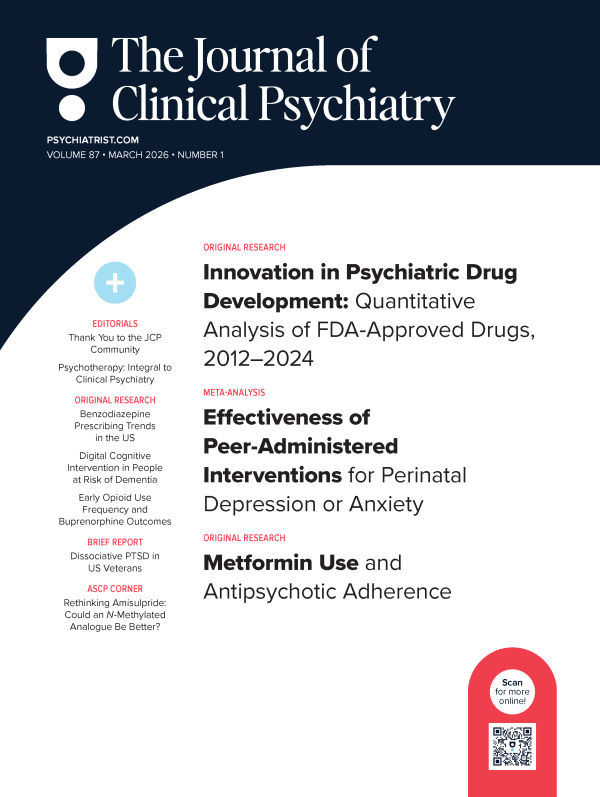
Vol 87 • 2026 • Number 1
Read the Current Issue
Original Research
Innovation in Psychiatric Drug Development: A Quantitative Analysis of FDA-Approved Psychiatric Drugs, 2012–2024
Meta-Analysis
Effectiveness of Peer-Administered Interventions for Perinatal Depression or Anxiety
Original Research
Effect of Adjuvant Metformin on Adherence to and Persistence of Treatment With SGAs in Nondiabetic Patients
Editorial
Thank You to the JCP Community
Editorial
Psychotherapy: Integral to Clinical Psychiatry
Original Research
Trends in Benzodiazepine Prescribing to Adults in the United States
Insightful. Evidence-based. Human-centered.
Listen to the JCP Podcast Now