Moving from “I Think You Have a Sleep Problem” to an Actual Diagnosis
Sleep disturbance is not just a side effect in psychiatric care—it is one of the most common, yet overlooked, challenges we face. It affects anywhere from half to 90% of patients across major psychiatric conditions — and research suggests women are disproportionately affected, particularly during hormonal transitions like pregnancy, postpartum, and menopause. Importantly, poor sleep makes psychiatric illness worse. It drives higher relapse rates, blunts the effectiveness of treatment, and wears down a person’s ability to function even when their other symptoms are under control.1,2
|
50–90%
of psychiatric patients have clinically significant sleep disturbance
|
80%
of patients with OSA remain undiagnosed
|
2×
higher relapse risk when comorbid sleep disorders go untreated
|
Diagnosing the problem can be challenging. Patient histories and standard questionnaires are useful for screening, but have their limits. They cannot reliably spot things like obstructive sleep apnea, periodic limb movement disorder, or circadian rhythm issues. They may also treat insomnia as a diagnosis, even though it is frequently just a symptom pointing to something deeper.3
The real question is, “What happens next?” Once you suspect a sleep problem, how do you get a confirmed diagnosis in a way that works for a psychiatric patient?
Home Testing vs. The Sleep Lab
When a sleep disorder is suspected, the first response is often to prescribe a medication, send the patient to a sleep lab, or refer them back to their primary care doctor. For some people, those steps still make sense. But for many patients who also have mental health conditions, an overnight sleep study can create real challenges. The wait times are long, and trying to sleep in an unfamiliar medical setting can trigger anxiety or trauma responses. These barriers can delay a diagnosis for months, or stop the process altogether.
Current guidelines from the American Academy of Sleep Medicine now recognize home sleep apnea testing as a validated, first-line option. It’s well-suited for adults who have a high likelihood of OSA and don’t have other complex medical issues that would make home testing unreliable.4,5 The evidence is clear: for the right patients, home-based testing delivers results as good as what you’d get in a lab.6
A Modern, Insurance Covered Pathway That Is Fast & Convenient For Patients
SLIIIP has stepped in with a modern telehealth answer: the fastest, most convenient, fully at‑home sleep solution in the country, led by board-certified sleep medicine physicians. Every step—evaluation, testing, diagnosis, and treatment—happens from home via video consultation, with same week appointments, with no labs, no waitlists, and no administrative confusion. The home testing device ships directly to the patient’s door and captures multi-night data for greater diagnostic accuracy. Insurance verification, prior authorizations, and billing are handled from the start. Home sleep apnea tests are covered by Medicare and many commercial insurers7—SLIIIP verifies eligibility upfront so there are no surprises. And with ongoing support built into the care model, patients are not left to manage their sleep health alone. To start the process, simply refer on www.sliiip.com.
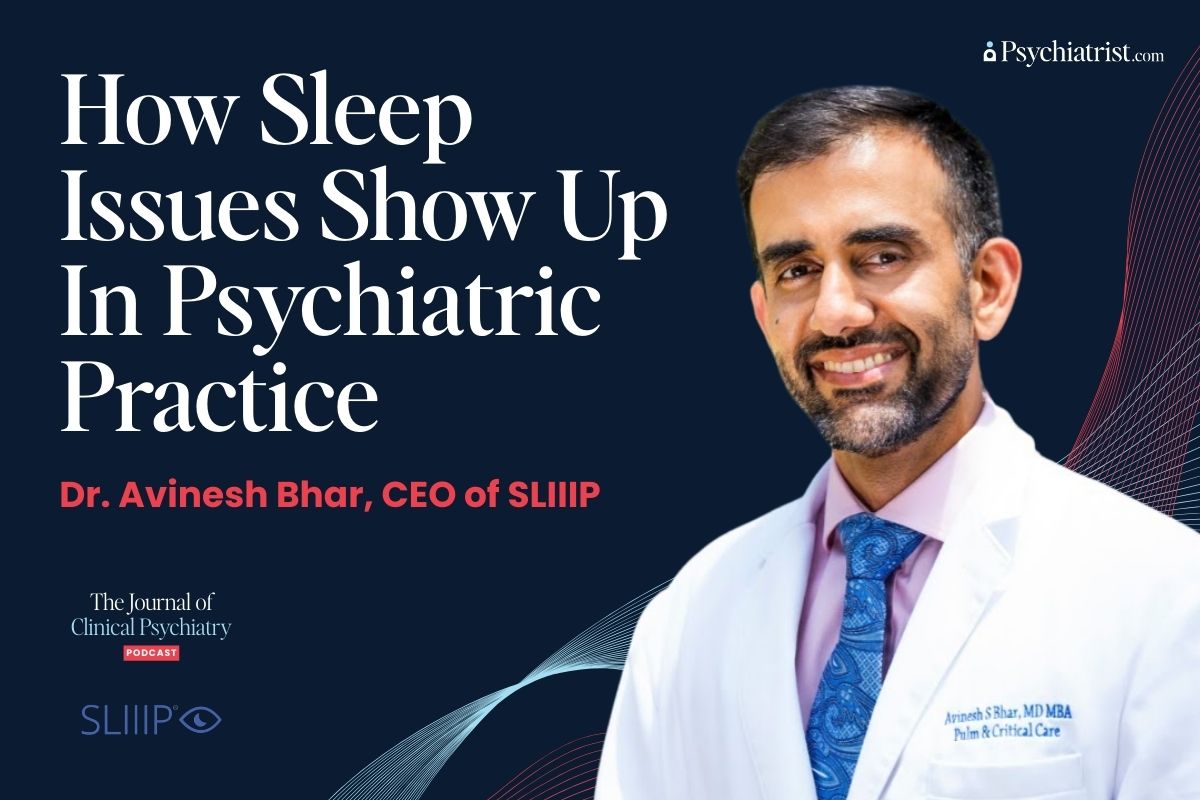
As Avi Bhar, MD, MBA, CEO of SLIIIP, puts it: “We see patients who’ve been on antidepressants for years finally respond — not because their psychiatrist changed the medication, but because someone finally looked at their sleep. That’s not a coincidence. That’s a missed diagnosis getting fixed.”
Treatment Is Where It All Comes Together
Once a diagnosis is confirmed, SLIIIP manages the complete treatment pathway remotely: CPAP initiation and ongoing management for sleep apnea, evidence-based CBT-I for insomnia, and oral appliance therapy where appropriate. CBT-I, an intervention psychiatrists know works but rarely have a clear referral path for, is delivered entirely remotely. More on that in our next issue. For patients already carrying the weight of depression, anxiety, or trauma, treating an underlying sleep disorder is often what helps everything else respond better. Better sleep means a more stable mood, sharper thinking, and a better chance for functional recovery. As one patient put it: “Fixing my sleep gave me my life back. I’m sharper at work, more present with my kids, and finally myself again.”
The Bottom Line
Your patients’ sleep disorders are diagnosable, treatable, and covered by insurance. The infrastructure now exists to evaluate and treat them without burdening your practice or your patients with the logistical obstacles. Even CBT-I coaching is now accessible and treating insomnia with CBT-I reduces anxiety relapse rates.
References
- Baglioni C, Nanovska S, Regen W, et al. Sleep and mental disorders: a meta-analysis of polysomnographic research. Psychol Bull. 2016;142(9):969–990.
- Freeman D, Sheaves B, Waite F, Harvey AG, Harrison PJ. Sleep disturbance and psychiatric disorders. Lancet Psychiatry. 2020;7(7):628–637.
- National Institutes of Health. State-of-the-science conference statement: manifestations and management of chronic insomnia in adults. Sleep. 2005;28(9):1049–1057.
- Kapur VK, Auckley DH, Chowdhuri S, et al. Clinical practice guideline for diagnostic testing for adult obstructive sleep apnea. J Clin Sleep Med. 2017;13(3):479–504.
- Rosen IM, Kirsch DB, Carden KA, et al. Clinical use of a home sleep apnea test: an updated American Academy of Sleep Medicine position statement. J Clin Sleep Med. 2018;14(12):2075–2077.
- Chai-Coetzer CL, Antic NA, Hamilton GS, et al. Physician decision making and clinical outcomes with laboratory polysomnography or limited-channel sleep studies. Ann Intern Med. 2017;166(5):332–340.
- Kim RD, Kapur VK, Redline-Bruch J, et al. An economic evaluation of home versus laboratory-based diagnosis of obstructive sleep apnea. SLEEP. 2015;38(7):1027–1037.
Featured Article
Sleep medicine specialist Dr. Avinesh Bhar discusses how sleep-disordered breathing drives psychiatric and cardiometabolic morbidity, the clinical case for integrating sleep evaluation into mental health care, and how home sleep testing is expanding patient access to diagnosis and treatment.
Read More