





Psychiatry

Psychiatry, the medical specialty dedicated to mental health, encompasses a vast array of disorders, treatments, and research areas. The Journal of Clinical Psychiatry provides comprehensive insights into the field, from the latest research findings to clinical best practices. Our expert editors ensure that content is evidence-based, relevant, and cutting-edge, serving as a valuable resource for psychiatrists seeking to enhance their knowledge, skills, and patient care outcomes.

\n
\nhttps:\/\/open.spotify.com\/episode\/1p1R1W5iLMNtyoQ53QtUgc?si=d7b3b68f62ed4269\n<\/div><\/figure>\n\n\n\n\n\n\n\n

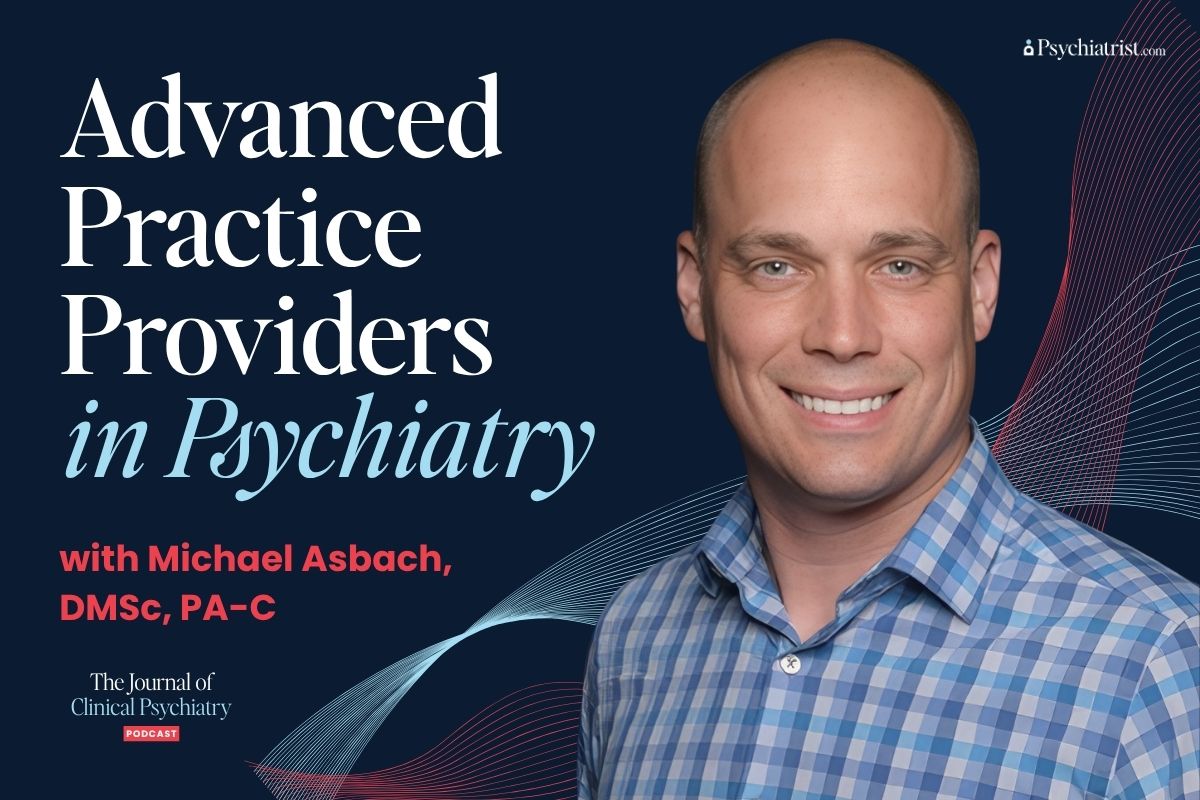
<\/p>\n\n\n\n\n\";s:10:\"post_title\";s:55:\"Dr Michael Asbach on the Evolution of PAs in Psychiatry\";s:12:\"post_excerpt\";s:287:\"Physician Assistant Dr. Michael Asbach addresses workforce solutions in psychiatry, from PA training and autonomous collaboration models to recent UK policy debates. Learn how interdisciplinary teams can expand access, reduce burnout, and optimize outcomes in behavioral health settings.\";s:11:\"post_status\";s:7:\"publish\";s:14:\"comment_status\";s:6:\"closed\";s:11:\"ping_status\";s:6:\"closed\";s:13:\"post_password\";s:0:\"\";s:9:\"post_name\";s:36:\"ep5-pas-in-psychiatry-michael-asbach\";s:7:\"to_ping\";s:0:\"\";s:6:\"pinged\";s:0:\"\";s:13:\"post_modified\";s:19:\"2025-12-30 06:53:39\";s:17:\"post_modified_gmt\";s:19:\"2025-12-30 12:53:39\";s:21:\"post_content_filtered\";s:0:\"\";s:11:\"post_parent\";i:0;s:4:\"guid\";s:38:\"https:\/\/www.psychiatrist.com\/?p=224057\";s:10:\"menu_order\";i:0;s:9:\"post_type\";s:4:\"post\";s:14:\"post_mime_type\";s:0:\"\";s:13:\"comment_count\";s:1:\"0\";s:6:\"filter\";s:3:\"raw\";}i:1;O:7:\"WP_Post\":24:{s:2:\"ID\";i:224495;s:11:\"post_author\";s:6:\"107961\";s:9:\"post_date\";s:19:\"2025-12-29 08:37:54\";s:13:\"post_date_gmt\";s:19:\"2025-12-29 14:37:54\";s:12:\"post_content\";s:6308:\"The tropes about profanity are as old as swearing itself.<\/span>\r\n\r\n\u201cIt reveals a lack of class.\u201d<\/span>\r\n\r\n\u201cIt shows low intelligence.\u201d<\/span>\r\n\r\n\u201cIt exposes a lack of imagination.\u201d<\/span>\r\n\r\nSociety\u2019s conditioned us to regulate our language so much that lawmakers and regulators have mandated warnings on movies and music that include it.<\/span>\r\n\r\nBut an <\/span>interesting new study<\/span><\/a> out of England\u2019s Keele University offers up a new take, hinting that swearing at just the right moment might help us perform better physically.<\/span>\r\n\r\n\u201cThis new research shows how swearing gives us a boost by putting us in a more disinhibited state that helps individuals feel more focused, confident, and overcome internal constraints. It verifies our theory that swearing can act as a simple, low-cost psychological tool that helps people not hold back and go for it a little more,\u201d Keele\u2019s Richard Stephens, BSc, explained. \u201cIn short, swearing helps us to stop overthinking and start doing.\u201d<\/span>\r\n

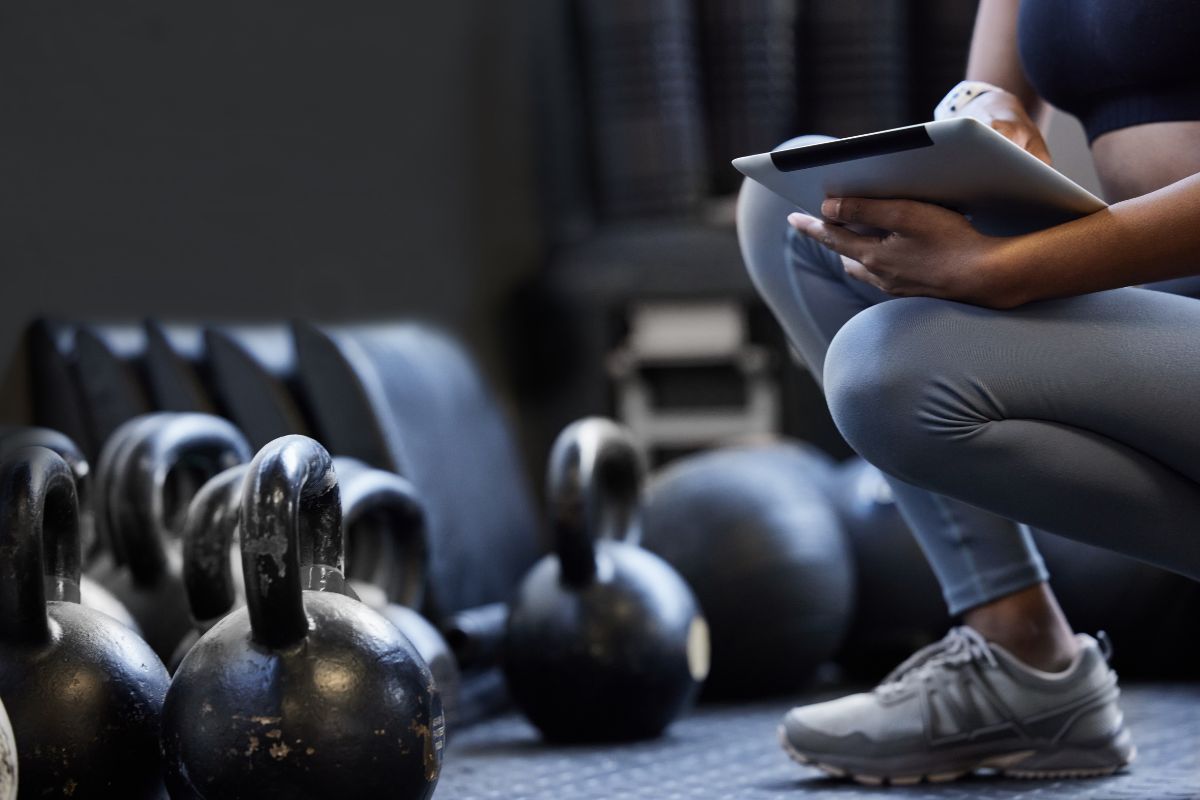
Methodology<\/b><\/h3>\r\nIn a paper published in American Psychologist, the authors report that repeating a self-selected swear word during a short, intense strength task consistently boosted performance. The result, they argue, appears to work not by revving up the body\u2019s physiology, but by relaxing the psychological restraints that normally hold us back.<\/span>\r\n\r\nStephens and his research team conducted two preregistered experiments involving nearly 200 participants. They then merged those results with data from a previous study, bringing the total sample to 300 adults.<\/span>\r\n\r\nAcross all three studies, participants completed a \u201cchair push-up\u201d task while repeatedly saying either a swear word of their choosing or a neutral word.<\/span>\r\n\r\nThe results displayed striking consistency. On average, participants held the position longer when swearing than when using a random, neutral word. The performance boost remained modest \u2013 but reliable \u2013 adding up to a 10% bump in endurance in some trials.<\/span>\r\n

Exploring Explanations<\/b><\/h3>\r\nEarlier studies had hinted that swearing might enhance strength by boosting one\u2019s heart rate or triggering stress-related physiological arousal. But this new study threatens to upend those assumptions.<\/span>\r\n\r\nThe authors instead point to a psychological mechanism they call \u201cstate disinhibition.\u201d It appears to represent a temporary shift away from self-restraint and toward more uninhibited (and action-oriented) behavior.<\/span>\r\n\r\nTo test that theory, the researchers looked at a range of psychological factors historically tied to disinhibition, including flow (the feeling of being fully absorbed in an activity), distraction from self-doubt, and self-confidence. And while each individual experiment produced mixed results, the overall analysis told a simple story.<\/span>\r\n\r\nWhen researchers combined the data from all three studies, they noticed increases in flow, lower cognitive distraction, and higher self-confidence. Simply put, swearing didn\u2019t help because it was funny. It helped, they insist, because it seemed to quiet internal brakes.<\/span>\r\n

Implications<\/b><\/h3>\r\nThe findings align with previous research that revealed that vocal expressions, from grunts to shouts, can boost one\u2019s physical strength. But the authors add that swearing might be uniquely effective because it carries emotional and social weight. Using taboo language briefly disrupts the norms we live with every day, which could make us less self-conscious and more willing to push ourselves.<\/span>\r\n\r\nBut the researchers warn against reading too much into what they found. They focused on short, intense tasks. And they didn\u2019t look at long-term training outcomes or complex athletic performance.<\/span>\r\n\r\nEven so, the authors argue that the practical implications are worth considering. Swearing is free, widely accessible, and requires no special equipment or training. Whether its sports and rehabilitation to situations that demand assertiveness or courage, a well-timed expletive could provide a small (yet meaningful) psychological edge.<\/span>\r\n\r\n\u201cThese effects could have valuable applications in sport, rehabilitation, and any situation that calls for courage or assertiveness,\u201d Stephens added. \u201cIn this way, swearing could serve as an accessible way to unlock our full potential when peak performance is needed.\u201d\u202f\u00a0<\/span>\r\n\r\nObviously, that doesn\u2019t mean clinics or gyms should start encouraging profanity as official policy. Social norms remain relevant. And swearing can be inappropriate or harmful in the wrong setting. But the research suggests that, in private or controlled situations, breaking linguistic rules might help people break through mental barriers.<\/span>\r\n\r\nSometimes, the data suggest, strength isn\u2019t about more than raw muscle. It\u2019s about permission. Permission to not hold back.<\/span>\r\n

Further Reading<\/b><\/h3>\r\nProfanity Can Sometimes Be the Best Medicine<\/b><\/a>\r\n\r\nHuman Speech Runs on a Global Rhythm<\/b><\/a>\r\n\r\nHow Does Singing Help Aphasia Patients Find Their Voices?<\/b><\/a>\";s:10:\"post_title\";s:30:\"Could Swearing Be Good For Us?\";s:12:\"post_excerpt\";s:108:\"A new study suggests that swearing at the right moment can modestly but reliably boost physical performance.\";s:11:\"post_status\";s:7:\"publish\";s:14:\"comment_status\";s:6:\"closed\";s:11:\"ping_status\";s:6:\"closed\";s:13:\"post_password\";s:0:\"\";s:9:\"post_name\";s:29:\"could-swearing-be-good-for-us\";s:7:\"to_ping\";s:0:\"\";s:6:\"pinged\";s:0:\"\";s:13:\"post_modified\";s:19:\"2025-12-29 08:37:54\";s:17:\"post_modified_gmt\";s:19:\"2025-12-29 14:37:54\";s:21:\"post_content_filtered\";s:0:\"\";s:11:\"post_parent\";i:0;s:4:\"guid\";s:58:\"https:\/\/www.psychiatrist.com\/?post_type=news&p=224495\";s:10:\"menu_order\";i:0;s:9:\"post_type\";s:4:\"news\";s:14:\"post_mime_type\";s:0:\"\";s:13:\"comment_count\";s:1:\"0\";s:6:\"filter\";s:3:\"raw\";}i:2;O:7:\"WP_Post\":24:{s:2:\"ID\";i:224449;s:11:\"post_author\";s:6:\"107961\";s:9:\"post_date\";s:19:\"2025-12-24 07:26:55\";s:13:\"post_date_gmt\";s:19:\"2025-12-24 13:26:55\";s:12:\"post_content\";s:7295:\"It\u2019s as bad as we think it is.<\/span>\r\n\r\nThat\u2019s the unsettling sentiment from a new <\/span>Gallup poll<\/span><\/a> that exposes a clear erosion in how Americans view their own mental health. For the first time in the long-running survey, fewer than a third of U.S. adults describe their mental health as \u201cexcellent.\u201d The revelation underscores a disturbing trend that started with the Covid pandemic.<\/span>\r\n\r\nThe West Health-Gallup Center on Healthcare in America<\/span><\/a>, which conducted the survey between Nov. 3-25, found that only 29% of adults were willing to grade their own mental health as excellent. Another 43% felt they had \u201cgood\u201d mental health. The 72% total positive rate ranked three percentage points lower than the organization\u2019s previous record low.<\/span>\r\n

Pandemic Ripple Effects<\/b><\/h3>\r\nBefore the pandemic, Americans\u2019 mental health ratings had held surprisingly steady. Between 2001 and 2019, at least 42% of adults consistently rated their mental well-being as excellent. But that figure fell off a cliff in late 2020 \u2013 roughly eight months into the life-changing lockdowns that upended the lives of virtually all Americans. Since then, the numbers continue to fall.<\/span>\r\n\r\n\"Line\r\n\r\nThe deterioration in sentiment is hardly isolated. It\u2019s infected nearly every major demographic.<\/span>\r\n