
A variety of American and European guidelines are available for clinicians treating major depressive disorder and depressive subtypes. Major Western guidelines published since 2000 make similar recommendations for all stages of treatment for depression, including a reliance on measurement-based care. First-line treatment is usually a serotonin reuptake inhibitor, psychotherapy, or a combination of pharmacotherapy and psychotherapy. Next-step treatment recommendations are switching or augmentation, depending on patient response to the initial treatment. Maintenance therapy continues the approach that led to remission. The American Psychiatric Association will release a new treatment guideline to offer information on developments made since the last guidelines were published in 2000. Despite progress made during the last decade, no major breakthroughs in the treatment of depression have occurred, and genetic testing developments allowing for personalized care remain the goal of research.
(J Clin Psychiatry 2010;71[7]:e15)
From the Department of Psychiatry, Penn State College of Medicine, Hershey, Pennsylvania.
doi: 10.4088/JCP.9078tx1c
Find more articles on this and other psychiatry and CNS topics:
The Journal of Clinical Psychiatry
The Primary Care Companion for CNS Disorders
From the Editors

Are you a healthcare provider?
Add your NPI to personalize your JCP experience.
Major Treatment Guidelines Since 2000
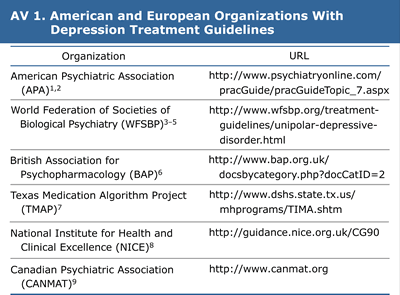
The last full update to the APA treatment guideline for depression was in 2000,1 which was followed by a partial update in 2005.2 The APA is in the process of preparing a full update, but, as of this publication, new guidelines have not yet been released. Since 2000, other major Western guidelines for the treatment of depression include those released by the WFSBP in 20023,4 and 2007,5 the BAP6 and the TMAP in 2008,7 and the NICE8 and the CANMAT in 20099 (AV 1). For a more detailed review of these guidelines, see the supplement article “Major Depressive Disorder Treatment Guidelines in America and Europe” by Jonathan R.T. Davidson, MD.
Each of these guidelines addresses both major depression and subthreshold or mild depression with the exception of the CANMAT and TMAP guidelines, which cover only MDD. Psychiatrists are the intended audience for all of the guidelines except the 2007 edition of the WFSBP guidelines, which is for physicians in primary care. The NICE and BAP guidelines address both psychiatrists and primary care providers.
Consensus Among Guidelines
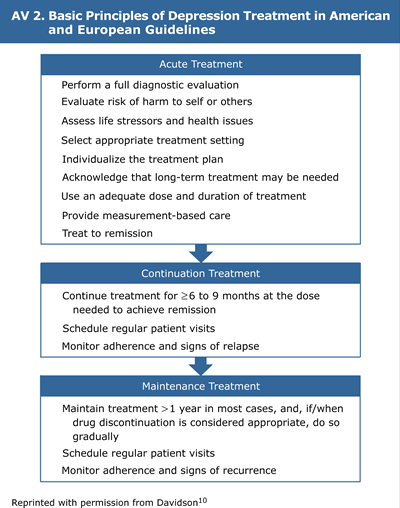
All major guidelines for the treatment of depression agree upon the need for a biopsychosocial assessment of stressors, patients’ overall health issues, and any risk of harm that patients may pose to themselves or to others (AV 2).10 Other universal recommendations include individualizing treatment according to patients’ profiles and needs, using standardized measurement tools to track symptomatology, prescribing an appropriate dosage of a medication for an adequate duration, and treating patients to remission—that is, suppressing virtually all depressive symptoms.
Although all major international guidelines for the treatment of depression are evidence-based, treatment recommendations may occasionally be influenced by factors such as the composition of the author group or an underlying mandate, political or otherwise. Cultural perceptions of mental illness vary and can influence treatment recommendations. For example, certain cultures might view medication as less necessary for anxiety than for depression. However, the American and European guidelines tend to agree on the basic principles of treatment for major depression, especially moderate and severe cases.
First-Line Treatments for Depression by Severity
Mild depression. Depending on the guideline, treatment recommendations for mild depression range from antidepressant pharmacotherapy or psychotherapy (or the combination) to exercise and CAM treatments to active monitoring if a possibility exists that the episode might resolve itself. The NICE guideline for mild depression also includes the options of computer-delivered CBT and guided self-help as well as sleep hygiene education. The general idea is that low-intensity treatments should be tried first, depending on the patient’s history; if the patient has chronic depression or has previously had a severe episode, then antidepressant or evidence-based psychotherapies are appropriate first-line treatments for mild depression.
Moderate depression. Generally, first-line treatment recommendations for moderate depression are antidepressant monotherapy, some form of psychotherapy as monotherapy, or a combination of the 2, especially when the patient has significant psychosocial problems or a comorbid Axis II disorder. Commonly recommended first-line pharmacotherapeutic options include SSRIs, SNRIs, bupropion, and mirtazapine. Recommended psychotherapeutic methods include CBT, IPT, cognitive therapy, and behavior therapy with activity scheduling.
Severe depression. For severe depression, probably the most elaborate guideline comes from TMAP, which offers a 6-stage algorithm for psychotic major depression along with its algorithm for nonpsychotic MDD.7 In all of the guidelines, first-line treatment options are ECT, a combination of an antidepressant and psychotherapy, or, if the patient has psychotic features, a combination of antidepressant and antipsychotic medications.
Tracking response and remission. The definitions of response and remission vary from guideline to guideline. The TMAP guideline uses specific QIDS-1611 score ranges to define response and remission, whereas percentage of change in symptomatology is used by the WFSBP and CANMAT guidelines. The APA, BAP, and NICE guidelines are less specific but recommend employing measurement-based care.
Most guidelines agree that first-line treatments need a trial of 8 to 12 weeks. Upon initiation of treatment, clinicians should schedule patient visits every 1 or 2 weeks to assess improvement (or the lack of improvement) and doses should be gradually and persistently increased until either remission is achieved or patients’ tolerance limits are reached. At least 4 weeks of treatment at an adequate dose are needed before response can be determined.
Second-Line Treatment Strategies
If remission has not occurred after adequate first-line treatment, second-line treatment is needed. In some guidelines, short-term continuation of the first-line medication, with or without an increase in dosage, is recommended as a second-line option if partial response has occurred with no intolerable side effects. Another option for partial response is augmentation with a second antidepressant that has a different mechanism of action. If response to the first-line treatment was poor—eg, < 20% to 25% improvement—then switching to a different antidepressant or to psychotherapy is recommended.
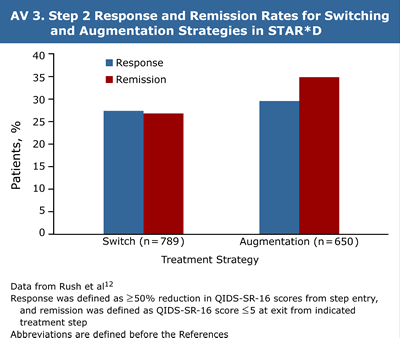
Despite the guideline recommendations, neither switching nor augmentation were found to be particularly effective second-line strategies in STAR*D (AV 3).12 The overall remission rate in STAR*D for second-step subjects—a group comprising approximately 63% of total study subjects—was about 30%. In fact, the likelihood of response or remission decreased with each additional treatment stage. Therefore, choosing the first-line treatment option that best suits a patient’s individual illness profile is crucial.
Continuation and Maintenance Treatment
Major treatment guidelines for depression agree that patients who reach remission should continue their treatment at the same dosage for at least 6 to 9 months to achieve recovery (see AV 2). Maintenance treatment is usually needed beyond 1 year. Because episodes of major depression are associated with high rates of recurrence, many patients will require long-term or even lifetime treatment. During the continuation or maintenance phases, clinicians should meet with patients regularly and pay particular attention to treatment adherence. If antidepressant pharmacotherapy is withdrawn, discontinuation should be gradual, although the specifics of discontinuation may vary among different medications.
APA Treatment Guidelines for MDD, 3rd Edition
The revised edition of the APA treatment guideline for MDD is expected to be published in early 2010. New developments since the 2000 edition that will be addressed in the new edition include issues surrounding antidepressants and suicidality; major clinical trials such as STAR*D,13 REVAMP,14 and PREVENT15; ECT; CAM treatments; and new research concerning psychotherapy and antidepressant pharmacotherapy.
Several new agents from different drug classes have been studied and used for the treatment of depression since the last APA guidelines were published.1,2 Some of the new drugs are achieving better results than others, but none of the new options dramatically improve the current state of antidepressant therapy. Of note, some atypical antipsychotics have been found to be useful as adjuncts, and perhaps even as monotherapy, in MDD.
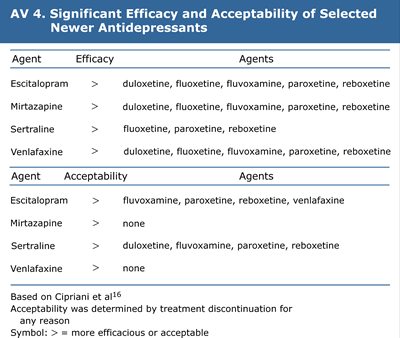
Cipriani and colleagues16 conducted a meta-analysis evaluating 12 of the new antidepressants for efficacy, tolerability, and overall value. The agents mirtazapine, escitalopram, venlafaxine, and sertraline were reported to be more efficacious than duloxetine, fluoxetine, fluvoxamine, paroxetine, and reboxetine (AV 4).17 When considering all-cause discontinuation, the authors found that escitalopram and sertraline had the best tolerability profiles. Sertraline, which is available as a generic drug, appears to be the most cost-effective option overall and stands out as a potential first-line recommendation for the new APA guideline.
Advances have been made in the realm of nonpharmacologic treatments for depression, although, as with medication, none is a clear breakthrough. Psychotherapeutic techniques such as CBT and IPT have demonstrated efficacy in the acute and maintenance treatment phases for depression, both as monotherapy and in combination with pharmacotherapy.17
Conclusion
Evidence-based treatment guidelines are necessary and generally make the same recommendations concerning the treatment of depression. SSRIs, SNRIs, bupropion, and evidence-based psychotherapy are the main first-line treatments endorsed by current guidelines. Treatments should be individualized according to patient profiles. Selection of a drug or psychotherapy takes place within the context of treatment acceptability to patients and their families because the only treatment that works is the treatment that patients actually adhere to.
Measurement-based care is essential in strategically deciding when to continue a particular treatment or to move on to another therapy. Of the accepted treatment strategies for depression, no single approach is always better than another, which was demonstrated dramatically by the STAR*D study.13 Some strategies may have more evidence of efficacy than others, but multiple factors affect study outcomes, including depressive severity and subtype, number and length of previous episodes, type and duration of previous treatment, comorbidities, and other population specifics. As such, personalized medicine using genetic testing for patients with MDD remains an ideal for which to strive.
For Clinical Use
- Consult evidence-based guidelines for all steps of the depression treatment process from diagnosis to maintenance therapy
- Individualize treatment selection as much as possible
- Use measurement-based care and standardized measurement tools when assessing patient progress
Drug Names
bupropion (Aplenzin, Wellbutrin, and others), duloxetine (Cymbalta), escitalopram (Lexapro and others), fluoxetine (Prozac, and others), fluvoxamine (Luvox and others), mirtazapine (Remeron and others), paroxetine (Paxil, Pexeva, and others), sertraline (Zoloft and others), venlafaxine (Effexor and others)
Abbreviations
APA = American Psychiatric Association, BAP = British Association of Psychopharmacology, CAM = complementary and alternative medicine, CBT = cognitive-behavioral therapy, CANMAT = Canadian Network for Mood and Anxiety Treatments, ECT = electroconvulsive therapy, IPT = interpersonal therapy, MDD = major depressive disorder, NICE = National Institute for a Health and Clinical Excellence, PREVENT = Prevention of Recurrent Episodes of Depression With Venlafaxine for Two Years, QIDS-16 = 16-Item Quick Inventory of Depressive Symptomatology, REVAMP = Research Evaluating the Value of Augmenting Medication With Psychotherapy, SNRI = serotonin-norepinephrine reuptake inhibitor, SSRI = selective serotonin reuptake inhibitor, STAR*D = Sequenced Treatment Alternatives to Relieve Depression, TMAP = Texas Medication Algorithm Project, WFSBP = World Federation of Societies of Biological Psychiatry
References
- American Psychiatric Association. Practice Guideline for the Treatment of Patients With Major Depressive Disorder. Second edition. Arlington, VA: American Psychiatric Association; 2000. http://www.psychiatryonline.com/pracGuide/pracGuideTopic_7.aspx. Accessed February 9, 2010.
- Fochtmann LJ, Gelenberg AJ. Guideline Watch: Practice Guideline for the Treatment of Patients With Major Depressive Disorder, Second edition. Arlington, VA: American Psychiatric Association; 2005. http://www.psychiatryonline.com/pracGuide/pracGuideTopic_7.aspx. Accessed February 9, 2010.
- Bauer M, Whybrow PC, Angst J, et al, for the WFSBP task Force on Treatment Guidelines for Unipolar Depressive Disorders. World Federation of Societies of Biological Psychiatry (WFSBP) guidelines for biological treatment of unipolar depressive disorders, part 1: acute and continuation treatment of major depressive disorder. World J Biol Psychiatry. 2002;3(1):5–43. http://www.wfsbp.org/treatment-guidelines/unipolar-depressive-disorder.html. Accessed February 25, 2010.
- Bauer M, Whybrow PC, Angst J, et al, for the WFSBP task Force on Treatment Guidelines for Unipolar Depressive Disorders. World Federation of Societies of Biological Psychiatry (WFSBP) guidelines for biological treatment of unipolar depressive disorders, part 2: maintenance treatment of major depressive disorder and treatment of chronic depressive disorders and subthreshold depressions. World J Biol Psychiatry. 2002;3(2):69–86. http://www.wfsbp.org/treatment-guidelines/unipolar-depressive-disorder.html. Accessed February 25, 2010.
- Bauer M, Bschor T, Pfennig A, et al, for the WFSBP task Force on Treatment Guidelines for Unipolar Depressive Disorders. World Federation of Societies of Biological Psychiatry (WFSBP) guidelines for biological treatment of unipolar depressive disorders in primary care. World J Biol Psychiatry. 2007;8(2):67–104. http://www.wfsbp.org/treatment-guidelines/unipolar-depressive-disorder.html. Accessed February 25, 2010.
- Anderson IM, Ferrier IN, Baldwin RC, et al. Evidence-based guidelines for treating depressive disorders with antidepressants: a revision of the 2000 British Association for Psychopharmacology guidelines. J Psychopharmacol. 2008;22(4):343–396. http://www.bap.org.uk/docsbycategory.php?docCatID=2. Accessed February 25, 2010.
- Suehs BT, Argo TR, Bendele SD, et al. Texas Medication Algorithm Project Procedural Manual: Major Depressive Disorder Algorithm. Austin, TX: Texas Department of State Health Services; 2008. http://www.dshs.state.tx.us/mhprograms/TIMA.shtm. Accessed February 9, 2010.
- National Collaborating Centre for Mental Health for the National Institute for Health and Clinical Excellence. Depression: The Treatment and Management of Depression in Adults. London, England: National Institute for Health and Clinical Excellence; 2009. http://www.nice.org.uk/CG90. Accessed December 30, 2009.
- Kennedy SH, Lam RW, Parikh SV, et al, for the Canadian Network for Mood and Anxiety Treatments. Canadian Network for Mood and Anxiety Treatments (CANMAT) clinical guidelines for the management of major depressive disorder in adults: introduction. J Affect Disord. 2009;117(suppl 1):s1–s2.
- Davidson JRT. Major depressive disorder treatment guidelines in America and Europe. J Clin Psychiatry. 2010;71(suppl E1):e04.
- Rush AJ, Trivedi MH, Ibrahim HM, et al. The 16-item Quick Inventory of Depressive Symptomatology (QIDS), clinician rating (QIDS-C), and self-report (QIDS-SR): a psychometric evaluation in patients with chronic major depression. Biol Psychiatry. 2003;54(5):573–583.
- Rush AJ, Trivedi JH, Wisniewski SR, et al. Acute and longer-term outcomes in depressed outpatients requiring one or several treatment steps: a STAR*D report. Am J Psychiatry. 2006;163(11):1905–1917.
- Fava M, Rush AJ, Trivedi MH, et al. Background and rationale for the Sequenced Treatment Alternatives to Relieve Depression (STAR*D) study. Psychiatr Clin North Am. 2003;26(2):457–494.
- Trivedi MH, Kocsis JH, Thase ME, et al. REVAMP: Research Evaluating the Value of Augmenting Medication With Psychotherapy: rationale and design. Psychopharmacol Bull. 2008;41(4):5–33.
- Kornstein SG. Beyond remission: rationale and design of the Prevention of Recurrent Episodes of Depression with Venlafaxine for Two years (PREVENT) study. CNS Spectr. 2006;11(12 suppl 15):28–34.
- Cipriani A, Furukawa TA, Salanti G, et al. Comparative efficacy and acceptability of 12 new-generation antidepressants: a multiple-treatments meta-analysis. Lancet. 2009;373(9665):746–758.
- Parikh SV, Segal ZV, Grigoriadis S, et al. Canadian Network for Mood and Anxiety Treatments (CANMAT) clinical guidelines for the management of major depressive disorder in adults, pt 2: psychotherapy alone or in combination with antidepressant medication. J Affect Disord. 2009;117(suppl 1):s15–25.
Find more articles on this and other psychiatry and CNS topics:
The Journal of Clinical Psychiatry
The Primary Care Companion for CNS Disorders
CME Background Information
Supported by an educational grant from Eli Lilly and Company.
Objective
After completing this educational activity, you should be able to:
- Use up-to-date treatments for patients with depression, accounting for advancements in current practice guidelines
Financial Disclosure
The faculty for this CME activity and the CME Institute staff were asked to complete a statement regarding all relevant personal and financial relationships between themselves or their spouse/partner and any commercial interest. The CME Institute has resolved any conflicts of interest that were identified. No member of the CME Institute staff reported any relevant personal financial relationships. Faculty financial disclosure is as follows:
Dr Gelenberg is a consultant for Eli Lilly, Pfizer, Best Practice Project Management, AstraZeneca, Wyeth, GlaxoSmithKline, ZARS, Jazz, Lundbeck, Takeda, and E-Research Technology; has received grant/research support from Eli Lilly and GlaxoSmithKline; and is a stock shareholder of Healthcare Technology Systems.
Accreditation Statement
The CME Institute of Physicians Postgraduate Press, Inc., is accredited by the Accreditation Council for Continuing Medical Education to provide continuing medical education for physicians.
Credit Designation
The CME Institute of Physicians Postgraduate Press, Inc., designates this educational activity for a maximum of 1.0 AMA PRA Category 1 Credit™. Physicians should only claim credit commensurate with the extent of their participation in the activity.
To obtain credit for this activity, study the material and complete the CME Posttest and Evaluation.
Release, Review, and Expiration Dates
This J Clin Psychlopedia activity was published in April 2010 and is eligible for AMA PRA Category 1 Credit through April 30, 2013. The latest review of this material was April 2010.
Statement of Need and Purpose
Depression is one of the leading causes of disability and affects 121 million people worldwide, yet it continues to be undertreated. With so many antidepressants available, clinicians may have difficulty selecting the most appropriate agent for each patient and may resort to a one-size-fits-all treatment approach. Advances in neuroimaging suggest that depression is related to abnormalities in brain structure and functioning, and patients with depression have been shown to have disrupted neurobiological processes, which may affect different symptom domains of mood and behavior. Additionally, advancements have occurred since the American Psychiatric Association practice guidelines for the treatment of depression were published in 2000, which may improve treatment outcomes for patients with depression. Clinicians need more information on current practices and neurobiological processes to optimize treatments for patients with depression and increase the likelihood of remission. This activity was designed to meet the needs of participants in CME activities provided by the CME Institute of Physicians Postgraduate Press, Inc., who have requested information on depression.
Disclosure of Off-Label Usage
Dr Gelenberg has determined that, to the best of his knowledge, no investigational information about pharmaceutical agents that is outside US Food and Drug Administration−approved labeling has been presented in this activity.
Review Process
The entire faculty of the series discussed the content at a peer-reviewed planning session, the Chair reviewed the activity for accuracy and fair balance, and a member of the External Advisory CME Board who is without conflict of interest reviewed the activity to determine whether the material is evidence-based and objective.
Acknowledgement
This J Clin Psychlopedia activity was derived from the planning teleconference “Improving Outcomes in Depression,” which was held on December 3, 2009, and supported by an educational grant from Eli Lilly and Company. The opinions expressed herein are those of the faculty and do not necessarily reflect the opinions of the CME provider and publisher or the commercial supporter.