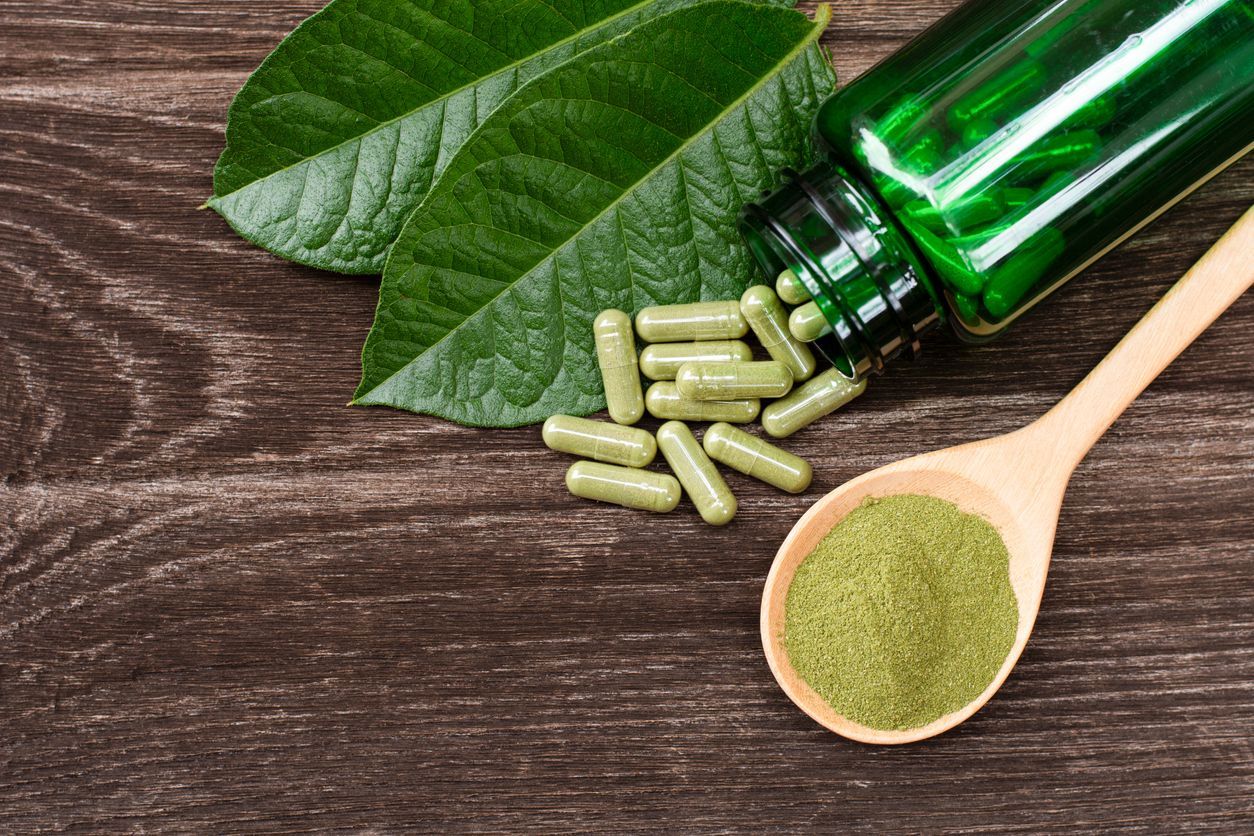

Kratom is an herbal product consisting of 2 alkaloids, mitragynine and 7-hydroxymitragynine, which can bind to opioid receptors with stimulant and sedative effects, depending on the dosages.1 In the past 10 years, the consumption of kratom has increased dramatically, particularly in the United States. According to National Poison Data System data, call volumes increased from 26 calls in 2010 to over 1,800 calls in 2018.2 In a study that analyzed data compiled by the Centers for Disease Control and Prevention, researchers screened for kratom in cases of overdose deaths between 2016 and 2017 and found kratom in 152 of them, often alongside other substances.3 Kratom is most often used for opioid withdrawal or by individuals with a history of substance use disorder. But its use has broadened due to nonmedical users seeking psychoactive effects.4 In the Midwest and Southern United States, kratom is marketed in the form of a supplement to treat pain and mood disorders, and usage appears above average according to regional trends.5 The availability, in addition to the therapeutic potential and the potential for abuse, raises serious concerns.1 But kratom is legal in many states, according to the US Food and Drug Administration (FDA) and Drug Enforcement Administration.2
Case Report
We present the case of a 29-year-old man who presented to the emergency department (ED) for abdominal pain with nausea and vomiting for 3 days. The patient had a pertinent medical history of substance use disorder for opioids and ethyl alcohol use disorder; however, both were in remission. The patient noted that he often drank 5–7 30-mL bottles of kratom “shots” per day. The patient’s initial workup in the ED (blood work, electrocardiogram, and cultures) was noncontributory, and the patient was started on intravenous fluids, antiemetics, and proton pump inhibitors.
On the second night of hospital admission, the patient was found to have 2 hidden empty bottles of kratom during a change of his bed linens. It was determined by hospital security that the patient’s father had been bringing the patient kratom “shots,” and he was searched each subsequent time he would visit. During the next 12 hours, the patient was noted to be increasingly hypoxic, confused, and lethargic at the sudden cessation of the drug. A rapid response was called 20 hours following the discovery of the kratom bottles and refusal to allow the patient to continue to use the substance while admitted.
During the rapid response, the patient was noted to have significant cyanosis, intractable rigors, confusion, and inability to take deep breaths or follow commands due to his tremulousness. The patient’s rigors continued despite aggressive intravenous opioids, and the decision was made to sedate and intubate the patient, as his oxygen saturation was unable to be increased above 83% with supplemental oxygen. The patient was transferred to the intensive care unit (ICU) for continuation of care.
On the fourth night of admission, the patient’s first night in the ICU, a code blue was called due to significant bradycardia and eventual cardiac arrest. Cardiopulmonary resuscitation was performed for 23 minutes before the return of spontaneous circulation was achieved. The patient continued to be sedated for 7 additional days while being worked up for possible cardiac, endocrine, metabolic, and hematologic causes for his sudden cardiovascular collapse. No discernible etiology was found during this time, leading the medical team to determine that the cause of his sudden cardiac arrest was due to significant withdrawal from kratom.
The patient was subsequently weaned from sedation, and spontaneous breathing trials liberated him from the ventilator. The patient underwent an uneventful hospital course for 3 more days before being discharged home with instructions not to continue kratom use, and referrals were given to substance abuse specialists.
Discussion
Kratom has gained popularity in the United States for its use to relieve pain, combat opioid withdrawal, and elicit euphoric sensations; however, cases of kratom addiction and withdrawal have increased as well. Epidemiology has shown that 0.8%–1.5% of the US population use kratom, which contributes to roughly 3–5 million users.6
Kratom Withdrawal. The primary active compounds involved in kratom are mitragynine and 7-hydroxymitragynine. These compounds interact with opioid receptors, providing the stimulant and sedative effects based on the dosage consumed. Higher dosages of kratom, considered to be 5 g or more, will mimic opioid-like effects, including euphoria and analgesia, making it very attractive for individuals who endure chronic pain or suffer from opioid use disorder. Prolonged use of high-dose kratom has been shown to lead to physical dependence. The most common adverse effects associated with withdrawal symptoms, from most common to least, include agitation, tachycardia, drowsiness, vomiting, and confusion.7
Kratom withdrawal symptoms have generally been considered to be milder than opioid withdrawal; however, kratom withdrawal can still lead to severe complications for chronic users. A study by Smith et al8 found that individuals with opioid use disorder who rely on kratom to self-manage withdrawal symptoms often report much more severe withdrawal reactions. The patient in our case also reported a history of heroin use, which likely contributed to more severe symptoms upon cessation. The severe response is likely attributable to both the high dose of kratom use and the patient’s prior opioid disorder, triggering the vast array of withdrawal symptoms that this patient endured.
Cardiovascular and Respiratory Risks. The most concerning aspect of kratom withdrawal is its association with cardiovascular instability. Kratom’s alkaloids act on μ-opioid receptors, producing opioid-like effects; however, it also works on κ-opioid and α-2 adrenergic receptors, which can contribute to tachycardia at lower doses and bradycardia in addition to hypotension at higher doses. This symptom is more common in users with a history of opioid use disorder. Regarding kratom-associated deaths, the FDA reported 44 deaths associated with kratom abuse in 2017, increasing from years prior.6 The patient described in our case experienced both cardiovascular and respiratory consequences, leading to bradycardia and eventual cardiac arrest, requiring prolonged resuscitation.
Management of Severe Kratom Withdrawal. Treatment for kratom withdrawal is mainly based on clinical judgment, as there is no standardized protocol for managing this condition. Research has shown that pharmacologic interventions used in opioid withdrawal, most commonly buprenorphine and naloxone, can be effective in alleviating withdrawal symptoms of kratom use disorder. In the case reported by Arhin et al,6 a kratom-dependent patient was successfully managed with these medications, reducing withdrawal symptoms and assisting with long-term abstinence. The patient described in our case was also initially managed with naloxone when found unconscious in his home, showcasing the effectiveness of these medications for kratom abuse. The combination of buprenorphine and naloxone would provide an effective measure to reduce withdrawal symptoms with less risk.
In our case, opioid agonists such as buprenorphine may have been considered in the management of his withdrawal symptoms, possibly preventing life-threatening complications. As our patient required sedation and eventual mechanical ventilation, this highlights the importance of early intervention in suspected kratom withdrawal cases.
Conclusion
In conclusion, this case highlights the detrimental effects associated with kratom withdrawal, particularly in individuals with a history of opioid use disorder. Despite kratom being perceived by many as a safer alternative to opioids, this does not eliminate the risk of dependence and subsequent withdrawal symptoms. Early identification and intervention by clinicians is crucial for managing kratom withdrawal. As kratom use continues to surge, cases such as the one presented here demonstrate the urgent need for further research to better establish standardized guidelines for treatment protocols and to explore the efficacy of various pharmacological interventions to achieve the best long-term outcomes for kratom withdrawal.
Article Information
Published Online: December 25, 2025. https://doi.org/10.4088/PCC.25cr04043
© 2025 Physicians Postgraduate Press, Inc.
Prim Care Companion CNS Disord 2025;27(6):25cr04043
Submitted: July 15, 2025; accepted September 12, 2025.
To Cite: Goodwin BJ, Chaudhri M, Jain A, et al. Kratom withdrawal: a case report and review of epidemiology, incidence, and prevalence. Prim Care Companion CNS Disord 2025;27(6):25cr04043.
Author Affiliations: Department of Graduate Medical Education, Ocean University Medical Center, Brick Township, New Jersey (Goodwin, Chaudhri, Jain, Vohra, Patel, Kaunzinger); Futures Forward Research Institute, Toms River, New Jersey (Goodwin, Brancaccio, Mossolem); St. George’s University School of Medicine, True Blue, Grenada (Alahdadi).
Corresponding Author: Brandon J. Goodwin, DO, Department of Graduate Medical Education, Ocean University Medical Center, Brick Township, New Jersey 08724 ([email protected]).
Relevant Financial Relationships: None.
Funding/Support: None.
Patient Consent: Consent was received from the patient to publish the case report, and information has been de-identified to protect patient anonymity.
ORCID: Brandon Goodwin: https://orcid.org/0000-0002-3965-4664; Moiuz Chaudhri: https://orcid.org/0000-0003-3995-3012; Ankur Jain: https://orcid.org/0009-0000-4925-9310; Amitpal Vohra: https://orcid.org/0009-0000-8002-6785; Hanna Brancaccio: https://orcid.org/0009-0005-8005-9276; Fatima Mossolem: https://orcid.org/0009-0008-1513-6409
References (8)

- Jentsch MJ, Pippin MM. Kratom. In: StatPearls. StatPearls Publishing; 2023.
- Grundmann O, Hendrickson RG, Greenberg MI. Kratom: history, pharmacology, current user trends, adverse health effects and potential benefits. Dis Mon. 2023;69(6):101442. PubMed CrossRef
- Li X, Ndungu P, Taneja SB, et al. An evaluation of adverse drug reactions and outcomes attributed to kratom in the US Food and drug administration adverse event reporting System from january 2004 through september 2021. Clin Transl Sci. 2023;16(6):1002–1011. PubMed CrossRef
- Garcia-Romeu A, Cox DJ, Smith KE, et al. Kratom (Mitragyna speciosa): user demographics, use patterns, and implications for the opioid epidemic. Drug Alcohol Depend. 2020;208:107849. PubMed CrossRef
- Rogers JM, Smith KE, Strickland JC, et al. Kratom use in the US: both a regional phenomenon and a white middle-class phenomenon? Evidence from NSDUH 2019 and an online convenience sample. Front Pharmacol. 2021;12:789075. PubMed CrossRef
- Arhin M, Mobley J, Hamad H, et al. Successful management of kratom use disorder with buprenorphine and naloxone. Cureus. 2023;15(6):e41146. PubMed CrossRef
- Meireles V, Rosado T, Barroso M, et al. Mitragyna speciosa: clinical, toxicological aspects and analysis in biological and non-biological samples. Medicines (Basel). 2019;6(1):35. PubMed CrossRef
- Smith KE, Dunn KE, Rogers JM, et al. Assessment of kratom use disorder and withdrawal among an online convenience sample of US adults. J Addict Med. 2022;16(6):666–670. PubMed CrossRef
Enjoy this premium PDF as part of your membership benefits!