
In recent years, immune checkpoint inhibitors (ICIs) have seen a significant rise in use for a majority of malignancies. With these medications, various adverse events have been noted. One of the rarer and serious complications from these medications is aseptic autoimmune encephalitis.1 A recent review of pharmacologic adverse events data noted that nivolumab and ipilimumab showed significant increases in encephalitis.2 Of note, the combination therapy nivolumab/ ipilimumab was found to have an incidence of aseptic encephalitis of 0.1%–0.2%.3 A prevailing theory suggests that ICIs may disrupt the balance of previously existing subclinical autoimmune antibodies, which triggers an autoimmune reaction.3 Within the malignancies treated with this combination, melanoma showed the highest rate of incidence at 30% of involved cases; however, the exact pathophysiology of causation remains poorly understood.4
Nivolumab/ipilimumab adverse events are typically a mixed presentation of either a focal encephalitis or a meningeoencephalitis, with encephalitis presenting more so with features of altered cerebral functioning or cognition.5 Aseptic encephalitis is a diagnosis of exclusion, and vascular events, metabolic abnormalities, and infection must be ruled out via bloodwork, magnetic resonance imaging (MRI), lumbar puncture, and electroencephalogram for subclinical seizures.6 Treatment for ICI-induced aseptic encephalitis is usually steroids or immune modulation with intravenous immunoglobulin.7 If refractory to these treatments, rituximab, plasmapheresis, or mycophenolate can be employed.8
Case Report
The patient is an 84-year-old man with a medical history of atrial fibrillation, prior strokes, benign prostatic hyperplasia, and metastatic melanoma to the cervical lymph nodes. The patient was initially brought to the emergency department due to sudden-onset weakness and confusion a week following his most recent infusion of nivolumab/ipilimumab. After extensive testing, the patient was not found to have any leukocytosis, infectious nidus, or metabolic derangement. The patient’s head computed tomography and urinalysis were both within normal limits.
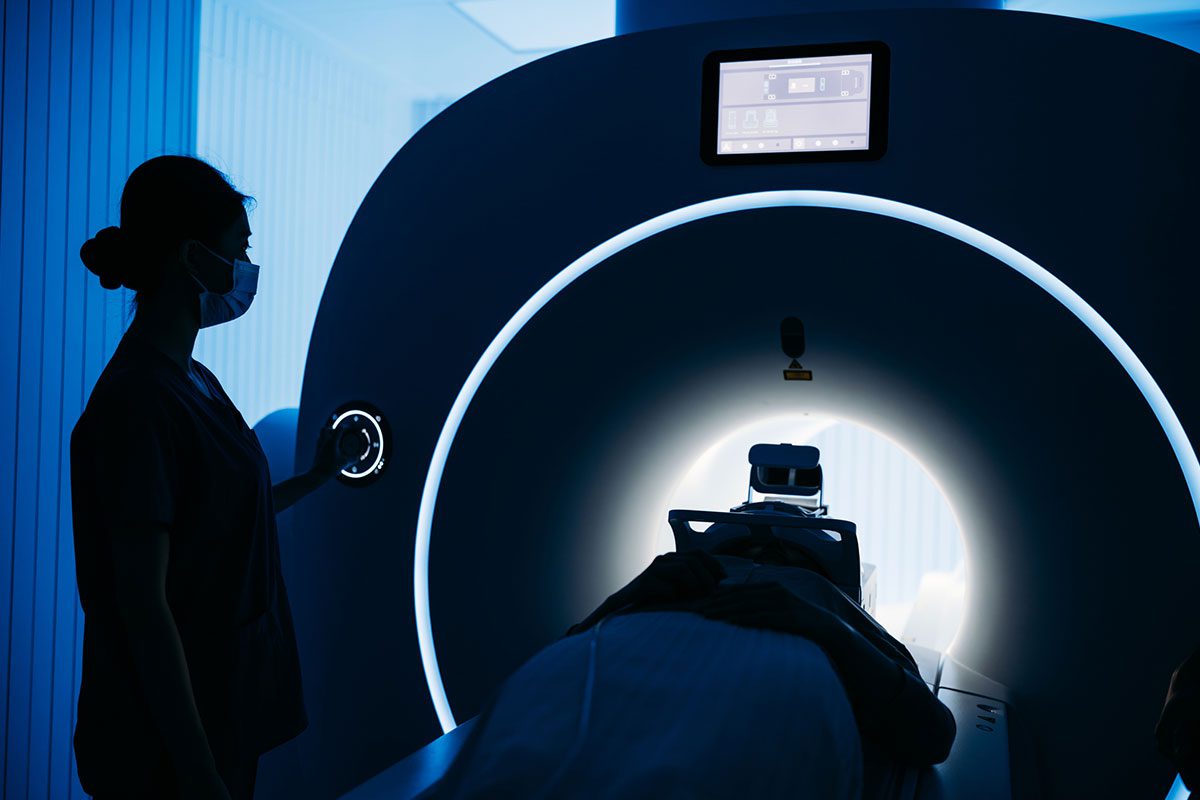
During acute hospitalization, the patient subsequently showed normal thyroid function. MRI of the brain with and without contrast showed no acute pathology but did reveal some chronic small vessel disease and age-appropriate volume loss. The patient then underwent a lumbar puncture, which showed lymphocytic pleocytosis, elevated proteins, and low glucose, with a negative meningitis panel. Additionally, West Nile, Venereal Disease Research Laboratory, HCU, Y0, and RI antibodies were also negative. The diagnosis of aseptic immune checkpoint inhibitor encephalitis was made, and the patient was transferred to acute inpatient rehabilitation for continued care.
While at acute rehabilitation, the patient faced significant somnolence and issues with attention and emotional lability when awake. On initial presentation, the patient was sleeping roughly 20 hours daily and had limited participation in therapy when awake. The patient’s initial Cognitive Log (Cog-Log) score was 11/30. Due to the patient’s history of atrial fibrillation, careful consideration was made regarding neurostimulants. Eventually, the decision was made to initiate 200 mg of caffeine daily. The same day as initiation of caffeine, a repeat Cog-Log evaluation showed a score of 23/30. Following the patient tolerating caffeine well, and a marked improvement in cognition and awakeness, the decision was made to continue the medication daily. With the drastic change in mentation, the patient was able to participate significantly more in his therapies and managed to meet all expected rehabilitation goals. The patient was discharged home 2 weeks later.
Discussion
With the increased usage of ICIs, the potential for aseptic encephalitis poses a unique challenge to patient rehabilitation. In lieu of prompt diagnosis and treatment, patients are often placed in subacute or acute inpatient rehabilitation programs with poor involvement. We present the case of a rare pathology treated in a unique fashion allowing the patient improved outcomes compared to conventional treatments. With the addition of a fairly benign medication, the patient had a significant improvement in therapy participation and eventually progressed to be safely discharged home.
Article Information
Published Online: March 5, 2026. https://doi.org/10.4088/PCC.25cr04080
© 2026 Physicians Postgraduate Press, Inc.
Prim Care Companion CNS Disord 2026;28(2):25cr04080
Submitted: September 11, 2025; accepted December 1, 2025.
To Cite: Goodwin BJ, Yacubovich D, Alhassan FB, et al. Caffeine for the treatment of aseptic immune checkpoint inhibitor–induced encephalitis. Prim Care Companion CNS Disord 2026;28(2):25cr04080.
Author Affiliations: Department of Physical Medicine and Rehabilitation, Johns Hopkins University, Baltimore, Maryland (Goodwin, Fagbemigun, Engle); Futures Forward Research Institute, Toms River, New Jersey (Goodwin); Rowan-Virtua School of Osteopathic Medicine, Stratford, New Jersey (Yacubovich); Thomas Jefferson University, Sidney Kimmel Medical School, Philadelphia, Pennsylvania (Alhassan); Rocky Vista University College of Osteopathic Medicine, Parker, Colorado (Martino); St. George’s University School of Medicine, True Blue, Grenada (Alahdadi).
Corresponding Author: Brandon J. Goodwin, DO, Department of Physical Medicine and Rehabilitation, Johns Hopkins University, 600 North Wolfe St, Phipps 174, Baltimore, MD 21287 ([email protected]).
Financial Disclosure: None.
Funding/Support: None.
Patient Consent: Consent was received from the patient to publish the case report, and information has been de-identified to protect patient anonymity.
ORCID: Brandon Goodwin: https://orcid.org/0000-0002-3965-4664;
Dan Yacubovich: https://orcid.org/0009-0005-7876-1947;
Fatimah Alhassan: https://orcid.org/0009-0008-3722-9251;
Rachael Martino: https://orcid.org/0009-0009-9416-4500;
Jessica Pam Engle: https://orcid.org/0000-0002-4711-7324
References (8)

- Di X, Shi X, Gai F, et al. Immune checkpoint inhibitor-associated autoimmune encephalitis and other neurological immune-mediated adverse events: a pharmacovigilance study using the FAERS and JADER. Front Oncol. 2025;15:1621045. CrossRef
- Chisaki Y, Hata H, Matsumura C, et al. The occurrence of encephalitis due to immune checkpoint inhibitors: a pharmacovigilance study. Ther Innov Regul Sci. 2022;56(2):323–332. CrossRef
- Thouvenin L, Olivier T, Banna G, et al. Immune checkpoint inhibitor-induced aseptic meningitis and encephalitis: a case-series and narrative review. Ther Adv Drug Saf. 2021;12:20420986211004745. CrossRef
- Nersesjan V, McWilliam O, Krarup LH, et al. Autoimmune encephalitis related to Cancer treatment with immune checkpoint inhibitors: a systematic review. Neurology. 2021;97(2):e191–e202.
- Velasco R, Villagrán M, Jové M, et al. Encephalitis induced by immune checkpoint inhibitors: a systematic review. JAMA Neurol. 2021;78(7):864–873.
- Richard K, Weslow J, Porcella SL, et al. A case report of steroid responsive nivolumab-induced encephalitis. Cancer Control. 2017;24(5):1073274817729069.
- Bir Yucel K, Sutcuoglu O, Yazıcı O, et al. Nivolumab-ipilimumab combination therapy-induced seronegative encephalitis; rapid response to steroid plus intravenous immunoglobulin (IVIG) treatment. J Oncol Pharm Pract. 2023;29(3):760–763. CrossRef
- Stuby J, Herren T, Schwegler Naumburger G, et al. Immune checkpoint inhibitor therapy-associated encephalitis: a case series and review of the literature. Swiss Med Wkly. 2020;150:w20377. PubMed CrossRef
Enjoy this premium PDF as part of your membership benefits!