

ABSTRACT
Digital therapeutics for major depressive disorder (MDD) are evidence-based clinical interventions that can help address barriers in access to effective specialty/secondary care, patient preference for nonpharmacologic options, and continuity of care between visits. Despite growing evidence of efficacy, clinical adoption lags and current health care systems do not provide guidance for clinicians on their evaluation or implementation. In May 2026, a multidisciplinary expert consensus panel convened virtually to discuss the role of digital therapeutics in the management of MDD across primary care, specialty psychiatry, and community mental health practice in the United States and Europe. The panel developed four consensus statements regarding the evaluation, selection, and implementation of digital therapeutics for MDD. Digital therapeutics were identified as a distinct clinical category that should be evaluated using principles similar to other evidence-based MDD treatments, with efficacy as the primary selection criterion. Digital therapeutics may be incorporated across multiple stages of stepped-care management, including bridge-to-care and augmentation treatment. The panel identified clinician unfamiliarity, implementation challenges, and uncertainty regarding patient engagement as key adoption barriers. The consensus recommendations are intended to help clinicians select evidence-based digital therapeutics, position them appropriately within stepped-care management of MDD, and address the barriers preventing translation of current evidence into routine clinical practice.
J Clin Psychiatry 2026;87(4):hdgtxachi2507
From the Editors

Are you a healthcare provider?
Add your NPI to personalize your JCP experience.
This Academic Highlights section of The Journal of Clinical Psychiatry presents the highlights of the virtual consensus panel meeting “Defining the Clinical Role of Digital Therapeutics in Major Depressive Disorder,” which was held May 6, 2026.
The meeting was chaired by Sagar V. Parikh, MD, FRCPC, John F. Greden Professor of Depression and Clinical Neuroscience; Professor of Psychiatry; University of Michigan Medical School, Ann Arbor, Michigan (correspondence: [email protected]; 4250 Plymouth Road, Ann Arbor, MI 48109, USA). The faculty were Anthony J. Cleare, MBBS, FRCPsych, PhD, Professor of Psychopharmacology and Affective Disorders, King’s College London, London, United Kingdom; Brian M. Iacoviello, PhD, Assistant Professor, Department of Psychiatry, Icahn School of Medicine at Mount Sinai, New York, New York; Saundra Jain, MA, PsyD, LPC, Adjunct Clinical Affiliate, School of Nursing, The University of Texas at Austin, Austin, Texas; Co-founder, WILD 5 Wellness; Anne Karow, MD, Professor of Psychiatry, MiNDNET E-HEALTH AG, Hamburg, Germany; and Aderonke B. Pederson, MD, Assistant Professor of Psychiatry, Massachusetts General Hospital; Harvard Medical School, Boston, Massachusetts.
Financial disclosures appear at the end of the article.
This evidence-based, peer-reviewed Academic Highlights article was prepared by Healthcare Global Village, Inc. The panel meeting was sponsored by Otsuka Pharmaceutical Development and Commercialization, Inc. Content development and consensus statements reflect the independent clinical perspectives of the participating faculty and do not necessarily reflect the views of Healthcare Global Village, Inc., the publisher, or the commercial supporter. Editorial support was provided by Jessica Baker, PhD, and Ryan R. Bailey, PhD, OTR/L, of Healthcare Global Village, Inc, and financial support for preparation and dissemination of this Academic Highlights was provided by Otsuka Pharmaceutical Development and Commercialization, Inc. This article is distributed by Otsuka Pharmaceutical Development and Commercialization, Inc for educational purposes only.
Use of AI-Assisted Technologies in the Writing Process: During the preparation of this manuscript, Claude (Anthropic) was used to improve readability and language. The authors reviewed, edited, and verified all content and take full responsibility for the final manuscript.
Published Online: November 2, 2026.
To Cite: Parikh SV, Cleare AJ, Iacoviello BM, et al. Establishing the clinical role of digital therapeutics in major depressive disorder treatment: a consensus panel perspective. J Clin Psychiatry. 2026;87(4):hdgtxachi2507.
To Share: https://doi.org/10.4088/JCP.hdgtxachi2507
© 2026 Physicians Postgraduate Press, Inc.
Major depressive disorder (MDD) affects approximately 8% of the United States adult population annually1 and 6% worldwide,2 with the number of incident cases increasing by 49.9% from 1990 to 2017.3 MDD imposes significant individual and health care burdens,4,5 is a leading cause of mental-health-related global disability,2 and has significant negative impacts on interpersonal functioning, quality of life, cognitive status, employment, and work productivity.6–10 In 2019, the annual economic burden of MDD in the United States was estimated at approximately $334 billion.4
Despite the detrimental consequences of MDD,11 only about 50% of people with the condition receive treatment.12,13 Barriers to MDD care are both structural and psychosocial. For example, structural factors include mental health workforce shortages, which limit access to specialty psychiatric care (referred to as secondary care in some health systems) when needed, increasing reliance on primary care to manage some of the more severe and/or complex presentations that may be better treated in specialty care.14 Psychosocial barriers include stigma associated with seeking care for a psychiatric condition, which may influence whether a patient seeks treatment and where they may choose to receive care.15 Notably, approximately two-thirds of MDD treatment is delivered by primary care clinicians, in part due to the ease of accessibility, preexisting relationships between the clinician and patient, and patient preference.16,17 The most commonly delivered treatment for MDD by primary care clinicians is pharmacotherapy, whereas evidence-based recommendations also support psychotherapy as a first-line intervention.18
Telemedicine use for mental health treatment has increased substantially since 2021, with nearly 50% of mental health visits now conducted virtually compared with less than 1% prior to 2021.19–21 Digital therapeutics, which are distinct from telehealth, are software intended to treat or alleviate a disease or condition by generating and delivering a medical intervention. Unlike telehealth, which serves as a platform for clinicians to deliver existing treatments remotely, digital therapeutics deliver the therapeutic intervention through the software itself and can be self-guided, representing an additional approach to expanding access to evidence-based treatment.22 Digital therapeutics for MDD often include aspects of cognitive behavioral therapy (CBT), cognitive-emotional training, and mindfulness meditation,23,24 yet integration into routine care is limited. In response to the growing availability of digital tools, the Canadian Network for Mood and Anxiety Treatments25 has issued recommendations regarding the use of digital mental health interventions. Specifically, the guidelines recognize digital interventions as evidence-based treatment options that may (1) complement traditional treatment approaches, (2) improve access to care for some patients, and (3) support treatment within primary care. The guidelines also distinguished between guided and unguided interventions, recognizing that clinician-supported interventions generally have a stronger evidence base.25 However, the guidelines did not address how to improve the adoption of digital therapeutics into routine care. An important challenge is not only expanding access to evidence-based treatment for patients but also determining how digital therapeutics can practically be integrated into routine MDD treatment.
To address these questions, an expert consensus panel convened to discuss persistent gaps in clinical guidance on the role of digital therapeutics in MDD management, including implementation barriers, evidence standards, real-world adoption, and which patients may benefit most from these interventions. Panelists also discussed real-world adoption challenges and system-level infrastructure factors influencing large-scale implementation, while recognizing that digital technologies are increasingly shaping health care delivery. They also explored how digital therapeutics function as adjuncts to clinician-supported care. This article focuses on integrating digital therapeutics across primary, specialty/secondary, and community-based mental health settings and is intended for the full clinical spectrum of mental health clinicians.
METHODS
In May 2026, a multidisciplinary expert consensus panel met virtually to develop practical guidance on the evaluation, selection, and integration of digital therapeutics into routine MDD care for individual patients across clinical settings in the United States and Europe. The moderated panel comprised six expert clinicians representing academic psychiatry, clinical psychology, and applied behavioral health across the United States, United Kingdom, and Germany. Panelists were selected based on their clinical and research expertise in digital therapeutics for MDD treatment. The panel convened over four hours and followed a semistructured discussion guide developed iteratively with the panel chair, which addressed four clinical-decision topics in turn (ie, definition and rationale, evidence and selection, stepped-care positioning, and adoption realities). The panel chair moderated the discussion, summarized key points, and solicited panel alignment at the conclusion of major discussion topics. Panel deliberations were transcribed and analyzed using a qualitative descriptive approach26 with thematic organization to identify recurrent themes throughout the discussion and points of explicit panel agreement. Four consensus statements emerged. These statements are presented in the sections below alongside the supporting evidence and clinical implications. All work reported herein reflects the independent clinical perspectives of the participating faculty.
DEFINING THE DIGITAL THERAPEUTIC LANDSCAPE
Consensus Statement 1
Digital therapeutics constitute a definable clinical category, distinguished from consumer wellness applications by intended medical use, evidence requirements, regulatory pathway, and quality oversight; their integration into MDD care is justified by demonstrable advantages in access, patient preference, and continuity of care.
What Are Digital Therapeutics?
The current digital mental health landscape includes thousands of smartphone apps claiming to support functions ranging from general wellness to disease prevention and management. This rapidly expanding landscape may create confusion for both patients and clinicians regarding which digital tools constitute evidence-based clinical interventions versus general wellness applications. Definitions of digital therapeutics also vary across organizations and regulatory regions, further complicating adoption and integration into routine clinical care. Panelists therefore emphasized the importance of precise terminology and shared evaluative criteria when discussing digital therapeutics and their integration into MDD care. The panel’s first step was to establish a common framework clinicians could use to evaluate digital tools in practice.
The International Organization for Standardization (ISO)27 defines digital therapeutics as “health software intended to treat or alleviate a disease, disorder, condition, or injury by generating and delivering a medical intervention that has a demonstrable positive therapeutic impact on a patient’s health.” Consistent with this definition, products designed to diagnose, treat, mitigate, prevent, or cure a disease or illness are subject to US Food and Drug Administration (FDA) medical device regulation in the United States, distinguishing digital therapeutics from applications intended solely for general wellness.28
Panelists identified four major dimensions relevant to evaluating digital health applications: intended medical use; evidence and outcomes; regulatory status; and quality, safety, and data protections. Intended medical use refers to whether a tool was developed for a predefined medical purpose, such as to diagnose, treat, mitigate, prevent, or cure a disease or illness. Evidence and outcomes refer to the rigor and prespecification of clinical evidence supporting the intervention. Regulatory status reflects whether a product has undergone formal region-specific regulatory review and authorization. Quality, safety, and data protections refer to the degree of formal oversight surrounding product quality, usability, cybersecurity, adverse-event monitoring, and data-handling practices, including postmarketing surveillance and product user measurements. Together, these dimensions capture the medical purpose, intended population, scientific evidence, and regulatory oversight surrounding digital therapeutic tools.
A Framework for Categorizing Digital Therapeutics
Panelists proposed two main categories of digital mental health tools: general wellness applications and digital therapeutics. General wellness applications are consumer-directed tools primarily supporting lifestyle or self-management goals without making disease-treatment claims. In contrast, as stated, digital therapeutics represent evidence-based interventions intended to treat or alleviate a disease or illness, disorder, condition, or injury by generating and delivering a medical intervention. Within the digital therapeutics category, panelists defined a subcategory of digital therapeutics, prescription digital therapeutics, which are digital therapeutics that operate within formal prescription-based clinical frameworks. The distinctions between the two categories across evaluation dimensions are summarized in Table 1.
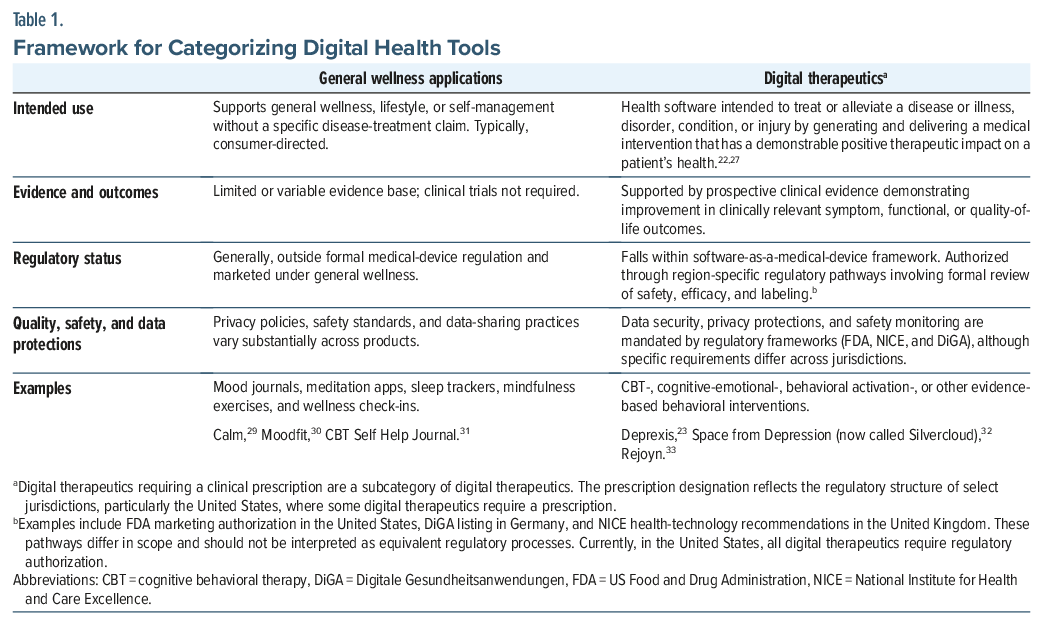
The panel agreed that general wellness applications and digital therapeutics are relatively well-defined categories, whereas prescription digital therapeutics represent a subset of digital therapeutics tied to specific regulatory pathways rather than a distinct category. Prescription status may vary based on regulatory requirements, even among related products targeting similar conditions. For example, EndeavorRx is a prescription digital therapeutic for pediatric attention-deficit/hyperactivity disorder (ADHD)34 for use in children that received FDA authorization in the United States, whereas EndeavorOTC, intended for adults with ADHD,35 is available without a prescription. Similarly, Flow Neuroscience’s transcranial direct current stimulation (tDCS) platform for MDD treatment,36 which is a hybrid of hardware and software, is FDA-cleared for at-home use and requires a prescription in the United States, while the same intervention may be used without a prescription in the United Kingdom. These examples illustrate that “prescription” reflects regional regulatory architecture rather than a universally distinct therapeutic category. Accordingly, this article uses the term digital therapeutics as the primary working term throughout. This terminology aligns with broader international efforts, including ISO27 and Digital Therapeutics Alliance (now part of the American Telemedicine Association [ATA] Action) frameworks,22 to distinguish digital therapeutics from general wellness applications on the basis of medical purpose, scientific evidence, and regulatory oversight.
Benefits of Integrating Digital Therapeutics into Routine Clinical Care
The sections that follow review the evidence and clinical rationale supporting the integration of digital therapeutics into routine MDD care. Three recurring themes emerged throughout the panel discussion: improving access to evidence-based mental health care, supporting patient preference for nonpharmacologic treatment options, and extending continuity of care.
Digital therapeutics could expand access to evidence-based care. Limited access to evidence-based treatment emerged as the most consistently identified rationale for integrating digital therapeutics into routine MDD care, with mental health workforce shortages emerging as a major barrier to evidence-based MDD treatment when seeking specialty care.37 As of 2021, approximately one-third of the United States population lived in areas without enough mental health professionals to meet community needs.38 Among nonmetropolitan counties specifically, 65% had no practicing psychiatrists.38 Telehealth has helped reduce some geographic barriers to accessing mental health services; however, substantial workforce shortages persist even when virtual care is available as an access option.38,39 Geographic limitations, long wait times, insurance restrictions, and high out-of-pocket costs may further reduce access to specialty mental health services.14,40–43
Additionally, not all patients successfully connect with specialty clinicians when referred, and early discontinuation of psychotherapy is common.44 For many patients, primary care may be a preferred and acceptable setting for MDD treatment because of established clinician relationships, convenience, and integration with the care of other conditions. However, panelists also discussed that primary care visit structures are often not designed to support the intensity of care required for complex and/or severe MDD,45,46 including the provision of evidence-based psychotherapy and specialty psychiatric services. In these situations, digital therapeutics may help extend care by reinforcing evidence-based therapeutic skills and supplying access to nonpharmacologic treatment approaches between clinical visits, acting as a bridge until specialty care can be accessed.
Digital therapeutics may increase availability of nonpharmacologic treatments. Patient preference for nonpharmacologic treatment also emerged as a major rationale supporting the integration of digital therapeutics into routine MDD care. In accordance with evidence-based practice principles, treatment decisions should incorporate patient preferences alongside clinical expertise and available evidence.47,48 Pharmacologic and psychotherapeutic treatments demonstrate broadly comparable outcomes for many patients with MDD,49–51 making patient preference particularly relevant when selecting among treatment options.
A meta-analysis examining treatment preferences found that approximately 75% of patients preferred psychosocial interventions over pharmacologic treatment when given a choice, with stronger preferences observed among women and younger patients.52 Similarly, a study of primary care patients found that approximately 50% preferred nonpharmacologic treatment,53 yet only about 20% of patients receive nonpharmacologic treatment for depression in primary care.54 Not only do patients overwhelmingly prefer nonpharmacologic treatment, but clinical practice guidelines also generally recommend evidence-based psychotherapies or pharmacologic care as first-line treatment for MDD.18,54,55 Panelists discussed that mismatch between patient treatment preferences and delivered care may influence engagement and adherence, particularly in settings where access to evidence-based psychotherapy remains limited. Patients who receive their preferred treatment modality demonstrate stronger therapeutic alliance, higher engagement, lower dropout rates, and improved clinical outcomes compared with patients assigned to nonpreferred treatments.56,57
Digital therapeutics can improve continuity of care. Continuity of care between clinic visits emerged as another rationale throughout the panel discussion. Digital therapeutics may help extend support between visits by reinforcing evidence-based skills, supporting self-management, and facilitating longitudinal symptom monitoring outside of scheduled clinical encounters. Panelists repeatedly emphasized that digital therapeutics should function as a complement to clinician-delivered services rather than a replacement for care.
Continuity of care is constrained by clinical encounter time and frequency across primary care and specialty settings. Primary care visit lengths are short and vary by region. In the United States, clinicians spend an average of 18 minutes per patient visit,58 and in Germany and the United Kingdom, patient visits average 8 to 9 minutes.59,60 Between 2008 and 2015, primary care visits in the United States decreased by approximately 20%, accompanied by a 6% decline in scheduled follow-up visits, while mental health visits within primary care increased by approximately 13%.61 Similarly, clinicians in the United Kingdom report that up to 41% of their daily patient visits include a psychiatric or mental health component.62 At the same time, MDD is typically episodic and recurrent and may require ongoing symptom monitoring, reassessment, reinforcement of therapeutic skills, and treatment adjustment over time,45,46,63 which may create challenges for care models based primarily on brief, episodic encounters, in particular for more severe symptom presentations that require sustained continuity of care.
The benefits of digital therapeutics extend across the full spectrum of clinicians involved in MDD care, where the tools themselves may be integrated differently but draw upon similar underlying rationales related to access, patient preference, and continuity of care. For example, these tools may support primary care clinicians managing less severe MDD, provide continuity while patients with moderate-to-severe MDD await specialty referral access, reinforce therapeutic skills between psychotherapy sessions, and extend monitoring and engagement between psychiatric follow-up visits. Finally, the symptom-tracking functionality embedded within some digital therapeutics can also provide clinicians in all settings with structured longitudinal data, facilitating measurement-based care, an approach associated with improved patient outcomes,64 while complementing traditional clinic-based assessment, which often captures only a single cross-sectional snapshot of symptoms.
Equity in Digital Therapeutics
Panelists explicitly acknowledged a competing consideration of the expanding digital landscape: Digital therapeutics can close access gaps for patients who would otherwise have no treatment, but it could also legitimize systemic underinvestment in the mental health workforce for vulnerable populations. As one panelist stated, digital therapeutics could become a “Band-Aid for larger issues” that require more investment for change.
Access to timely health care services is associated with better outcomes for most illnesses, including MDD. This includes screening, diagnosis, treatment, and support. Although a global mental health workforce shortage exists,14 substantial disparities in health care access remain. For example, income, geographic, racial, and ethnic disparities exist in access to care.38,65 Digital therapeutics should not be used as the primary solution to chronic clinician shortages or to improve access for underserved communities. Further, there are also potential equity barriers to the use of digital therapeutics. Their use requires access to a mobile device or computer, stable internet, and digital literacy. Barriers may also include cost/lack of insurance reimbursement for use and accessibility accommodations. Panelists concluded that digital therapeutics have their own limitations, and systemic and infrastructure barriers to care must still be addressed.
CLINICAL EVALUATION FRAMEWORK FOR DIGITAL THERAPEUTICS
Consensus Statement 2
Clinical selection of digital therapeutics rests on demonstrated efficacy in symptomatic and functional outcomes, with mechanism of action treated as foundational scientific context; the supporting evidence standards for an emerging digital therapeutic in MDD may be a single adequately powered randomized controlled trial reinforced by structured real-world evidence.
It has been estimated that only about 4% of mobile mental health apps available are evidence-based.66 For digital therapeutics to be integrated and adopted into routine clinical care, there must be agreed-upon standards for evaluating the efficacy and safety of applications so that clinicians have confidence using such tools in practice with patients. The sections that follow review the panelists’ discussion on how to evaluate digital therapeutic options available and the evidence required for a tool to be considered effective. Throughout, the panel acknowledged that digital therapeutics, and technology in general, are fast-moving fields and that this should be considered when evaluating the evidence base for digital tools. As the field matures, evidence expectations for digital therapeutics will likely evolve.
Selection Criteria for Digital Therapeutics
The evaluation and selection of digital therapeutics should parallel the criteria used to evaluate pharmacologic treatments. Efficacy must be supported by randomized controlled trials designed to treat a specific medical condition (ie, MDD) and peer-reviewed research. Trials need to demonstrate statistically and clinically significant effects in symptomatic, functional, and quality-of-life outcomes.25,67,68 Outcomes should be measured by illness-specific, scientifically validated measures of depression symptoms (eg, Patient Health Questionnaire-9,69 Montgomery-Asberg Depression Rating Scale70) and functional impairment (eg, Sheehan Disability Scale,71 Medical Outcomes Study 36-Item Short Form Health Survey72). Panelists agreed that while the underlying mechanism of action of a product is important from a scientific context, it likely will not be the primary selection criterion used to evaluate a digital therapeutic, in part because many therapeutics combine multiple mechanisms,73 making it difficult to categorize and evaluate based solely on mechanism.
This practice is not unique to digital therapeutics. Historically, many psychiatric treatments were adopted into clinical practice based on efficacy before the mechanism of action was fully understood. Digital therapeutics are often developed around hypothesized mechanisms, but ongoing research will continue to refine the understanding of how specific intervention components produce clinical benefit (see Appendix 1). As a result, uncertainty regarding mechanism should not outweigh evidence of clinical effectiveness when evaluating digital therapeutics for MDD. The proposed mechanism of action may still influence clinical decision-making. For example, mechanism of action may be a strong consideration factor when matching patients with treatments specific to their symptom presentation, or when efficacy is comparable across products. The mechanism of a digital therapeutic should also be part of the clinical discussion with patients. Explaining the mechanism may help patients understand why their engagement could improve symptoms, while also strengthening the therapeutic alliance and supporting shared decision-making.
Panelists identified four broad classes of mechanisms of action available for currently available digital therapeutics products for MDD. First, cognitive behavioral therapy (CBT) is the most common framework given the long-standing evidence supporting the efficacy of CBT for MDD both in person74,75 and digitally.76,77 Second, behavioral activation targets avoidance and mood-enhancing activities78,79 and is often used to complement CBT frameworks.73 Third, neuroplasticity-focused interventions, defined as structured, evidence-based therapies designed to stimulate the brain’s ability to reorganize itself by forming new neural connections,80 differ conceptually from CBT-based digital therapeutics in that modulation of cognitive-control and emotion-processing circuitry represents the intended therapeutic target.24,81 Although CBT-based interventions may also produce neuroplastic effects,82 these changes are generally considered secondary to the behavioral and cognitive therapeutic framework rather than the primary mechanism of action.83 Fourth, hybrid approaches to digital therapeutics incorporate multiple therapeutic mechanisms within a single intervention. Such approaches may combine CBT, behavioral activation, neuroplasticity-based exercises, mindfulness meditation, or clinician-guided support to address depression through complementary pathways.23,33,84 Panelists discussed that the distinction between mechanisms may be particularly relevant when considering digital therapeutics targeting specific depressive symptom presentations. Examples include cognitive restructuring for cognitive biases and symptoms; neuroplasticity-focused interventions to enhance cognitive-emotional control for symptoms such as rumination, dwelling, and worrying; or behavioral activation for primary lethargy and anhedonia.
Digital Therapeutics Is a Fast-Moving Field
Conventional treatment-development pathways for new medications (ie, two Phase 3 clinical trials) were designed to ensure safety and efficacy, but at the cost of many years to develop. Indeed, the implementation lag between treatment development and routine clinical use is substantial, with new interventions frequently taking an average of 17 years to reach patients.85 In contrast, digital therapeutic products may undergo meaningful iteration within months, such that by the completion of a traditional efficacy trial, the intervention studied may already have been modified, updated, or superseded. Panelists therefore discussed that conventional pharmaceutical evidence-development models may not fully align with the realities of digital therapeutics. Accordingly, the panel recognized that modified evidence standards may be justified for digital therapeutics given the fast-paced nature of the field and endorsed a tiered evidence framework. Within the proposed framework, a single high-quality randomized controlled trial may support initial clinical adoption, with postmarket real-world evidence accumulating through early use to strengthen clinician confidence, inform patient acceptability, and support broader implementation.
The single-trial standard is consistent with current regulatory practice for both medications and devices. For medications, in the US the FDA long interpreted its requirement for substantial evidence of effectiveness as two positive trials. However, the statute has permitted 1 adequate and well-controlled trial plus confirmatory evidence since 1997,86 and FDA’s 2026 revised draft guidance describes how sponsors can rely on this approach.87 Digital therapeutics for MDD are regulated as medical devices, to which the 2-trial convention has never applied. Rejoyn, for example, was cleared in the US through the FDA’s 510(k) premarket notification as substantially equivalent to an existing computerized behavioral therapy intervention; this classification requires that clinical data validate the therapeutic model and does not specify the number of trials.88 In the European Union, the Medical Device Regulation requires clinical evidence “of a sufficient amount and quality to allow a qualified assessment” of a device’s safety and clinical benefit, without specifying a number of trials,89 and Germany’s Digitale Gesundheitsanwendungen (DiGA) program permits provisional, reimbursed listing while comparative studies demonstrating positive care effects are completed.90 Consensus Statement 2 therefore does not propose a lower regulatory bar. Rather, it describes the evidence clinicians should consider when selecting among authorized products.
The panel’s proposed single adequately powered randomized controlled trial reinforced by structured real-world evidence is supported by broader device-regulatory precedent, in which software medical-device pathways already incorporate more flexible evidentiary structures than traditional pharmaceutical programs, including the use of postmarket data collection, real-world evidence, and ongoing monitoring to supplement premarket clinical evidence. For example, some digital therapeutics are developed through mechanisms such as the US Small Business Innovation Research (SBIR) and Small Business Technology Transfer (STTR) programs. These mechanisms often generate smaller early-stage datasets than traditional pharmaceutical programs, making real-world evidence an important addition to early clinical trial data. The panel emphasized that their position reflects adaptation to a rapidly evolving field rather than abandonment of rigorous evidence standards.91,92
CLINICAL POSITIONING OF DIGITAL THERAPEUTICS WITHIN EXISTING TREATMENT MODELS
Consensus Statement 3
Digital therapeutics are best positioned within a stepped-care framework as augmentation alongside pharmacotherapy and psychotherapy, not as replacement, with placement scaled to severity through shared decision-making rather than reflexive severity-based exclusion.
The sections that follow review the panelists’ discussion on how digital therapeutics may fit into existing treatment models for mental health broadly as well as specific considerations for MDD. The benefits of including digital therapeutics into existing models are also reviewed.
Digital Therapeutics in the Stepped-Care Model
Mental health treatment guidelines recommend patients begin care with the least resource-intensive treatment.93–95 If the patient does not improve, they then “step up” to the next level of care. Panelists agreed that digital therapeutics can be integrated within the stepped-care framework as part of treatment plans that include traditional care such as pharmacology, psychotherapy, or ongoing clinical management. Consistent with stepped-care principles, digital therapeutics may be considered as part of lower-intensity treatment approaches. However, placement within the stepped-care model should be informed by the evidence base and intended use of the individual product, as some digital therapeutics are authorized for use only as an adjunct to pharmacologic treatment or clinician-managed care.
For mild MDD presentations, panelists agreed that digital therapeutics may be particularly well suited for use within primary care settings, alongside lifestyle and behavioral interventions (eg, exercise, sleep hygiene) and other low-intensity evidence-based interventions,25 with escalation to more intensive interventions when response is inadequate. In contrast, for moderate-to-severe MDD, digital therapeutics are most appropriately used in combination with pharmacotherapy and/or psychotherapy. Finally, the panel discussed acute safety risks within MDD and agreed that patients presenting with imminent safety concerns require a higher level of treatment intensity and clinical oversight. In these situations, digital therapeutics may serve as supportive components of care but should not replace higher-acuity interventions. These positions are generally consistent with contemporary treatment guidelines, which identify digital health interventions as potential treatment options for mild depression and adjunctive interventions for more severe presentations.25 Figure 1 shows a visual stepped-care decision model for the use of digital therapeutics in MDD treatment.
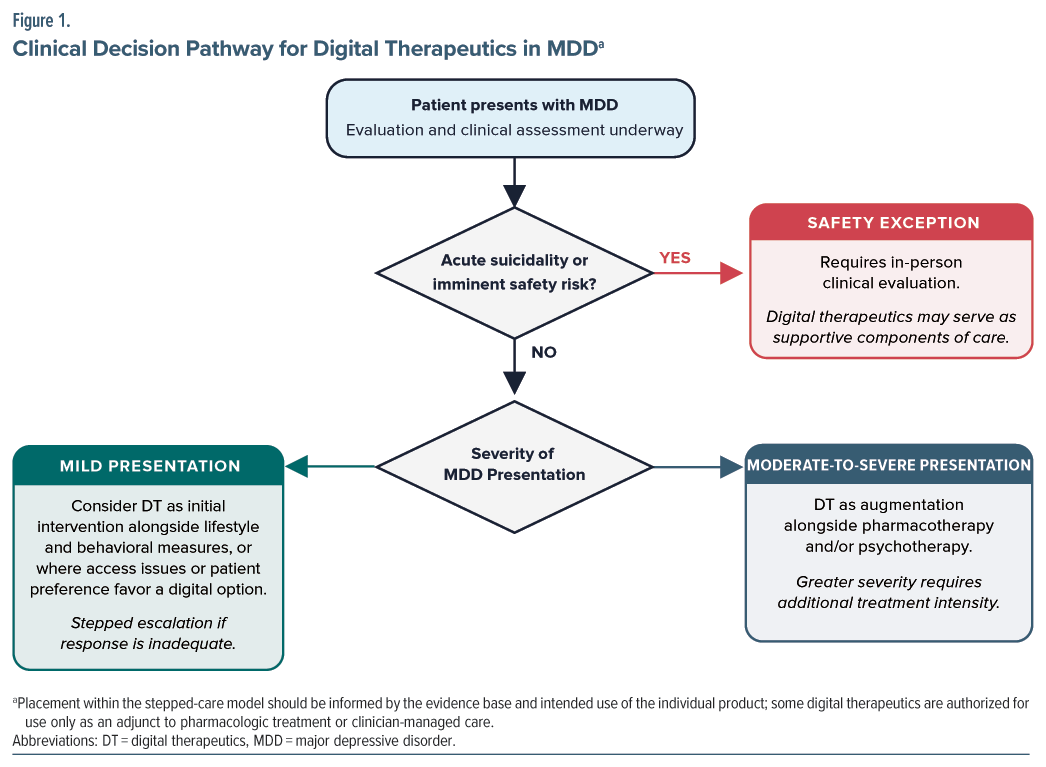
To date, a majority of digital therapeutic research has focused on mild-to-moderate depression, though there is some initial evidence that the combination of traditional treatment approaches with digital therapeutics provides incremental benefit in symptom reduction for moderate-to-severe depression,96 including suicidal ideation when combined with high-acuity care.97 As such, severity alone should not determine whether digital therapeutics are recommended for a patient, especially given that some evidence suggests patients with more severe symptoms are more interested in digital mental health interventions.98 When considering digital therapeutics, clinicians should use the current evidence on patient-level factors associated with engagement and adherence across severity levels such as treatment preference, digital literacy, social support, insurance coverage, gender (women more likely to engage), and treatment adherence history.99–102 Panelists agreed that until the evidence base becomes more definitive on the added benefit of digital therapeutics in the treatment of severe and treatment-resistant MDD, shared decision-making and patient preference should drive selection, whereas severity will define where the patient falls within the stepped-care model and when or how digital therapeutics could be integrated with treatment. As noted in Appendix 1, panelists agreed that future research should examine digital therapeutic efficacy across patient subgroups, including the full spectrum of MDD severity.
Safety, Clinical Monitoring, and Division of Responsibility
Panelists raised four critical safety questions regarding the use of digital therapeutics for MDD. First, when a patient reports suicidal thoughts through a digital therapeutic that collects such information, how is that identified and acted upon, and who is responsible for responding to risk when it emerges? Second, should the field define clinical guardrails for patients with severe symptoms or acute suicidality? Such guardrails would also support implementation by clarifying which patients are appropriate candidates. Third, to what extent can clinicians rely on regulatory authorization as evidence of clinical safety? Panelists observed that clinicians often infer safety from regulatory authorization and evaluate digital therapeutics primarily on efficacy. Regulatory review certifies quality management, cybersecurity, adverse-event monitoring, and postmarket surveillance, but it does not monitor the individual patient. Fourth, how should the risks of delaying treatment or leaving a patient without evidence-based care while awaiting access to specialty/secondary services be weighed against concerns about using a digital therapeutic? Untreated depression and prolonged waiting for care are themselves associated with worsening outcomes, so symptom reduction during that interval may itself be a safety benefit, weighed against the perception that a digital therapeutic requires less clinical oversight.
Clinical worsening and emergent suicidality are features of MDD rather than of any particular delivery modality, and current guidelines direct that suicide risk assessment be a routine part of clinical care, with enhanced surveillance in the month after an antidepressant is initiated or stopped.25 Digital therapeutics are designed to deliver an intervention, and while some include symptom tracking, what a product records and what it transmits to the treating clinician differ by product. The risk profile of a given product therefore depends on what information it collects and what it delivers to the clinician and/or patient in response to that information. Monitoring for clinical worsening and emergent suicidal ideation should therefore be planned explicitly at initiation, as it would be when initiating any other treatment for MDD,25 and recommending a digital therapeutic does not transfer responsibility for risk assessment away from the treating clinician.
Most of the safety evidence in digital mental health comes from trials of mental health applications that have not undergone regulatory review. In that literature, adverse-event reporting is inconsistent; only 32% of 171 randomized trials of mental health applications reported adverse events at all.103 Crisis resources are handled variably.104 Where deterioration and emergent suicidality have been measured, rates have not exceeded those in control conditions.105 In a trial among acutely suicidal inpatients, a digital intervention did not change time to a first suicide attempt after discharge, and it was delivered alongside risk assessment, safety planning, and crisis resources rather than in place of them.97 However, similar to pharmacologic treatments for depression, pivotal trials for digital therapeutics have generally excluded or triaged patients at significant risk for suicidal behavior.23,32,33 Nonetheless, safety outcomes have been reported across products. In a randomized trial of Deprexis in 1,013 adults, worsening of depressive symptoms occurred in 21.0% of intervention participants and 32.7% of those receiving care as usual106; in a pragmatic randomized trial of SilverCloud programs, reliable deterioration occurred in 5.2% of intervention participants and 12.2% of waitlist controls, with no severe adverse events reported.107 In the phase 3 trial supporting Rejoyn, reported clinically important suicidality for the digital therapeutic did not exceed that in the sham group (3.21% and 4.84%, respectively), and 1 participant in the digital therapeutic group met predefined criteria for worsening depressive symptoms.108 There are also patient-and provider-facing materials that may facilitate evaluation of safety-related information. For example, indication or intended-use statements place digital therapeutics alongside clinician-managed care.108–110 Further, a product’s labeling and instructions for use are a primary source of safety information, including the guidance it provides to a patient in crisis.
There is some current guidance available that provides a framework for incorporating these considerations into clinical practice. For example, the CANMAT 2023 update recommends evaluating potential risks of digital health interventions, including whether their use could delay assessment or treatment, whether inaccurate or harmful advice could be provided, how providers and support personnel are trained and supervised in guided interventions, whether difficulties completing an intervention could adversely affect the patient, and what procedure is in place if a user experiences a crisis.25 The same guidelines position digital interventions within clinician oversight, recommending adjunctive guided internet CBT digital health interventions as a first-line digital option, adjunctive self-directed digital health interventions as a second-line digital option when supported with guidance by clinicians, and reserving unsupported self-directed use for mild severity when no other clinical interventions are available.25
Bridge-to-Care and Secondary Benefits of Digital Therapeutics
Given the fragmented nature of health care systems and persistent delays in access to specialty mental health services, panelists identified digital therapeutics as a potential bridge-to-care strategy.111 Through the National Health Service in the United Kingdom, patients commonly access specialty mental health services through referrals coordinated by general practitioners, though some services allow for self-referral.112 In the United States, patients can typically self-refer for mental health care. However, in both systems, patients may face long waitlists for specialty/secondary and community-based services and are managed in primary care while they wait. These delays can leave patients without timely access to evidence-based mental health treatment.
Evidence-based digital therapeutics may provide structured support during these waiting periods. Patients can begin symptom monitoring, learn initial symptom-management techniques, and implement behavioral changes while continuing to receive ongoing care. For example, the FDA-cleared and UK Conformity Assessed (UKCA)–marked digital therapeutic Rejoyn, indicated in the US for patients already receiving antidepressant treatment and, in the United Kingdom, alongside usual care, provides a 6-week program combining cognitive-emotional training exercises with CBT-based therapeutic lessons plus a posttreatment extension phase with continued access to CBT-based lessons.33,108,110 Panelists emphasized that this bridge-to-care model is intended to supplement ongoing treatment rather than replace specialty mental health care. Consistent with the stepped-care framework, digital therapeutics should be integrated within broader treatment plans appropriate to the patient’s symptom severity.
Digital therapeutics can also complement broader treatment plans in clinically complex patients. MDD is commonly comorbid with other psychiatric illnesses, including anxiety disorders and posttraumatic stress disorder,113 which can result in treatment plans involving multiple clinicians, clinic visits, and medications. Evidence-based digital therapeutics are available across multiple mental health conditions114 and may provide therapeutic support without requiring the addition of additional clinic visits and medication burden that introduce the potential for drug-drug interactions.
Willingness to include digital therapeutics in treatment planning may also provide secondary benefits beyond direct symptom reduction. Panelists noted that discussing digital therapeutics as part of a broader treatment plan may support shared decision-making, reinforce patient preference, and encourage personalized care. Presenting digital therapeutics as one of several evidence-based treatments may improve patient engagement in the treatment plan and foster a more collaborative therapeutic relationship, regardless of whether the patient ultimately adopts the recommended tool.
Finally, as part of their discussion on the benefits of integrating digital therapeutics into clinical care, the panel addressed perspectives on the duration of use of digital therapeutics. Panelists questioned whether digital therapeutics should function primarily as acute interventions or long-term companion treatments. Current research evaluating digital therapeutics has focused largely on the acute phase of treatment, typically over a 6-to 12-week period with limited follow-up,115 so long-term effectiveness remains unclear. However, it was proposed that digital therapeutics could evolve into “durable companion apps” with continued use across maintenance and recurrence phases. Digital therapeutics could be used as relapse-prevention tools, booster sessions to sustain gains, and maintenance support following traditional treatment and for symptom monitoring. Similar maintenance strategies already exist in psychiatry. For example, booster sessions are commonly used following CBT116 to reinforce skills and support relapse prevention; patients treated with interpersonal therapy may receive maintenance/continuation sessions,117 and those who respond to transcranial magnetic stimulation may receive maintenance or booster treatments to help sustain treatment gains and reduce the risk of recurrence.118 The panel concluded that this is an important direction for future research, as described in Appendix 1.
SYSTEM INFRASTRUCTURE, CLINICIAN-LEVEL FACTORS, AND DATA PRIVACY
Consensus Statement 4
Adoption of digital therapeutics in routine practice is shaped less by evidence or regulatory approval than by clinician mindsets and system infrastructure, including reimbursement design, engagement assumptions, professional identity concerns, and expert endorsement.
There are many factors that impact whether an emerging treatment is integrated and adopted into routine clinical care. The panelists addressed potential barriers to widespread adoption of a new treatment into care. These include broader system-level infrastructure factors as well as clinician-level factors that can impact adoption. As part of the panel’s discussion of system-level factors, it was emphasized that regulatory and implementation frameworks vary considerably across the United States and Europe, including evidentiary requirements, requirements related to medical-device regulation, privacy protections, and reimbursement, which may differentially influence the clinical adoption of digital therapeutics across countries. However, a detailed comparison of international regulatory systems is outside the scope of this article.
System Infrastructures Impacting Adoption
Panelists agreed that regulatory authorization and evidentiary requirements alone do not guarantee the adoption of digital therapeutics into routine care. Instead, clinical adoption is also heavily influenced by reimbursement pathways and implementation infrastructures, which differ substantially across health care systems.119 Germany’s Digital Health Application program, DiGA,90 provides perhaps the clearest example of this relationship, which pairs inclusion in the DiGA directory with mandated reimbursement across public and private insurers. In other words, it is listing in the DiGA directory maintained by the German Federal Institute for Drugs and Medical Devices (BfArM), rather than CE marking alone, that triggers reimbursement. This allows both clinicians and patients to know what to expect if a digital therapeutic is recommended. At the opposite end of the spectrum, the United States has established regulatory pathways through FDA authorization, but reimbursement is entirely distinct, creating uncertainty for both patients and clinicians as to whether a regulated tool is reimbursed by insurers. To narrow this gap, recent initiatives have been launched, including Technology-Enabled Meaningful Patient Outcomes (TEMPO) and Advancing Chronic Care with Effective, Scalable Solutions (ACCESS),120 that together create a coordinated pathway linking regulatory authorization of digital health devices to Medicare reimbursement for qualifying chronic conditions, including depression and anxiety. The United Kingdom occupies an intermediate position in which National Institute for Health and Care Excellence guidance can support adoption and reimbursement decisions.
These differences highlight that regulatory approval and reimbursement are distinct concepts. Regulatory review establishes standards for safety, efficacy, and quality, whereas reimbursement determines whether patients can access treatment in routine care. As a result, real-world adoption is often influenced as much by reimbursement structures and implementation supports as by regulatory status itself.
Clinician-Level Factors Impacting Adoption
Clinician assumptions about patient engagement may represent one of the most important clinician-level barriers to digital therapeutic adoption. Panelists noted that “I won’t recommend something if I don’t think the patient will use it” is often an unspoken mental model that operates as a clinical decision rule for clinicians. This mental model ultimately influences clinician recommendation behavior before the patient is given the opportunity to engage with the tool. However, one panelist, drawing on experience across 14 studies with approximately 675 patients, noted anecdotally that clinician predictions about adherence were routinely incorrect: Patients thought likely to adhere dropped out, while those expected to disengage frequently adhered. When clinicians withhold recommendations based on their assumptions about engagement, patients who might benefit are not given the opportunity.
Evidence suggests that engagement is influenced by a combination of patient-, intervention-, and system-level factors and that features such as structured treatment pathways, reminders, notifications, human support, and guided intervention models are associated with improved engagement.121 Panelists noted that engagement and clinical benefit may not be perfectly correlated, suggesting that completion rates alone may not fully capture the benefit of a digital therapeutic intervention, such that meaningful clinical benefit may occur even with partial engagement.122 Thus, assumptions regarding who will or will not benefit from a digital therapeutic may unnecessarily limit access to potentially effective interventions.
The panel also identified professional-identity concerns as a clinician-level barrier to digital therapeutic adoption. Some clinicians may perceive digital therapeutics as threats to professional autonomy or employment, whereas others may worry that widespread adoption devalues specialty expertise by implying that a digital tool can perform functions delivered by trained mental health professionals. Ultimately, these concerns may also influence recommendation behavior, either explicitly or implicitly, as clinicians who view digital therapeutics as competitors may be less likely to recommend them to patients. However, as noted throughout this article, digital therapeutics are not intended to replace clinician-delivered care and are most appropriately positioned within broader treatment plans. Rather than competing with clinicians, digital therapeutics may extend the reach of evidence-based interventions, provide support between clinical encounters, and reinforce therapeutic skills outside of treatment sessions. Adoption is therefore likely to improve when digital therapeutics are framed as tools that support clinician-delivered care rather than replace it.
The Impact of Data Privacy on Adoption
Patient privacy and data security concerns are a distinct adoption factor that intersects with both clinician mindsets and regulatory infrastructure. Panelists first acknowledged that patients are already using a wide range of technology and digital applications in their daily lives and that digital therapeutic data do not differ from other digital tools at the technical level. However, the panel agreed that privacy concerns may be more salient in digital therapeutics, in particular for conditions such as MDD, given the potential stigma around mental health conditions15,41 and sensitive nature of the data they may collect (eg, mood tracking, suicidal ideation monitoring, and longitudinal symptom data). The collection of this sensitive data may create more fear around data exposure for patients.
The panel noted that privacy and security protections are typically incorporated into the regulatory review process for digital therapeutics. Across regulatory frameworks, including the FDA in the United States, DiGA in Germany, and the General Data Protection Regulation in the United Kingdom, manufacturers are expected to implement safeguards for patient data, maintain cybersecurity protections, and comply with applicable privacy regulations as part of regulatory authorization and ongoing postmarket oversight. However, despite common European Union Medical Device Regulation (EU MDR) requirements, regulatory heterogeneity across European countries remains a significant barrier to widespread implementation. Consequently, the panel proposed a practical clinician decision rule that integrates the regulatory and clinical perspectives: Regulated and approved digital therapeutics conform to safety and privacy standards, providing baseline assurance that required data privacy standards are met. For nonregulated products, such as general wellness applications, additional verification is needed. At a minimum, privacy statements and security disclosures should be reviewed along with a public search of the product, to confirm what data are collected, how they are used, and whether any information is shared with third parties. The vendor should be contacted directly if anything is unclear. Furthermore, panelists acknowledged that digital therapeutics is a fast-moving field and that artificial intelligence (AI) will likely expand the capabilities of future products in ways that existing regulatory frameworks, particularly those governing data privacy and security, may not yet fully address. Future regulatory frameworks should explicitly address AI-enabled digital therapeutics, including adaptive algorithms, continuous learning systems, transparency requirements, and postmarket monitoring.
A Multipoint Model of Adoption
Panelists identified lack of expert endorsement and treatment guideline recommendations as one of the largest barriers to digital therapeutic adoption, a gap this article begins to address. Treating clinicians frequently rely on trusted colleagues, professional networks, and practice guidelines when evaluating new treatment approaches. However, MDD treatment guidelines have only recently begun incorporating digital therapeutics,25 leaving clinicians without clear recommendations or resources regarding when and how digital therapeutics should be used in practice. This challenge is not unique to digital therapeutics. Across health care, there is a large gap between the translation of research findings into routine care, with estimates suggesting an average delay of 17 years.85 As a result, patients may not benefit from emerging evidence-based treatments until long after efficacy has been established, highlighting the importance of reducing the implementation gap for digital therapeutics in clinical practice.
The panel proposed a multi-touchpoint model of adoption in which clinician and patient familiarity, system-level dissemination, marketing channels, professional education, and trusted colleague networks all contribute to implementation. No single touchpoint is likely sufficient to drive widespread adoption. Instead, adoption will require efforts across multiple stakeholders and communication channels. Continuing medical education programs and evidence-based clinical resources (eg, UpToDate) represent possible mechanisms for dissemination by helping clinicians stay current with emerging evidence and treatment approaches.119 Such an implementation framework may help accelerate the adoption of evidence-based digital therapeutics and reduce the lag between evidence generation and routine clinical use.
CLOSING THE GAP IN DIGITAL THERAPEUTIC ADOPTION
Clinicians ultimately play the most critical role in determining whether digital therapeutics are adopted into routine clinical care for MDD. The panel provided six concrete recommendations clinicians can take to support the adoption of digital therapeutics into MDD care. The recommendations address many of the clinician-level barriers previously described, including unfamiliarity, concerns regarding replacement of clinician-delivered care, uncertainty around patient engagement with digital therapeutics, and lack of guidance123 on digital therapeutic use. Each of the recommendations is summarized below and discussed in more detail in Table 2.
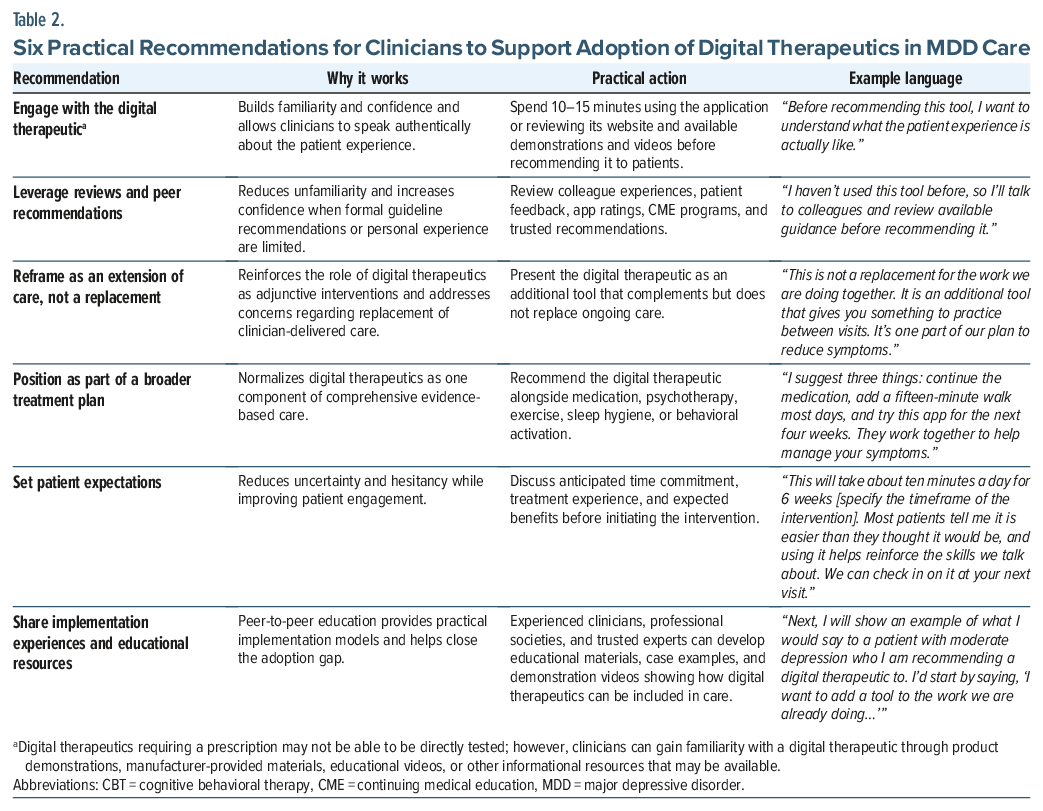
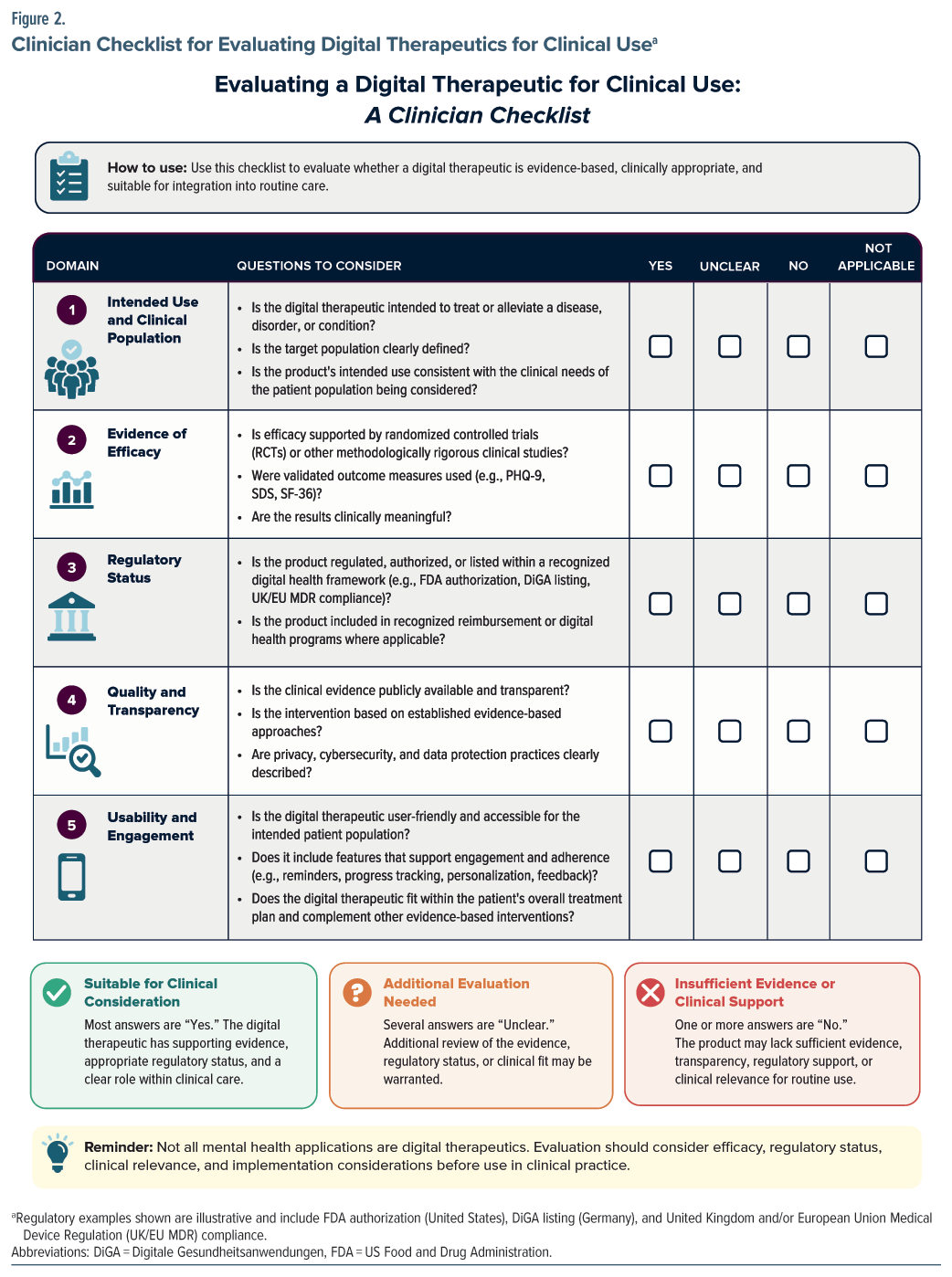
First, clinicians can gain firsthand experience with a digital therapeutic before recommending it to patients by spending 10–15 minutes using the application before recommending it. Second, clinicians can leverage reviews, peer recommendations, and other trusted sources when evaluating digital therapeutic options, particularly in areas where formal guideline recommendations remain limited. Together, these approaches help reduce unfamiliarity with the digital therapeutic and increase self-efficacy and confidence. Third, clinicians can frame digital therapeutics as one component of a broader treatment plan alongside other evidence-based interventions. Fourth, clinicians can position digital therapeutics as tools that extend and support care rather than replace clinician-delivered treatment. Combined, these recommendations normalize the use of digital therapeutics and reinforce their role as adjunctive and not replacement treatments. Fifth, to reduce uncertainty and hesitancy for patients and potentially improve engagement, clinicians can set clear expectations regarding time commitment, treatment experience, and anticipated benefits. Finally, clinicians with experience using digital therapeutics and other trusted experts (eg, professional societies) can help close the adoption gap by developing educational materials and demonstration videos that model real-world implementation. Such peer-to-peer guidance can provide practical examples of how digital therapeutics can be incorporated into routine MDD care. Taken together, the implementation of these recommendations may support clinical implementation of evidence-based digital therapeutics for patients with MDD. To support translation of these recommendations into practice, a clinician checklist for evaluating and initiating digital therapeutics with individual patients is provided in Figure 2. The checklist summarizes key considerations for evaluating digital therapeutics for use in clinical practice and is intended to support evidence-based evaluation of digital therapeutics and facilitate clinical decision-making regarding their incorporation into routine care.
FUTURE RESEARCH PRIORITIES
Throughout this article, the panel provided practical guidance and thoughtful recommendations of how to proceed, recognizing that there are limits in the current digital therapeutic scientific literature. While the panel did not critically appraise the evidence underlying individual digital therapeutics, panelists did identify four key research priorities for digital therapeutics: real-world evidence across diverse patient populations, research examining the specific intervention components that drive clinical benefit, comparative effectiveness studies to inform treatment selection, and investigations evaluating the durability of treatment effects over time. Additional research is needed to address these questions and improve understanding of which digital therapeutics are most effective, when they should be implemented within the course of treatment, and which patients are most likely to benefit. See Appendix 1 for a review of these priorities.
CONCLUSIONS
Digital therapeutics constitute a definable clinical category that offers demonstrable advantages in access, patient preference, and continuity of care for MDD treatment. However, their integration into routine clinical practice remains limited due to system infrastructure challenges and clinician-level factors as much as by the underlying evidence base. The four consensus statements presented here map the clinical decision space for digital therapeutics in MDD, addressing what digital therapeutics are and why they belong in clinical care, how clinicians should evaluate and select them, where they fit within existing treatment models, and what factors may determine if they ultimately reach patients. Notably, practical strategies are provided for clinicians to facilitate utilization of digital therapeutics (Table 2). Collectively, the recommendations presented in this article position digital therapeutics as tools that extend and support care across the spectrum of clinicians treating MDD rather than as replacements for clinician-delivered treatment.
The panel’s closing observations emphasized that digital therapeutics are already part of the clinical landscape and represent one component of the solution to persistent challenges in access to evidence-based mental health care. The question facing the field is no longer whether digital therapeutics should be used but rather how to facilitate their adoption into the hands of patients who may benefit from them. Although a growing number of evidence-based digital therapeutic options are now available, adoption remains at an early stage. The panel proposed a multi-touchpoint model of adoption that engages clinicians, patients, health care systems, professional networks, and dissemination channels simultaneously, recognizing that no single strategy is likely to be sufficient. As evidence continues to evolve, maintaining a focus on rigorous evaluation while facilitating thoughtful implementation will be essential to realizing the potential of digital therapeutics to extend access to effective, evidence-based treatment for MDD.
FINANCIAL DISCLOSURES
Dr Parikh has received consulting fees from Otsuka, Boehringer Ingelheim, and AbbVie; grant/research support from Aifred, Compass, and Janssen; and advisory board fees from Almatica. Dr Cleare has received consulting fees from Otsuka, J&J/Janssen, UBS, and Compass Pathways; grant/research support from UK NIHR, Wellcome Trust, UK MRC, Protexin-ADM, and Beckley Psytech; and honoraria for speaking/teaching from Otsuka, Medscape, and Compass Pathways. Dr Iacoviello has stock options in Click Therapeutics and has received consulting fees from Otsuka Digital Health and honoraria for speaking from MJH Life Sciences and HMP Global. Dr Iacoviello is a named inventor on, and gains from, patents related to the Emotional Faces Memory Task (EFMT) and the Rejoyn app. Dr Jain has received consulting fees from Otsuka Pharmaceuticals, Otsuka Precision Health, Lundbeck Pharmaceuticals, Definium Therapeutics, and Compass Pathways. Dr Karow is an employee of and has equity interest/stocks in MiNDNET E-Health AG and GmbH; has received consulting fees and honoraria for speaking/teaching from Takeda, Otsuka, Johnson & Johnson, Bayer, and Rovi; has received grant/research support from Takeda; and has received advisory board fees from Takeda, Otsuka, and Johnson & Johnson. Dr Pederson has received consulting fees from Otsuka and grant/research support from the National Institute of Mental Health (K23 MH128535).
References (123)

- Substance Abuse and Mental Health Services Administration. Key substance use and mental health indicators in the United States: Results from the 2021 National Survey on Drug Use and Health (HHS Publication No. PEP22-07-01-005, NSDUH Series H-57). Center for Behavioral Health Statistics and Quality, Substance Abuse and Mental Health Services Administration; 2022. https://www.samhsa.gov/data/report/2021-nsduh-annual-national-report. Accessed May 25, 2026
- GBD 2015 Disease and Injury Incidence and Prevalence Collaborators. Global, regional, and national incidence, prevalence, and years lived with disability for 310 diseases and injuries, 1990-2015: a systematic analysis for the Global Burden of Disease Study 2015. Lancet. 2016;388(10053):1545–1602.
- Liu Q, He H, Yang J, et al. Changes in the global burden of depression from 1990 to 2017: findings from the Global Burden of Disease study. J Psychiatr Res. 2020;126:134–140. PubMed CrossRef
- Greenberg P, Chitnis A, Louie D, et al. The economic burden of adults with major depressive disorder in the United States (2019). Adv Ther. 2023;40(10):4460–4479. CrossRef
- Kan K, Lokkerbol J, Jorg F, et al. Real-world treatment costs and care utilization in patients with major depressive disorder with and without psychiatric comorbidities in specialist mental healthcare. Pharmacoeconomics. 2021;39(6):721–730. CrossRef
- Clark M, DiBenedetti D, Perez V. Cognitive dysfunction and work productivity in major depressive disorder. Expert Rev Pharmacoecon Outcomes Res. 2016;16(4):455–463. PubMed CrossRef
- Beck A, Crain AL, Solberg LI, et al. Severity of depression and magnitude of productivity loss. Ann Fam Med. 2011;9(4):305–311.
- Evans VC, Iverson GL, Yatham LN, et al. The relationship between neurocognitive and psychosocial functioning in major depressive disorder: a systematic review. J Clin Psychiatry. 2014;75(12):1359–1370. PubMed CrossRef
- Knight MJ, Lyrtzis E, Baune BT. The association of cognitive deficits with mental and physical quality of life in major depressive disorder. Compr Psychiatry. 2020;97:152147. PubMed CrossRef
- Rock PL, Roiser JP, Riedel WJ, et al. Cognitive impairment in depression: a systematic review and meta-analysis. Psychol Med. 2014;44(10):2029–2040. PubMed CrossRef
- Kohn R, Saxena S, Levav I, et al. The treatment gap in mental health care. Bull World Health Organ. 2004;82(11):858–866.
- Gonzalez HM, Vega WA, Williams DR, et al. Depression care in the United States: too little for too few. Arch Gen Psychiatry. 2010;67(1):37–46. PubMed CrossRef
- Kessler RC, Berglund P, Demler O, et al. The epidemiology of major depressive disorder: results from the National Comorbidity Survey Replication (NCS-R). JAMA. 2003;289(23):3095–3105.
- National Center for Health Workforce Analysis. State of the Behavioral Workforce; 2025. https://bhw.hrsa.gov/sites/default/files/bureau-health-workforce/data-research/Behavioral-Health-Workforce-Brief-2025.pdf. Accessed May 25, 2026
- Campbell DG, Bonner LM, Bolkan CR, et al. Stigma predicts treatment preferences and care engagement among veterans affairs primary care patients with depression. Ann Behav Med. 2016;50(4):533–544. CrossRef
- Olfson M, Marcus SC, Druss B, et al. National trends in the outpatient treatment of depression. JAMA. 2002;287(2):203–209. PubMed CrossRef
- Frank RG, Huskamp HA, Pincus HA. Aligning incentives in the treatment of depression in primary care with evidence-based practice. Psychiatr Serv. 2003;54(5):682–687. PubMed CrossRef
- Guideline Development Panel for the Treatment of Depressive Disorders. Summary of the clinical practice guideline for the treatment of depression across three age cohorts. Am Psychol. 2022;77(6):770–780. CrossRef
- Bosworth A, Ruhter J, Samson LW, et al. Medicare beneficiary use of telehealth visits: early data from the start of COVID-19 pandemic. Assistant Secr Plan Eval. https://aspe.hhs.gov/sites/default/files/private/pdf/263866/hp-issue-brief-medicare-telehealth.pdf. Accessed May 25, 2026
- Busch AB, Sugarman DE, Horvitz LE, et al. Telemedicine for treating mental health and substance use disorders: reflections since the pandemic. Neuropsychopharmacology. 2021;46(6):1068–1070. CrossRef
- Wilcock AD, Huskamp HA, Busch AB, et al. Use of telemedicine and quality of care among Medicare enrollees with serious mental illness. JAMA Health Forum. 2023;4(10):e233648. CrossRef
- Digital therapeutics alliance guidance to industry: classification of digital health technologies. Accessed July 1, 2026. https://dtxalliance.org/wp-content/uploads/2023/06/Guidance-to-Industry-Classification-of-Digital-Health-Technologies-2023Jun05.pdf
- Beevers CG, Pearson R, Hoffman JS, et al. Effectiveness of an internet intervention (Deprexis) for depression in a United States adult sample: a parallel-group pragmatic randomized controlled trial. J Consult Clin Psychol. 2017;85(4):367–380. PubMed CrossRef
- Iacoviello BM, Wu G, Alvarez E, et al. Cognitive-emotional training as an intervention for major depressive disorder. Depress Anxiety. 2014;31(8):699–706. PubMed CrossRef
- Lam RW, Kennedy SH, Adams C, et al. Canadian Network for Mood and Anxiety Treatments (CANMAT) 2023 Update on Clinical Guidelines for Management of Major Depressive Disorder in Adults: reseau canadien pour les traitements de l’humeur et de l’anxiete (CANMAT) 2023 : mise a jour des lignes directrices cliniques pour la prise en charge du trouble depressif majeur chez les adultes. Can J Psychiatry. 2024;69(9):641–687. CrossRef
- Sandelowski M. Whatever happened to qualitative description?. Res Nurs Health. 2000;23(4):334–340.
- Digital Therapeutics Alliance International Organization for Standardization (ISO) Digital Therapeutic Definition. Accessed July 1, 2026. https://dtxalliance.org/wp-content/uploads/2023/06/DTA_FS_ISO-Definition.pdf
- U.S. Food & Drug Administration. Overview of device regulation. https://www.fda.gov/medical-devices/device-advice-comprehensive-regulatory-assistance/overview-device-regulation. Accessed June 9, 2026
- Huberty J, Green J, Glissmann C, et al. Efficacy of the mindfulness meditation mobile app “Calm” to reduce stress among college students: randomized controlled trial. JMIR Mhealth Uhealth. 2019;7(6):e14273. CrossRef
- Roble Ridge Software. Moodfit. https://www.getmoodfit.com/. Accessed July 1, 2026
- Clarity: CBT self help journal. Accessed July 1, 2026. https://www.thinkwithclarity.com/
- Palacios JE, Richards D, Palmer R, et al. Supported internet-delivered cognitive behavioral therapy programs for depression, anxiety, and stress in university students: open, non-randomised trial of acceptability, effectiveness, and satisfaction. JMIR Ment Health. 2018;5(4):e11467. CrossRef
- Rothman B, Slomkowski M, Speier A, et al. A digital therapeutic (CT-152) as adjunct to antidepressant medication: a phase 3 randomized controlled trial (the Mirai study). J Affect Disord. 2025;388:119409. CrossRef
- Oh S, Choi J, Han DH, et al. Effects of game-based digital therapeutics on attention deficit hyperactivity disorder in children and adolescents as assessed by parents or teachers: a systematic review and meta-analysis. Eur Child Adolesc Psychiatry. 2024;33(2):481–493. CrossRef
- Stamatis CA, Mercaldi C, Kollins SH. A single-arm pivotal trial to assess the efficacy of AKL-T01, a novel digital intervention for attention, in adults diagnosed with ADHD. J Am Acad Child Adolesc Psychiatry. 2023;62(10):S319.
- Woodham RD, Selvaraj S, Lajmi N, et al. Home-based transcranial direct current stimulation treatment for major depressive disorder: a fully remote phase 2 randomized sham-controlled trial. Nat Med. 2025;31(1):87–95. CrossRef
- Substance Abuse and Mental Health Services Administration. Digital Therapeutics for Management and Treatment in Behavioral Health. https://library.samhsa.gov/sites/default/files/pep23-06-00-001.pdf. Accessed June 9, 2026
- Modi H, Orgera K, Grover A. Exploring Barriers to Mental Health Care in the U.S. Association of American Medical Colleges. https://www.aamc.org/about-us/mission-areas/clinical-care/exploring-barriers-mental-health-care-us. Accessed May 25, 2026
- Warren JC, Smalley KB. Using telehealth to meet mental health needs during the COVID-19 crisis. The Commonwealth Fund. https://www.commonwealthfund.org/blog/2020/using-telehealth-meet-mental-health-needs-during-covid-19-crisis. Accessed May 25, 2026
- Seegan PL, McGuire JF. Provider and patient barriers and facilitators to integration of digital mental health applications in routine clinical care. J Affect Disord. 2024;363:55–62. CrossRef
- Coombs NC, Meriwether WE, Caringi J, et al. Barriers to healthcare access among U.S. adults with mental health challenges: a population-based study. SSM Popul Health. 2021;15:100847. CrossRef
- Carbonell A, Navarro-Perez JJ, Mestre MV. Challenges and barriers in mental healthcare systems and their impact on the family: a systematic integrative review. Health Soc Care Community. 2020;28(5):1366–1379. PubMed CrossRef
- Mohr DC, Hart SL, Howard I, et al. Barriers to psychotherapy among depressed and nondepressed primary care patients. Ann Behav Med. 2006;32(3):254–258. PubMed CrossRef
- Swift JK, Greenberg RP. Premature discontinuation in adult psychotherapy: a meta-analysis. J Consult Clin Psychol. 2012;80(4):547–559. PubMed CrossRef
- Musliner KL, Munk-Olsen T, Eaton WW, et al. Heterogeneity in long-term trajectories of depressive symptoms: patterns, predictors and outcomes. J Affect Disord. 2016;192:199–211. PubMed CrossRef
- van Eeden WA, van Hemert AM, Carlier IVE, et al. Severity, course trajectory, and within-person variability of individual symptoms in patients with major depressive disorder. Acta Psychiatr Scand. 2019;139(2):194–205. PubMed CrossRef
- Dusin J, Peltzer J. Patient engagement in evidence-based practice frameworks. J Patient Exp. 2024;11:23743735241302941.
- Guyatt GH, Haynes RB, Jaeschke RZ, et al. Users’ Guides to the Medical Literature: XXV. Evidence-based medicine: principles for applying the Users’ Guides to Patient Care. Evidence-Based Medicine Working Group. JAMA. 2000;284(10):1290–1296. PubMed CrossRef
- Cuijpers P, Oud M, Karyotaki E, et al. Psychologic treatment of depression compared with pharmacotherapy and combined treatment in primary care: a network meta-analysis. Ann Fam Med. 2021;19(3):262–270. CrossRef
- Gartlehner G, Wagner G, Matyas N, et al. Pharmacological and non-pharmacological treatments for major depressive disorder: review of systematic reviews. BMJ Open. 2017;7(6):e014912. PubMed CrossRef
- Casacalenda N, Perry JC, Looper K. Remission in major depressive disorder: a comparison of pharmacotherapy, psychotherapy, and control conditions. Am J Psychiatry. 2002;159(8):1354–1360. PubMed CrossRef
- McHugh RK, Whitton SW, Peckham AD, et al. Patient preference for psychological vs pharmacologic treatment of psychiatric disorders: a meta-analytic review. J Clin Psychiatry. 2013;74(6):595–602. PubMed CrossRef
- Dwight-Johnson M, Sherbourne CD, Liao D, et al. Treatment preferences among depressed primary care patients. J Gen Intern Med. 2000;15(8):527–534. PubMed CrossRef
- Stafford RS, Ausiello JC, Misra B, et al. National patterns of depression treatment in primary care. Prim Care Companion J Clin Psychiatry. 2000;2(6):211–216.
- Robinson WD, Geske JA, Prest LA, et al. Depression treatment in primary care. J Am Board Fam Pract. 2005;18(2):79–86.
- Swift JK, Callahan JL. The impact of client treatment preferences on outcome: a meta-analysis. J Clin Psychol. 2009;65(4):368–381. PubMed CrossRef
- Lindhiem O, Bennett CB, Trentacosta CJ, et al. Client preferences affect treatment satisfaction, completion, and clinical outcome: a meta-analysis. Clin Psychol Rev. 2014;34(6):506–517. PubMed CrossRef
- Neprash HT, Everhart A, McAlpine D, et al. Measuring primary care exam length using electronic health record data. Med Care. 2021;59(1):62–66. CrossRef
- Deveugele M, Derese A, van den Brink-Muinen A, et al. Consultation length in general practice: cross sectional study in six European countries. BMJ. 2002;325(7362):472.
- Irving G, Neves AL, Dambha-Miller H, et al. International variations in primary care physician consultation time: a systematic review of 67 countries. BMJ Open. 2017;7(10):e017902. PubMed CrossRef
- Rao A, Shi Z, Ray KN, et al. National trends in primary care visit use and practice capabilities, 2008-2015. Ann Fam Med. 2019;17(6):538–544. CrossRef
- Royal College of Psychiatry. RCPsych Wales Mental Health Workforce Report. https://heiw.nhs.wales/files/smhwfp-psychiatry-report/. Accessed July 1, 2026
- Chen L, Eaton WW, Gallo JJ, et al. Understanding the heterogeneity of depression through the triad of symptoms, course and risk factors: a longitudinal, population-based study. J Affect Disord. 2000;59(1):1–11. PubMed CrossRef
- Fortney JC, Unutzer J, Wrenn G, et al. A tipping point for measurement-based care. Psychiatr Serv. 2017;68(2):179–188. CrossRef
- Cook BL, Hou SS, Lee-Tauler SY, et al. A review of mental health and mental health care disparities research: 2011-2014. Med Care Res Rev. 2019;76(6):683–710. CrossRef
- Lecomte T, Potvin S, Corbiere M, et al. Mobile apps for mental health issues: meta-review of meta-analyses. JMIR Mhealth Uhealth. 2020;8(5):e17458. CrossRef
- Juul S, Faltermeier P, Siddiqui F, et al. Challenges in the selection and measurement of outcomes in psychiatric trials. BMJ Evid Based Med. 2026;31(2):75–78. CrossRef
- Kroenke K, West SL, Swindle R, et al. Similar effectiveness of paroxetine, fluoxetine, and sertraline in primary care: a randomized trial. JAMA. 2001;286(23):2947–2955. PubMed CrossRef
- Kroenke K, Spitzer RL, Williams JB. The PHQ-9: validity of a brief depression severity measure. J Gen Intern Med. 2001;16(9):606–613. PubMed CrossRef
- Montgomery SA, Ashberg M. A new depression scale designed to be sensitive to change. Br J Psychiatry. 1979;134(4):382–389.
- Sheehan DV, Harnett-Sheehan K, Raj BA. The measurement of disability. Int Clin Psychopharmacol. 1996;11(Suppl 3):89–95.
- Ware JE Jr., Sherbourne CD. The MOS 36-item Short-Form Health Survey (SF-36). I. Conceptual framework and item selection. Med Care. 1992;30(6):473–483.
- Fitzpatrick KK, Darcy A, Vierhile M. Delivering cognitive behavior therapy to young adults with symptoms of depression and anxiety using a fully automated conversational agent (Woebot): a randomized controlled trial. JMIR Ment Health. 2017;4(2):e19. CrossRef
- Werson AD, Meiser-Stedman R, Laidlaw K. A meta-analysis of CBT efficacy for depression comparing adults and older adults. J Affect Disord. 2022;319:189–201. CrossRef
- Cuijpers P, Miguel C, Harrer M, et al. Cognitive behavior therapy vs. control conditions, other psychotherapies, pharmacotherapies and combined treatment for depression: a comprehensive meta-analysis including 409 trials with 52,702 patients. World Psychiatry. 2023;22(1):105–115. CrossRef
- Linardon J, Torous J, Firth J, et al. Current evidence on the efficacy of mental health smartphone apps for symptoms of depression and anxiety. A meta-analysis of 176 randomized controlled trials. World Psychiatry. 2024;23(1):139–149. CrossRef
- Linardon J, Cuijpers P, Carlbring P, et al. The efficacy of app-supported smartphone interventions for mental health problems: a meta-analysis of randomized controlled trials. World Psychiatry. 2019;18(3):325–336. PubMed CrossRef
- Wang X, Feng Z. A narrative review of empirical literature of behavioral activation treatment for depression. Front Psychiatry. 2022;13:845138. CrossRef
- Uphoff E, Ekers D, Robertson L, et al. Behavioural activation therapy for depression in adults. Cochrane Database Syst Rev. 2020;7(7):CD013305.
- Gazerani P. The neuroplastic brain: current breakthroughs and emerging frontiers. Brain Res. 2025;1858:149643. CrossRef
- Iacoviello BM, Murrough JW, Hoch MM, et al. A randomized, controlled pilot trial of the Emotional Faces Memory Task: a digital therapeutic for depression. NPJ Digit Med. 2018;1:21. CrossRef
- Yuan S, Wu H, Wu Y, et al. Neural effects of cognitive behavioral therapy in psychiatric disorders: a systematic review and activation likelihood estimation meta-analysis. Front Psychol. 2022;13:853804. CrossRef
- Norbury A, Hauser TU, Fleming SM, et al. Different components of cognitive-behavioral therapy affect specific cognitive mechanisms. Sci Adv. 2024;10(13):eadk3222. CrossRef
- Richards D, Timulak L, O’Brien E, et al. A randomized controlled trial of an internet-delivered treatment: its potential as a low-intensity community intervention for adults with symptoms of depression. Behav Res Ther. 2015;75:20–31.
- Rubin R. It takes an average of 17 years for evidence to change practice-the burgeoning field of implementation science seeks to speed things up. JAMA. 2023;329(16):1333–1336. CrossRef
- Food and Drug Administration Modernization. Act of 1997, Pub. L. No. Pub L No. 105-115, 21 §§115. 1997. https://www.govinfo.gov/content/pkg/PLAW-105publ115/html/PLAW-105publ115.htm
- US Food and Drug Administration. Demonstrating substantial evidence of effectiveness for human drug and biological products; revised draft guidance for industry; availability. Fed Regist. 2026;91:37994–37996.
- US Food and Drug Administration. 510(k) premarket notification summary K231209: Rejoyn (CT-152). Updated March 30, 2024. https://www.accessdata.fda.gov/cdrh_docs/pdf23/K231209.pdf. Accessed October 14, 2026
- Regulation (EU). 2017/745 of the European Parliament and of the Council of 5 April 2017 on medical devices (as amended). Orkesterjournalen. 2017;L117:1–175.
- Schmidt L, Pawlitzki M, Renard BY, et al. The three-year evolution of Germany’s digital therapeutics reimbursement program and its path forward. NPJ Digit Med. 2024;7(1):139. CrossRef
- Yang SR, Chien JT, Lee CY. Advancements in clinical evaluation and regulatory frameworks for AI-driven software as a medical device (SaMD). IEEE Open J Eng Med Biol. 2025;6:147–151. CrossRef
- Herpertz J, Stern AD, Opel N, et al. FDA-authorized software as a medical device in mental health: a perspective on evidence, device lineage, and regulatory challenges. Npj Ment Health Res. 2025;4(1):62. PubMed
- Jeitani A, Fahey PP, Gascoigne M, et al. Effectiveness of stepped care for mental health disorders: an umbrella review of meta-analyses. Personalized Med Psychiatry. 2024;47-48:100140. CrossRef
- Mareya S, Watts MC, Zhao L, et al. Exploring the stepped care model in delivering primary mental health services—a scoping review. Int J Ment Health Nurs. 2024;33(6):2026–2042. PubMed
- van Straten A, Hill J, Richards DA, et al. Stepped care treatment delivery for depression: a systematic review and meta-analysis. Psychol Med. 2015;45(2):231–246. PubMed CrossRef
- Bae H, Shin H, Ji HG, et al. App-based interventions for moderate to severe depression: a systematic review and meta-analysis. JAMA Netw Open. 2023;6(11):e2344120. PubMed
- Bryan CJ, Simon P, Wilkinson ST, et al. A digital therapeutic intervention for inpatients with elevated suicide risk: a randomized clinical trial. JAMA Netw Open. 2025;8(8):e2525809. PubMed
- Lipschitz JM, Pike CK, Hogan TP, et al. The engagement problem: a review of engagement with digital mental health interventions and recommendations for a path forward. Curr Treat Options Psychiatry. 2023;10(3):119–135. PubMed
- Borghouts J, Eikey E, Mark G, et al. Barriers to and facilitators of user engagement with digital mental health interventions: systematic review. J Med Internet Res. 2021;23(3):e24387. CrossRef
- Karyotaki E, Kleiboer A, Smit F, et al. Predictors of treatment dropout in self-guided web-based interventions for depression: an “individual patient data” meta-analysis. Psychol Med. 2015;45(13):2717–2726. PubMed CrossRef
- Del Pino-Sedeno T, Infante-Ventura D, Hernandez-Gonzalez D, et al. Sociodemographic and clinical predictors of adherence to antidepressants in depressive disorders: a systematic review with a meta-analysis. Front Pharmacol. 2024;15:1327155. PubMed
- Christensen H, Griffiths KM, Farrer L. Uptake in internet interventions for anxiety and depression: systematic review. J Med Internet Res. 2009;11(2):e1194.
- Linardon J, Fuller-Tyszkiewicz M, Firth J, et al. Systematic review and meta-analysis of adverse events in clinical trials of mental health apps. NPJ Digit Med. 2024;7(1):363. PubMed
- Martinengo L, Van Galen L, Lum E, et al. Suicide prevention and depression apps’ suicide risk assessment and management: a systematic assessment of adherence to clinical guidelines. BMC Med. 2019;17(1):231. PubMed CrossRef
- Karyotaki E, Kemmeren L, Riper H, et al. Is self-guided internet-based cognitive behavioural therapy (iCBT) harmful? An individual participant data meta-analysis. Psychol Med. 2018;48(15):2456–2466. PubMed CrossRef
- Klein JP, Berger T, Schröder J, et al. Effects of a psychological internet intervention in the treatment of mild to moderate depressive symptoms: results of the EVIDENT study, a randomized controlled trial. Psychother Psychosom. 2016;85(4):218–228. PubMed
- Richards D, Enrique A, Eilert N, et al. A pragmatic randomized waitlist-controlled effectiveness and cost-effectiveness trial of digital interventions for depression and anxiety. NPJ Digit Med. 2020;3:85. PubMed CrossRef
- Otsuka Precision Health I. Rejoyn (CT-152) Clinician Brief Summary. Revised. 2026. https://www.rejoynhcp.com/Clinician-Brief-Summary.pdf. Accessed September 3, 2026
- GAIA AG. Deprexis. https://deprexis.com/en. Accessed September 3, 2026
- Otsuka Pharmaceutical Europe Ltd. Rejoyn. Accessed July 27, 2026. https://rejoyn.co.uk/public
- Kern LM, Bynum JPW, Pincus HA. Care fragmentation, care continuity, and care coordination—how they differ and why it matters. JAMA Intern Med. 2024;184(3):236–237. CrossRef
- National Health Service. How you can access NHS mental health services. https://www.nhs.uk/mental-health/social-care-and-your-rights/how-to-access-mental-health-services/. Accessed June 9, 2026
- Saha S, Lim CCW, Cannon DL, et al. Co-morbidity between mood and anxiety disorders: a systematic review and meta-analysis. Depress Anxiety. 2021;38(3):286–306. PubMed
- Kwon H, Choi IY, Kim DJ, et al. A review of current digital mental health care applications for anxiety symptoms and future prospects. Psychiatry Investig. 2024;21(6):551–560. PubMed
- Orsolini L, Longo G, Volpe U. Practical application of digital therapeutics in people with mood disorders. Curr Opin Psychiatry. 2024;37(1):9–17. PubMed
- Beck JS. Cognitive Behavior Therapy: Basics and Beyond. 3rd ed.. Guilford Press; 2020.
- Frank E, Kupfer DJ, Buysse DJ, et al. Randomized trial of weekly, twice-monthly, and monthly interpersonal psychotherapy as maintenance treatment for women with recurrent depression. Am J Psychiatry. 2007;164(5):761–767. PubMed CrossRef
- Senova S, Cotovio G, Pascual-Leone A, et al. Durability of antidepressant response to repetitive transcranial magnetic stimulation: systematic review and meta-analysis. Brain Stimul. 2019;12(1):119–128. PubMed CrossRef
- Torous J, Bucci S, Bell IH, et al. The growing field of digital psychiatry: current evidence and the future of apps, social media, chatbots, and virtual reality. World Psychiatry. 2021;20(3):318–335. PubMed
- Digital Health Center of Excellece. FDA Launches a Digital Health Devices Pilot. FDA. https://www.fda.gov/medical-devices/digital-health-center-excellence. Accessed July 1, 2026
- Figueiredo T, Alcantara L, Carrilho J, et al. Understanding adherence to digital health technologies: systematic review of predictive factors. J Med Internet Res. 2025;27:e77362. PubMed
- Hammerfald K, Jahren HH, Solbakken OA. The association between patient engagement and treatment outcome in guided internet-delivered CBT for anxiety and depression. Front Psychol. 2025;16:1494729. CrossRef
- Hatch A, Hoffman JE, Ross R, et al. Expert consensus survey on digital health tools for patients with serious mental illness: optimizing for user characteristics and user support. JMIR Ment Health. 2018;5(2):e46. PubMed CrossRef
This PDF is free for all visitors!