

Abstract
Objective: To evaluate pharmacokinetics of viloxazine extended-release (ER) in breast milk and plasma of healthy lactating women and calculate potential infant exposure.
Methods: Healthy lactating women (N=15), who were ≥12 weeks postpartum, received viloxazine ER 600 mg/d (the maximum recommended adult dose, given as 3×200 mg capsules) for 3 days at the same time each morning. Pharmacokinetic parameters describing the timing and amount of viloxazine in plasma and breast milk were measured based on samples collected predose and for 24 hours postdose on Day 3.Measures of potential infant exposure were calculated, including estimated daily infant dose (EDID) and relative infant dose (RID; the percentage of the weight-adjusted maternal daily dose that an infant would likely receive through breast milk).
Results: At steady state, the median Tmax, milk in breast milk for viloxazine ER was 5.53 h, and the geometric mean (coefficient of variation [CV]%) breast milk-to-plasma ratio was 0.338 (17.4), indicating limited partitioning of drug into breast milk. Using a standard estimate of 150 mL/kg/d infant milk intake, the geometric mean (CV%) EDID was 0.134 (34.4) mg/kg/d, yielding an RID of 1.53% (27.6)—a value indicating low infant exposure within the commonly accepted <5%–10% RID safety threshold. Mild treatment-related adverse events were reported by 80% of participants, most commonly somnolence (67%), nausea (20%), and dizziness (20%). No participants discontinued.
Conclusion: Viloxazine transfer into breastmilk of healthy, lactating women following multiple, once-daily 600 mg viloxazine ER doses was low.
Trial Registration: ClinicalTrials.gov identifier: NCT06259331
J Clin Psychiatry 2026;87(3):25m16169
Author affiliations are listed at the end of this article.

Attention-deficit/hyperactivity disorder (ADHD) is a neurodevelopmental disorder characterized by persistent symptoms of inattention, impulsivity and/or hyperactivity that impair social and occupational functioning.1 Women with ADHD have historically been underdiagnosed, particularly in childhood; however, the difference in ADHD prevalence between men and women appears to be narrowing.2–5 In particular, greater recognition and diagnosis of ADHD in women over the past decade have led to an increasing number of women in their reproductive years using ADHD medications and an increased need for information concerning the safety of these medications during pregnancy and while breastfeeding.6–8 This increased prevalence has been reported in several populations, including in a US Centers for Disease Control and Prevention study reporting a 344% increase in percentage of reproductive-age women having an ADHD medication prescription, from 2003–20156 and a study of pregnant women in the Quebec Pregnancy/Children Cohort that reported a 14-fold increase in ADHD medication use among pregnant women between 1998–2015.9
For women who give birth and choose to breastfeed, an important consideration is the extent of medication transfer into breast milk and whether use of ADHD medications is compatible with breastfeeding. However, there is a dearth of data on the safety of most ADHD medications during breastfeeding, with available information largely limited to case reports.10–15
Viloxazine ER (viloxazine extended-release capsules; Qelbree®, Supernus Pharmaceuticals, Inc.) is a US Food and Drug Administration (FDA)–approved, nonstimulant treatment for ADHD in children (age ≥6 years) and adults.16–20 Viloxazine ER has multimodal effects, inhibiting the reuptake of norepinephrine through selective blockade of the presynaptic norepinephrine transporter, as well as functioning as a partial agonist at the serotonin 5-HT2C receptor and antagonist of the 5-HT2B and 5-HT7 receptors.21,22 Viloxazine is metabolized by hydroxylation and subsequent glucuronidation of the phenyl ring, forming 5-hydroxyviloxazine glucuronide (5-HVLX-gluc) as the major and inactive metabolite.23 This metabolite is presumed to be pharmacologically inactive as the phase 2 conjugation reaction renders 5-HVLX-gluc more water soluble, and, combined with its higher molecular weight (5-HVLX-gluc, 429 g/mol; viloxazine, 237 g/mol), it is unlikely to be able to penetrate the blood-brain barrier. Data from mouse models have shown low brain transfer, with a brain-to-plasma 5-HVLX-gluc AUC ratio of 0.007 (unpublished data). In light of the potential patient population using viloxazine ER and the increased number of women using ADHD medications, we carried out this postmarketing study following the FDA guidance on clinical lactation studies,24 with the primary objective to assess the pharmacokinetics of viloxazine and its metabolite, 5-HVLX-gluc, in breast milk of healthy lactating women who received multiple doses of the maximum recommended therapeutic dose (600 mg/d) of viloxazine ER capsules; secondary objectives were to evaluate the pharmacokinetics of viloxazine and 5-HVLX-gluc in plasma of these women, to evaluate the overall exposure between breast milk and maternal plasma, and to estimate the potential infant exposure from breast milk. Safety and tolerability of viloxazine ER in lactating women were also assessed.
METHODS
This was a phase 4, open-label, lactation study evaluating the pharmacokinetics of viloxazine and its 5-HVLX-gluc metabolite following multiple doses of viloxazine ER (600 mg) in 15 healthy lactating women (NCT06259331).25 The trial was conducted from June 20, 2023 (first participant first dose) to September 20, 2023 (last participant contact). The study was conducted in accordance with the principles of the International Council for Harmonisation Good Clinical Practice guidelines and the Declaration of Helsinki. All participants provided written informed consent prior to enrollment.
Participants
Eligible participants were healthy lactating women, 18–45 years of age, who were at least 12 weeks and not more than 2 years postpartum of a healthy-term newborn infant. Participants were to be exclusively breastfeeding (baby-to-breast or bottle-feeding mother’s expressed breast milk) and willing to temporarily discontinue breastfeeding for 7 days (including 1 day of admission to inpatient unit, 3 consecutive days of dosing with study medication, and 3 consecutive days after last dose of study medication). Participants were required not to be in the process of weaning and to have maintained an adequate breast milk supply with regular pumping or routine breastfeeding (eg, pumping or feeding 3–4 times a day) at admission.
Inclusion criteria also required participants to be medically healthy, have a body mass index 18–35 kg/m2, be abstaining from sexual activity or using acceptable birth control measures, and be nonsmokers.
Exclusion criteria included history or presence of medical, neurological, or psychiatric disorders (including an Edinburgh Postnatal Depression Scale score >13); history of breast implants, breast augmentation, or reduction surgery; history of mastitis within 30 days, breast cancer, previous mastectomy or lumpectomy, or presence of clinically significant abnormality in either breast during a clinical breast examination at screening or admission; current use or positive test for alcohol, cotinine, or drugs; history of alcohol use disorder or recreational drug use within 1 year of screening; use of prescription medication (except hormonal contraceptives) or over-the-counter products (except postnatal vitamins, acetaminophen, and topical products without systemic absorption) within 2 weeks prior to dosing of study medication (or 5 half-lives, whichever was longer); or presence of a condition or planned procedure with the potential to interfere with the absorption, metabolism, or elimination of the study drug (eg, cholecystectomy).
Study Procedures
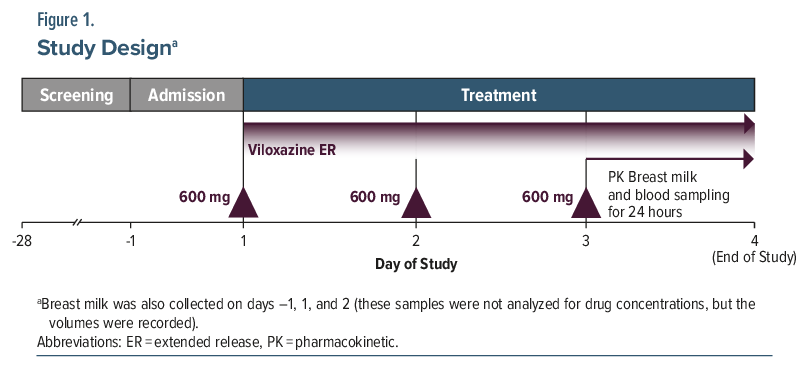
The study duration was up to 32 days, consisting of a screening period (up to 28 days) and inpatient treatment period. The inpatient stay included admission on Day –1, 3 days of viloxazine ER treatment (Days 1–3), and discharge on Day 4. Mothers were admitted to the inpatient unit without their children in order to ensure standardized times and procedures for milk collection and storage. Enrolled participants received once-daily 600 mg (3 × 200 mg capsules) doses of viloxazine ER—the maximum recommended adult dose for the treatment of ADHD based on US prescribing information—on 3 consecutive days at the same time each morning. Breast milk and blood samples for pharmacokinetic analyses were collected predose on Days 1 and 3 and for 24 hours postdose on Day 3 (Figure 1). Breast milk was collected during the following prespecified intervals:
- Day 1: –4 to 0 hours predose
- Day 3: –4 to 0 hours predose and postdose at 0–4 hours, 4–6 hours, 6–8 hours, 8–10 hours, 10–12 hours, 12–16 hours, and 16–24 hours.
During milk expression, participants emptied both breasts as completely as possible using an electric breast pump. To ensure complete and efficient milk removal, participants were directed to double pump (use a breast pump with 2 collection flanges to empty both breasts simultaneously) for at least 10 minutes until milk flow ceased. Each collection session was to last no more than 30 minutes. For all collections, the actual start and end times of the collection session and the total volume (mL) of milk expressed were recorded.
A total of 13 blood samples were collected at the following times: predose on Days 1 and 3, and 0.5, 1.0, 2.0, 3.0, 4.0, 5.0, 6.0, 8.0, 10.0, 16.0, and 24.0 hours postdose on Day 3. The actual date and time of each blood draw were also recorded.
Additionally, non-pharmacokinetic breast milk samples (not to be analyzed for drug concentrations) were collected on Day –1 (per normal pumping routine), Day 1 (0–24 h), and Day 2 (0–20 hours), and the volume of milk collected was recorded.
Pharmacokinetic Analyses
Pharmacokinetic samples were analyzed using validated achiral chromatographic tandem mass spectrometry assays. Viloxazine and its major metabolite, 5-HVLX-gluc, were measured in human breast milk over the concentration range of 1.00–2000 ng/mL and in plasma over the concentration range of 0.005–10.0 µg/mL. Details on bioanalytical methods have been previously published.26,27
Viloxazine and 5-HVLX-gluc pharmacokinetic parameters in breast milk. Primary end points were the following PK parameters measured in breast milk after viloxazine reached steady-state plasma concentration on Day 3: area under the concentration–time curve (AUC) over a 24-hour dosing interval AUCtau,milk; maximum observed concentration in milk Cmax,milk; average drug concentration in milk Cave,milk (calculated as AUCtau,milk/24); drug trough concentration immediately before next dose Ctrough,milk; time of maximum observed concentration Tmax,milk; and total amount of drug excreted in breast milk Ammilk , over a dosing interval, calculated as the sum of the product of breast milk volumes and concentrations from each time period.
Viloxazine and 5-HVLX-gluc pharmacokinetic parameters in plasma. Secondary end points were the following PK parameters measured in plasma after viloxazine reached steady-state concentration on Day 3: AUC over a 24-hour dosing interval in plasma AUCtau,ss; maximum observed plasma concentration Cmax,ss; average plasma concentration Cave,ss (calculated as AUCtau,ss/24); drug trough concentration immediately before the next dose in plasma at steady state Ctrough,ss; time of maximum observed concentration in plasma Tmax,ss; breast milk-plasma ratio (ML/PL) based on AUCtau,milk/AUCtau,ss calculated for viloxazine and for 5-HVLX-gluc; and apparent total body clearance of viloxazine, CLss/F, where F is the fraction of the dose absorbed.
Measures of potential infant exposure. The following measures of potential infant exposure were calculated from the pharmacokinetic parameters for viloxazine and 5-HVLX-gluc in breast milk and plasma determined above.
- The daily infant dose (DID, mg/d), or total amount of drug in breast milk with the potential to be consumed by the infant per day, was equal to Ammilk. Note that this parameter is study-specific, as it is based on the measured milk volume of enrolled study participants (and assumed feeding volumes of their infants). It is not normalized to infant body weight.
- The estimated daily infant dose (EDID) was calculated from the milk-plasma ratios as follows: EDID =ML/PL×Cave,ss ×150 mL/kg/d estimated daily infant milk intake. The EDID was also calculated using a higher daily infant milk intake of 200 ml/kg/d for early infancy.28
- The standardized parameter relative infant dose (RID), the percentage of the weight-adjusted maternal dose consumed via breast milk by the infant over 24 hours, was calculated as follows: EDID (mg/kg/d)/maternal dosage (mg/kg/d) ×100%.
Safety Assessments
Safety and tolerability were assessed by monitoring and recording adverse events (AEs), clinical laboratory test results (hematology, serum chemistry, and urinalysis), vital signs (orthostatic systolic and diastolic blood pressures [measured after the participant had been seated for a minimum of 5 minutes and within 3 minutes of standing], pulse rate, respiratory rate, and oral temperature), 12-lead electrocardiogram (ECG) findings, physical examination findings, and prospective assessment of suicidality (Columbia–Suicide Severity Rating Scale [C-SSRS]). Concomitant medications were also recorded.
Statistical Analyses
All statistical analyses were conducted using Statistical Analysis System SAS Version 9.4 or higher (SAS Institute, Cary, North Carolina). Viloxazine and 5-HVLX-gluc breast milk and plasma concentration data for each sample were summarized using descriptive statistics (n, mean, SD, coefficient of variation [CV], minimum, median, maximum). The midpoint of the breast milk collection interval was used as the milk sampling time. Breast milk and plasma PK parameters calculated from the concentrations and actual times were summarized using descriptive statistics (including geometric mean and geometric CV). The time of maximum observed concentration (Tmax) was summarized using n, median, minimum, and maximum only. Viloxazine and 5-HVLX-gluc breast milk and plasma concentration-time data were analyzed by noncompartmental analysis using Phoenix WinNonlin Version 8.3.4 or higher (Certara USA, Inc., Princeton, New Jersey).
Safety data were summarized using descriptive statistics. Verbatim adverse events were coded to preferred terms for reporting using the Medical Dictionary for Regulatory Activities (MedDRA version 26.0).
RESULTS
Participant Disposition and Baseline Characteristics
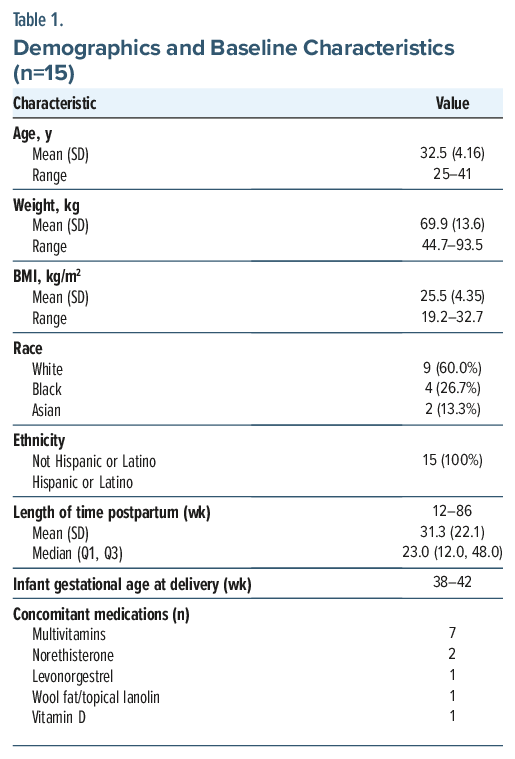
Fifteen healthy lactating women completed the study (21 enrolled, but 6 did not meet inclusion/exclusion criteria). Participants had a mean±standard deviation (SD) age of 32.5 ±4.16 years and ranged from 12 to 86 weeks postpartum (Table 1).
Pharmacokinetics of Viloxazine in Breast Milk and Plasma
The mean milk and plasma concentration-time profiles of viloxazine are presented in Figure 2, and PK parameters are summarized in Table 2. For the inactive metabolite 5-HVLX-gluc, the mean milk and plasma concentration-time profiles are shown in Supplementary Figure 1, and PK parameters are summarized in Supplementary Table 1.
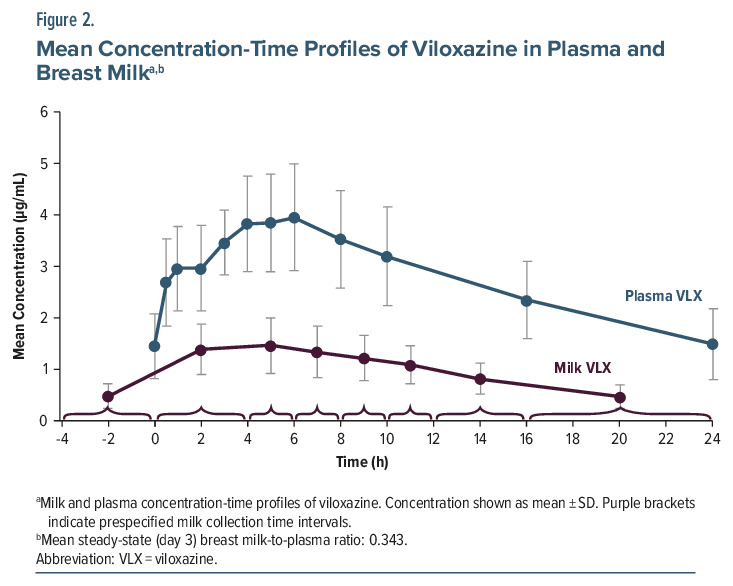
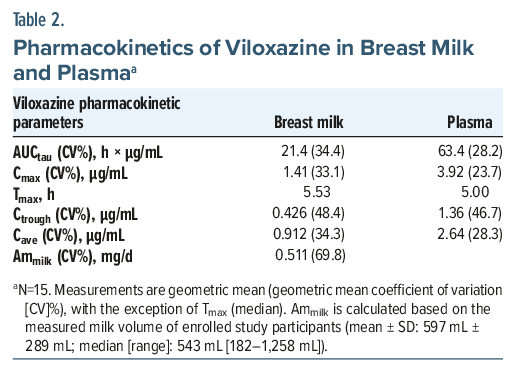
Pharmacokinetic parameters in breast milk. At steady state, a geometric mean viloxazine Cmax,milk of 1.41 μg/mL was reached at a median Tmax of 5.53 h. Geometric mean breast milk total exposure (AUCtau,milk) for viloxazine was 21.4 µg•h/mL. The geometric mean breast milk to plasma ratio was 0.338.
Pharmacokinetic parameters in plasma. At steady state, a geometric mean viloxazine Cmax of 3.92 ug/mL was reached at median Tmax,ss of 5.00 h. Geometric mean plasma total exposure (AUCtau,ss) to viloxazine was 63.4 µg•h/mL. The calculated total body clearance for (CLss/F) for viloxazine was 9.46 L/h.
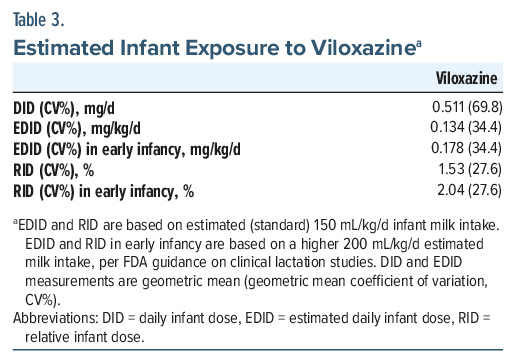
Estimated infant exposure to viloxazine. Infant exposure parameters are summarized in Table 3. The median total milk volume collected on Day 3 was 543 mL (range, 182–1,259 mL). The geometric mean DID—the total drug present in breast milk with the potential to be consumed by the infant per day—for viloxazine in this study was 0.511 mg/d (∼0.09% of the administered 600 mg/d viloxazine ER dosage). The EDID for viloxazine was 0.134 mg/kg/d (based on 150 mL/kg/d infant milk intake) and 0.178 mg/kg/d (based on 200 mL/kg/d infant milk intake). Weight-adjusted RID (based on 150 mL/kg/d infant milk intake) was calculated to be 1.53% of the weight-adjusted maternal dosage for viloxazine. RID in early infancy (based on 200 mL/kg/d infant milk intake) for viloxazine was 2.04% of the weight-adjusted maternal dosage.
Safety in Healthy, Lactating Women
Overall, viloxazine was well tolerated. Twelve (80%) participants reported 28 AEs, all of which were mild in severity and had resolved by the end of the study. No serious AEs were reported, and no participants discontinued due to any AE. The most commonly reported AE was somnolence (n = 10). Other AEs occurring in 2 or more participants were dizziness (n = 3), nausea (n = 3), breast tenderness (n = 3), headache (n = 2), and dry mouth (n = 2). Dyspepsia, chills, decreased appetite, dermatitis, and hot flush were reported by 1 participant each. All AEs with the exception of breast tenderness, chills, dermatitis, and hot flush were considered to be treatment-related. There were no reported AEs based on vital sign measurements, clinical laboratory test results, 12-lead ECG findings, or physical examination findings, and no clinically relevant changes were noted in these parameters. No participant reported suicidal ideation or behavior on C-SSRS.
DISCUSSION
This was a phase 4, open-label, single-arm study to evaluate the transfer (excretion) of viloxazine and its metabolite, 5-HVLX-gluc, into the breast milk of healthy lactating women. The results demonstrated that viloxazine is present in breast milk of lactating mothers at low concentrations. Following multiple doses of viloxazine ER at the maximum recommended adult dosage of 600 mg/d, the EDID was 0.134–178 mg/kg/d (based on estimated milk intake 150–200 ml/kg/d), resulting in a range of RID of ∼1%–2% (1.53%–2.04%) of weight-adjusted maternal dosage. Concentrations of the metabolite 5-HVLX-gluc in breast milk were negligible (RID ∼0.1%; Supplementary Table 2).
RID, which represents the percent of the weight-adjusted maternal dosage consumed in breast milk by an infant over a 24-hour period, has been recommended as a standardized parameter for estimating infant exposure in FDA draft guidance on clinical lactation studies.24,29 Recommendations from lactation specialists, including updated clinical treatment guidelines from the American College of Obstetricians and Gynecologists, consider medications with RID <10% to be generally accepted as safe for breastfeeding.30–32 Our method of calculating RID (using milk/plasma AUC ratios over a 24-hour dosing interval at steady state and standard weight-based milk consumption estimates to EDID) follows FDA guidance and may help allow RID estimates to be generalized beyond the 15 participants in our study.
Formal lactation studies for many ADHD medications are lacking, and current knowledge is largely based on case studies. Amphetamine has been reported in human breast milk and infant urine, and studies have reported RID of 2% to 13.8% of weight-adjusted maternal dosage, though there were no reported adverse events in breast-fed infants.10,11,33 Case studies of lactating women taking methylphenidate have reported RIDs <1%, with no reports on adverse events in the breastfed infant.12,13 The reported RID estimates for clonidine ranged from 4.1% to 8.4% of the maternal weight-adjusted dosage, with 1 case report of sedation, hypotonia, and apnea in a breastfed infant.15 Prescribing information for mixed amphetamine salts and lisdexamfetamine advises against breastfeeding while using these medications,34,35 and prescribing information for methylphenidate and clonidine advises caution.36,37 Current prescribing information for atomoxetine and guanfacine do not report data on drug presence in breast milk.38,39 A recently published study of 10 lactating women participating in the InfantRisk Human Milk Repository suggests low drug presence of atomoxetine in breast milk (estimated RID <1%), although this study was observational and relied on unsupervised at-home sample collection.40
To our knowledge, this is the first clinical lactation study of an ADHD medication completed under the current May 2019 FDA draft guidance on clinical lactation studies.24,41 Standardized methodology for evaluating medication excretion into breast milk and estimated infant exposure may allow clinicians and women to compare medication choices and make informed risk/benefit decisions. This is especially critical as ADHD symptoms may become more pronounced and challenging to manage in the postpartum period, and the risk-to-benefit assessment of treating maternal symptoms and ensuring infant safety is often made in the context of breastfeeding.14,42,43 Additionally, women with ADHD have higher rates of unplanned pregnancy, and higher prevalence of postpartum distress, than women without ADHD.44–46 A recent expert review published in the American Journal of Obstetrics and Gynecology on treatment of ADHD in pregnancy and the postpartum period highlighted the need to reduce the risks associated with ADHD that worsen during the perinatal period and emphasized education and counseling regarding ADHD and its pharmacotherapy.14
Based on our study, the FDA approved an update to the viloxazine ER prescribing information (section 8.2) to note that the excretion of viloxazine in breast milk is low.34,47 Using a nominal infant body weight of 6 kg and the observed amount of drug in milk (DID) in our study, the FDA calculated an EDID for viloxazine of 0.085 mg/kg and an RID of approximately 1% the weight-normalized maternal daily dose of 8.58 mg/kg of viloxazine (estimated for a 70 kg woman using 600 mg viloxazine ER daily). The numerical differences between the EDID and RID values presented in FDA labeling and those reported in this PK analysis reflect the use of two distinct methodological approaches. FDA labeling calculations were based on the measured amount of drug excreted into human milk in our study and the conversion of this daily amount to an estimated infant dose using a nominal infant body weight (eg, 6 kg). As a result, the EDID and RID values presented in FDA labeling differ modestly from the PK-based estimates derived using standard milk intake assumptions (eg, 150 mL/kg/d). Both approaches lead to the same overall conclusion: transfer of viloxazine into breast milk is low.
Of note, the median total daily milk volume produced on day 3 was 543 mL, ranging from 182 mL to 1,259 mL. The wide variability in milk production across participants is likely due to the small size of our study and differences in postpartum timing, ranging 12–86 weeks. We also acknowledge that milk volumes collected under controlled inpatient study conditions may differ from volumes produced in real-world settings.
Viloxazine ER was well tolerated by lactating women in this study despite treatment initiation at the maximum recommended daily dose, and all reported adverse events reported were mild. We note that this study does not provide data on effects of viloxazine ER on breastfed infants, as infants did not participate in the study. However, according to the FDA guidance on clinical lactation studies,24 the mother-infant pair study design is primarily recommended when there is evidence of drug accumulation in breast milk and likely absorption by the breastfed infant. Based on the low excretion of viloxazine into breast milk in our study, our study design was considered to be sufficient for assessment of likely infant dose. Maternal pharmacokinetic factors, such as clearance and drug binding, may also play an important role in determining drug transfer into milk and, consequently, infant exposure.48 Our results therefore provide a general framework for estimating infant exposure while acknowledging that variability in both maternal and infant clearance may affect real-world drug levels.
When considering whether to breastfeed while using viloxazine ER, clinicians and parents should weigh the potential risk for adverse effects resulting from viloxazine ER exposure against the mother’s clinical need for viloxazine ER and the developmental and health benefits of breastfeeding. Women with ADHD are also encouraged to participate in the National Pregnancy Registry for Psychiatric Medications (https://womensmentalhealth.org/research/pregnancyregistry) to advance the information regarding outcomes for use vs nonuse of ADHD medications in individuals with ADHD and their children.
CONCLUSIONS
Viloxazine ER transfer into breast milk of healthy, lactating women following administration of a once-daily 600 mg dose was low. Viloxazine ER was well tolerated by the women in the study, and no participants discontinued due to adverse events. Based on this study, the FDA approved an update to the viloxazine ER prescribing information (section 8.2).47 The RID of viloxazine measured in our study is well below the <10% RID threshold generally considered acceptable for breastfeeding.30–32
Article Information
Published Online: August 5, 2026. https://doi.org/10.4088/JCP.25m16169
© 2026 Physicians Postgraduate Press, Inc.
Submitted: October 1, 2025; accepted May 18, 2026.
To Cite: Cai Y, Wang Z, Alleyne N, et al. Pharmacokinetics of viloxazine extended-release capsules in breast milk of healthy lactating women. J Clin Psychiatry 2026;87(3):25m16169.
Author Affiliation: Supernus Pharmaceuticals, Inc., Rockville, Maryland.
Corresponding Author: Zhao Wang, MD, Supernus Pharmaceuticals, Inc., 9715 Key West Ave, Rockville, MD 20850 ([email protected]).
Author Contributions: Conceptualization: (Cai, Wang, Earnest, Lin); formal analysis: (Cai, Wang); methodology: (Cai, Wang); validation: (Cai, Wang); writing – original draft: (Cai, Wang, Earnest, Lin); writing – reviewing and editing: (all authors); project administration: (Alleyne); supervision: (Upadhyaya).
Relevant Financial Relationships: All authors are full-time employees of Supernus Pharmaceuticals, Inc. and may hold Supernus stock or stock options.
Funding/Support: Financial support for this study was provided by Supernus Pharmaceuticals, Inc. (Rockville, Maryland, USA).
Role of the Sponsor: This study was supported by Supernus Pharmaceuticals, Inc. Supernus had the opportunity to review the manuscript for factual accuracy; the authors maintained full control of the manuscript and determined the final content.
Previous Presentations: Portions of these results were presented in posters at the American Association of Psychiatric Pharmacists 2024 Annual Meeting (April 7–10, 2024, Orlando, FL), Psych Congress 2024 (October 29–November 2, 2024, Boston, MA), Neuroscience Education Institute 2024 (November 7–10, 2024, Colorado Springs, CO), The American Professional Society for ADHD and Related Disorders (APSARD) 2025 Annual Meeting (January 16–19, 2025, San Diego, CA), and the Nevada Psychiatric Association 2025 Annual Meeting (February 12–15, 2025, Las Vegas, NV).
Acknowledgments: The authors thank all study participants, Ilmiya Yarullina, MD, Supernus Pharmaceuticals, Inc., for review of drug safety content; Peibing Qin, PhD, Supernus Pharmaceuticals, Inc., for assistance with statistical analyses; and Andrea Formella, PharmD, BCPP, Supernus Pharmaceuticals, Inc. for editing assistance.
Supplementary Material: Available at Psychiatrist.com.
Clinical Points
- Despite rising use of ADHD medications by pregnant women, data on potential infant exposure and safety of these medications during breastfeeding remain limited.
- This pharmacokinetic study of viloxazine extended-release in healthy lactating women demonstrates low drug presence in breast milk, with relative infant dose ∼1%–2% of the maternal weight-based dose, a level considered well within commonly accepted safety thresholds compatible with breastfeeding.
Editor’s Note: We encourage authors to submit papers for consideration as a part of our Focus on Women’s Mental Health section. Please contact Marlene P. Freeman, MD, at Psychiatrist.com/contact/freeman.
References (48)

- American Psychiatric Association. Diagnostic and Statistical Manual of Mental Disorders: DSM-5. American Psychiatric Association; 2013.
- Hinshaw SP, Nguyen PT, O’Grady SM, et al. Annual research review: attention-deficit/hyperactivity disorder in girls and women: underrepresentation, longitudinal processes, and key directions. J Child Psychol Psychiatry. 2022;63(4):484–496. PubMed CrossRef
- London AS, Landes SD. Cohort change in the prevalence of ADHD among U.S. adults: evidence of a gender-specific historical period effect. J Atten Disord. 2021;25(6):771–782. PubMed CrossRef
- Kessler RC, Adler L, Barkley R, et al. The prevalence and correlates of adult ADHD in the United States: results from the National Comorbidity Survey Replication. Am J Psychiatry. 2006;163(4):716–723. PubMed CrossRef
- Simon V, Czobor P, Bálint S, et al. Prevalence and correlates of adult attention-deficit hyperactivity disorder: meta-analysis. Br J Psychiatry. 2009;194(3):204–211. PubMed CrossRef
- Anderson KNAE, Danielson M, et al. Attention-deficit/hyperactivity disorder medication prescription claims among privately insured women aged 15–44 years — United States, 2003–2015. MMWR Morb Mortal Wkly Rep. 2018;67(2):66–70. PubMed CrossRef
- Louik C, Kerr S, Kelley KE, et al. Increasing use of ADHD medications in pregnancy. Pharmacoepidemiol Drug Saf. 2015;24(2):218–220. PubMed CrossRef
- Young S, Adamo N, Ásgeirsdóttir BB, et al. Females with ADHD: an expert consensus statement taking a lifespan approach providing guidance for the identification and treatment of attention-deficit/ hyperactivity disorder in girls and women. BMC Psychiatry. 2020;20(1):404. PubMed CrossRef
- Lemelin M, Boukhris T, Zhao JP, et al. Prevalence and determinants of attention deficit/hyperactivity disorder (ADHD) medication use during pregnancy: results from the Quebec Pregnancy/Children Cohort. Pharmacol Res Perspect. 2021;9(3):e00781. PubMed CrossRef
- Steiner E, Villén T, Hallberg M, et al. Amphetamine secretion in breast milk. Eur J Clin Pharmacol. 1984;27(1):123–124. PubMed
- Öhman I, Wikner BN, Beck O, et al. Narcolepsy treated with racemic amphetamine during pregnancy and breastfeeding. J Hum Lact. 2015;31(3):374–376. PubMed CrossRef
- Spigset O, Brede WR, Zahlsen K. Excretion of methylphenidate in breast milk. Am J Psychiatry. 2007;164(2):348. PubMed CrossRef
- Bolea-Alamanac BM, Green A, Verma G, et al. Methylphenidate use in pregnancy and lactation: a systematic review of evidence. Br J Clin Pharmacol. 2014;77(1):96–101. PubMed CrossRef
- Scoten O, Tabi K, Paquette V, et al. Attention-deficit/hyperactivity disorder in pregnancy and the postpartum period. Am J Obstet Gynecol. 2024;231(1):19–35. PubMed CrossRef
- Sevrez C, Lavocat MP, Mounier G, et al. [Transplacental or breast milk intoxication to clonidine: a case of neonatal hypotonia and drowsiness]. Arch Pediatr. 2014;21(2):198–200. PubMed CrossRef
- Nasser A, Hull JT, Chaturvedi SA, et al. A phase III, randomized, double-blind, placebo-controlled trial assessing the efficacy and safety of viloxazine extended-release capsules in adults with attention-deficit/hyperactivity disorder. CNS Drugs. 2022;36(8):897–915. PubMed CrossRef
- Nasser A, Liranso T, Adewole T, et al. A phase 3, placebo-controlled trial of once-daily viloxazine extended-release capsules in adolescents with attention-deficit/hyperactivity disorder. J Clin Psychopharmacol. 2021;41(4):370–380. PubMed CrossRef
- Nasser A, Liranso T, Adewole T, et al. A phase III, randomized, placebo-controlled trial to assess the efficacy and safety of once-daily SPN-812 (viloxazine extended-release) in the treatment of attention-deficit/hyperactivity disorder in school-age children. Clin Ther. 2020;42(8):1452–1466. PubMed CrossRef
- Nasser A, Liranso T, Adewole T, et al. Once-daily SPN-812 200 and 400 mg in the treatment of ADHD in school-aged children: a phase III randomized, controlled trial. Clin Ther. 2021;43(4):684–700. PubMed CrossRef
- Nasser A, Liranso T, Adewole T, et al. A phase 3 placebo-controlled trial of once-daily 400-mg and 600-mg SPN-812 (viloxazine extended-release) in adolescents with ADHD. Psychopharmacol Bull. 2021;51(2):43–64. PubMed
- Garcia-Olivares J, Yegla B, Bymaster FP, et al. Viloxazine increases extracellular concentrations of norepinephrine, dopamine, and serotonin in the rat prefrontal cortex at doses relevant for the treatment of attention-deficit/hyperactivity disorder. J Exp Pharmacol. 2024;16:13–24. PubMed CrossRef
- Yu C, Garcia-Olivares J, Candler S, et al. New insights into the mechanism of action of viloxazine: serotonin and norepinephrine modulating properties. J Exp Pharmacol. 2020;12:285–300. PubMed CrossRef
- Yu C. Metabolism and in vitro drug-drug interaction assessment of viloxazine. Xenobiotica. 2020;50(11):1285–1300. PubMed CrossRef
- Clinical lactation studies: considerations for study design. Guidance for Industry. May 2019. Accessed March 10, 2025. https://www.fda.gov/regulatory-information/search-fda-guidance-documents/clinical-lactation-studies-considerations-study-design.
- ClinicalTrials.gov. Study details: evaluation of viloxazine and its metabolite 5-hydroxy-viloxazine glucoronide into breast milk in healthy lactating women. Accessed June 11, 2025. https://clinicaltrials.gov/study/NCT06259331?term=%20&intr=viloxazine%20ER%20&rank=1
- Faison SL, Fry N, Adewole T, et al. Pharmacokinetics of coadministered viloxazine extended-release (SPN-812) and methylphenidate in healthy adults. Clin Drug Investig. 2021;41(2):149–159. PubMed CrossRef
- Faison SL, Fry N, Adewole T, et al. Pharmacokinetics of coadministered viloxazine extended-release (SPN-812) and lisdexamfetamine in healthy adults. J Clin Psychopharmacol. 2021;41(2):155–162. PubMed CrossRef
- Anderson PO, Valdés V. Variation of milk intake over time: clinical and pharmacokinetic implications. Breastfeed Med. 2015;10(3):142–144. PubMed CrossRef
- Wang J, Johnson T, Sahin L, et al. Evaluation of the safety of drugs and biological products used during lactation: workshop summary. Clin Pharmacol Ther. 2017;101(6):736–744. PubMed CrossRef
- Treatment and Management of Mental Health Conditions During Pregnancy and Postpartum. ACOG Clinical Practice Guideline No. 5. Obstet Gynecol. 2023;141(6):1262–1288. PubMed
- NCBI Bookshelf. Drugs Lactation Database (LactMed®). https://www.ncbi.nlm.nih.gov/books/NBK501922/
- Hale TW. Hale’s Medications and Mothers’ Milk: A Manual of Lactational Pharmacology. 21 ed. Springer Publishing; 2025.
- Ilett KF, Hackett LP, Kristensen JH, et al. Transfer of dexamphetamine into breast milk during treatment for attention deficit hyperactivity disorder. Br J Clin Pharmacol. 2007;63(3):371–375. PubMed CrossRef
- Adderall XR. Full prescribing information. Takeda Pharmaceuticals America; 2023. Accessed June 11, 2025. https://www.accessdata.fda.gov/drugsatfda_docs/label/2023/021303s038lbl.pdf
- Vyvanse. Full prescribing information. Takeda Pharmaceuticals America; 2023. Accessed June 11, 2025. https://www.accessdata.fda.gov/drugsatfda_docs/label/2023/021977s050,208510s007lbl.pdf
- Concerta. Full prescribing information. Janssen Pharmaceuticals. Accessed June 11, 2025. https://www.accessdata.fda.gov/scripts/cder/daf/index.cfm?event=overview.process&ApplNo=021121
- Kapvay. Full prescribing information. Concordia Pharm. 2020. Accessed June 11, 2025. https://www.accessdata.fda.gov/drugsatfda_docs/label/2020/022331s021lbl.pdf
- Strattera. Full prescribing information. Eli Lilly and Company; 2022. Accessed June 11, 2025. https://www.accessdata.fda.gov/drugsatfda_docs/label/2022/021411s050lbl.pdf
- Intuniv. Full prescribing information. Takeda Pharm. 2019. Accessed June 11, 2025. https://www.accessdata.fda.gov/drugsatfda_docs/label/2019/022037s019lbl.pdf
- Yamada E, Trehan S, Stark A, et al. Atomoxetine as a viable ADHD treatment in breastfeeding mothers: evidence from human milk pharmacokinetic analysis. J Clin Psychopharmacol. 2026;46(1):16–22. PubMed CrossRef
- US Food and Drug Administration. Postmarketing requirements and commitments: status and fulfillment categories. Accessed June 11, 2025. https://www.fda.gov/drugs/postmarketing-requirements-and-commitments-introduction/postmarketing-requirements-and-commitments-status-and-fulfillment-categories
- Freeman MP. ADHD and pregnancy. Am J Psychiatry. 2014;171(7):723–728. PubMed CrossRef
- Joseph HM, Khetarpal SK, Wilson MA, et al. Parent ADHD is associated with greater parenting distress in the first year postpartum. J Atten Disord. 2022;26(9):1257–1268. PubMed CrossRef
- Owens EB, Hinshaw SP. Adolescent mediators of unplanned pregnancy among women with and without childhood ADHD. J Clin Child Adolesc Psychol. 2020;49(2):229–238. PubMed CrossRef
- Owens EB, Zalecki C, Gillette P, et al. Girls with childhood ADHD as adults: cross-domain outcomes by diagnostic persistence. J Consult Clin Psychol. 2017;85(7):723–736. PubMed CrossRef
- Babinski DE, Riggle K, Tuan WJ. Postpartum distress among women with and without attention-deficit/hyperactivity disorder. J Clin Psychiatry. 2025;86(3):24m15724. PubMed CrossRef
- Qelbree. Full prescribing information. Cited June 11, 2025. https://www.accessdata.fda.gov/drugsatfda_docs/label/2025/211964s013lbl.pdf
- Gasparyan J, Anderson PO, Lewis T, et al. Rules of thumb for estimating drug levels in breast milk: how well do they work?. Clin Pharmacol Ther. 2026;119(1):101–108. PubMed CrossRef
This PDF is free for all visitors!