
Lessons Learned at the Interface of Medicine and Psychiatry
The Psychiatric Consultation Service at Massachusetts General Hospital sees medical and surgical inpatients with comorbid psychiatric symptoms and conditions. During their twice-weekly rounds, Dr Stern and other members of the Consultation Service discuss diagnosis and management of hospitalized patients with complex medical or surgical problems who also demonstrate psychiatric symptoms or conditions. These discussions have given rise to rounds reports that will prove useful for clinicians practicing at the interface of medicine and psychiatry.
Prim Care Companion CNS Disord 2026;28(6):26f04275
Author affiliations are listed at the end of this article.
From the Editors

Are you a healthcare provider?
Add your NPI to personalize your JCP experience.
Have you cared for patients with chronic pain whose extensive workup is unrevealing? Have you wondered whether trauma, psychiatric comorbidities, or fibromyalgia may be contributing to their symptoms? Have you found it challenging to identify the underlying drivers of their pain and to develop an effective, compassionate management plan? If you have, the following case vignette and discussion should prove useful.
CASE VIGNETTE
Ms S, a 28-year-old woman, presented to her primary care physician (PCP) with a 2-year history of progressively worsening, widespread musculoskeletal pain, fatigue, and insomnia. She also reported frequent tension-type headaches, irritable bowel symptoms, and difficulties with memory and concentration. Over the past several months, her pain and fatigue became disabling, occasionally requiring a wheelchair for mobility and causing her to leave her job. She had previously been referred for psychiatric evaluation because of persistent mood symptoms, anxiety, and trauma-related symptoms, resulting in diagnoses of major depressive disorder (MDD), generalized anxiety disorder (GAD), and posttraumatic stress disorder (PTSD). Her functional impairment and psychological distress were increasingly contributing to feelings of hopelessness and passive thoughts of suicide. An extensive autoimmune and inflammatory workup was unremarkable. After careful evaluation of her symptom pattern, functional limitations, and comorbidities, she was diagnosed with fibromyalgia. She had a family history of fibromyalgia in her mother.
DISCUSSION
What Is Fibromyalgia?
Fibromyalgia is a chronic syndrome characterized by widespread musculoskeletal pain, typically accompanied by fatigue, sleep disturbance, cognitive difficulties, and mood symptoms.1–3 Although the concept of fibromyalgia has shifted over time, the diagnostic label reflects changes in how clinicians name and classify chronic, diffuse pain without a clear causative structural pathology. Earlier eras grouped these presentations under broad descriptive terms for generalized body pain, such as “rheumatism.” In the early 20th century, “fibrositis” was proposed as an inflammatory explanation for soft-tissue pain.4 As evidence failed to support a consistent inflammatory driver, the field moved toward a symptom-defined syndrome. Since the modern construct evolved in the 1970s, the American College of Rheumatology (ACR) has continued to revise its criteria, emphasizing patient-reported symptom burden and distribution.4–7
Epidemiologic estimates have varied by the disorder’s definition and setting. In many population-based estimates, fibromyalgia affects about 2% of adults, with a reported prevalence ranging roughly from 1.75% to 8% across studies and criteria.1–3,8 Women are diagnosed more often than men, and the reported female-to-male ratios vary widely (about 2.3:1 up to 13.7:1) depending on the diagnostic criteria applied.8,9 In population-based studies, the incidence of physician-diagnosed fibromyalgia has been estimated at approximately 4.3 per 1,000 person-years, with a higher incidence reported among those with preexisting medical illnesses.10 The prevalence has also been substantially higher in selected clinical populations, including those with rheumatologic disorders (about 15%), irritable bowel syndrome (IBS), type 2 diabetes, and end-stage renal disease receiving hemodialysis.11 National survey work has suggested that a large fraction of individuals who have met criteria-based definitions have not received a clinical diagnosis, highlighting persistent under-recognition.12
Fibromyalgia has been associated with numerous psychiatric and medical comorbidities, including other chronic pain conditions. Depression is the most prevalent psychiatric comorbidity, with more than half of patients experiencing depressive disorders, a lifetime prevalence of MDD as high as 63%, and a more than fivefold increase in the odds of suicide attempts.13,14 Other comorbid psychiatric conditions include GAD (adjusted odds ratio about 2.75), substance use disorders (about 1.40), and eating disorders (about 2.45).15 Comorbid chronic pain conditions include IBS, headache disorders, and temporomandibular disorders.13,16 Emerging data suggest higher rates of certain endocrine and metabolic conditions including thyroid disease, diabetes, osteoporosis, and vitamin D deficiency.17
Fibromyalgia substantially impairs physical functioning and social and occupational participation and places a significant burden on health care systems. Patients report a markedly reduced health-related quality of life, which spans physical and mental domains.18 Fibromyalgia also affects families and caregivers, with epidemiologic work describing high rates of dependence on family members for household tasks and measurable caregiver distress; a recent systematic review and meta-analysis found more depressive symptoms among spouses of patients with fibromyalgia than among spouses of healthy individuals (standardized mean difference about 0.68).19 The economic burden of fibromyalgia is also substantial, with systematic reviews reporting wide ranges of annual direct costs per patient ($1,750 to $35,920) and even larger indirect costs driven by work impairment, disability, and reduced productivity.20 In cohort studies, missed work and the loss of household productivity are common, and a meaningful minority of patients receive disability benefits in some national samples.21
What Is the Pathophysiology of Fibromyalgia?
Fibromyalgia is characterized by central sensitization, a state of heightened central nervous system (CNS) responsiveness whereby somatosensory neurons overreact to normal or subthreshold stimuli.22 This altered nociception results in nociplastic changes, which typically manifest as allodynia (pain from nonpainful stimuli) and hyperalgesia (exaggerated pain from painful stimuli).
The development of nociplastic pain has been linked to complex interactions between immune cells and cytokines. While research into specific biomarkers has yielded some conflicting data, systematic reviews confirm that patients with fibromyalgia exhibit significantly elevated levels of proinflammatory cytokines in a process mediated by microglia.23–25 Microglia, the immune cells of the brain, polarize into 2 primary functional states: M1 (proinflammatory) and M2 (anti-inflammatory).26 M1 microglia are activated by cytokines like tumor necrosis factor alpha (TNF-α) and secrete further TNF-α and interleukin-6, creating a self-sustaining cycle of neuroinflammation. M2 microglia, activated by interleukin-10 (IL-10), secrete further IL-10 to modulate the immune response. Fibromyalgia involves a fundamental imbalance in the M1/M2 ratio, with the neurological environment tipping toward a proinflammatory M1 state that maintains central sensitization and nociplastic pain. Of note, while C-reactive protein is elevated in some individuals with fibromyalgia, it is not considered a definitive diagnostic biomarker, as these elevations are confounded by several factors such as body mass index, physical inactivity, and sleep apnea.27–30
Recent studies have identified a potential autoimmune mechanism for fibromyalgia, in which immunoglobulin G (IgG) antibodies bind to and activate satellite glial cells (SGCs) in the dorsal root ganglia to generate nociplastic pain signals.31 In mouse studies, researchers successfully transferred IgG from human patients with severe fibromyalgia to rodents.32,33 Following a single injection, recipient mice developed significant mechanical hyperalgesia as quickly as the second day. The transferred IgG accumulated specifically within the SGCs of the dorsal root ganglia, which encase sensory nerve bodies. Notably, the activation of these peripheral glia occurred independently of changes in serum cytokines. These findings highlight a nontraditional pain pathway where IgG antibodies induce hypersensitivity through direct interaction with glial cells, bypassing the need for overt inflammatory responses or physical nerve lesions.34 In humans with fibromyalgia, anti-SGC IgG levels have been reported to correlate with symptom severity.
Genetic research into fibromyalgia has established an estimated heritability of 13.9%, a figure that rises significantly among those aged 50 years or younger.35 Furthermore, a 2025 multiancestry meta-analysis of more than 2.5 million people identified 26 unique genetic risk loci primarily centered in the CNS.36
What Role Does Trauma Play in the Development of Chronic Pain Syndromes?
Chronic psychological stress and trauma are increasingly recognized as contributors to the development and persistence of chronic pain syndromes, including fibromyalgia. Exposure to trauma has been associated with long-term dysregulation of the hypothalamic-pituitary-adrenal (HPA) axis, autonomic nervous system imbalance, and immune activation, each of which is implicated in central sensitization and pain amplification.37
Epidemiologic and clinical studies demonstrate a disproportionately high burden of adverse childhood experiences and other traumatic events among individuals with fibromyalgia compared with healthy controls. In one cohort, 84% of patients with fibromyalgia reported at least 1 traumatic event before the onset of chronic pain, and childhood trauma scores were significantly correlated with worse symptom burden and quality of life.38 Childhood trauma has also been associated with a higher prevalence of mood and anxiety disorders in those with fibromyalgia, underscoring the complex interplay between psychosocial and somatic factors.39 Importantly, these associations do not imply that trauma “causes” fibromyalgia but instead suggest that trauma functions as a disease modifier, increasing vulnerability to chronic pain and shaping symptom severity and functional impact.40
At a mechanistic level, childhood neglect and physical or sexual abuse in childhood or adulthood have been strongly linked to HPA axis dysfunction, and these experiences are highly prevalent among individuals with fibromyalgia.41 However, evidence for HPA axis dysfunction in fibromyalgia overall is mixed. A systematic review found no consistent differences in corticotropin-releasing hormone, adrenocorticotropic hormone, blood cortisol, morning cortisol, and epinephrine levels, although individuals with fibromyalgia did have lower salivary and urinary cortisol than healthy controls.42 These findings suggest that HPA axis dysregulation may not be a universal feature of fibromyalgia but may instead characterize a subset of patients, particularly those with a history of early-life adversity.
This observation raises the possibility of a trauma-associated phenotype of fibromyalgia, characterized by greater psychiatric comorbidity, heightened stress reactivity, and more severe symptom burden. Although this proposed phenotype is not formally recognized within current diagnostic criteria, identifying patients with significant trauma histories may have important clinical implications. In addition to standard multimodal pain management, these individuals may particularly benefit from trauma-informed care, routine screening for PTSD and other psychiatric comorbidities, and integration of behavioral health interventions aimed at addressing both chronic pain and trauma-related symptoms.
In addition to biological mechanisms, trauma shapes the psychological experience of pain. Cognitive constructs such as pain catastrophizing, reduced self-efficacy, and heightened symptom vigilance occur at higher rates among individuals with a trauma history and have been shown to moderate pain severity and functional impact in fibromyalgia.43 These patterns reflect learned survival responses rather than purely “psychogenic” processes, interacting with altered neurophysiology to perpetuate cycles of pain perception.
Trauma-related disorders may further amplify these processes. PTSD occurs more frequently among individuals with fibromyalgia than in the general population and shares overlapping symptoms such as sleep disturbance, fatigue, and hyperarousal.44 Because these symptoms are also common in chronic pain conditions, PTSD may go unrecognized unless clinicians specifically screen for trauma exposure and trauma-related symptoms.
Somatic symptom disorders also overlap substantially with fibromyalgia, highlighting the limitations of rigid diagnostic categories when patients present with multisystem physical and psychological symptoms. Population studies demonstrate a strong association between fibromyalgia and somatic symptom severity.45 A shared mechanism linking trauma, PTSD, and somatic symptom disorders is heightened vigilance toward internal bodily sensations, which may amplify pain perception and reinforce cycles of symptom monitoring and distress.
Within biopsychosocial frameworks, trauma-related alterations in stress response, cognition, and perception help shape the experience of chronic pain. This underscores the importance of trauma-informed approaches to fibromyalgia care, which emphasize validation, safety, and collaboration when addressing chronic pain.
What Are Common Psychiatric Comorbidities Associated With Fibromyalgia?
Fibromyalgia is associated with a high prevalence of psychiatric comorbidities, particularly MDD and anxiety disorders. Large cohort studies and systematic reviews have found that at least half of patients with fibromyalgia meet criteria for mood and anxiety disorders.46 These conditions are associated with greater pain severity, fatigue, sleep disturbance, and a reduced quality of life, contributing to increased clinical complexity in affected individuals.
The relationship between psychiatric distress and fibromyalgia is bidirectional. Longitudinal analyses suggest that depression increases the risk of developing fibromyalgia, while the presence of fibromyalgia increases the likelihood of subsequent depressive episodes, suggesting shared or interacting pathophysiological mechanisms.47 Chronic pain can worsen mood and anxiety through sleep disruption, functional impairment, and psychosocial stress, while depression and anxiety may amplify pain perception through behavioral and neurobiological pathways such as reduced activity, maladaptive coping, and increased attentional focus on bodily symptoms.
For clinicians, the high burden of psychiatric comorbidity underscores the importance of recognizing mental health conditions as integral components of fibromyalgia rather than secondary complications. Identifying and addressing these conditions may improve coping strategies, treatment adherence, and overall quality of life for patients with chronic pain.
What Are Practical Treatment Strategies for PCPs?
Making the diagnosis. Physicians routinely cite fibromyalgia as a clinical entity associated with practice dissatisfaction.48 This is at least partially explained by diagnostic uncertainty; a recent UK survey found that 41% of general practitioners viewed fibromyalgia criteria as unclear.49 In addition to the lack of definitive biological markers, fibromyalgia is complicated by symptoms spanning multiple domains, including pain, sleep, energy, cognition, and affect.50 Prompt and accurate diagnosis is important, as fibromyalgia severity appears to correlate positively with time from presentation to diagnosis.51 PCPs may consult the 2016 revised ACR criteria, which aim to improve specificity and reduce overdiagnosis.50 These criteria incorporate the distribution of pain across 5 body regions, symptom duration of at least 3 months, and a structured assessment of symptom severity using validated scoring thresholds.52 The revised approach emphasizes a brief questionnaire-based assessment of widespread pain and associated symptoms that can be administered in clinical settings. Additional tools, such as the Fibromyalgia Impact Questionnaire-Revised (FIQR), may help quantify symptom burden and monitor treatment response.53 The 2016 ACR revision also specifies that fibromyalgia can be diagnosed in the presence of other conditions and should not be treated as a diagnosis of exclusion.52 Fibromyalgia shares significant symptom overlap and co-occurrence with numerous medical and psychiatric diagnoses. Thus, addressing fibromyalgia includes consideration of a broad differential diagnosis. A thorough history is essential; clues that point toward fibromyalgia include pain beginning in adolescence; pain onset related to psychological or physical stress or trauma; pain that is aggravated by weather, sleep, and stress; high emotionality related to pain; multiple somatic symptoms; hypervigilance; hypersensitivity to touch, smell, noise, or taste; and a positive family history.48 Along with a thorough history, a complete physical examination (with an emphasis on joint and neurological abnormalities) and directed laboratory testing can help to rule out alternative and/or co-occurring conditions.
The differential diagnosis for fibromyalgia may be categorized into rheumatologic, nonrheumatologic medical, neurological, psychiatric, and drug-related conditions. Joint pain, muscle pain, and fatigue may be attributed to fibromyalgia early in the course of inflammatory spondyloarthritis prior to significant joint swelling or laboratory and imaging abnormalities. Certain connective tissue disorders are highly comorbid with fibromyalgia; 1 systematic review found a concomitant diagnosis of fibromyalgia and hypermobile Ehlers-Danlos syndrome ranging from 68% to 88.9%,6 and another found that in patients with Sjogren syndrome, 62% had a chronic overlapping pain condition, such as fibromyalgia.54
Among nonrheumatologic medical disorders, fibromyalgia mimickers include micronutrient deficiencies, such as those of B12, vitamin D, iron, vitamin C, and magnesium.55 Querying patients about dietary intake of nutrients, chronic alcohol use, and gastrointestinal symptoms may help to identify these conditions. Endocrine disorders, particularly thyroid diseases, may also present similarly to fibromyalgia and are easily screened for via laboratory testing of thyroid-stimulating hormone. Obesity and fibromyalgia are closely linked, with the prevalence of obesity among those with fibromyalgia being up to 40% and with more severe fibromyalgia symptoms among those with obesity.56 White adipose tissue produces proinflammatory cytokines, which may contribute to the low-grade inflammatory state associated with obesity and potentially exacerbate central sensitization observed in fibromyalgia.57 Chronic infections may present with musculoskeletal pain and should be included in the differential.55 Human immunodeficiency virus and hepatitis C virus may be considered in those at risk of infection. More recently, discussion has centered around the overlap between post–COVID-19 syndrome and fibromyalgia, with fatigue, cognitive impairment, sleep problems, and autonomic dysfunction.54,55 All phases of untreated Lyme disease may present with fatigue, cognitive dysfunction, and musculoskeletal pain and may be tested by antibody serology for Borrelia burgdorferi in the appropriate setting; posttreatment Lyme disease syndrome is a more challenging diagnosis to identify.55 Various other nonrheumatologic medical diseases may also mimic fibromyalgia, including celiac disease, obstructive sleep apnea, and malignancy (particularly late-stage or those with bone metastases).
Of the neurological disorders, peripheral neuropathy may be described similarly to fibromyalgia, with 20%–30% of those having fibromyalgia describing burning and tingling in the extremities, trunk, or hands.50 In cases of generalized musculoskeletal pain, small fiber neuropathy is the most common neurological mimicker of fibromyalgia, and it co-occurs in approximately 50% of individuals with fibromyalgia.55 Unlike fibromyalgia, small fiber neuropathy often demonstrates objective sensory deficits on examination, such as reduced pinprick or temperature sensation in a length-dependent distribution, and may be confirmed by skin biopsy or autonomic function testing.
Mental health conditions frequently influence the course of fibromyalgia and may worsen symptom severity, coping, and functional outcomes if unrecognized. Because patients presenting with chronic widespread pain may not spontaneously report psychological distress, routine screening for depression, anxiety, trauma-related disorders, and somatic symptom disorders is an important component of evaluation in primary care settings. Brief validated tools, such as the Patient Health Questionnaire-4, can assist PCPs in identifying treatable psychiatric comorbidities and guiding appropriate interventions or referrals.48 Incorporating mental health assessment into fibromyalgia care allows clinicians to address both physical and psychological contributors to symptom burden and to develop more comprehensive, patient-centered treatment plans. Given the high prevalence of trauma exposure among individuals with fibromyalgia, clinicians should also utilize trauma-informed approaches to care, emphasizing validation of symptoms, collaborative goal setting, and sensitivity to the ways prior trauma may shape health care experiences.
Finally, multiple medications (including statins, bisphosphonates, aromatase inhibitors, and isotretinoin) have been associated with musculoskeletal pain.55 A careful review of patients’ medication lists, drug-drug interactions, and potential side effects can help to differentiate fibromyalgia from a medication-induced syndrome.
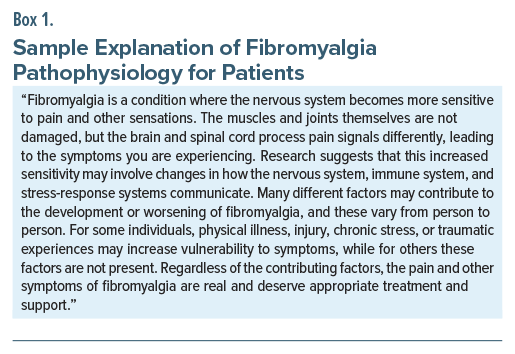
Patient education. Giving the diagnosis of fibromyalgia can be a therapeutic step to improve the health of patients who meet diagnostic criteria. Diagnostic uncertainty contributes to patient distress and frustration; conversely, a diagnosis provides legitimacy and reassurance so that patients can cope and employ evidence-based treatments.48 Patient education regarding the diagnosis is essential. Routine clinic testing and overall appearance of the patient may be normal, despite a patient’s pain scores being higher than those of patients with cancer.58 Written information should supplement verbal presentations, and the language used should be appropriate to the patient’s health literacy. A thorough explanation should include information on the pathophysiology, symptom management, and prognosis, while validating that the illness and functional disability experienced are real despite a lack of peripheral tissue damage (Box 1).50 Studies of descriptions of fibromyalgia in primary care offices in the United Kingdom suggest using specific language, citing the alteration of pain processing in the CNS, or more simply, an “abnormal volume control setting” for pain.59
Principles of Treatment
A patient-centered approach to treatment includes understanding the patient’s perspective, environment, strengths, and goals. The heterogeneity of disease means that a tailored approach is paramount; effective treatments vary between patients. When trauma or significant psychosocial stressors are present, recognizing and addressing these factors through trauma-informed care and appropriate behavioral health interventions may improve coping, engagement, and overall treatment outcomes. Identifying triggers may help patients better manage symptoms. Partners play an important role in treatment outcomes; fibromyalgia affects the mental health of both partners, and affectionate engagement has been shown to improve overall quality of life.51 Advocacy and support groups such as the National Fibromyalgia Association can be a valuable source of assistance for patients, relieving some of the caretaker burden in the home environment and allowing for greater patient self-efficacy.59 Patients who are newly diagnosed with fibromyalgia or establishing care may benefit from follow-up within several weeks to reinforce education, assess treatment tolerability, address questions, and establish a strong therapeutic alliance. Patients with fibromyalgia frequently report feeling disappointed, ignored, or powerless in prior interactions with the health care system, making early follow-up an important opportunity to rebuild trust, validate symptoms, and reinforce a collaborative treatment plan.60 Once symptoms and treatment are stable, follow-up every 3–6 months is generally appropriate to monitor symptoms, reinforce nonpharmacologic strategies, adjust treatment, and maintain the therapeutic alliance. When referrals for comanagement are made, scheduling a follow-up visit in primary care shortly thereafter may further reinforce continuity of care and help patients feel supported rather than abandoned.
Multimodal treatment is the mainstay of care. Physicians and other treatment providers (such as physical therapists and psychologists) employ various pharmacologic and nonpharmacologic interventions to target pain, sleep dysfunction, fatigue, anxiety, and depression, with the overall goal of improving quality of life. While a multidisciplinary team is ideal, consistent open communication among providers and with the patient is necessary to prevent communication of conflicting messages.59 Referrals for subspecialty care should be made thoughtfully and for specific treatment modalities or concerns; patients with fibromyalgia may feel rejected by their PCPs if they are sent to other physicians indiscriminately.49 Specifically, subspecialty referrals should be made when an evidence-based treatment modality is not offered in the primary care office, when first-line treatment has failed to treat a specific symptom (such as MDD that fails to respond to a routine antidepressant), or when a patient has a comorbid condition that is best addressed by a subspecialist (such as a sleep medicine physician for likely co-occurring obstructive sleep apnea).48
When a patient is not improving with use of at least 2 indicated medications of different classes, at an appropriate dose and duration, and at least 2 nonpharmacologic interventions, a logical and stepwise assessment should be undertaken. The diagnosis of fibromyalgia should be revisited, ensuring that the appropriate criteria have been met. Alternative and additional diagnoses should be considered, particularly given the high level of comorbidity with both psychiatric and physical illnesses. Underlying comorbidity can cause fibromyalgia symptoms to worsen, and other co-occurring diseases must be addressed with evidence-based treatments. Medication adherence should be fully assessed, particularly when patients are taking multiple medications. Nonpharmacologic strategies are also essential, and adherence should likewise be examined. Finally, psychosocial factors may interfere with effective treatment and are not always conscious; patients may fear the loss of support associated with illness-related roles or have pending disability claims that influence illness behavior.61 When such concerns arise, clinicians should explore them with open-ended, nonjudgmental questions and focus on collaborative goal setting around functional improvement rather than solely symptom elimination.
Setting realistic treatment expectations is essential. Promises of complete resolution of pain often lead to disappointment; for context, pharmacologic treatment for fibromyalgia defines a positive response as a 30% reduction in pain.61 Lack of realistic expectations can lead to frustration, decreased adherence to recommendations, and abandonment of treatment.50 Because of the subjective nature of symptoms, physicians may want to track response to individual symptoms and overall quality of life using tools such as the FIQR.53.
Nonpharmacologic Therapy
A wide array of nonpharmacologic therapies has been studied in the treatment of fibromyalgia. Because the ACR has not issued formal treatment guidelines for fibromyalgia, many clinicians reference recommendations from the European League Against Rheumatism, which identify 4 nonpharmacologic interventions supported by level 1A evidence: exercise, cognitive-behavioral therapy (CBT), mindfulness-based stress reduction, and acupuncture.50 An overview of Cochrane reviews similarly found that nonpharmacologic interventions, particularly exercise and psychological therapies, produce modest but clinically meaningful improvements in pain, physical function, and quality of life.62
Exercise is the mainstay of nonpharmacologic treatment. Both aerobic and resistance exercise improve pain, physical function, and sleep.51 Structured, prescribed exercise programs that take into account patient preference, resources, and fitness are most effective. Programs should begin at very low intensity and progress gradually according to patient tolerance. For markedly deconditioned individuals, this may initially involve only a few minutes of walking or walking 1–2 blocks before slowly increasing duration and intensity over time. Patients should also be counseled that temporary increases in pain or fatigue lasting several days after initiating exercise are common and do not necessarily indicate injury or treatment failure. Setting these expectations may improve adherence and reduce discouragement. Long-term goals are to progress toward approximately 150–300 minutes of moderate-intensity exercise weekly, consistent with guidance from the American College of Sports Medicine, with higher adherence associated with improved outcomes in fibromyalgia.63 While aerobic and resistance training have the strongest evidence, flexibility exercises and multicomponent practices such as yoga and tai chi may also improve physical function and quality of life and can be useful alternatives for patients who are not ready for the intensity of aerobic exercise.51,64
Psychological approaches also play an important role in the treatment of fibromyalgia. CBT focuses on reframing maladaptive thoughts, altering underlying schemas about pain and illness, and modifying behavioral responses, thereby improving coping and relieving emotional distress. CBT is the most studied form of therapy in the treatment of fibromyalgia, and it has decreased pain intensity, depression, and anxiety.51 Mindfulness-based stress reduction, a newer mindfulness modality with increasing evidence, enhances self-regulation of pain by reducing pain catastrophizing.50 Other types of therapy show promise in altering outcomes. Acceptance and commitment therapy shifts the patient’s focus from altering disease to living meaningfully; eye movement desensitization and reprocessing has the potential to impact depression, hypervigilance, and anxiety, particularly for those with a history of trauma.51
Integrative and device-based therapies may serve as useful adjuncts for fibromyalgia, particularly when they are matched to a patient’s dominant symptoms, comorbidities, and treatment preferences. Acupuncture has the strongest support among integrative approaches and may improve pain and fatigue, potentially through endorphin release and anti-inflammatory effects.50,51 Hydrotherapy has a less robust evidence base but may help improve pain and mobility.51,54 Dietary interventions can also be supportive. A Mediterranean-style diet, emphasizing omega-3 fatty acids and fresh vegetables, may be associated with improved quality of life, while a low fermentable oligosaccharides, disaccharides, monosaccharides, and polyols diet may reduce gastrointestinal symptoms in patients with prominent bowel complaints.51 For patients with comorbid obesity, weight loss through dietary change and exercise may also reduce fibromyalgia symptom burden.55 Wearable neuromodulation devices offer another nonpharmacologic option. Transcutaneous electrical nerve stimulation, for example, has shown modest improvements in symptom impact, pain, and function in clinical trials.63 One prescription device, Quell Fibromyalgia, has received US Food and Drug Administration (FDA) approval for adults with high pain sensitivity.
Sleep dysfunction is a key feature of fibromyalgia, and insomnia can trigger pain and psychiatric symptoms. Studies suggest that sleep disturbances may even be among the causative factors for fibromyalgia.7 Thus, assessing sleep practices and quality and promoting sleep hygiene are important aspects of care.58
Pharmacologic Therapy
Pharmacologic therapy should be considered an adjunct to nonpharmacologic treatment rather than the primary intervention. As with nonpharmacologic options, there is no “one-size-fits-all” prescription for the treatment of fibromyalgia. There are 3 medications that meet evidence level IA from the European League Against Rheumatism: amitriptyline, duloxetine, and pregabalin.50 Cochrane reviews differ slightly, identifying duloxetine, milnacipran, and pregabalin as providing moderate-to-good evidence for substantial pain relief.65
Serotonin-norepinephrine reuptake inhibitors (SNRIs) are generally considered first-line pharmacologic therapy. Studies demonstrate that duloxetine leads to the greatest improvement in symptoms with the lowest rate of discontinuation due to adverse effects.54 Duloxetine dose should be guided by patient response and tolerability; while studies show that doses less than 60 mg/day are ineffective, there was no difference found between doses of 60 mg/day and 120 mg/day.66 Duloxetine is particularly effective for patients with fibromyalgia who present with symptoms of depression or anxiety. The SNRI milnacipran has also been efficacious for the treatment of fibromyalgia, although there is evidence that duloxetine is superior to milnacipran in alleviating pain and improving sleep.
Second-line options include amitriptyline and pregabalin. Amitriptyline, a tricyclic antidepressant, is recommended at low dose (25 mg) and has improved sleep, fatigue, and overall quality of life.66 However, anticholinergic side effects may limit tolerability.51 Pregabalin, an α2δ calcium channel ligand, is FDA approved for fibromyalgia and may improve pain and sleep.66 However, it is a schedule V controlled substance with some potential for misuse. Isolated studies have suggested possible retinal structural changes associated with pregabalin use;54 however, these findings have not established a causal relationship, and routine avoidance in patients with glaucoma or diabetic retinopathy is not currently recommended. In practice, many insurers require patients to trial gabapentin before covering pregabalin. Gabapentin is commonly used off-label, but evidence supporting efficacy is limited.65 PCPs should also exercise caution given recent evidence suggesting a possible increased risk of dementia with gabapentin use, particularly in nonelderly adults.67
Other medications have more limited evidence and should generally be considered only after failure of the above options. Among pain medications, the weak opioid tramadol may be somewhat effective in reducing pain, possibly due to its serotonergic and noradrenergic properties.50,68 However, adverse effects, such as dizziness, drowsiness, constipation, and anxiety, prevent its use as first-line therapy.64 Other opioids have not been shown to significantly impact pain associated with fibromyalgia and thus are not recommended.51 However, emerging evidence shows that low-dose naltrexone (an opioid antagonist) may modulate pain in fibromyalgia with fewer side effects. Despite increasing evidence of the contribution that inflammation plays in fibromyalgia, nonsteroidal anti-inflammatory drugs have not been shown to provide significant pain relief compared to placebo and are not routinely recommended.69 Cannabinoids may have a therapeutic role, with tetrahydrocannabinol-rich compounds improving pain and cannabidiol-rich compounds offering anti-inflammatory effects with lower side effects, and are recommended in Canadian guidelines, particularly for sleep difficulties.51,66 Muscle relaxants are not first-line therapy, and long-term effectiveness has shown to be limited.51 However, the FDA recently approved a once-nightly sublingual long-acting formulation of cyclobenzaprine for fibromyalgia. In a randomized controlled trial, it modestly improved daily pain, sleep quality, and patient-reported outcomes compared to placebo, though global improvement scores were not significantly different.70 Thus, it can be considered as an adjunct for select patients. Nonprescription dietary supplements have also been explored as treatments for fibromyalgia. Among these, melatonin, coenzyme Q, vitamin E, and vitamin D have been shown to improve pain and/or quality of life, although the evidence is not strong enough to definitively recommend these.7,54 Figure 1 provides a treatment algorithm for PCPs.

Physician Factors in Treatment
PCPs often find patients with fibromyalgia challenging to treat; 1 UK-based study found that roughly three-fourths (76%) of physicians described caring for these patients as frustrating.49 Attitudes and beliefs of physicians can impact patient management, beliefs, and response to treatment.59 Qualitative analysis notes that negative feelings in the treatment of fibromyalgia can lead to a cyclic relationship in which physician and patient interactions feed on one another, degrading the alliance and worsening the relationship over time.49 Understanding and addressing negative physician beliefs and attitudes toward fibromyalgia, and patients who suffer from the disorder, may help improve both physician satisfaction and patient outcomes.
Negative feelings about fibromyalgia may stem from a lack of understanding about the disease. Throughout the 19th and 20th centuries, fibromyalgia was considered psychogenic.49 The absence of visible, objective signs and this historic context have contributed to skepticism in many physicians, with up to 1 in 5, as recently as 2010, describing patients with fibromyalgia as “malingerers.” Increasing evidence of the biological basis of fibromyalgia in the 21st century has begun to shift this perspective. Intentional symptom exaggeration can occur in any chronic medical condition, and clinicians should be cautious about assuming malingering in the absence of clear evidence. Physicians should remain attentive to potential biases while continuing to deepen their understanding of conditions involving complex interactions between physical and psychological processes.
System factors can contribute to this, particularly in resource-limited settings where referrals to subspecialty services may be delayed or difficult to access and indicated medications may not be available without insurance. Even in resource-rich health systems, access to the multidisciplinary care often recommended for fibromyalgia may be limited. Short appointment times add to frustration; many physicians cite patients with fibromyalgia as time-consuming.59 Authenticity and transparency can help physicians to set boundaries on what is possible in any visit. Physicians may also want to see patients with fibromyalgia more frequently so that objective goals can be met in shorter time increments.
What Happened to Ms S?
Ms S was subsequently managed longitudinally by her PCP using a multimodal, trauma-informed, patient-centered approach. Over time, she trialed several pharmacologic therapies (including duloxetine, amitriptyline, gabapentin, pregabalin, bupropion, and trazodone) that targeted pain, mood, and sleep. She also engaged in nonpharmacologic therapies including low-intensity exercise and CBT. She was referred to psychiatry to help address her mood and trauma symptoms. Through treatment, she achieved partial but meaningful improvement in her overall symptom burden. Regular follow-up in primary care allowed for ongoing monitoring, reinforcement of nonpharmacologic strategies, and iterative adjustment of her treatment plan. Over time, Ms S developed a clearer understanding of the complex interactions among her physical symptoms and psychological health. In particular, the targeted treatment of her mood and trauma-related symptoms contributed to improved coping, functional capacity, and quality of life, even as chronic pain persisted. This case highlights the central role of primary care in delivering longitudinal, coordinated, and trauma-informed management for patients with fibromyalgia.
CONCLUSIONS
Fibromyalgia is a common, yet frequently misunderstood, condition encountered in primary care, where patients often present with chronic pain, multisystem symptoms, and unremarkable diagnostic testing. Understanding fibromyalgia through a biopsychosocial framework that integrates central sensitization, stress physiology, immune dysregulation, and psychiatric comorbidity allows PCPs to move beyond diagnostic uncertainty and stigma toward effective, patient-centered care. Trauma exposure and co-occurring mood, anxiety, and somatic symptom disorders should not be viewed as alternative explanations for pain but rather as important modifiers that shape symptom severity, functional impairment, and treatment response.
As illustrated by the case of Ms S, PCPs are uniquely positioned to recognize fibromyalgia early, provide validation, screen for trauma and psychiatric comorbidities, initiate evidence-based treatment, and coordinate interdisciplinary support. By adopting trauma-informed communication and integrated management strategies, PCPs can strengthen the therapeutic alliance, reduce unnecessary testing and referrals, and support meaningful improvements in function and quality of life. Framing fibromyalgia at the mind-body intersection affirms the legitimacy of patient symptoms while equipping clinicians with practical tools to manage this complex condition in everyday practice.
Article Information
Published Online: November 17, 2026. https://doi.org/10.4088/PCC.26f04275
© 2026 Physicians Postgraduate Press, Inc.
Submitted: May 13, 2026; accepted July 31, 2026.
To Cite: Ketchum C, Baumgarten N, Robbins-Welty G, et al. Fibromyalgia: diagnosis and management in primary care. Prim Care Companion CNS Disord 2026;28(6):26f04275.
Author Affiliations: Department of Medicine, Emory University School of Medicine, Atlanta, Georgia (Ketchum); University of Washington School of Medicine, Seattle, Washington (Baumgarten); Department of Family and Preventative Medicine, Emory University School of Medicine and Grady Memorial Hospital, Atlanta, Georgia (Robbins-Welty); Departments of Psychiatry and Behavioral Sciences and Medicine, Emory University School of Medicine and Grady Memorial Hospital, Atlanta, Georgia (Robbins-Welty, Ward); Department of Psychiatry, Yale School of Medicine, New Haven, Connecticut (Dolber); Department of Psychiatry, Harvard Medical School and Massachusetts General Hospital, Boston, Massachusetts (Stern); Departments of Internal Medicine-Immunology and Psychiatry, University of Iowa, Iowa City, Iowa (Zembrzuska).
Corresponding Author: Courtney Ketchum, MD, Department of Medicine, Emory University School of Medicine, Atlanta, Georgia ([email protected]).
Dr Zembrzuska is the senior author.
Financial Disclosure: Dr Stern has received royalties from Elsevier for editing textbooks on psychiatry. The other authors report no conflicts or financial disclosures related to the subject of this article.
Funding/Support: None.
Clinical Points
- Fibromyalgia is a chronic condition characterized by musculoskeletal pain, fatigue, disturbed sleep, impaired cognition, and dysregulated mood; it is commonly comorbid with psychiatric disorders, other chronic pain conditions, and selected medical conditions.
- Chronic psychological stress, adverse childhood experiences, and trauma may contribute to the development and persistence of fibromyalgia through effects on stress-response systems, autonomic regulation, and immune function.
- Giving patients the diagnosis of fibromyalgia can provide a step toward improving their health, as diagnostic uncertainty contributes to patient distress and frustration.
- Since promises of complete resolution of pain often lead to disappointment, it is important to set realistic treatment expectations for those with fibromyalgia.
- Multimodal treatment is the mainstay of care, incorporating pharmacologic and nonpharmacologic strategies to target pain, sleep dysfunction, fatigue, anxiety, and depression, with the overall goal of improving function and quality of life.
- Subspecialty consultation should be considered for specific clinical indications, including diagnostic uncertainty, failure of first-line multimodal treatment, severe or refractory psychiatric comorbidities, significant sleep disorders, complex neurological symptoms, or when specialized therapies are required.
- Understanding and addressing negative physician beliefs and attitudes toward those with fibromyalgia may help improve physician satisfaction and patient outcomes.
References (70)

- Winslow BT, Vandal C, Dang L. Fibromyalgia: diagnosis and management. Am Fam Physician. 2023;107(2):137–144.
- Häuser W, Ablin J, Fitzcharles MA, et al. Fibromyalgia. Nat Rev Dis Primers. 2015;1(1):15022.
- Clauw DJ. Fibromyalgia: a clinical review. JAMA. 2014;311(15):1547–1555.
- Inanici F, Yunus MB. History of fibromyalgia: past to present. Curr Pain Headache Rep. 2004;8(5):369–378.
- Wolfe F, Walitt B. Culture, science and the changing nature of fibromyalgia. Nat Rev Rheumatol. 2013;9(12):751–755.
- Galvez-Sánchez CM, Reyes Del Paso GA. Diagnostic criteria for fibromyalgia: critical review and future perspectives. J Clin Med. 2020;9(4):1219.
- Siracusa R, Paola RD, Cuzzocrea S, et al. Fibromyalgia: pathogenesis, mechanisms, diagnosis and treatment options update. Int J Mol Sci. 2021;22(8):3891. CrossRef
- Jones GT, Atzeni F, Beasley M, et al. The prevalence of fibromyalgia in the general population: a comparison of the American College of Rheumatology 1990, 2010, and modified 2010 classification criteria. Arthritis Rheumatol. 2015;67(2):568–575. PubMed CrossRef
- Wolfe F, Walitt B, Perrot S, et al. Fibromyalgia diagnosis and biased assessment: sex, prevalence and bias. PLoS One. 2018;13(9):e0203755. PubMed CrossRef
- Creed F. A review of the incidence and risk factors for fibromyalgia and chronic widespread pain in population-based studies. Pain. 2020;161(6):1169–1176. PubMed CrossRef
- Heidari F, Afshari M, Moosazadeh M. Prevalence of fibromyalgia in general population and patients, a systematic review and meta-analysis. Rheumatol Int. 2017;37(9):1527–1539. PubMed CrossRef
- Walitt B, Nahin RL, Katz RS, et al. The prevalence and characteristics of fibromyalgia in the 2012 national health interview survey. PLOS ONE. 2015;10(9):e0138024. CrossRef
- Kleykamp BA, Ferguson MC, McNicol E, et al. The prevalence of psychiatric and chronic pain comorbidities in fibromyalgia: an ACTTION systematic review. Semin Arthritis Rheum. 2021;51(1):166–174. CrossRef
- Hudson JI, Goldenberg DL, Pope HG, et al. Comorbidity of fibromyalgia with medical and psychiatric disorders. Am J Med. 1992;92(4):363–367.
- Sleurs D, Tebeka S, Scognamiglio C, et al. Comorbidities of self-reported fibromyalgia in United States adults: a cross-sectional study from the national epidemiological survey on alcohol and related conditions (NESARC-III). Eur J Pain. 2020;24(8):1471–1483. PubMed CrossRef
- Clauw DJ. Fibromyalgia and related conditions. Mayo Clin Proc. 2015;90(5):680–692.
- Magen E, Tolkin L, Aamar S, et al. Endocrine comorbidities in fibromyalgia. Clin Endocrinol (Oxf). 2025.
- Kim SK, Kim SH, Lee CK, et al. Effect of fibromyalgia syndrome on the health-related quality of life and economic burden in Korea. Rheumatol Oxf. 2013;52(2):311–320. PubMed CrossRef
- Treister-Goltzman Y, Peleg R. Mood states and well-being of spouses of fibromyalgia patients: a systematic review and meta-analysis. Front Psychol. 2024;15:1411709. CrossRef
- D’Onghia M, Ciaffi J, Ruscitti P, et al. The economic burden of fibromyalgia: systematic literature review. Semin Arthritis Rheum. 2022;56:152060.
- Lacasse A, Bourgault P, Choinière M. Fibromyalgia-related costs and loss of productivity: a substantial societal burden. BMC Musculoskelet Disord. 2016;17:168. PubMed CrossRef
- Fleming KC, Volcheck MM. Central sensitization syndrome and the initial evaluation of a patient with fibromyalgia: a review. Rambam Maimonides Med J. 2015;6(2):e0020. PubMed CrossRef
- Russo M, Santarelli D, Georgius P, et al. A review of etiological biomarkers for fibromyalgia and their therapeutic implications. Pain Physician. 2024;27(8):495–506.
- Uçeyler N, Häuser W, Sommer C. Systematic review with meta-analysis: cytokines in fibromyalgia syndrome. BMC Musculoskelet Disord. 2011;12:245.
- O’Mahony LF, Srivastava A, Mehta P, et al. Is fibromyalgia associated with a unique cytokine profile? A systematic review and meta-analysis. Rheumatol Oxf. 2021;60(6):2602–2614.
- Atta AA, Ibrahim WW, Mohamed AF, et al. Microglia polarization in nociplastic pain: mechanisms and perspectives. Inflammopharmacology. 2023;31(3):1053–1067. CrossRef
- Beiner E, Brenner MS, Friederich HC, et al. Elevated high sensitive C-reactive protein in fibromyalgia. Front Psychiatry. 2023;14:1237518.
- Zetterman T, Markkula R, Kalso E. Elevated highly sensitive C-reactive protein in fibromyalgia associates with symptom severity. Rheumatol Adv Pract. 2022;6(2):rkac053. CrossRef
- Feinberg T, Sambamoorthi U, Lilly C, et al. Potential mediators between fibromyalgia and C-reactive protein: results from a large U.S. Community survey. BMC Musculoskelet Disord. 2017;18(1):294. PubMed CrossRef
- Xiao Y, Haynes W, Michalek J, et al. Elevated serum high-sensitivity C-reactive protein levels in fibromyalgia syndrome patients correlate with body mass index, interleukin-6, interleukin-8, erythrocyte sedimentation rate. Rheumatol Int. 2012;33(5):1259–1264. CrossRef
- Fanton S, Menezes J, Krock E, et al. Anti-satellite glia cell IgG antibodies in fibromyalgia patients are related to symptom severity and to metabolite concentrations in thalamus and rostral anterior cingulate cortex. Brain Behav Immun. 2023;114:371–382. CrossRef
- Goebel A. Fibromyalgia syndrome-am I an autoimmune condition?. Pain Rep. 2025;10(4):e1270.
- Goebel A, Krock E, Gentry C, et al. Passive transfer of fibromyalgia symptoms from patients to mice. J Clin Invest. 2021;131(13):e144201.
- Krock E, Morado-Urbina CE, Menezes J, et al. Fibromyalgia patients with elevated levels of anti-satellite glia cell immunoglobulin G antibodies present with more severe symptoms. Pain. 2023;164(8):1828–1840. CrossRef
- Dutta D, Brummett CM, Moser SE, et al. Heritability of the fibromyalgia phenotype varies by age. Arthritis Rheumatol. 2020;72(5):815–823.
- Kerrebijn I, Bjornsdottir G, Arbabi K, et al. The genetic architecture of fibromyalgia across 2.5 million individuals. medRxiv. 2025:2025.09.18.25335914.
- Tidmarsh LV, Harrison R, Ravindran D, et al. The influence of adverse childhood experiences in pain management: mechanisms, processes, and trauma-informed care. Front Pain Res (Lausanne). 2022;3:923866. CrossRef
- Gardoki-Souto I, Redolar-Ripoll D, Fontana M, et al. Prevalence and characterization of psychological trauma in patients with fibromyalgia: a cross-sectional study. Pain Res Manag. 2022;2022:2114451.
- Gündüz N, Polat A, Erzincan E, et al. Psychiatric comorbidity and childhood trauma in fibromyalgia syndrome. Turk J Phys Med Rehab. 2018;64(2):91–99. PubMed CrossRef
- Beiner E, Hermes M, Reichert J, et al. Early-life adversity as a predictor of fibromyalgia syndrome: the central role of perceived stress over endocrine stress indicators. Pain. 2025;166(8):1871–1881. CrossRef
- Yavne Y, Amital D, Watad A, et al. A systematic review of precipitating physical and psychological traumatic events in the development of fibromyalgia. Semin Arthritis Rheum. 2018;48(1):121–133. PubMed CrossRef
- Beiner E, Lucas V, Reichert J, et al. Stress biomarkers in individuals with fibromyalgia syndrome: a systematic review with meta-analysis. Pain. 2023;164(7):1416–1427. CrossRef
- Yamin JB, Meints SM, Pester BD, et al. Childhood abuse and health outcomes in patients with fibromyalgia: a cross-sectional exploratory study of the moderating effects of pain catastrophizing and mindfulness. BMC Musculoskelet Disord. 2025;26(1):195. CrossRef
- Avni C, Morr M, Sinai D, et al. Psychiatric comorbidities in fibromyalgia: comparison with chronic conditions and healthy controls. J Nerv Ment Dis. 2025;213(8):187–195. PubMed
- Wolfe F, Brähler E, Hinz A, et al. Fibromyalgia prevalence, somatic symptom reporting, and the dimensionality of polysymptomatic distress: results from a survey of the general population. Arthritis Care Res Hob. 2013;65(5):777–785. PubMed CrossRef
- Jafari M, Zadgari E, Amouzadeh-Lichahi M, et al. The global prevalence of depression and anxiety among fibromyalgia patients: a systematic review and meta-analysis. J Affect Disord. 2026;393(Pt A):120340. PubMed
- Chang MH, Hsu JW, Huang KL, et al. Bidirectional association between depression and fibromyalgia syndrome: a nationwide longitudinal study. J Pain. 2015;16(9):895–902. PubMed
- Häuser W, Sarzi-Puttini P, Fitzcharles MA. Fibromyalgia syndrome: under-over- and misdiagnosis. Clin Exp Rheumatol. 2019;37(Suppl 116):90–97.
- Byrne A, Jones K, Backhouse M, et al. Patient and primary care practitioners’ perspectives on consultations for fibromyalgia: a qualitative evidence synthesis. Prim Health Care Res Dev. 2023;24:e58. PubMed
- Filipovic T, Filipović A, Nikolic D, et al. Fibromyalgia: understanding, diagnosis and modern approaches to treatment. J Clin Med. 2025;14(3):955. PubMed
- Iannuccelli C, Favretti M, Dolcini G, et al. Fibromyalgia: one year in review 2025. Clin Exp Rheumatol. 2025;43(6):957–969. PubMed
- Wolfe F, Clauw DJ, Fitzcharles MA, et al. 2016 Revisions to the 2010/2011 fibromyalgia diagnostic criteria. Semin Arthritis Rheum. 2016;46(3):319–329.
- Carrasco-Vega E, Martínez-Moya M, Barni L, et al. Questionnaires for the subjective evaluation of patients with fibromyalgia: a systematic review. Eur J Phys Rehabil Med. 2023;59(3):353–363.
- Giorgi V, Bazzichi L, Batticciotto A, et al. Fibromyalgia: one year in review 2023. Clin Exp Rheumatol. 2023;41(6):1205–1213. PubMed
- D’Amuri A, Greco S, Pagani M, et al. Common non-rheumatic medical conditions mimicking fibromyalgia: a simple framework for differential diagnosis. Diagn (Basel). 2024;14(16):1758.
- Ursini F, Naty S, Grembiale RD. Fibromyalgia and obesity: the hidden link. Rheumatol Int. 2011;31(11):1403–1408. PubMed
- Fantuzzi G. Adipose tissue, adipokines, and inflammation. J Allergy Clin Immunol. 2005;115(5):911–919. PubMed
- Tran G, Gough A. Fibromyalgia remains the elephant in the clinic room. Rheumatol Oxf. 2023;62(10):3223–3224.
- McConnell K, Heron N, Hart ND. Explaining a diagnosis of fibromyalgia in primary care: a scoping review. BJGP Open. 2023;7(4):BJGPO.2023.0033. PubMed
- Otón T, Carmona L, Rivera J. Patient-journey of fibromyalgia patients: a scoping review. Reumatol Clin Engl Ed. 2024;20(2):96–103.
- Vidal LF, Messina O, Rodríguez T, et al. Refractory fibromyalgia. Clin Rheumatol. 2021;40(9):3853–3858. PubMed
- Bidonde J, Fisher E, Perrot S, et al. Effectiveness of non-pharmacological interventions for fibromyalgia and quality of review methods: an overview of Cochrane Reviews. Semin Arthritis Rheum. 2023;63:152248. PubMed
- Bull FC, Al-Ansari SS, Biddle S, et al. World Health Organization 2020 guidelines on physical activity and sedentary behaviour. Br J Sports Med. 2020;54(24):1451–1462. PubMed CrossRef
- Jurado-Priego LN, Cueto-Ureña C, Ramírez-Expósito MJ, et al. Fibromyalgia: a review of the pathophysiological mechanisms and multidisciplinary treatment strategies. Biomedicines. 2024;12(7):1543. PubMed
- Moore A, Bidonde J, Fisher E, et al. Effectiveness of pharmacological therapies for fibromyalgia syndrome in adults: an overview of Cochrane Reviews. Rheumatol Oxf. 2025;64(5):2385–2394. CrossRef
- Kia S, Choy E. Update on treatment guideline in fibromyalgia syndrome with focus on pharmacology. Biomedicines. 2017;5(2):20. CrossRef
- Eghrari NB, Yazji IH, Yavari B, et al. Risk of dementia following gabapentin prescription in chronic low back pain patients. Reg Anesth Pain Med. 2025:rapm-2025-106577.
- Sarzi-Puttini P, Giorgi V, Atzeni F, et al. Fibromyalgia position paper. Clin Exp Rheumatol. 2021;39(Suppl 130):186–193.
- García-Domínguez M. Fibromyalgia and inflammation: unrevealing the connection. Cells. 2025;14(4):271. PubMed
- Lederman S, Arnold LM, Vaughn B, et al. Efficacy and safety of sublingual cyclobenzaprine for the treatment of fibromyalgia: results from a randomized, double-blind, placebo-controlled trial. Arthritis Care Res Hob. 2023;75(11):2359–2368. CrossRef
Please sign in or purchase this PDF for $40.