
Abstract
Importance: Dermatologic and psychotropic therapies intersect frequently in patients with bipolar disorder, in whom systemic dermatologic medications may affect mood stability and mood stabilizers or antipsychotics may produce clinically important cutaneous adverse reactions. Because several medications discussed in this review are also used for psychotic disorders, severe or treatment-resistant major depressive disorder, suicidality, and other psychiatric conditions, this article distinguishes medication-related risks from considerations specific to bipolar disorder.
Observations: This narrative review synthesized English-language literature indexed in PubMed through June 29, 2026 addressing psychiatric adverse effects of dermatologic therapies and dermatologic adverse effects of psychotropic medications relevant to bipolar disorder. The literature consisted largely of case reports, case series, observational studies, pharmacovigilance analyses, and narrative or systematic reviews. No randomized controlled trials directly evaluating these bidirectional interactions in bipolar disorder were identified. Dermatologic agents such as isotretinoin, systemic corticosteroids, and methotrexate have been associated with mood destabilization in susceptible patients. Conversely, lithium and lamotrigine carry important dermatologic risks, including acneiform or psoriasiform eruptions, hidradenitis suppurativa, and severe cutaneous adverse reactions.
Conclusions and Relevance: Dermatologic-psychiatric drug interactions can be clinically significant and require careful screening, counseling, and longitudinal monitoring. Dermatologists, psychiatrists, and primary care clinicians should collaborate when initiating or modifying high-risk therapies, especially when psychiatric history, prior cutaneous drug reactions, polypharmacy, or rapid dose escalation increase risk.
Prim Care Companion CNS Disord 2026;28(5):26nr04252
Author affiliations are listed at the end of this article.

The intersection of dermatology and psychiatry represents a complex clinical domain wherein therapeutic interventions can produce unexpected, clinically significant, and occasionally severe systemic complications. Bipolar disorder, affecting approximately 1%–3% of the global population, routinely requires long-term pharmacologic management with lithium, mood stabilizers, and antipsychotics that carry well-established dermatologic risks.1 Conversely, dermatologic conditions requiring systemic therapy may precipitate psychiatric destabilization in susceptible populations, creating a challenging therapeutic landscape for clinicians across both specialties. Understanding these bidirectional interactions becomes critical when treating patients with bipolar disorder because these patients often receive long-term psychotropic medications while also requiring dermatologic therapies that may affect mood stability; however, many risks described here are medication-related and may also apply to patients receiving the same agents for other psychiatric indications.
Recent advances in our understanding of drug-induced adverse effects have highlighted the need for comprehensive systematic evaluation and clear, clinically oriented synthesis of interspecialty medication interactions. The clinical relevance of these interactions extends beyond isolated side effect profiles, potentially affecting treatment adherence, quality of life, and long-term therapeutic outcomes. Although cutaneous adverse reactions associated with psychotropic medications and psychiatric adverse effects related to dermatologic therapies have been well documented, there remains a gap in the literature on these interactions specifically among patients with bipolar disorder. Patients with bipolar disorder are at heightened risk for both dermatologic toxicity and mood destabilization, which are clinically important to anticipate, especially in this population. Thus, we present this narrative review to synthesize dermatologic adverse effects associated with commonly used psychiatric medications and psychiatric adverse effects associated with systemic dermatologic therapies in patients with bipolar disorder.
METHODS
We performed a narrative review of English-language literature indexed in PubMed and relevant references cited within included articles through June 29, 2026. Search terms included combinations of bipolar disorder, psychodermatology, lithium, lamotrigine, carbamazepine, antipsychotic, isotretinoin, systemic corticosteroid, methotrexate, dapsone, Stevens-Johnson syndrome, toxic epidermal necrolysis, DRESS, psoriasis, acne, hidradenitis suppurativa, mania, depression, suicidality, and drug interaction. We prioritized peer-reviewed clinical studies, case reports, case series, pharmacovigilance studies, narrative reviews, systematic reviews, and mechanistic papers that described psychiatric adverse effects of dermatologic therapies or dermatologic adverse effects of psychotropic medications used to treat bipolar disorder. Articles were excluded when they did not address a dermatologic-psychotropic medication interaction, did not include clinically actionable adverse effects, or were not available in English.
The final cited literature comprised 30 sources, including 6 case reports or case series, 1 observational cohort/pharmacovigilance study, 4 systematic reviews or meta-analyses, 8 narrative reviews, and 11 mechanistic or guideline-relevant safety papers. No randomized controlled trials directly evaluating dermatologic-psychotropic drug interactions in bipolar disorder were identified. Because the literature is heterogeneous and largely nonrandomized, findings are summarized qualitatively by medication class, adverse effect profile, and practical management implications.
RESULTS
Pathophysiology of Dermatologic-Psychiatric Drug Interactions
In patients treated for bipolar disorder, bidirectional dermatologic and psychiatric drug reactions may be understood in part through shared neuroendocrine and neuroimmune pathways that influence both mood regulation and cutaneous homeostasis. Aberrant immune activation represents a central mechanism, as bipolar disorder has been associated with elevated levels of proinflammatory cytokines, including interleukin (IL)-6, tumor necrosis factor-alpha (TNF-α), and C-reactive protein.2 These cytokines also are key drivers of dermatologic disease pathogenesis, particularly in psoriasis and acneiform conditions.3 Neuroimmune crosstalk further links the nervous and cutaneous systems: Keratinocytes express receptors for serotonin, dopamine, and substance P, allowing psychotropic medications to directly influence epidermal proliferation, barrier function, and inflammatory signaling.4–6
The hypothalamic-pituitary-adrenal (HPA) axis plays a critical role in mediating psychiatric reactions to dermatologic therapies. Systemic glucocorticoids dysregulate the HPA axis, increasing dopaminergic signaling and precipitating manic or hypomanic episodes in susceptible patients.7 Conversely, lithium interferes with cutaneous inositol monophosphate signaling pathways, which can enhance keratinocyte proliferation and cytokine release, analogous to psoriatic inflammation.8,9
Lamotrigine-associated severe cutaneous adverse reactions (SCARs) reflect T-cell–mediated immune activation, in which HLA-restricted presentation of drug metabolites triggers cytotoxic lymphocyte responses.8,9 These pathophysiologic mechanisms provide biological plausibility for cross-system toxicities; however, many risks discussed here are medication related and may also apply to patients receiving the same agents for other psychiatric illnesses. Bipolar disorder remains a clinically useful focus because mood stabilizers, antipsychotics, and systemic dermatologic therapies commonly intersect in this population.2
Dermatologic Therapies and Psychiatric Complications
Isotretinoin. The administration of dermatologic treatments to patients with bipolar disorder warrants careful consideration due to potential psychiatric adverse effects, with isotretinoin representing the most extensively documented and concerning agent. Multiple studies demonstrate that isotretinoin exposure in patients with bipolar disorder is associated with mood symptom exacerbation rates approaching 90%, with 30% of patients developing suicidal ideation.10 A retrospective cohort review of 10 patients with bipolar disorder receiving isotretinoin revealed that concurrent psychotropic medications did not prevent psychiatric destabilization, with 5 of 9 symptomatic patients (whose symptoms ranged from suicidal ideation to hypomania) requiring discontinuation of isotretinoin due to worsening psychiatric status. The psychiatric effects of isotretinoin were so profound that only discontinuing isotretinoin led to their complete resolution.10
The neurobiological mechanisms underlying isotretinoin-associated psychiatric side effects remain incompletely understood but appear to involve multiple pathways. Neuroimaging studies have identified decreased brain metabolism in the orbitofrontal cortex, a region critical for mood regulation.10 Additional hypotheses include dysregulation of neurotransmitters in the striatum and hippocampus, dopaminergic system disruption, and inhibition of hippocampal neurogenesis. Isotretinoin’s vitamin A derivative properties may further contribute to psychiatric destabilization, as case reports have documented an association between high-dose vitamin A supplementation and the acute onset of neuropsychiatric symptoms in patients with unremarkable psychiatric histories.11,12 The neuropsychiatric manifestations of vitamin A toxicity may be due to the presence of vitamin A receptors in parts of the brain that have also been identified in the pathophysiology of depressive disorders, such as the hippocampus, amygdala, and thalamus.13 For example, an 18-year-old woman presented with frequent depressive episodes 6 months after starting vitamin A treatment for acne. The depressive episode included insomnia and weight loss; she subsequently developed symptoms concerning for pseudotumor cerebri (headaches, papilledema, and tinnitus).14 Within 2 weeks of discontinuing vitamin A, her neurological and psychiatric symptoms resolved.
Corticosteroids. Systemic corticosteroid therapy represents another well-recognized risk factor for psychiatric complications, particularly in patients with subthreshold or established bipolar disorders. A recent case report described a 30-year-old woman who developed a severe manic episode requiring involuntary hospitalization following treatment with high-dose methylprednisolone (160 mg/day for 5 days) for an asthma exacerbation, achieving a Young Mania Rating Scale score of 41 (scoring range of 1–6: borderline mentally ill; 7–12: mildly ill; 13–20: moderately ill; 21–30: markedly ill; 31–40: severely ill; and 41–45: most extremely ill).15,16 This psychiatric reaction occurred despite the patient experiencing only subthreshold bipolar symptoms prior to corticosteroid exposure, highlighting the vulnerability of patients with any symptoms of bipolar disorder. Corticosteroid-induced mania demonstrates dose-dependent characteristics, with risk increasing to 18.4% at prednisone-equivalent doses exceeding 80 mg daily.15,17 The pathophysiology of corticosteroid-induced mania involves dysregulation of the HPA axis and disruption of neurotransmitter systems, particularly dopamine and serotonin pathways.15 Intravenous corticosteroid administration appears to confer a higher risk than oral formulations due to increased blood concentrations, suggesting that route of administration represents an important risk factor for psychiatric complications.15 Given these considerations, pretreatment screening for bipolar spectrum symptoms and cautious dose selection and escalation strategies are recommended for systemic corticosteroid use, particularly in high-risk populations. Furthermore, clinicians should be aware that these psychiatric complications can be recurrent; it is essential to ask about prior episodes, especially in patients with conditions like multiple sclerosis or systemic lupus erythematosus that frequently require high-dose bolus corticosteroid therapy to treat disease flares.17
Methotrexate. Methotrexate therapy has been infrequently associated with precipitation of manic episodes in patients with bipolar disorder, with 1 case report of a 55-year-old man needing recurrent hospitalizations for severe manic episodes following methotrexate treatment (dosage not specified) for psoriasis management.18 The patient’s second manic episode proved more severe and treatment resistant, requiring prolonged hospitalization and combined stabilizer and antipsychotic treatment. The proposed mechanisms involve folate metabolism interference through dihydrofolate reductase inhibition, disrupting neurotransmitter synthesis pathways essential for mood stability. The clinical implications of methotrexate-induced manic episodes extend beyond the acute episode, as demonstrated by the patient’s deterioration upon rechallenge with methotrexate. This pattern suggests that sensitivity to methotrexate-induced psychiatric side effects may persist or intensify following initial exposure, necessitating permanent avoidance of the agent in susceptible patients. Therefore, clinicians should be vigilant when initiating methotrexate in patients with known or suspected bipolar spectrum disorders, even at standard dermatologic dosing ranges, and should consider alternative therapies if psychiatric destabilization occurs.
Psychiatric Therapies and Dermatologic Complications
Lithium. Lithium, a cornerstone treatment for bipolar disorder, is associated with well-established dermatologic risks that can significantly impact patient medication adherence and quality of life. The association between lithium and dermatologic side effects represents one of the most clinically significant psychotropic-dermatologic medication interactions, with reported prevalence rates of all dermatologic side effects ranging from 3.4% to 45% and psoriasis incidence rates of 1.8% to 6% in lithium-treated patients 1. These reactions can be severe and treatment resistant, often requiring modification or discontinuation of lithium.1 A recent case series of 2 patients (a 26-year-old woman and a 31-year-old man) demonstrated lithium-induced acne inversa (hidradenitis suppurativa), a rare but severe dermatologic complication characterized by Hurley stage II disease, defined by recurrent abscesses with sinus tract formation and scarring and widely separated lesions.19 Both cases involved patients with bipolar disorder who developed moderate to severe acne inversa refractory to standard dermatologic treatments, including topical antibiotics and oral doxycycline. The condition resolved only following lithium discontinuation and substitution with alternative mood stabilizers.19
The pathophysiology of lithium-induced dermatologic reactions involves multiple interconnected mechanisms. Lithium reduces cyclic adenosine monophosphate and inositol levels, leading to altered calcium homeostasis and increased keratinocyte proliferation 1. The medication also modulates immune function by dysregulating proinflammatory cytokines, including tumor growth factor-alpha, interferon-gamma, and IL-2, while enhancing neutrophil chemotaxis and phagocytic activity.1,19 These effects promote direct epidermal hyperproliferation and impair skin barrier integrity.1
The management of lithium-induced dermatologic complications typically requires a multidisciplinary approach combining conventional dermatologic treatments with consideration of psychotropic medication regimen modification in refractory cases. Conventional dermatologic therapies, including topical corticosteroids, vitamin D analogs, retinoids, methotrexate, and phototherapy, may provide partial benefit but are frequently insufficient.1 Newer therapeutic approaches include omega-3 fatty acid supplementation, TNF-α inhibitors (eg, etanercept), and inositol supplementation aimed at counteracting lithium-related metabolic effects.1
Lamotrigine. Lamotrigine, a commonly used mood stabilizer in managing bipolar disorder, carries a well-recognized risk of SCARs, including Stevens-Johnson syndrome (SJS) and toxic epidermal necrolysis (TEN). Mortality rates are up to 10% for SJS and 30%–50% for TEN, underscoring the need for prompt recognition and urgent intervention when early signs of these reactions emerge. The pathophysiology involves delayed-type hypersensitivity reactions mediated by cytotoxic T lymphocytes and natural killer cells.20 Prevention strategies include US Food and Drug Administration–recommended genetic screening for HLA-B*15:02, particularly in patients of Asian ancestry, in whom this allele significantly increases the risk of SJS/TEN.20 Risk mitigation further relies on low initial dosing and gradual titration, especially when lamotrigine is coadministered with valproate, which inhibits lamotrigine metabolism and increases lamotrigine concentrations and associated toxicity risk.20
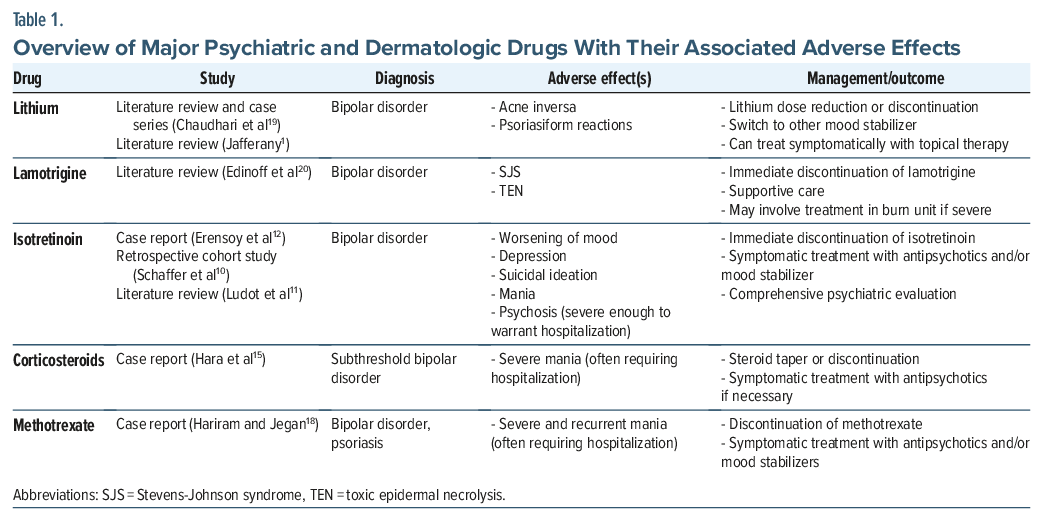
The management of SJS/TEN requires immediate lamotrigine discontinuation and aggressive supportive care, often necessitating transfer to specialized burn or intensive care units. Because SJS/TEN is a life-threatening medical emergency, clinicians must prioritize its immediate treatment; concerns regarding the emergence of mood symptoms following abrupt lamotrigine cessation should not delay its discontinuation. Treatment modalities include intravenous immunoglobulin, systemic corticosteroids, cyclosporine, and plasmapheresis, although outcomes vary considerably across these interventions.20 Given lamotrigine’s growing use in bipolar disorder, dermatologists play a critical role in early recognition of SCARs, counseling at-risk patients, and interdisciplinary management of these potentially fatal reactions. Table 1 provides an overview of major psychiatric and dermatologic drugs and associated side effects.
While lithium and lamotrigine are the most notable psychiatric medications with dermatologic side effects, clinicians should also be aware that carbamazepine and certain antipsychotics carry a risk for SCARs, including SJS/TEN and drug reaction with eosinophilia and systemic symptoms (DRESS). Carbamazepine is a well-documented trigger for SJS/TEN, particularly in patients with the HLA-B*1502 allele, which is highly prevalent in certain Asian populations.21 Therefore, it is recommended to screen for this allele prior to initiation of carbamazepine in this patient population. Additionally, certain second-generation antipsychotics, notably olanzapine and quetiapine, have been associated with DRESS syndrome and other severe hypersensitivity reactions.22,23
Interdisciplinary Collaboration Between Dermatology and Psychiatry
Interdisciplinary collaboration and proactive risk assessment between dermatology and psychiatry are essential for the early identification and mitigation of risk in patients with bipolar disorder and coexisting dermatologic comorbidities. Multiple patient-, medication-, and disease-specific factors can increase vulnerability to dermatologic and psychiatric drug interactions, emphasizing the need for early interdisciplinary involvement.
In bipolar disorder, a personal or family history can be one of the strongest predictors of corticosteroid-or isotretinoin-induced mood destabilization.24 This suggests an underlying genetic predisposition to neurochemical dysregulation. Additionally, a prior history of drug-associated skin reactions increases the risk of SCARs with lamotrigine and other antiepileptics, especially among individuals carrying HLA-B*15: 02 or HLA-A*31:01 alleles.25,26
Medication regimen complexity further demonstrates the need for an interdisciplinary team. Polypharmacy, such as valproate coadministration increasing lamotrigine serum levels or combinations of stimulants and antidepressants potentiating corticosteroid-induced or isotretinoin-induced mania, can significantly potentiate the toxicity risk.27 Additional destabilizing factors, including substance use, sleep disruption, and metabolic dysregulation, may affect treatment tolerability and heighten immune activation.28 Rapid dose escalation, intravenous corticosteroid use, and high-dose systemic therapy also correlate with greater risk of dermatologic and psychiatric complications, further highlighting the need for coordinated patient monitoring strategies.29
Overall, the findings of this review highlight the importance of interdisciplinary collaboration and timely risk assessment. Given the high rates of adverse reactions observed, especially with agents such as isotretinoin and lithium, clinicians should prioritize comprehensive screening for psychiatric and dermatologic histories, employ shared decision-making, and maintain vigilant longitudinal monitoring throughout treatment. The development of formal interdisciplinary protocols and the expansion of psychodermatology consultation services may further optimize patient outcomes.30 Specifically, integrating psychiatric clinicians into dermatology clinics is highly desirable to ensure timely, reliable access to psychiatric care.
Limitations
This review is limited by the predominance of case reports, case series, and narrative reviews, which restrict the generalizability of the findings. Included studies varied widely in design, methodology, and reporting, complicating data synthesis and analysis. The search was limited to English-language articles in PubMed, introducing possible language and publication bias.
Additionally, studies with severe or unusual adverse effects may be overrepresented, and the lack of long-term follow-up in many case reports limits assessment of causality and detection of persistent adverse reactions. Future research should focus on prospective studies and the creation of standardized guidelines to better address these complex interdisciplinary drug interactions.
CONCLUSION
The evidence presented in this review demonstrates the critical need for recognizing and proactively managing dermatologic-psychiatric drug interactions in patients with bipolar disorder. Dermatologic treatments, particularly isotretinoin, corticosteroids, and methotrexate, pose substantial psychiatric risks in this population, including severe mood destabilization and, in some reports, life-threatening outcomes such as suicidal behavior, with mood symptom exacerbation rates approaching 90% in select studies.
Conversely, psychotropic medications essential for bipolar disorder management, most notably lithium and lamotrigine, carry significant dermatologic risks ranging from treatment-refractory skin conditions to life-threatening hypersensitivity reactions. The mechanisms underlying these bidirectional interactions involve complex disruptions in shared neuro-immuno-dermatologic pathways, highlighting the interconnected nature of skin and mental health. As our understanding of these interactions continues to evolve, clinicians are advised to remain vigilant for emerging patterns of adverse effects while prioritizing patient safety through comprehensive risk stratification, shared decision-making, and close interdisciplinary collaboration between psychiatry and dermatology.
Article Information
Published Online: October 8, 2026. https://doi.org/10.4088/PCC.26nr04252
© 2026 Physicians Postgraduate Press, Inc.
Submitted: April 13, 2026; accepted June 28, 2026.
To Cite: Mack D, Modanlo N, Park I, et al. Skin and brain in bipolar disorder: a review of dermatologic-psychotropic drug interactions. Prim Care Companion CNS Disord.2026;28(5):26nr04252.
Author Affiliations: David Geffen School of Medicine, UCLA, Los Angeles, California (Mack, Modanlo, Park); NorCal Neurostimulation, Folsom, California (Yan); Department of Psychiatry and Behavioral Sciences, University of California, Davis Medical Center, Sacramento, California (Bourgeois).
Corresponding Author: Drew Mack, BS, David Geffen School of Medicine, UCLA, 757 Westwood Plaza, Los Angeles, CA 90095 ([email protected]).
Financial Disclosure: None.
Funding/Support: None.
ORCID: Drew Mack: https://orcid.org/0009-0003-9212-6072; Nina Modanlo: https://orcid.org/0000-0003-1156-7566; Ingyun Park: https://orcid.org/0009-0004-5218-9367; James Alan Bourgeois: https://orcid.org/0000-0002-1426-474
Clinical Points
- Before initiating isotretinoin or systemic corticosteroids in patients with bipolar disorder, clinicians should assess psychiatric history, counsel patients about possible mood destabilization, and arrange close monitoring for mania, depression, or suicidality.
- Lithium may cause or worsen psoriasis, acneiform eruptions, and hidradenitis suppurativa, whereas a rapidly progressive rash with mucosal involvement during lamotrigine therapy should raise concern for Stevens-Johnson syndrome or toxic epidermal necrolysis and prompt immediate discontinuation of lamotrigine and urgent evaluation.
- Dermatologists, psychiatrists, and primary care clinicians should coordinate high-risk treatment decisions when prior cutaneous drug reactions, polypharmacy, rapid dose escalation, or concomitant valproate increase the risk of psychiatric or cutaneous toxicity.
References (30)

- Jafferany M. Lithium and psoriasis. Prim Care Companion J Clin Psychiatry. 2008;10(06):435–439.
- Solmi M, Suresh Sharma M, Osimo EF, et al. Peripheral levels of C-reactive protein, tumor necrosis factor-α, interleukin-6, and interleukin-1β across the mood spectrum in bipolar disorder: a meta-analysis of mean differences and variability. Brain Behav Immun. 2021;97:193–203. CrossRef
- Nestle FO, Kaplan DH, Barker J. Psoriasis. New Engl J Med. 2009;361(5):496–509.
- Pondeljak N, Lugović-Mihić L. Stress-induced interaction of skin immune cells, hormones, and neurotransmitters. Clin Ther. 2020;42(5):757–770.
- Sandoval-Talamantes AK, Gómez-González BA, Uriarte-Mayorga DF, et al. Neurotransmitters, neuropeptides and their receptors interact with immune response in healthy and psoriatic skin. Neuropeptides. 2020;79:102004. PubMed CrossRef
- Roosterman D, Goerge T, Schneider SW, et al. Neuronal control of skin function: the skin as a neuroimmunoendocrine organ. Physiol Rev. 2006;86(4):1309–1379. PubMed CrossRef
- Warrington TP, Bostwick JM. Psychiatric adverse effects of corticosteroids. Mayo Clin Proc. 2006;81(10):1361–1367.
- Duong TA, Valeyrie-Allanore L, Wolkenstein P, et al. Severe cutaneous adverse reactions to drugs. Lancet. 2017;390(10106):1996–2011.
- Żełabowski K, Wojtysiak K, Ratka Z, et al. Lamotrigine therapy: relation between treatment of bipolar affective disorder and incidence of Stevens–Johnson syndrome—a narrative review of the existing literature. J Clin Med. 2025;14(12):4103. PubMed CrossRef
- Schaffer LC, Schaffer CB, Hunter S, et al. Psychiatric reactions to isotretinoin in patients with bipolar disorder. J Affect Disord. 2010;122(3):306–308.
- Ludot M, Mouchabac S, Ferreri F. Inter-relationships between isotretinoin treatment and psychiatric disorders: depression, bipolar disorder, anxiety, psychosis and suicide risks. World J Psychiatry. 2015;5(2):222–227. PubMed CrossRef
- Erensoy H, Ceylan ME, Ceylan HZ. Isotretinoin and psychotic mania. West Indian Med J. 2014 Sep;63(5):555–556.
- Bremner JD. Isotretinoin and neuropsychiatric side effects: continued vigilance is needed. J Affect Disord Rep. 2021;6:100230.
- Restak RM. Pseudotumor cerebri, psychosis, and hypervitaminosis A. J Nerv Ment Dis. 1972;155(1):72–75.
- Hara T, Kaichi Y, Imai K, et al. A severe manic episode induced by corticosteroid treatment in a patient with subthreshold bipolar disorder. Cureus. 2025;9;17(2):e78765.
- Samara MT, Levine SZ, Leucht S. Linkage of Young Mania Rating Scale to Clinical Global Impression Scale to enhance utility in clinical practice and research trials. Pharmacopsychiatry. 2023;56(01):18–24. PubMed CrossRef
- Dubovsky AN, Arvikar S, Stern TA, et al. The neuropsychiatric complications of glucocorticoid use: steroid psychosis revisited. Psychosomatics. 2012;53(2):103–115.
- Hariram J, Jegan Y. Contribution of methotrexate in precipitation of manic episode in bipolar affective disorder explored: a case report. Ther Adv Psychopharmacol. 2013;3(4):251–254. PubMed CrossRef
- Chaudhari D, Vohra RR, Abdefatah Ali M, et al. A rare phenomenon of lithium-associated acne inversa: a case series and literature review. Cureus; 2023.
- Edinoff AN, Nguyen LH, Fitz-Gerald MJ, et al. Lamotrigine and Stevens-Johnson syndrome prevention. Psychopharmacol Bull. 2021;51(2):96–114.
- Chung WH, Hung SI, Hong HS, et al. A marker for Stevens–Johnson syndrome. Nature. 2004;428(6982):486.
- Gentile S. Safety concerns associated with second-generation antipsychotic long-acting injection treatment. A systematic update. Horm Mol Biol Clin Investig. 2018;36(2).
- Bommersbach TJ, Lapid MI, Leung JG, et al. Management of psychotropic drug–induced DRESS syndrome: a systematic review. Mayo Clin Proc. 2016;91(6):787–801. PubMed CrossRef
- Tan NKW, Tang A, MacAlevey NCYL, et al. Risk of suicide and psychiatric disorders among isotretinoin users. JAMA Dermatol. 2024;160(1):54–62.
- Alvarado AT, Zavaleta AI, Li-Amenero C, et al. Role of pharmacogenomics for prevention of hypersensitivity reactions induced by aromatic antiseizure medications. Front Pharmacol. 2025;16:1640401. CrossRef
- Perucca P, Gilliam FG. Adverse effects of antiepileptic drugs. Lancet Neurol. 2012;11(9):792–802.
- de Leon J, Spina E. Possible pharmacodynamic and pharmacokinetic drug-drug interactions that are likely to Be clinically relevant and/or frequent in bipolar disorder. Curr Psychiatry Rep. 2018;20(3):17. CrossRef
- Grande I, Berk M, Birmaher B, et al. Bipolar disorder. Lancet. 2016;387(10027):1561–1572.
- Lima JP, Chowdhury SR, Tangamornsuksan W, et al. Adverse events following short-course systemic corticosteroids among children and adolescents. JAMA Netw Open. 2025;8(9):e2534953.
- Azambuja RD. The need of dermatologists, psychiatrists and psychologists joint care in psychodermatology. Bras Dermatol. 2017;92(1):63–71. PubMed CrossRef
Please sign in or purchase this PDF for $40.