
Abstract
Importance: Catatonia is a neuropsychiatric syndrome characterized by abnormalities in motor behavior, speech, volition, and affect. Although historically associated with schizophrenia, contemporary diagnostic frameworks recognize catatonia as a transdiagnostic condition occurring across psychiatric, medical, and neurological disorders. Despite its potential for serious complications (including dehydration, autonomic instability, and malignant catatonia), the syndrome remains underrecognized in many clinical settings.
Observations: A focused PubMed/MEDLINE search was conducted using combinations of keywords related to catatonia, diagnosis, and treatment. Publications from the past decade were prioritized, with foundational studies included when necessary for diagnostic instruments. Thirty PubMed-indexed studies were selected as the core evidence set and synthesized narratively due to heterogeneity in study design and outcome reporting. Across the literature, diagnosis consistently requires the presence of 3 or more characteristic psychomotor signs, with the Bush-Francis Catatonia Rating Scale representing the most widely used structured assessment tool. Epidemiologic studies estimate an annual incidence of approximately 5.15 cases per 100,000 persons, while prevalence may exceed 10% in psychiatric inpatient populations. Benzodiazepines, particularly lorazepam, remain first-line therapy with response rates ranging from 66 to 100%. Electroconvulsive therapy demonstrates response rates approaching 80–100% in severe or refractory cases.
Conclusions: Catatonia is a highly treatable yet frequently missed syndrome. Improved recognition, systematic screening, and timely treatment remain essential to reducing morbidity and improving patient outcomes.
Prim Care Companion CNS Disord 2026;28(5):26nr04231
Author affiliations are listed at the end of this article.
From the Editors

Are you a healthcare provider?
Add your NPI to personalize your JCP experience.
Catatonia is a psychomotor syndrome characterized by abnormalities in movement, speech, behavior, and autonomic function that may arise across a wide range of psychiatric, neurological, and general medical conditions.1,2 Although historically linked to schizophrenia, current diagnostic systems define catatonia as a transdiagnostic syndrome that may accompany mood disorders, psychotic disorders, neurodevelopmental conditions such as autism spectrum disorder (ASD), autoimmune and infectious encephalitis, metabolic derangements, and critical illness.1–7 This shift is reflected in both the Diagnostic and Statistical Manual of Mental Disorders, Fifth Edition (DSM-5), and the International Classification of Diseases, Eleventh Revision (ICD-11), which recognize catatonia as a syndrome that can occur across multiple underlying conditions rather than as a schizophrenia-specific subtype.1,2
This conceptual change has proven to be clinically meaningful as catatonia continues to be underrecognized, especially outside psychiatric settings.1,3,8,9 Its presentation overlaps with delirium, neuroleptic malignant syndrome, medication effects, akinetic mutism, encephalitis, and severe mood or psychotic states, creating diagnostic ambiguity precisely in settings where delayed recognition may be most harmful.1,2,3,8 Untreated catatonia has been associated with outcomes such as dehydration, malnutrition, venous thromboembolism, pressure injury, autonomic instability, infection, and progression to malignant catatonia.1,3,7,10
Recent epidemiologic studies suggest that catatonia is uncommon at that population level but substantially more frequent in high-risk clinical settings.3,6,11 Population-based estimates put annual incidence estimates in the range of approximately 4–5 cases per 100,000 persons, whereas prevalence is markedly higher in psychiatric inpatient populations and in select neurodevelopmental groups.3,5,6 In ASD, pooled data suggest that catatonic features occur in roughly 10% of affected individuals, with symptom-cluster analyses indicating that current criteria may not fully represent how catatonia presents in autistic populations.5,12
Catatonia is also notable for its therapeutic responsiveness. Benzodiazepines, particularly lorazepam, remain the standard first-line pharmacologic treatment, and electroconvulsive therapy (ECT) is consistently identified as the most effective intervention for severe, malignant, or benzodiazepine-refractory cases.1,2,10,13–17 At the same time, recent attention has been directed toward adjunctive or second-line treatment strategies, such as zolpidem, ketamine, memantine, amantadine, and selected anticonvulsants, although the supporting evidence remains limited currently.18,19–22
Given the expanding literature and continuing diagnostic uncertainty surrounding catatonia, an updated synthesis of current evidence is warranted. This systematic narrative review summarizes contemporary findings on the diagnosis, differential diagnosis, epidemiology, and treatment of catatonia using a curated core evidence set of PubMed-indexed studies. The goal of this review is to provide a clinically focused, evidence-based overview that translates recent literature into diagnostic vigilance and practical treatment decision-making.
METHODS
A focused literature search was conducted in PubMed/MEDLINE to identify clinically relevant studies addressing the diagnosis and treatment of catatonia. Search strategies combined MeSH terms and keywords related to catatonia and its management, including catatonia, catatonic, diagnosis, diagnostic criteria, treatment, benzodiazepines, lorazepam, electroconvulsive therapy, ECT, zolpidem, ketamine, and rating scale. Additional terms were used to capture diagnostic frameworks and relevant clinical contexts, including DSM-5, ICD-11, Bush-Francis Catatonia Rating Scale, differential diagnosis, delirium, neuroleptic malignant syndrome, autoimmune encephalitis, and consultation-liaison psychiatry.
This search prioritized human studies published primarily within the past 10 years, while allowing for the inclusion of older foundational articles when necessary to support current diagnostic practice, particularly for widely used assessment tools. Additional search modifiers were used to identify literature in pediatric, ASD, medically ill, critically ill, and geriatric populations. Titles and abstracts were screened for relevance to catatonia diagnosis, epidemiology, differential diagnosis, or treatment, and potentially relevant articles subsequently underwent full-text review.
Studies were included if they were PubMed indexed and focused primarily on catatonia-related diagnostic frameworks, clinical assessment, epidemiology, or therapeutic management with clear clinical applicability. Priority was given to consensus guidelines, systematic reviews, prospective cohort studies, meta-analyses, epidemiologic studies, and clinically oriented reviews. Articles were excluded if they were not indexed in PubMed, did not primarily address catatonia diagnosis or treatment, or consisted solely of isolated case reports without broader literature synthesis. Basic science and nonclinical publications without direct translational relevance were also excluded. After screening and full-text review, 30 studies were selected as the core evidence set for this narrative synthesis. The characteristics and contributions of the 30 included studies are summarized in Table 1.
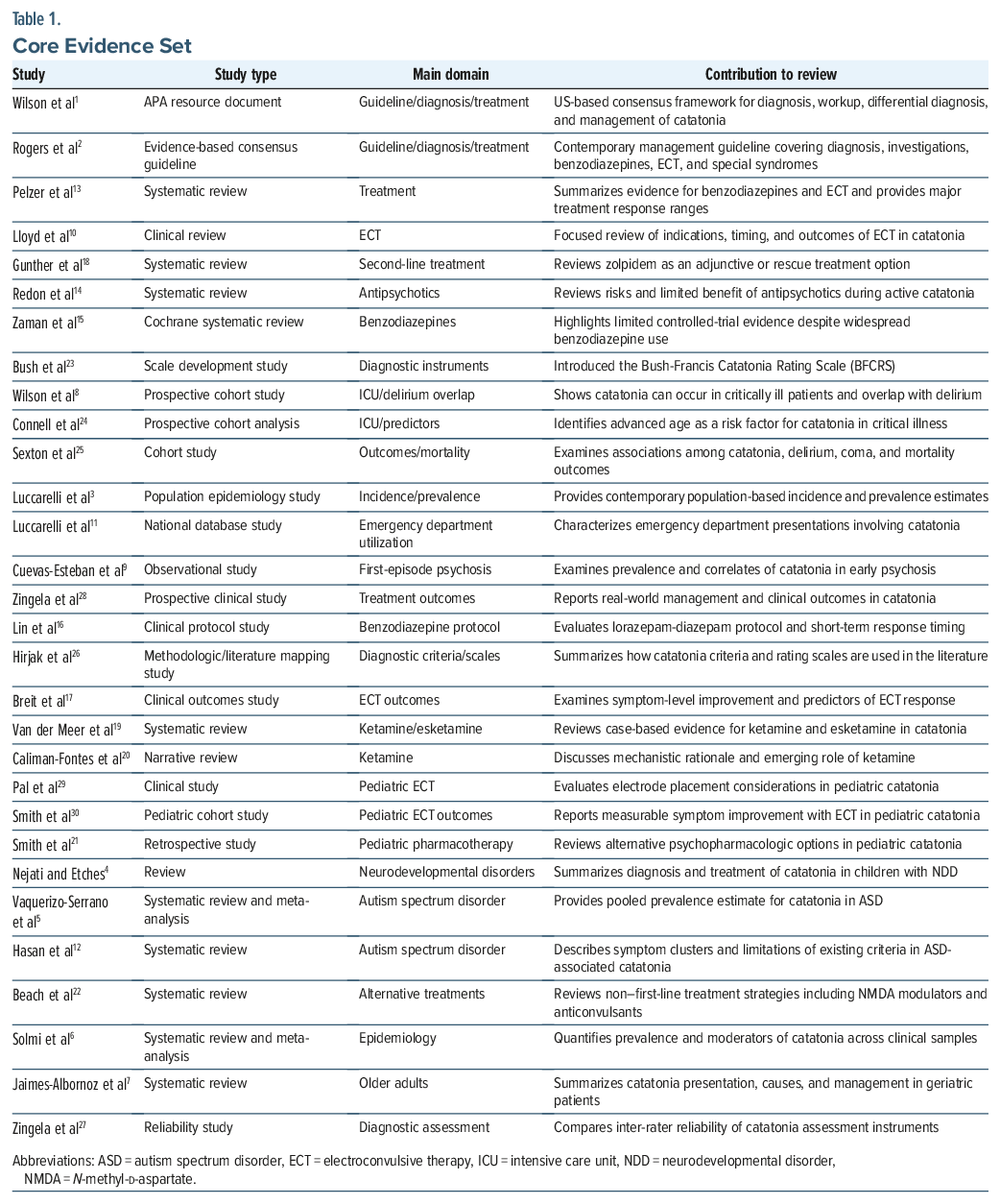
The final evidence set included consensus documents, meta-analyses, systematic reviews, epidemiologic studies, cohort studies, and diagnostic scale development or validation studies. Relevant information was extracted via a structured approach, including diagnostic criteria used, assessment tools, epidemiologic findings, treatment strategies, quantitative treatment outcomes, special populations, predictors of response, and reported complications. Particular attention was given to studies reporting numerical treatment outcomes for benzodiazepines, ECT, and second-line pharmacologic therapies.
Because the included studies had differed substantially in design, patient populations, diagnostic definitions, treatment protocols, and outcome measures, a narrative synthesis was used rather than a quantitative meta-analysis. Findings were organized by major thematic domains (diagnostic framework, epidemiology and associated conditions, treatment strategies, treatment outcomes, and clinical implications) to identify recurring patterns, areas of convergence, and persistent evidence gaps.
RESULTS
Diagnostic Framework for Catatonia
Catatonia is diagnosed clinically based on the presence of characteristic psychomotor abnormalities. Current diagnostic frameworks from the DSM-5 and ICD-11 require 3 or more characteristic signs to establish the syndrome.1,2,13 Because catatonia frequently occurs across psychiatric, medical, and neurological disorders, clinicians should maintain a low threshold for screening when psychomotor abnormalities are present.9 Clinicians should consider catatonia when 3 or more of the following features are present: stupor (no psychomotor activity), mutism, posturing or catalepsy, waxy flexibility, negativism, mannerisms or stereotypies, echolalia or echopraxia, grimacing, or agitation not influenced by external stimuli.
Standardized assessment tools can improve diagnostic accuracy. The Bush-Francis Catatonia Rating Scale (BFCRS) remains the most widely used screening instrument and includes both a 14-item screening version and a 23-item severity scale.18 The BFCRS has demonstrated strong reliability in both psychiatric and medical inpatient populations and is commonly used in research studies evaluating treatment response.14,15,18
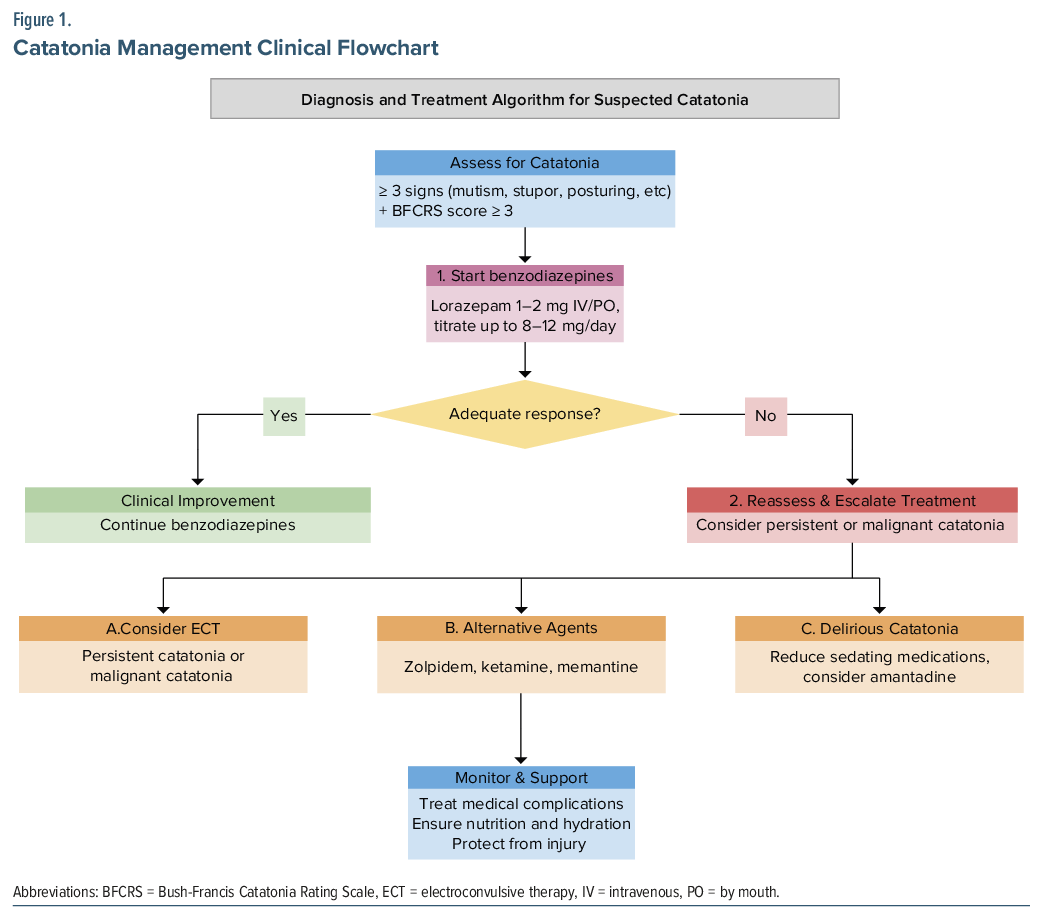
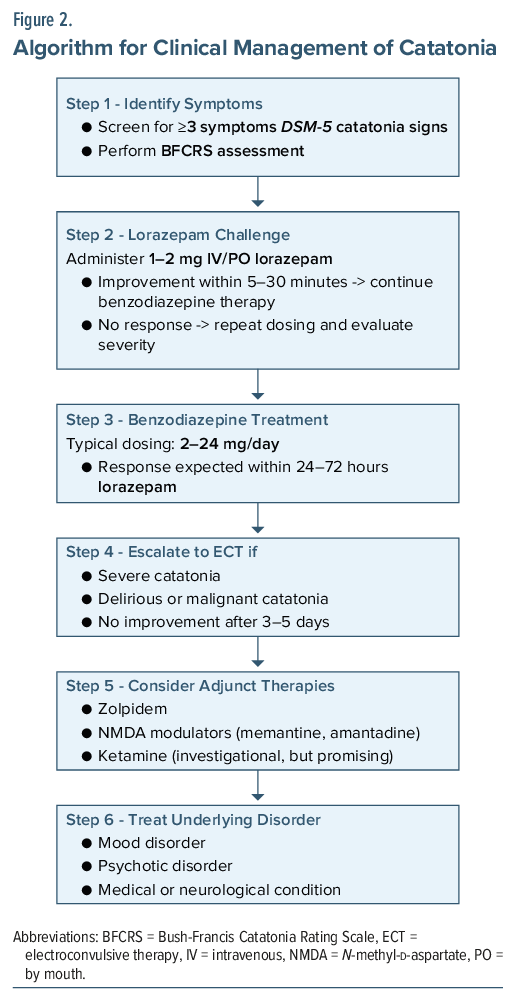
A practical bedside approach includes the following: screen for >3 DSM-5 catatonia signs, perform BFCRS assessment, and administer a lorazepam challenge test when diagnosis is uncertain. Rapid improvement after lorazepam administration strongly supports the diagnosis and simultaneously provides initial treatment.23 The integrated diagnostic and initial management pathway is summarized in Figure 1.
Delirious Catatonia
Delirious catatonia represents a severe form of the syndrome characterized by the coexistence of catatonic motor abnormalities and delirium-like cognitive disturbances, including agitation, confusion, and autonomic instability.8,24 Patients may fluctuate between agitation and stupor and frequently present with medical complications such as dehydration, fever, and rhabdomyolysis.
Recognition is clinically important because management differs from typical delirium. While antipsychotics are commonly used in delirium, they may worsen catatonia and increase the risk of malignant catatonia or neuroleptic malignant syndrome.25 First-line treatment remains benzodiazepines, most commonly lorazepam. However, patients with delirious catatonia may experience excessive sedation without clinical improvement. When this occurs, early escalation to ECT is recommended. Several clinical series demonstrate rapid improvement in delirious catatonia with ECT, often within a few treatments.3 Supportive medical management is essential and includes monitoring hydration status, preventing complications of immobility, and treating underlying medical conditions.
Clinical Features and Assessment Tools
The reviewed studies consistently described catatonia as a syndrome spanning motor, behavioral, affective, and autonomic domains.1,2,13 The most commonly reported features included stupor, immobility, mutism, posturing, rigidity, waxy flexibility, negativism, echolalia, echopraxia, and stereotyped/repetitive motor behaviors.1,2,13,14 Excited forms of catatonia, characterized by purposeless agitation, excessive motor activity, or impulsivity, were also described, highlighting that catatonia is not limited to retarded or stuporous presentations.2,9,12 Severe forms may include autonomic instability, altered consciousness, and hyperthermia, particularly in malignant catatonia.1,10
Standardized assessment tools were repeatedly identified as essential for both diagnosis and longitudinal monitoring. Among these, the BFCRS was by far the most frequently cited and most widely used instrument across the literature.1,2,7,13,26,27 The BFCRS includes a screening component and a severity rating scale, allowing clinicians to identify catatonia and follow symptom evolution over time. Distribution studies showed that the BFCRS is used substantially more often than alternative tools such as the Northoff Catatonia Rating Scale, and reliability studies further supported the superiority of BFCRS-based instruments over the DSM-5 alone for screening purposes.26,27
An important synthesis point across the included studies is that the problem is not absence of standardized tools but inconsistent deployment of them.1,26,27 When standardized tools are used, recognition improves and follow-up becomes more structured; when they are not, catatonia is more likely to be misclassified, especially in medically ill, critically ill, pediatric, and neurodevelopmental populations.1,4,7,8,12
Epidemiology and Clinical Context
Recent epidemiologic studies have refined the understanding of catatonia at the population level, although the literature continues to emphasize that all estimates are likely conservative given that they depend heavily on coding practices and clinician recognition.3,6,11 Contemporary analyses suggest an annual incidence of roughly 4–5 cases per 100,000 persons, with one study estimating a US hospitalization–related prevalence of approximately 5.15 per 100,000 persons.3 These figures support the conclusion that catatonia is relatively uncommon in the general population but likely underdetected.
Although uncommon in the population at large, catatonia appears much more often in high-risk clinical environments. A meta-analysis of clinical samples estimated prevalence among psychiatric patients at approximately 9%, with significant variance by diagnostic group, clinical setting, and criteria used.6 Rates appear higher in particular subgroups, specifically in mood disorders and acute psychosis.2,6,9 In ASD, pooled data indicate a catatonia prevalence of approximately 10.4%, while symptom-focused reviews suggest that common presentations in ASD may not fit existing classification criteria as closely.5,12 In older adults, catatonia appears closely linked to medical and medication-related precipitants and may present atypically, thus increasing the risk of delayed recognition.7
Health care utilization studies suggest that catatonia carries disproportionate clinical complexity relative to its frequency. Emergency department (ED) analyses estimated 51,671 ED visits, representing approximately 0.013% of all ED presentations, with a bimodal age distribution and disproportionate diagnosis in African American patients.11 In hospital settings, catatonia often requires multidisciplinary management, prolonged monitoring, and escalation to ECT when first-line treatment fails.3,11,28 The literature, therefore, suggests that catatonia is best understood not as a rare syndrome of limited relevance but as a clinically consequential syndrome predominantly rampant in the same settings where failure to recognize it has the highest costs.3,6,11
Special Populations
Catatonia occurs in children and adolescents but remains underrecognized. Prevalence estimates in pediatric psychiatric populations range from 5% to 17%, with higher rates reported in mood disorders and ASD.9,11 Clinical presentation often includes mutism, negativism, and posturing. Treatment approaches parallel adult management, with benzodiazepines and ECT demonstrating favorable response rates, although dosing adjustments and careful monitoring are required.11
Catatonia has been increasingly recognized among individuals with ASD as well, with pooled prevalence estimates of approximately 10% in some studies.28 Symptoms may manifest as regression in motor functioning, increased stereotypies, and progressive reduction in speech. Early recognition is crucial since benzodiazepines and ECT remain effective treatments, although behavioral and environmental triggers may also contribute.28
In older adults, catatonia frequently occurs in the context of medical illness, metabolic disturbances, or neurocognitive disorders.16 Clinical presentation may overlap with delirium, contributing to diagnostic delay.
Benzodiazepines remain first-line therapy; however, clinicians must monitor closely for sedation and respiratory depression.16
Catatonia also occurs in intensive care settings, particularly in patients with neurological disease, systemic infection, or metabolic disturbances.26 Recognition is challenging because symptoms overlap with delirium and critical illness. Consultation-liaison psychiatry services increasingly recommend routine catatonia screening in medically ill patients presenting with unexplained motor abnormalities.26
Treatment Strategies
Benzodiazepines. Across the literature, benzodiazepines remain the standard first-line treatment for catatonia, with lorazepam most consistently recommended because of its rapid onset and widespread clinical familiarity.1,2,13,14,15,25 The lorazepam challenge test is described as both a practical diagnostic aid and an early therapeutic intervention. Commonly, 1–2 mg of intravenous or intramuscular lorazepam is administered, and improvement within 5–30 minutes is taken as evidence supporting the diagnosis and probable benzodiazepine responsiveness.1,2,25
After a positive challenge, scheduled lorazepam is generally initiated and titrated according to symptom severity. Reported regimens commonly range from 2 to 6 mg/day, although higher doses (including 8–24 mg/day) have been described in severe cases.2,13,14 The literature supports flexible titration based on clinical response on a case-by-case basis rather than a single standard dose, and several studies emphasize that partial early improvement should not prompt premature discontinuation.13,16,25,28 Even as benzodiazepines remain the clinical standard, the Cochrane review underscores that high-quality randomized-trial evidence remains limited relative to the strength of routine clinical use.15
ECT. ECT is consistently identified as the most effective intervention for severe, malignant, or benzodiazepine-refractory catatonia.1,2,10,14,15,17 Unlike benzodiazepines, which are often used diagnostically and therapeutically at the bedside, ECT functions as a definitive escalation strategy when symptoms are severe at presentation or fail to improve adequately with lorazepam alone.1,10 Several guidelines and outcome studies support considering ECT earlier when catatonia is accompanied by autonomic instability, dehydration, refusal of oral intake, or rapidly progressive medical deterioration.1,2,10,17
Recent studies also contribute technique-specific and pediatric data. Symptom-level analyses suggest that ECT is especially effective in the management of stupor, mutism, and other motor inhibition symptoms with more variable response in perseverative phenomena and echophenomena.17 Pediatric reports support the effectiveness of ECT in pediatric patients with catatonia and suggest that right unilateral ECT may be an acceptable starting placement in some cases, while bilateral placement typically remains preferred in malignant catatonia or nonresponse.29,30 Collectively, the literature overall suggests that ECT is often underutilized because of access barriers, delayed referral, and continued reliance on prolonged benzodiazepine trials.10,30
Second-Line and Adjunctive Pharmacologic Treatments. Although benzodiazepines and ECT remain the primary evidence-based treatments for catatonia, several additional pharmacologic interventions have been reported in treatment-resistant cases. Evidence for these therapies is limited and is derived primarily from case reports and small case series. Second-line pharmacologic treatments and the strength of their supporting evidence are summarized in Table 2.
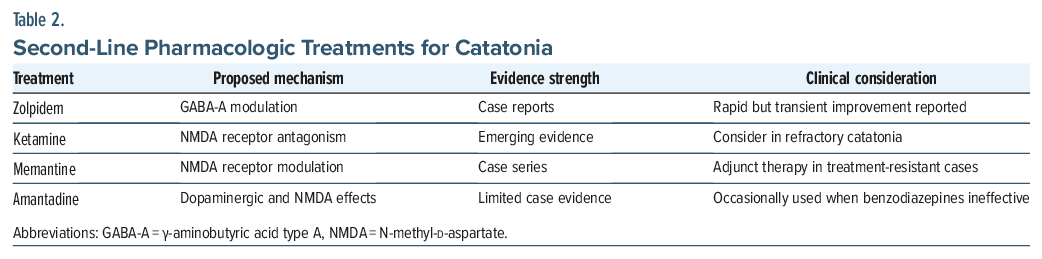
Ketamine, in particular, has received growing attention because of its rapid neuropsychiatric effects and potential to modulate glutamatergic dysfunction implicated in catatonia.17 However, controlled clinical trials remain limited.
Role of Antipsychotics: Practical Clinical Guidance. The use of antipsychotics in catatonia requires careful consideration. Although antipsychotics may be necessary to treat underlying psychotic disorders, they can worsen catatonia and increase the risk of malignant catatonia or neuroleptic malignant syndrome.25 Initiating high-potency antipsychotics during active catatonia, not waiting until catatonia is stable, escalating antipsychotic doses when motor symptoms worsen, and using antipsychotics before attempting benzodiazepine treatment should all be avoided. Regarding a practical approach for when psychosis persists, clinicians should treat catatonia first with benzodiazepines or ECT, wait until catatonic symptoms improve or resolve, and initiate low-dose/lower-potency antipsychotics with close monitoring if catatonia worsens or psychosis persists. Clinical reports suggest that cautious antipsychotic use after stabilization may be tolerated in selected patients, particularly when mood or psychotic disorders are the underlying cause.25 The complete stepwise clinical management algorithm is presented in Figure 2.
Treatment Outcomes
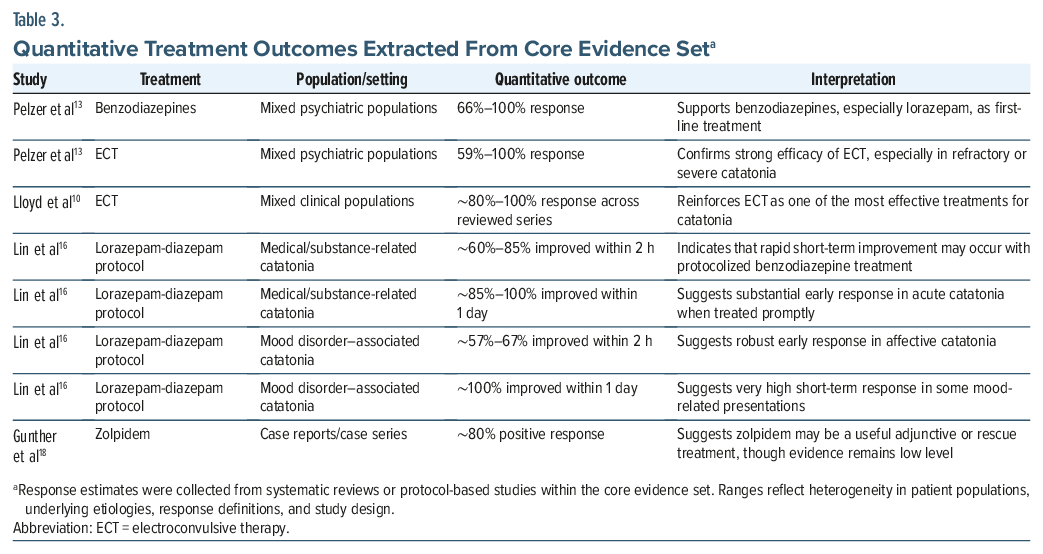
Response Rates. Treatment outcomes across the core evidence set were generally favorable when intervention occurred early. Benzodiazepines were the most common first-line treatment. Across systematic reviews and observational studies, 66%–100% of patients experienced clinically meaningful improvement following benzodiazepine therapy.13,14,25,28
Clinical improvement typically involved several observable changes. Patients often regained speech output and became more responsive to external stimuli. Motor rigidity frequently decreased, and initiation of voluntary movement returned. These improvements often occurred within the first several days of treatment.
ECT demonstrated the strongest and most consistent efficacy among patients with incomplete benzodiazepine response, malignant catatonia, or more severe clinical presentations. Across reviews and retrospective cohort studies, ECT response rates ranged from 80% to 100%, reinforcing its role as the most effective intervention for severe catatonia.10,17 Several studies reported substantial clinical improvement in patients who had shown only partial or minimal response to lorazepam. In these cases, ECT functioned both as a rescue therapy and a definitive treatment strategy in higher-acuity illness.10,17,28
Among emerging therapies, zolpidem has demonstrated promising results in case-based literature. Zolpidem acts as a selective γ-aminobutyric acid type A receptor agonist and may transiently reverse catatonic symptoms through modulation of inhibitory neural circuits. Compiled case reports suggest that approximately 80% of patients experience some degree of clinical improvement, often within minutes of administration.18 However, responses are frequently temporary, and the current evidence base remains limited to small case series and observational reports.
Ketamine has also received increasing attention as a potential treatment for refractory catatonia. Ketamine is a noncompetitive N-methyl-D-aspartate receptor antagonist that modulates glutamatergic signaling, a pathway increasingly implicated in the pathophysiology of catatonia. Ketamine has shown promise in refractory catatonia primarily through case reports, small case series, and preliminary systematic review evidence, suggesting that glutamatergic modulation may represent a potential therapeutic target.12,26 In several case-based series, ketamine administration was associated with rapid reduction in motor symptoms and improved responsiveness. These findings suggest that glutamatergic modulation may represent a promising therapeutic target. However, the evidence remains preliminary, and controlled trials are needed in the future to clarify optimal dosing strategies, durability of response, and long-term safety. Quantitative treatment outcomes from the core evidence set are summarized in Table 3.
Predictors of Treatment Response. Several clinical factors were associated with variability in treatment response. One consistent pattern was related to the underlying psychiatric diagnosis. Catatonia associated with mood disorders appeared more likely to respond to benzodiazepines and ECT than catatonia occurring in chronic schizophrenia spectrum illness.2,13,15 This difference may reflect variations in pathophysiology, illness duration, or the timing of clinical recognition.
Symptom severity at presentation also influenced treatment trajectories. Patients with severe or malignant features were less likely to respond to prolonged benzodiazepine therapy alone. These individuals were more likely to require early ECT escalation.10,17
Comorbidity and care setting also affected outcomes. In medically complex or critically ill patients, delayed diagnosis may influence outcomes as much as treatment responsiveness itself.1,3,8,24
Older adults represent a particularly vulnerable population. Catatonia in geriatric patients often occurs during medical illness or critical care hospitalization. Coexisting medical burden, medication effects, and atypical presentations can complicate timely recognition.7,24
In pediatric and neurodevelopmental populations, treatment response appears favorable when catatonia is recognized early. However, diagnostic overshadowing and limited access to specialized care may delay treatment. These barriers remain important determinants of outcome.4,29,30
Complications and Mortality. The clinical significance of catatonia extends beyond psychiatric symptoms alone. Untreated or delayed treatment can lead to serious systemic complications. Common complications include dehydration, malnutrition, pressure injuries, venous thromboembolism, and secondary infections due to prolonged immobility. These complications contribute substantially to morbidity.1,3,7
Malignant catatonia represents the most dangerous form of the syndrome. It is characterized by autonomic instability, hyperthermia, altered mental status, and rapidly progressive physiological deterioration.1,10 In this setting, early escalation of care is essential. Clinical guidelines consistently recommend rapid initiation of benzodiazepines and early consideration of ECT.1,2,10
Studies conducted in intensive care settings further highlight the risks associated with delayed recognition. Catatonia can coexist with delirium and coma states in critically ill patients. When not identified early, it may contribute to longer hospitalizations and worse clinical outcomes.8,24,25 One cohort study linked in-hospital catatonia, delirium, and coma states with mortality-related outcomes, emphasizing that the impact of catatonia extends beyond psychiatric symptom management alone.25
When considered together, these findings suggest that treatment outcomes depend not only on pharmacologic responsiveness but also on how early the syndrome is recognized and treated. Prompt identification may prevent medical complications from becoming the primary driver of morbidity.
DISCUSSION
Key Findings
Several broad conclusions can be drawn from this review. First, the literature strongly supports the view that catatonia is not a narrow schizophrenia subtype but rather a syndrome spanning affective, neurodevelopmental, psychotic, neurological, and general medical illnesses.1–7,9 This shift is more than a simple classification update; it changes where clinicians must look for catatonia. A narrow psychiatric framing likely contributes to its persistent underrecognition in emergency, consultation-liaison, intensive care unit, pediatric, and neurodevelopmental settings.1,4,8,11,12
Second, the treatment literature presents an unusual combination of high apparent efficacy and limited high-level evidence. Benzodiazepines and ECT are repeatedly associated with strong response rates, yet most of that evidence comes from observational studies, case series, and expert consensus rather than randomized trials.3,10,13,15,17,28 This pattern helps explain why catatonia occupies a distinctive position in psychiatry: Clinicians often see dramatic treatment response in practice, despite that the formal trial base is limited in current literature.
Additionally, diagnostic inconsistency remains one of the major obstacles to better care. The literature does not suggest major disagreement about what catatonia is, but it points to ongoing trouble recognizing it reliably in real-world contexts.1,7,8,26,27 This is especially evident in medically ill populations, where psychomotor slowing, withdrawal, mutism, or agitation may be attributed to delirium, medication effects, encephalopathy, or behavioral disturbance.3,8,9 In that sense, underrecognition may reflect the idea that unless clinicians are prompted to assess catatonia directly, it may never enter the differential diagnosis.
Clinical Implications
The most immediate clinical implication of this review is that catatonia should be considered early whenever unexplained psychomotor abnormalities are present. This is especially relevant in the context of EDs, inpatient psychiatry units, consultation-liaison services, and critical care settings.1,8,9,11 Routine use of standardized tools such as the BFCRS can help shift catatonia assessment from pattern recognition to a more reproducible and routine bedside practice.13,26,27
The reviewed literature also supports a practical treatment algorithmic framework: begin with benzodiazepines, use the lorazepam challenge strategically, and escalate to ECT earlier in severe, malignant, or refractory cases.1,2,10,17,25 The most clinically consequential error may not be selecting the wrong treatment but delaying the right one; this is particularly important to consider in patients with autonomic instability, marked immobility, refusal of food or fluids, or rapid physiological decline, where prolonged diagnostic uncertainty can quickly turn into consequential patient outcomes.1,3,10
Another important implication to consider is that psychiatric consultation should not be reserved for narrowly “psychiatric” presentations. Catatonia frequently exists at the intersection of psychiatry, neurology, hospital medicine, pediatrics, and critical care.1,3,4,8,29 Earlier multidisciplinary involvement may improve patient outcomes by encouraging simultaneous diagnostic workup, supportive care, and syndrome-directed treatment.
Gaps in Current Evidence
Despite substantial growth in the literature in recent years, the evidence base remains limited still in several ways that are important to consider. The most obvious gap is the relatively limited amount of randomized controlled trials evaluating benzodiazepines, ECT, and second-line pharmacologic therapies.13,15 Much of the current evidence comes from observational studies and expert consensus, which is clinically useful but limits direct comparisons across interventions.
Diagnostic heterogeneity is also another major limitation. Even when studies use DSM-5 or ICD-11 concepts, they still vary in how rigorously symptoms are assessed, what thresholds are applied, and whether standardized instruments are used.7,26,27 Epidemiologic studies based on administrative coding are particularly vulnerable to underestimation and misclassification as well, likely contributing to variability in reported prevalence and obscuring true disease burden, especially in hospital settings where catatonia is not routinely screened.3,6,11
Lastly, evidence for emerging therapies also remains in a preliminary stage. Agents such as zolpidem, ketamine, memantine, amantadine, valproate, and other adjunctive strategies are of clear interest, but current support is largely based on case reports, small case series, or targeted reviews of low-level evidence.18–22 The field, therefore, has a growing amount of plausible therapy alternatives but not yet enough strong evidence to define where they may fit within standardized treatment algorithms.
Future Directions
Despite well-established treatment strategies, catatonia remains underrecognized across psychiatric and medical settings, highlighting the need for standardized screening protocols and practical clinical algorithms. Future work should proceed in multiple different ways. First, the field would benefit from better standardization of case definition and outcome measurement, including more consistent use of standardized tools such as the BFCRS.7,13,26,27 This would improve comparability and external validity across studies and strengthen future epidemiologic and treatment research.
Second, prospective treatment studies are urgently needed. Even if large, randomized trials remain difficult because of syndrome disparities and ethical considerations in severe illness, multicenter prospective cohort studies using standardized protocols could significantly improve the quality of evidence available regarding dosing, sequencing, and comparative effectiveness.17,28
More attention must also be given to special populations in whom catatonia may be especially difficult to recognize or phenotypically distinct, including pediatric patients, individuals with ASD or other neurodevelopmental disorders, older adults, and critically ill patients.4,5,7,12,24,29,30 These populations are already represented in the literature but often in limited or fragmented ways that warrant further investigation.
Finally, the literature points toward the need for deeper investigation of biomarkers and neurophysiologic correlates of catatonia. While current research implies that cortical motor networks and GABAergic and glutamatergic mechanisms are involved, these findings have not yet translated into clinically useful tools or targeted treatment mechanisms.2,19,20 Advancing this area could improve both diagnostic precision and mechanistic treatment development.
CONCLUSION
This systematic narrative review synthesizes current evidence on the diagnosis, epidemiology, and treatment of catatonia and supports several overarching conclusions. Catatonia is a clinically relevant syndrome that spans neurological, psychiatric, and medical illnesses rather than belonging to a single diagnostic category. It remains underrecognized in clinical contexts despite the availability of clear diagnostic criteria and standardized assessment measures. Simultaneously, it is among the more treatment-responsive syndromes in the field of neuropsychiatry, with benzodiazepines and ECT continuing to show the strongest and most consistent benefit.
The literature suggests that the central challenge in catatonia treatment is not caused by a lack of options, but rather by delayed recognition and inconsistent application of established therapeutic and diagnostic approaches. Earlier recognition, routine use of standardized assessment tools, and timely escalation to ECT in severe or refractory cases may help reduce morbidity and improve outcomes across psychiatric and medical settings alike.
Several limitations of this review must be acknowledged. First, the search was limited to PubMed/MEDLINE only, which could have excluded relevant studies indexed elsewhere. Because the included studies differed greatly in design, patient population, diagnostic methods, and reporting of outcomes, the evidence was synthesized in a narrative manner rather than quantitatively. In addition, heterogeneity in diagnostic practices and reliance on coding-based epidemiologic studies limit direct comparison across some findings.
Even with these limitations, the current literature provides a strong foundation for clinical practice: consider catatonia early, assess it systematically, and treat it decisively. Future research should focus on standardizing the diagnostic approaches commonly used in practice, improving prospective treatment evidence, and clarifying the role of emerging therapies in patients who do not respond to first-line care. Ultimately, progress in catatonia care will depend on closing the gap between what is already known to be effective and what is consistently recognized and implemented at the bedside.
Article Information
Published Online: September 3, 2026. https://doi.org/10.4088/PCC.26nr04231
© 2026 Physicians Postgraduate Press, Inc.
Submitted: March 17, 2026; accepted May 26, 2026.
To Cite: Mohan N, Sarangi A. Clinical recognition and management of catatonia: a practical guideline and treatment algorithm. Prim Care Companion CNS Disord 2026;28(5):26nr04231.
Author Affiliations: School of Medicine, Texas Tech University Health Sciences Center, Lubbock, Texas (Mohan); Department of Psychiatry, Texas Tech University Health Sciences Center, Lubbock, Texas (Sarangi).
Corresponding Author: Namratha Mohan, MBA, School of Medicine, Texas Tech University Health Sciences Center, Lubbock, Texas ([email protected]).
Financial Disclosure: None.
Funding/Support: None.
Use of AI-Assisted Technologies in the Writing Process: In the writing of this manuscript, the authors used AI-assisted technology for language editing, sentence structure, and text concision. The authors reviewed and revised all AI-assisted material, independently verified the accuracy of the manuscript and cited sources and take full responsibility for the content of the publication.
ORCID: Namratha Mohan: https://orcid.org/0009-0008-2205-6984; Ashish Sarangi: https://orcid.org/0000-0003-3176-4006
Clinical Points
- Catatonia is a highly treatable but frequently underrecognized syndrome that occurs across psychiatric, neurological, and medical conditions; early recognition significantly improves outcomes.
- Rapid bedside screening for core psychomotor features, followed by structured assessment with tools such as the Bush-Francis Catatonia Rating Scale, can improve diagnostic accuracy in emergency, inpatient, and critical care settings.
- Benzodiazepines remain first-line therapy, while early escalation to electroconvulsive therapy is critical in severe, malignant, or benzodiazepine-refractory catatonia to reduce morbidity and mortality.
References (30)

- Wilson JE, Oldham MA, Francis A, et al. Catatonia: American Psychiatric Association resource document. J Acad Consultation-Liaison Psychiatry. 2025;66(4):277–299.
- Rogers JP, Oldham MA, Fricchione G, et al. Evidence-based consensus guidelines for the management of catatonia: recommendations from the British Association for Psychopharmacology. J Psychopharmacol. 2023;37(4):327–369. CrossRef
- Luccarelli J, Smith JR, Kalinich M, Amad A, Rogers JP. The population-based incidence and prevalence of catatonia. J Neuropsychiatry Clin Neurosci. 2025 Spring;37(2):160–162.
- Nejati N, Etches S. Identifying and treating catatonia in children with neurodevelopmental disorders: a case series. J Can Acad Child Adolesc Psychiatry. 2024;33(3):215–222.
- Vaquerizo-Serrano J, de Pablo GS, Singh J, et al. Catatonia in autism spectrum disorders: a systematic review and meta-analysis. Eur Psychiatry. 2022;65(1):e4.
- Solmi M, Pigato G, Roiter B, et al. Prevalence of catatonia and its moderators in clinical samples: results from a meta-analysis and meta-regression analysis. Schizophr Bull. 2018;44(5):1133–1150. CrossRef
- Jaimes-Albornoz W, Ruiz de Pellon-Santamaria A, Nizama-Vía A, et al. Catatonia in older adults: a systematic review. World J Psychiatry. 2022;12(2):348–367.
- Wilson JE, Niu K, Nicolson SE, et al. Delirium and catatonia in critically ill patients: the delirium and catatonia prospective cohort investigation. Crit Care Med. 2017;45(11):1837–1844.
- Cuevas-Esteban J, Serrat F, Iglesias-González M, et al. Catatonia in first-episode psychosis: prevalence and psychopathological association. BJPsych open. 2025;11(5):e220.
- Lloyd JR, Silverman ER, Kugler JL, et al. Electroconvulsive therapy for patients with catatonia: current perspectives. Neuropsychiatr Dis Treat. 2020;16:2191–2208.
- Luccarelli J, Kalinich M, Rogers JP, et al. Emergency department presentations for catatonia: a 2019-2021 national emergency department sample study. J Acad Consult Liaison Psychiatry. 2025;66(5):380–388. PubMed
- Hasan S, Hussain I, Chadwick L, et al. Systematic review of symptoms of catatonia in autism spectrum disorder. Advance online publication; 2025. doi:10.1007/s10803-025-06855-3. J autism Dev Disord CrossRef
- Pelzer AC, van der Heijden FM, den Boer E. Systematic review of catatonia treatment. Neuropsychiatric Dis Treat. 2018;14:317–326.
- Redon M, Virolle J, Montastruc F, et al. The use of antipsychotics in the treatment of catatonia: a systematic review. Eur Psychiatry J Assoc Eur Psychiatrists. 2025;68(1):e48. CrossRef
- Zaman H, Gibson RC, Walcott G. Benzodiazepines for catatonia in people with schizophrenia or other serious mental illnesses. Cochrane Database Syst Rev. 2019 Aug 5;8(8):CD006570. PubMed CrossRef
- Lin CC, Hung YY, Tsai MC, et al. The lorazepam and diazepam protocol for catatonia due to general medical condition and substance in liaison psychiatry. PloS one. 2017;12(1):e0170452. CrossRef
- Breit S, Meyer A, Schmitt W, et al. The effect of electroconvulsive therapy on specific catatonia symptoms and predictors of late response. Pharmacopsychiatry. 2024;57(1):13–20. PubMed
- Gunther M, Tran N, Jiang S. Zolpidem for the management of catatonia: a systematic review. J Acad Consult Liaison Psychiatry. 2025;66(1):49–56. PubMed
- van der Meer PB, Verboeket S, Slooter AJC, et al. Treatment with (es)ketamine in catatonia: a systematic review of case reports. J Clin Psychiatry. 2025;86(4):25br15940. PubMed
- Caliman-Fontes AT, Vieira F, Leal GC, et al. Ketamine for catatonia: a novel treatment for an old clinical challenge? A systematic review of the evidence. Schizophrenia Res. 2024;271:355–370. CrossRef
- Smith JR, Baldwin I, York T, et al. Alternative psychopharmacologic treatments for pediatric catatonia: a retrospective analysis. Front Child Adolesc Psychiatry. 2023.
- Beach SR, Gomez-Bernal F, Huffman JC, et al. Alternative treatment strategies for catatonia: a systematic review. Gen Hosp Psychiatry. 2017;48:1–19. PubMed CrossRef
- Bush G, Fink M, Petrides G, et al. Rating scale and standardized examination. Acta Psychiatr Scand. 1996;93(2):129–136. PubMed
- Connell J, Kim A, Brummel NE, et al. Advanced age is associated with catatonia in critical illness: results from the delirium and catatonia prospective cohort investigation. Front Psychiatry. 2021 Nov 19;12:673166. CrossRef
- Sexton MT, Kim A, McGonigle T, et al. In-hospital catatonia, delirium, and coma and mortality: results from the delirium and catatonia prospective cohort investigation. Schizophrenia Res. 2024;263:223–228. CrossRef
- Hirjak D, Brandt GA, Fritze S, et al. Distribution and frequency of clinical criteria and rating scales for diagnosis and assessment of catatonia in different study types. Schizophr Res. 2024;263:93–98. PubMed
- Zingela Z, Stroud L, Cronje J, et al. Assessment of catatonia and inter-rater reliability of three instruments: a descriptive study. Int J Ment Health Syst. 2021;15(1):82. PubMed
- Zingela Z, Stroud L, Cronje JH, et al. Management and outcomes of catatonia: a prospective study in urban South Africa. SAGE Open Med. 2022;10:20503121221105579. CrossRef
- Pal R, Cheng T, Eddington S, et al. Use of electroconvulsive therapy in children and adolescents with catatonia-a case series. J ECT. 2024;40(3):203–206. PubMed
- Smith JR, Baldwin I, Termini KA, et al. Use of ECT for children with and without catatonia: a single-site retrospective analysis. J ECT. 2024 Sep 1;40(3):154–161.
Please sign in or purchase this PDF for $40.