
ABSTRACT
Agitation is a common and clinically significant neuropsychiatric condition in Alzheimer’s dementia. Clinicians across the spectrum of care settings frequently encounter agitation but often lack practical clinical guidance. In April 2026, a consensus panel of clinical experts reviewed the literature and developed guidance for managing agitation in Alzheimer’s dementia. The panel emphasized the critical role of primary care in agitation management and discussed different treatment approaches for optimizing patient and caregiver outcomes. Treatment should prioritize reduction of patient and caregiver distress and preservation of function rather than mere sedation. Discussion of neurobiology focused on the evolving models of frontal-limbic imbalance as the key driver of agitation in progressing Alzheimer’s disease and implications for pharmacologic selection. The panel reviewed evidence on safety and efficacy of pharmacologic agents commonly used in agitation management and concluded that efficacy and safety profiles should guide clinical decision-making. The panel recommended conducting a behavioral assessment using validated tools, ruling out reversible causes, and using nonpharmacologic interventions as the first-line approach prior to starting pharmacologic treatment. Finally, setting-specific considerations were discussed. These recommendations complement prior guidance with a primary-care clinical decision pathway that matches treatment to the neurobiology of agitation and to comparative safety profiles, and that extends to the assessment, documentation, and coding clinicians need at the point of care. The goal is to help clinicians select evidence-based interventions for agitation in Alzheimer’s dementia that prioritize safety, alertness, functional engagement, and caregiver well-being while minimizing the serious harms that have historically accompanied off-label management in this population, including excess mortality, cerebrovascular events, cognitive impairment, falls, and sedation.
Prim Care Companion CNS Disord 2026;28(5):haadachi2603
From the Editors

Are you a healthcare provider?
Add your NPI to personalize your JCP experience.
This Academic Highlights section of The Primary Care Companion for CNS Disorders presents the highlights of the consensus panel meeting “Targeted Treatment of Agitation in Alzheimer’s Dementia: Prioritizing Function and Safety Over Sedation and Other Serious Harms,” which was held April 4, 2026, in Dallas, Texas.
The meeting was chaired by Pierre N. Tariot, MD, Banner Alzheimer’s Institute, University of Arizona College of Medicine, Phoenix, Arizona (correspondence: pierre.tariot@ bannerhealth.com; University of Arizona College of Medicine, 901 East Willetta Street, Phoenix, AZ 85006). The faculty were Leslie Citrome, MD, MPH, New York Medical College, Valhalla, New York; Carolyn K. Clevenger, DNP, GNP, University of Georgia, Athens, Georgia; W. Clay Jackson, MD, DipTH, University of Tennessee College of Medicine, Memphis, Tennessee; C. Brendan Montano, MD, Internal Medicine, Connecticut Clinical Research, Cromwell, Connecticut; Amita Patel, MD, Joint Township Hospital & Private Practice, Dayton, Ohio; Anton P. Porsteinsson, MD, University of Rochester Medical Center, Rochester, New York; and Marwan Sabbagh, MD, Barrow Neurological Institute, Phoenix, Arizona.
Financial disclosures appear at the end of the article.
This evidence-based, peer-reviewed Academic Highlights article was prepared by Healthcare Global Village, Inc. The meeting was sponsored by Otsuka America Pharmaceuticals Inc. and H. Lundbeck A/S. Content development and consensus recommendations reflect the independent clinical perspectives of the participating faculty. Editorial assistance is provided by Healthcare Global Village. Editorial support was provided by Michael Riviello, MRes, and Ryan R. Bailey, PhD, OTR/L, with funding from Otsuka America Pharmaceuticals Inc. and H. Lundbeck A/S.
Published Online: September 22, 2026.
To Cite: Tariot PN, Citrome L, Clevenger CK, et al. Targeted treatment of agitation in Alzheimer’s dementia: prioritizing function and safety over sedation and other serious harms.
Prim Care Companion CNS Disord. 2026;28(5):PCC.haadachi2603.
To Share: https://doi.org/10.4088/PCC.haadachi2603
Supplementary Material: Available at Psychiatrist.com.
© 2026 Physicians Postgraduate Press, Inc.
INTRODUCTION
Agitation is the most prevalent and burdensome neuropsychiatric symptom in Alzheimer’s dementia for patients, caregivers, and the clinicians responsible for their care.1,2 It frequently goes unrecognized or underreported and may not come to clinical attention until it has escalated to a crisis. Most patients with Alzheimer’s dementia are managed by primary care clinicians,3 often as the first and only point of intervention.
Pharmacologic treatment for agitation in patients with Alzheimer’s disease refractory to first-line nonpharmacologic management has often relied on off-label psychotropic agents with limited clinical evidence supporting their use, and substantial evidence of serious harms.4–6 Death, stroke, and falls are among the most consequential of these harms. Sedation is a common adverse effect in its own right, affecting approximately 25% of patients treated with psychotropic agents, which increases risk for falls, fractures, cognitive and functional decline, aspiration pneumonia, reduced quality of life, and increased mortality.2,7–11 However, sedation is also among the most avoidable of these events. Equating sedation with effective treatment of agitation is clinically erroneous. Managing agitation without sedation while preserving safety, alertness, and engagement should be a central goal of modern treatment.
Psychotropics are often prescribed in reaction to an acute agitation episode that occurs when the clinician is not present. This practice has led to inappropriate use of psychotropic medications in patients with agitation in Alzheimer’s dementia both at home and in long-term care (LTC) settings.12 Historically, pharmacologic management has been empirical rather than guided by a neurobiological understanding of the circuits underlying agitation in Alzheimer’s dementia, leaving clinicians without a principled basis for choosing among agents or anticipating their differential effects.
The emergence of US Food and Drug Administration (FDA)–approved pharmacologic options for this indication has changed what treatment can achieve. However, the availability of approved agents has not yet been matched by practical guidance on their implementation in primary care, including how to select among them, sequence them within a broader management strategy, apply a neurobiology-informed rationale to treatment decisions, and adapt that approach across acute, community, and long-term care settings. Appropriate management also depends on accurately identifying the cause of agitation and ruling out other contributors, such as infection, delirium, pain, or drug toxicity.13 Yet many clinicians have had little practical, evidence-based guidance for navigating these risks and decisions. What is needed is a clinical decision pathway that matches treatment to the neurobiology of agitation, is oriented toward function and quality of life, and accounts for comparative safety. It should be supported by validated assessment tools and by practical guidance on documentation and coding at the point of care. This article is intended to address the prevailing care gaps.
Presentation Overview Video
METHODS
In April 2026, a multidisciplinary panel of 8 experts in psychiatry, neurology, geriatric medicine, and family/primary care medicine convened to evaluate treatment approaches for agitation in Alzheimer’s dementia, with particular focus on the central role of primary care. The panel was chaired by Pierre N. Tariot, MD, Banner Alzheimer’s Institute & University of Arizona College of Medicine. Panelists included Leslie Citrome, MD, MPH; Carolyn K. Clevenger, DNP, GNP; W. Clay Jackson, MD, DipTh; C. Brendan Montano, MD; Amita Patel, MD; Anton P. Porsteinsson, MD; and Marwan Sabbagh, MD.
The panel met in-person for a structured discussion designed to complement available literature-based evidence with expert opinion and clinical experience. The agenda included reviewing (1) the role of primary care in the treatment of agitation in Alzheimer’s dementia; (2) current paradigms for pharmacologic intervention, including the use of off-label drugs; (3) the neurobiological basis of agitation; and (4) targeted treatment and practical management across community and LTC settings.
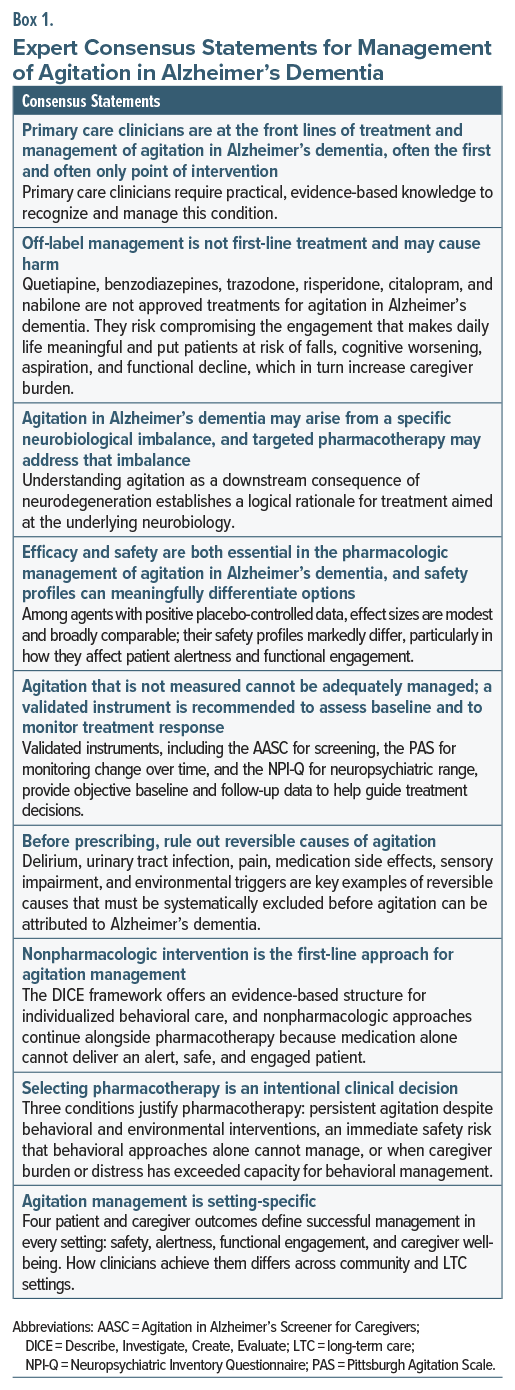
The panel reached consensus through iterative rounds of facilitated discussion. This Academic Highlights presents the nine resulting consensus statements (Box 1), framed for practical application in primary care settings.
Box 1. Expert Consensus Statements for Management of Agitation in Alzheimer’s Dementia
| Consensus Statements |
| Primary care clinicians are at the front lines of treatment and management of agitation in Alzheimer’s dementia, often the first and often only point of interventionPrimary care clinicians require practical, evidence-based knowledge to recognize and manage this condition. |
| Off-label management is not first-line treatment and may cause harmQuetiapine, benzodiazepines, trazodone, risperidone, citalopram, and nabilone are not approved treatments for agitation in Alzheimer’s dementia. They risk compromising the engagement that makes daily life meaningful and put patients at risk of falls, cognitive worsening, aspiration, and functional decline, which in turn increase caregiver burden. |
| Agitation in Alzheimer’s dementia may arise from a specific neurobiological imbalance, and targeted pharmacotherapy may address that imbalanceUnderstanding agitation as a downstream consequence of neurodegeneration establishes a logical rationale for treatment aimed at the underlying neurobiology. |
| Efficacy and safety are both essential in the pharmacologic management of agitation in Alzheimer’s dementia, and safety profiles can meaningfully differentiate optionsAmong agents with positive placebo-controlled data, effect sizes are modest and broadly comparable; their safety profiles markedly differ, particularly in how they affect patient alertness and functional engagement. |
| Agitation that is not measured cannot be adequately managed; a validated instrument is recommended to assess baseline and to monitor treatment responseValidated instruments, including the AASC for screening, the PAS for monitoring change over time, and the NPI-Q for neuropsychiatric range, provide objective baseline and follow-up data to help guide treatment decisions. |
| Before prescribing, rule out reversible causes of agitationDelirium, urinary tract infection, pain, medication side effects, sensory impairment, and environmental triggers are key examples of reversible causes that must be systematically excluded before agitation can be attributed to Alzheimer’s dementia. |
| Nonpharmacologic intervention is the first-line approach for agitation managementThe DICE framework offers an evidence-based structure for individualized behavioral care, and nonpharmacologic approaches continue alongside pharmacotherapy because medication alone cannot deliver an alert, safe, and engaged patient. |
| Selecting pharmacotherapy is an intentional clinical decisionThree conditions justify pharmacotherapy: persistent agitation despite behavioral and environmental interventions, an immediate safety risk that behavioral approaches alone cannot manage, or when caregiver burden or distress has exceeded capacity for behavioral management. |
| Agitation management is setting-specificFour patient and caregiver outcomes define successful management in every setting: safety, alertness, functional engagement, and caregiver well-being. How clinicians achieve them differs across community and LTC settings. |
| Abbreviations: AASC = Agitation in Alzheimer’s Screener for Caregivers; DICE = Describe, Investigate, Create, Evaluate; LTC = long-term care; NPI-Q = Neuropsychiatric Inventory Questionnaire; PAS = Pittsburgh Agitation Scale. |
Primary Care Clinicians Are at the Front Lines of Treatment and Management of Agitation in Alzheimer’s Dementia, Often the First and Only Point of Intervention
Recent estimates suggest that many patients with Alzheimer’s dementia, between 44% and 76%, experience agitation at some point in the course of illness.14–17 Agitation is among the most common co-occurring conditions, and, simultaneously, one of the most distressing aspects of Alzheimer’s dementia-related care according to caregivers,18 contributing to caregiver burnout and institutionalization.19,20
An urgent need exists for clinicians to intervene on behalf of patients, as well as for caregivers, many of whom face decline in well-being and strained patient-caregiver relationships. Caregiver distress is driven primarily by behavioral symptoms such as agitation, not cognitive decline,21 and the burden among caregivers is substantial, with fatigue, depression and burnout, reduced employment, and decline in the caregiver’s own physical health commonly reported.18 Proper management of agitation thus has the potential to impact the determinants of health and well-being outcomes for millions of caregivers.
Primary care is the logical clinical home for the management of agitation in Alzheimer’s dementia. Longitudinal relationships, chronic disease management expertise, and appropriate follow-up care are staples of primary care. These hallmarks of primary care practice, combined with evidence-based competencies, position the primary care clinician to detect a meaningful change in behavior, initiate treatment, and monitor response over time. It is in primary care that most of these patients are already seen and most agitation is first recognized, enabling earlier, evidence-based treatment that improves patient and caregiver outcomes and reduces avoidable crisis escalation.
The importance of this role is reinforced by a persistent access gap in dementia specialty care. Models project wait times of between 18 and 50 months to see a specialist nationally for diagnosis and disease-specific treatment, with rural wait times three times longer than urban wait times.22,23 In contrast to this scarcity, an estimated 80% of patients with dementia have a primary care clinician as their predominant clinician of care, with rates exceeding 90% in long-term care settings.3 Primary care clinicians close the access gap by reserving referral for diagnostically complex or treatment-refractory cases and managing agitation directly.
The contemporary situation echoes historical access gaps for those seeking care for depressive disorders, as psychiatric care for depression was similarly concentrated in specialty practice, with similar wait times. Today, however, primary care is the de facto frontline for people with depressive disorders. The opportunity exists for primary care to parallel the transition that occurred for depressive disorder care.
Effective management of agitation benefits patients, caregivers, and clinicians. For patients, this can mean relatively preserved (or even optimized) cognition and function, safety, and dignity, and the capacity to remain a participant in their own life. For caregivers, it promotes quality interactions over time and reduces the cascade of crises that strains patient-caregiver relationships and health. For primary care clinicians, it means fewer after-hours calls and fewer emergency care follow-ups. For all three, effective management can delay institutionalization, whereas untreated or poorly controlled agitation accelerates it. These benefits can lead to patients who are alert, safe, and engaged, sustained by quality interactions with their caregivers.
Off-label Management Is Not First-Line Treatment and May Cause Harm
Common pharmacologic approaches to the management of agitation in Alzheimer’s dementia include the historical off-label use of psychotropic medications such as benzodiazepines and some antipsychotics. Despite their widespread use, off-label medications are supported by limited evidence of benefit and a substantial record of harm.4,5,24–26
Quetiapine has no FDA indication for agitation and no positive controlled evidence at the doses used for it in practice.27 Benzodiazepines have not demonstrated efficacy for agitation but have proven to accelerate cognitive deterioration. One systematic review of 18 studies found five reports suggesting cognitive decline is associated with benzodiazepine use, and no study demonstrated significant sustained antiagitation benefit.28 Despite trazodone’s continued widespread clinical use, a large phase 3, randomized, placebo-controlled, multicenter trial funded by the National Institutes of Health, conducted through the Alzheimer’s Disease Cooperative Study, found no significant difference between trazodone, haloperidol, and placebo on the primary agitation outcome.29 Divalproex has not shown benefit over placebo and produced frequent adverse effects.30 Risperidone showed benefit on aggression, its primary end point, in a placebo-controlled trial and is approved outside the US for aggression, with no equivalent US indication, and carries numerous safety risks.21
Rather than treating agitation, these agents rely on sedation to suppress it. Sedation is not efficacy. The quiet it produces can resemble a treatment response, but quieting a patient through an adverse effect is not the same as treating the agitation. The US Centers for Medicare & Medicaid Services (CMS) defines sedation as a state of excessive sleeping, drowsiness, and withdrawal.31 The off-label pharmacologic strategies described above depend on this state to reduce agitation and may produce additional negative outcomes.32 Aspiration pneumonia can follow loss of protective reflexes in patients who experience sedation, for instance.33 Falls and fractures compound the mortality burden in a population with limited physiologic reserve, with some estimates suggesting up to 3.8 times the risk of falls, a 2.4-fold increased risk of hip fractures, and a 33% higher rate of injurious falls among those taking multiple fall risk-increasing medications.2,7,8 Sedation carries risks that overlap with and may worsen negative outcomes associated with agitation. Sedated patients may refuse care, engage less with families, and attend fewer activities.13,34 Accelerated functional decline and decreased daytime alertness also occur.11,35 These clinical setbacks significantly increase the caregiving load, acting as a significant driver of caregiver burden by diminishing the interactions important for meaningful patient-caregiver relationship.4,36
Despite well-documented risks and limited benefit, off-label prescribing patterns persist, sustained by established habits and acute situational pressure.37 Clinicians have been conditioned to intervene pharmacologically in a crisis, reflecting long-standing practice patterns rather than evidence-based decision making, and are often frustrated by a lack of options with proven evidence for benefit with a reduced risk profile.37 That pressure is most acute at the point of care, where distressed caregivers frequently request a quick solution.
These prescribing patterns largely developed during a period when no therapies were approved specifically for agitation in Alzheimer’s dementia. Now that treatments tested in patients with agitation in Alzheimer’s dementia, rather than extrapolated from other diagnoses, have been approved for the indication, clinicians have an opportunity to move beyond historical, sedation-oriented approaches and align treatment selection with contemporary evidence and the goals of care. Clinical success in agitation management should result in a patient who is alert, safe, and engaged, so clinicians should be wary of reducing agitation at the expense of that alertness and engagement. Caregivers seek connection, not merely a sedated patient; thus, an important therapeutic goal is to preserve the caregiver-patient relationship and the patient’s capacity for meaningful interaction.18 Successful treatment preserves function, protecting the patient’s ability to perform activities of daily living, attend meals, and recognize and engage with family and visitors.
Agitation in Alzheimer’s Dementia May Arise From a Specific Neurobiological Imbalance, and Targeted Pharmacotherapy May Address That Imbalance
A substantial body of evidence suggests that agitation in Alzheimer’s dementia may be driven by tau-mediated disruptions to noradrenergic, serotonergic, and dopaminergic neurotransmitter systems, causing imbalances in the activity of the circuits that regulate emotion and behavior. Agitation in Alzheimer’s dementia thus potentially reflects progressive neuronal loss with aberrant changes (e.g., compensatory signaling by remaining neurons) to the systems that normally govern emotional regulation.38
As Alzheimer’s disease damages the monoamine pathways that support executive function, the prefrontal cortex loses its normal control over emotional signals from deeper structures such as the amygdala (Figure 1, blue arrow).38 In turn, the disinhibited limbic system drives stronger emotional responses (Figure 1, red arrow). The emergence of agitation may serve as an indication that the disease has reached the brain systems that regulate emotional control. Reframing agitation as a manifestation of neurodegeneration rather than a change in the patient’s character or personality may help caregivers recognize it as a manifestation of the disease and not a dysfunctional personality characteristic. This understanding both preserves the caregiver-patient relationship and promotes earlier identification of agitation, allowing more timely intervention.
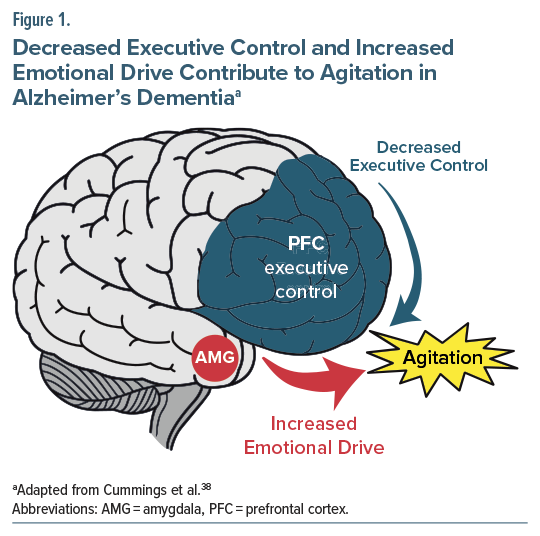
A circuit-level understanding of agitation in Alzheimer’s dementia has direct implications for pharmacologic selection. Psychotropic agents are often grouped by class, but they differ substantially in receptor-binding profiles, which determine whether a drug acts on agitation-related circuitry or broadly suppresses arousal.38,39 Sedation is driven largely by histamine H1 blockade, which quiets the patient without correcting the executive-emotional imbalance39,40; agents with greater H1 affinity tend to induce more sedation.38,40 It is erroneous to equate this sedation with effective treatment; genuine calming is relief of agitation achieved without sedation. Targeted agents potentially act on the specific neurochemical circuits underlying executive control and emotional regulation.38,39 For the primary care clinician, this means selecting by receptor-binding profile rather than drug class, favoring agents that act on agitation-related circuitry.
Efficacy and Safety Are Both Essential in the Pharmacologic Management of Agitation in Alzheimer’s Dementia, but Safety Profiles Can Meaningfully Differentiate Options
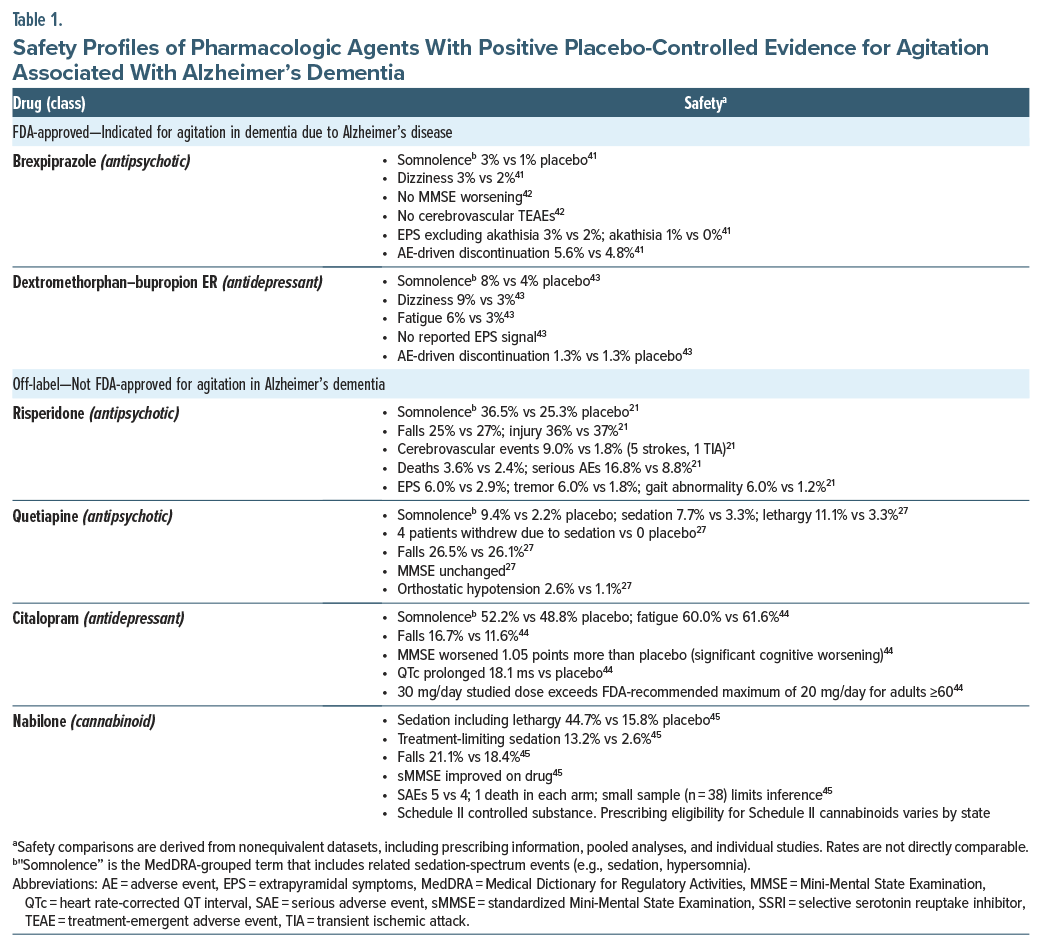
Once the decision to treat with medication has been made, the question becomes which agent to use, with clinical decision-making grounded in efficacy and safety data. Pharmacologic options for agitation management in Alzheimer’s dementia with positive placebo-controlled evidence are summarized in Table 1, alongside their safety profiles. No head-to-head randomized controlled trials exist, so direct comparisons between agents cannot be made. Across these agents, efficacy is modest and broadly comparable, but tolerability varies. Selection, therefore, should center on safety (i.e., objective medical risk) and tolerability (i.e., subjective experience of side effects), while addressing individual tolerability concerns through shared decision-making, with particular attention to preserving alertness, functional engagement, and the quality of interaction with caregivers.
FDA-approved pharmacologic treatments for agitation in Alzheimer’s dementia
Brexpiprazole received initial FDA approval in 2015 for adjunctive treatment of major depressive disorder and for the treatment of schizophrenia. In May 2023, it became the first FDA-approved agent for agitation in dementia due to Alzheimer’s disease, supported by three 12-week phase 3 placebo-controlled trials and a 12-week active-treatment extension.34,46–49 Pooled safety analyses covering up to 24 weeks showed a favorable benefit-risk profile, with minimal effect on weight, suicidality, and extrapyramidal symptoms and no worsening of cognition.42 Across these trials, two fixed-dose trials (1 and 2 mg/day; 2 and 3 mg/day) met their primary end point, while a flexible-dose trial (0.5 to 2 mg/day) did not. Benefit was consistent across 13 clinically relevant subgroups, regardless of care setting, cognitive impairment severity, or co-occurring symptoms such as psychosis, depression, anxiety, or sleep disorders, with a low sedation burden in the 12-week trials50 and none reported in the extension trial.51 The safety profile is summarized in Table 1.
Dextromethorphan–bupropion ER received initial FDA approval in 2022 for the treatment of major depressive disorder. In April 2026, it became the second FDA-approved agent for agitation in dementia due to Alzheimer’s disease, supported by two phase 3 five-week acute-treatment trials and two phase 3, twenty-six-week randomized-withdrawal relapse-prevention trials. Both relapse-prevention trials and one acute-treatment trial met their primary end points, while the second acute-treatment trial did not.43,52,53 The safety profile is summarized in Table 1. Dextromethorphan-bupropion ER was approved for agitation in Alzheimer’s dementia after the consensus panel convened. The panel therefore could not weigh its pivotal trial data in a manner that was comparable to its review of other agents, and as of this writing neither peer-reviewed publications of those trials nor pooled analyses are available; its profile here is therefore drawn from the product label.43
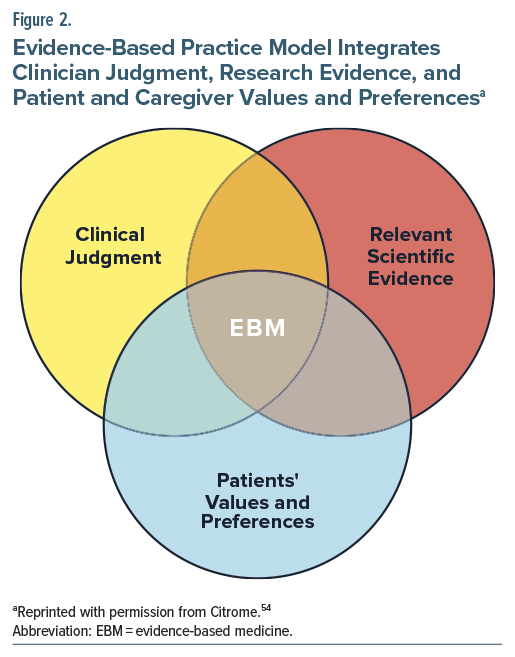
When choosing between FDA-approved agents, clinicians integrate clinical judgment with the evidence on efficacy, safety, and tolerability, and weigh patient and caregiver values (Figure 2). Evidence from controlled trials with strict inclusion and exclusion criteria doesn’t capture the complexities of patients in real-world settings. Thus, clinical judgment and shared decision-making are required to determine a course of action. Panelists noted that in practice, patient and caregiver preferences often drive the final choice, and the clinician’s role is to ensure that choice remains evidence-supported and clinically appropriate.
Common off-label treatments for agitation in Alzheimer’s dementia
The older antipsychotics carry the most serious safety risks among the off-label agents, and those risks include increased mortality and cerebrovascular events. The newer, atypical antipsychotics do not appear to carry the same risk; in the available controlled trials, which were short, cerebrovascular events were not increased, and no mortality signal emerged (Table 1), even though these agents inherit the class boxed warning discussed below.
A 2005 Journal of the American Medical Association review found that atypical antipsychotics offer minimal clinical benefit while carrying safety risks that outweigh that benefit.26 The Clinical Antipsychotic Trials of Intervention Effectiveness–Alzheimer’s Disease (CATIE-AD) trial, the largest publicly funded trial of antipsychotic use in dementia, confirmed these findings one year later.4 Olanzapine, quetiapine, and risperidone failed to improve outcomes over placebo, while adverse effects including sedation, confusion, and extrapyramidal signs were significantly and meaningfully more common in the treatment groups.4
Among the older agents, the increased risk of death is well documented. The FDA’s 2005 Public Health Advisory established that the risk of death was approximately 1.6 to 1.7 times that of placebo,24 and a meta-analysis of placebo-controlled trials confirmed a significant increase in all-cause mortality.5 Similar findings were reported in the DART-AD trial, the first long-term placebo-controlled antipsychotic withdrawal trial in Alzheimer’s disease, which showed a cumulative survival probability of 70% for patients continuing on an antipsychotic versus 77% for patients withdrawn to a placebo group at 12 months and 30% vs 59% survival probability at 36 months.25
Some off-label agents have positive placebo-controlled data but have limited clinical utility. Risperidone, for example, is approved in Europe for severe aggression and in Canada for moderate-to-severe aggression in Alzheimer’s dementia, in each case for short-term use and not for agitation, with no US approval for either. In one trial, it showed efficacy on aggression but produced somnolence in 36.5% of patients and a markedly higher rate of cerebrovascular events versus placebo (Table 1).13,21 Citalopram demonstrated efficacy at 30 mg/day, a dose that exceeds the FDA’s recommended maximum of 20 mg/day for adults aged 60 years and older, accompanied by QTc prolongation and cognitive worsening observed at the target dose.44 Citalopram thus only demonstrates efficacy at doses contraindicated in the patient population. Nabilone reduced agitation but produced sedation in 44% of patients and is a Schedule II cannabinoid, complicating prescribing in many practice settings.45 Results from the LiBBY trial of an investigational purified tetrahydrocannabinol and cannabidiol formulation in hospice-eligible patients with dementia, presented at the Alzheimer’s Association International Conference in July 2026, showed reduced agitation without an increase in daytime sleepiness, though serious adverse events were more frequent with active treatment.55 Quetiapine showed an effect on agitation at 200 mg/day,27 a dose in the range used for other psychiatric indications such as schizophrenia and bipolar disorder rather than agitation; at the 25–50 mg/day range typically prescribed in practice, no positive placebo-controlled data exist.27
Several agents are widely prescribed for agitation in Alzheimer’s dementia despite the absence of any positive placebo-controlled evidence. Benzodiazepines have no positive efficacy data for chronic agitation and pose risks of falls, fractures, cognitive decline, and paradoxical agitation; their use should therefore be limited to acute or procedural contexts.28 Trazodone failed to show benefit over placebo.29 Escitalopram trial data were inconclusive, with interim modeling projecting no likely benefit.56 Mirtazapine, carbamazepine, and valproate appear in older consensus guidance documents, but accumulating evidence does not support their use.57,58 In the aggregate, divalproex sodium has failed to show benefit over placebo. In one RCT evaluating divalproex sodium in nursing home residents with Alzheimer’s who had agitation, more people improved on divalproex sodium than placebo (68% vs 52%), but this difference was not statistically significant. Meanwhile, about two-thirds of the patients on divalproex sodium had side effects such as drowsiness, unsteady gait, tremor, diarrhea, and weakness.30 A subsequent large trial also found brain atrophy as measured by magnetic resonance imaging.59
Class-level boxed warnings
All atypical antipsychotics carry a boxed warning for increased mortality in elderly patients with dementia-related psychosis. The FDA issued the warning in 2005, and it applies to FDA-approved and off-label agents. The FDA reconvened experts to re-examine the mortality risk behind this class warning in 2024. In the panel’s view, distinguishing the older agents associated with these harms from the newer approved agents, which do not appear to carry the same risk, would be appropriate.60 In every case, the warning should be communicated to patients and caregivers plainly and in the context of the agent’s overall benefit–risk profile. Labeling may evolve with new approvals and post-marketing data, and approved use should always remain consistent with the indication.
Brexpiprazole’s warning has been modified; its labeled indication permits use for agitation in Alzheimer’s dementia whether or not psychosis is present, which is clinically relevant given that roughly 30% of patients with agitation also experience psychosis.61
FROM ASSESSMENT TO INTERVENTION: PRACTICAL CONSIDERATIONS FOR AGITATION MANAGEMENT IN ALZHEIMER’S DEMENTIA
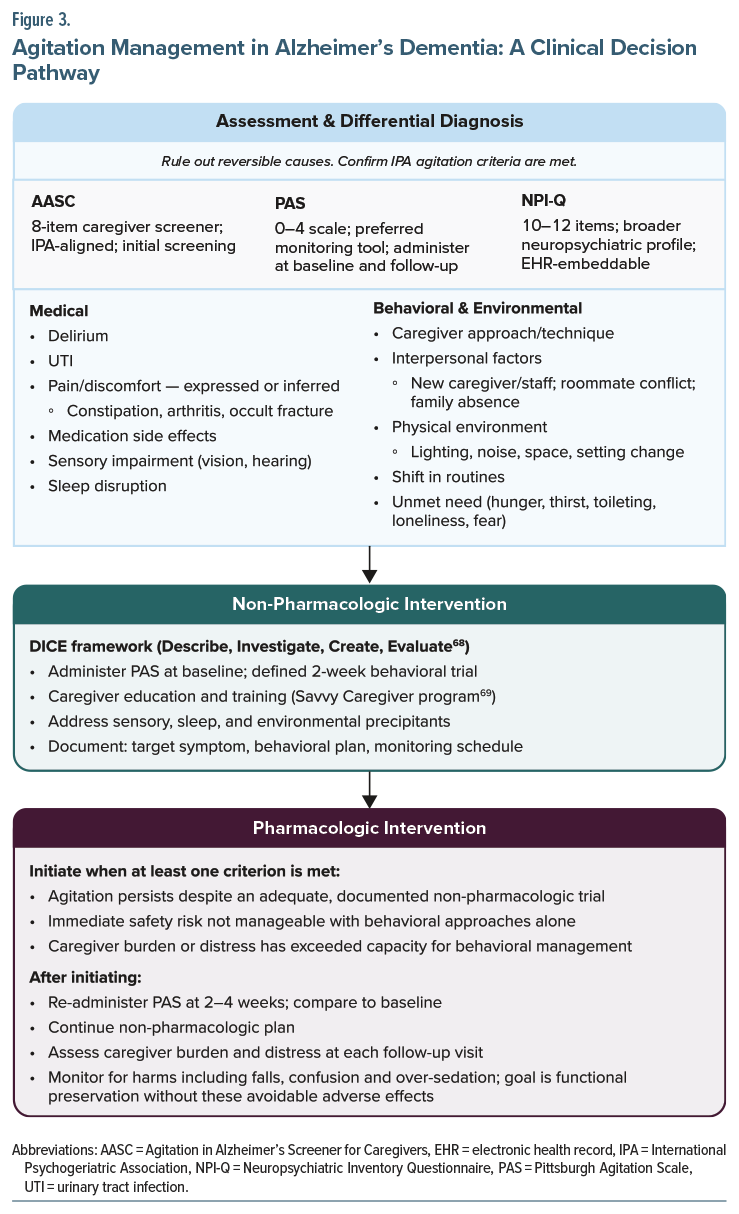
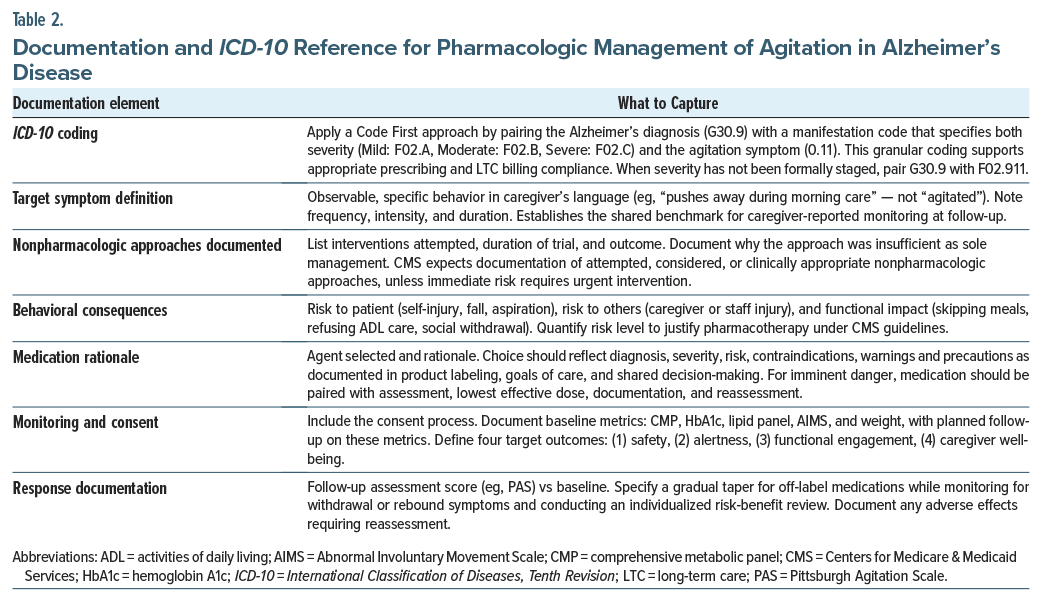
This section turns the preceding principles into a practical sequence: assess agitation with a validated instrument, rule out reversible causes, implement nonpharmacologic strategies first, consider pharmacologic treatment when specific criteria are met, and document each step of the process. Throughout this process, the goal is to reduce agitation while minimizing harms including sedation and preserving function. Figure 3 presents this workflow as a clinical decision pathway, and Table 2 details the documentation needed to support the initiation and ongoing oversight of pharmacologic therapy.
Agitation That Is Not Measured Cannot Be Adequately Managed; A Validated Instrument Is Recommended to Assess Baseline and to Monitor Treatment Response
An Alzheimer’s diagnosis alone does not establish agitation; it must be identified and characterized against International Psychogeriatric Association (IPA) consensus criteria before treatment.62 The panel endorsed three validated instruments that are potentially helpful and feasible for use in primary care: the Agitation in Alzheimer’s Screener for Caregivers (AASC), Pittsburgh Agitation Scale (PAS), and the Neuropsychiatric Inventory Questionnaire (NPI-Q). The AASC is a brief, eight-item, caregiver-reported “yes/no” questionnaire that aligns with the IPA criteria for agitation and screens for agitation symptoms. It takes approximately one minute to complete and serves the dual role of facilitating communication between caregivers and health care teams.63 Caregivers may reveal more on paper than they do in conversation, making the AASC particularly effective at surfacing behaviors that may otherwise go unreported. The PAS is preferred for monitoring change over time and can be used at baseline and at each follow-up to track response.64,65 The NPI-Q captures the full range of neuropsychiatric symptoms, is especially useful for ensuring a comprehensive assessment, and can be embedded into electronic health records for seamless documentation.66,67
Before Prescribing, Rule Out Reversible Causes of Agitation
This population is vulnerable to many conditions that can be associated with neuropsychiatric agitation.68 Before agitation is attributed to Alzheimer’s dementia, reversible medical and environmental contributions should be excluded. Building on the decision-tree algorithm published by Grossberg et al,13 Figure 3 presents a clinical decision pathway that makes the algorithm’s implicit steps explicit for point-of-use care. It lists several precipitants that should be screened for. Of note, delirium must always be ruled out first, and over-the-counter drugs or supplements that families add without informing the clinician can be missed easily.
Nonpharmacologic Interventions Are the First-Line Approach for Managing Agitation
Nonpharmacologic interventions remain the first-line strategy in management of agitation even when medications are later introduced (Figure 3). Evidence consistently supports the use of individualized, nonpharmacologic approaches to reduce both the frequency and severity of agitation when applied in a systematic manner.70 Panelists noted that in this population, agitated behavior is often the patient’s way of communicating an unmet need they can no longer name. The DICE approach (Describe, Investigate, Create, Evaluate) structures assessment and management: the caregiver describes what triggers the behavior and what calms it, the clinician investigates and creates a plan, and both evaluate whether it worked.68 The clinician coaches the caregiver through that sequence.
The suggested two-week behavioral trial shown in Figure 3 is the interval that can demonstrate whether agitation can be managed without medication. Documented outcomes from that trial, including what was tried, for how long, and with what result, help inform subsequent escalation decisions. When a trial of behavioral and environmental intervention does not produce relief, common reasons can include insufficient caregiver coaching or a missed reversible precipitant. Caregiver education and community resources, such as the Alzheimer’s Association 24/7 helpline, alongside structured caregiver-training programs (eg, Savvy Caregiver69), are part of the care plan rather than optional add-ons.
Selecting Pharmacotherapy Is an Intentional Clinical Decision
Pharmacologic management is warranted in three circumstances: when agitation persists despite an adequate, documented nonpharmacologic trial; when an immediate safety risk exists that behavioral approaches cannot contain; and when caregiver burden or distress has exceeded the capacity to sustain nonpharmacologic care.68 When medication is warranted, selection should favor an agent with an FDA-approved indication for agitation in Alzheimer’s dementia, which the panel identified as the clearest guide for primary care of what to prescribe and how to use it.
The decision to escalate requires attention to the target symptom, documentation of the behavioral management that preceded the prescription, and the relevant diagnostic codes. Each of these is often required by the respective regulatory environments and, concurrently, establishes the baseline needed for meaningful follow-up.
Even experienced clinicians receive little training in what to document when initiating pharmacologic management for agitation. For example, which ICD-10 codes capture the scenario and what regulatory recommendations apply,71 and what counts as adequate documentation of the nonpharmacologic trial that preceded the prescription. Table 2 provides important considerations for prescribing and documenting a pharmacologic agent, especially when constrained by CMS regulations (i.e., CMS QSO-25-14-NH).
Agitation Management Is Setting-Specific
Across acute, community, and LTC settings, the goal is the same: a patient who is alert, safe, and engaged and a caregiver who is supported. Before pharmacotherapy is initiated, the target symptom is defined in the caregiver’s own language: a specific, observable behavior. Four outcomes should be tracked at every follow-up: safety, alertness, functional engagement, and caregiver well-being. Functional decline after starting a medication requires reassessment. The 2025 Alzheimer’s Association clinical practice guideline frames how those decisions may be instituted in various settings.72 Supplementary Table 1 contrasts these principles with the commonly used approach of nonspecific sedation.
Acute/emergent setting
In an acute or emergent episode, primary care prioritizes safety and nonpharmacologic de-escalation and recognizes the need to stabilize the patient and prevent agitation from worsening when the risk of harm is high. Clinical assessment must be expeditious: assess for reversible precipitants, modify caregiver approach (eg, seated posture, lowered voice, listening before acting), and reduce environmental stimulation. Panelists suggested asking the caregiver, “If there’s one thing we could accomplish right now, what would that be?” No FDA-approved fast-acting PRN option currently exists for this scenario, though nonspecific sedating agents are commonly used off-label. Panelists were clear that when a medication is needed to get through an immediate crisis, it is a bridge, not a permanent solution, and an evidence-based regimen aimed at reducing the frequency and severity of agitation should start in short order. Case 1 in Supplementary Table 1 contrasts reflexive prescribing with de-escalation and precipitant identification in an emergent institutional setting.
Community/primary care setting
In primary care, a significant challenge is communicating with caregivers, who may be exhausted and overwhelmed, seeking a “quick fix” to calm the patient down. The clinician’s responsibility is to help the caregiver reframe the current treatment approach without making them feel criticized. Panelists suggested asking, “How is the current approach working for you?” and “What does a good day look like?” (eg, the patient eats dinner in the dining room again, re-engages with their companion, attends worship services, etc.). With a shared goal in mind, and the shared understanding that an optimal outcome is a patient who is alert, safe, and engaged, the conversation about nonpharmacologic interventions and approved pharmacotherapy can follow. Case 2 in Supplementary Table 1 contrasts a pharmacologic-first approach with collaborative target symptom identification and caregiver engagement.
Long-term care setting
In LTC, polypharmacy without documentation is not uncommon; there may be multiple off-label agents prescribed that have been escalated over time without a behavioral assessment on file. Transitioning to evidence-based care means safely tapering ineffective agents before, or alongside, starting an approved medication. Agitation should be assessed at 1- to 2-week intervals, matching the behavioral plan monitoring cycle.64 Documentation should meet quality, clinical, and CMS regulatory standards31: record the target symptom in caregiver-observable terms, document the nonpharmacologic approaches tried, and include the rationale for each pharmacologic decision (see Table 2).
It is important to acknowledge that recent CMS surveyor guidance (QSO-25-14-NH), effective April 2025, consolidated oversight of unnecessary psychotropic use (previously under F758) into the Right to Be Free from Chemical Restraint standard (F605) and expanded the definition of prescribing for “convenience” to include medications used to produce sedation or to reduce the effort required of staff.31 Primary care clinicians may shape facility practice, whether serving as medical director or advisor, or by orienting nursing staff to structured assessment and de-escalation before an after-hours crisis occurs rather than during one. Case 3 in Supplementary Table 1 contrasts escalating polypharmacy with precipitant identification and evidence-based regimen management.
CONCLUSION
Assessing and managing agitation in Alzheimer’s dementia requires distinguishing it from a range of reversible precipitants and co-occurring conditions and then treating agitation rather than masking it. This work is carried out amid a changing set of treatment options, a complex population, and a strained health care system with limited avenues for specialty referral.
Clinical realities, regulatory guidance, and ethical considerations require clinicians to manage dementia-related agitation methodically and case by case, grounded in evidence. This is especially challenging in a population highly vulnerable to medication-related harm, where available treatments offer modest symptom improvement for a distressing condition that may reflect progression of the underlying fatal disease, and where historical practice patterns have often relied on medications that are neither standard of care nor evidence-based. Many of these agents work through cognitive impairment and sedation, producing a quiet that is easily mistaken for genuine calm and effective treatment, yet the outcomes are vastly different. Sedating agents rarely produce lasting benefit, and the older off-label antipsychotics increase mortality and cerebrovascular risk. The pressure to intervene is strong in an emergency, when a distressed caregiver wants an immediate solution, and clinicians, patients, and caregivers can become caught in a cycle of crisis-driven management, which serves all parties poorly.
Effective management of agitation in Alzheimer’s dementia should result in a patient who is alert, safe, and engaged and a caregiver who is supported. Reducing severe behavioral symptoms at the cost of oversedation, disengagement, falls, worsening cognition, secondary illness, or loss of function does not constitute improvement, but rather harm. The expert consensus recommends a sequence: measure agitation with a validated tool, rule out reversible causes, apply structured nonpharmacologic interventions as first-line, and use pharmacotherapy only when there is imminent threat, behavioral or environmental approaches fail, or caregiver capacity is exceeded. When medication is warranted, treatment selection should be deliberate and individualized. The availability of approved therapies allows clinicians to align treatment selection with evidence generated specifically in patients with agitation in Alzheimer’s dementia rather than relying on medications adopted historically from other indications. Approaches must be tailored to setting, with ongoing care anchored to routine measurement and documentation of response. These recommendations give primary care clinicians a practical, evidence-based guide for managing agitation in Alzheimer’s dementia, and the confidence to apply it.
FINANCIAL DISCLOSURES
Dr Tariot has received consulting fees from Acadia Pharmaceuticals, Athira, Axsome, Biogen, Bristol Myers Squibb, Eisai, EMA Wellness, ImmunoBrain, Janssen, MapLight, Merck & Co., Neumora Therapeutics, Novartis, Novo Nordisk, and ONO Pharmaceuticals; honoraria for speaking/teaching from Catamount Medical Education, Clinical Care Operations, Haymarket Media, and PriMed Media; and advisory board fees from AbbVie, AC Immune, AmyriAD Therapeutics, Cognition Therapeutics, Cognito Therapeutics, Genentech, Lundbeck, Roche, and Otsuka. Dr Citrome has stock options in Reviva; is a stock shareholder of health-related stocks—a portfolio of small number of shares of common stock of multiple companies and managed externally; has received consulting fees from Abbvie, Acadia, Adheretech, Altus, Alumis, Axsome, Alkermes, Arc, Auritec, Autobahn, Avant Healthcare Solutions, Biogen, BioXcel, BMS/Karuna, Boehringer Ingelheim, Cadent, Cerevel, Clario/Medavante/Prophase, Clinilabs, Compass, Corcept, Definium, Delpor, Eisai, Enteris BioPharma, Health Wellness Partners, HLS, Idorsia, Inmune Bio, Intra-Cellular, Johnson & Johnson/Janssen, Little Bear, Lundbeck, Luye, Lyndra, Maplight, Marvin, Mindmed, Neurelis, Neushen, Neumora, Neurocrine, Noema, Novartis, Noven, Orexo, Otsuka, Ovid, Pontifax/Draig, Praxis, PSL, Real Chemistry, Relmada, Renew Research, Response, Reviva, Sage, Seaport, Sumitomo/Sunovion, Supernus, Teva, University of Arizona, Vanda, Wells-Fargo, and one-off ad hoc consulting for individuals/entities conducting marketing, commercial, or scientific scoping research; has received honoraria for speaking/teaching from Abbvie, Acadia, Alkermes, Bristol Myers Squibb, Eisai, Idorsia, Intra-Cellular, Johnson & Johnson/Janssen, Lundbeck, Luye, Neopharm, Neurocrine, Noven, Otsuka, Recordati, Takeda, Teva, Vanda, and CME activities organized by medical education companies such as Decera Clinical Education/Clinical Education Alliance/Clinical Care Options, CME Institute, CMEology, HMP/Psych Congress, Medscape/WebMD, MultiMedia Medical LLC, Neuroscience Education Institute, NEI, Paradigm, Real Psychiatry/Efficient, Real World CE, Rockpointe, Total CME, Vindico, and Universities, Professional Organizations/Societies and Advocacy Associations (MHA); and has received royalties/publishing income from Taylor & Francis (Editor-in-Chief, Current Medical Research and Opinion, 2022-date), UpToDate (reviewer), Springer Healthcare (book), Elsevier (Topic Editor, Psychiatry, Clinical Therapeutics, through Spring 2025). Dr Clevenger has received advisory board fees from BrainCheck, Otsuka, Eli Lilly, and Axsome. Dr Jackson has received consulting fees and advisory board fees from Otsuka. Dr Montano has received grant/research support from Abbvie, Autobahn, Axsome, Boehringer Ingelheim, Eli Lilly, Intracellular, Kallyope, Neurocrine, Otsuka, Pfizer, Seaport, Supernus, Vistagen, and Xenon; honoraria for speaking/teaching from Abbvie, Axsome, Corium, Evoke, Intracellular, Otsuka, and Vanda; and advisory board fees from Abbvie, Axsome, Boehringer Ingelheim, Bristol Myers Squibb, Eisai, Eli Lilly, Johnson & Johnson, Otsuka, and Tris. Dr Patel has received consulting fees, honoraria for speaking/teaching, and advisory board fees from Neurocrine, Acadia, Alpha Cognition, Teva, Otsuka, Axsome, and BMS. Dr Porsteinsson has received consulting fees from Acadia Pharmaceuticals, Athira, Axsome, Beren Therapeutics, Biogen, Bristol Myers Squibb, Cognitive Research Corp, Cognition Therapeutics, Cognito, Eisai, Eli Lilly, IQVIA, Lundbeck, MapLight Therapeutics, Neumora, Novartis, Novo Nordisk, Oligomerix, ONO Pharmaceuticals, Otsuka, Voyager, WCG, and Xenon; grant/research support from Alector, Athira, Biogen, Cassava, Eisai, Eli Lilly, Genentech/Roche, ONO, Vaccinex, National Institute on Aging, National Institute of Mental Health, and Department of Defense; and honoraria for speaking/teaching from Decera, Medical Learning Institute, and Med Learning Group. Dr Sabbagh has equity interest/stocks in Lighthouse Pharmaceuticals; has stock options in Alzheon; has received consulting fees from Genentech, Neurotherapia, Abbvie, Actinogen, Otsuka, Cognito Therapeutics, Signant, and Alzinova; has received honoraria for speaking/teaching from Lilly; has received advisory board fees from Eisai, GSK, and Anave; and is on the board of directors of CervoMed.
References (73)

- Zhao QF, Tan L, Wang HF, et al. The prevalence of neuropsychiatric symptoms in Alzheimer’s disease: systematic review and meta-analysis. J Affect Disord. 2016;190:264–271. PubMed
- Fillit H, Aigbogun MS, Gagnon-Sanschagrin P, et al. Impact of agitation in long-term care residents with dementia in the United States. Int J Geriatr Psychiatry. 2021;36(12):1959–1969. PubMed
- Yang M, Chang CH, Carmichael D, et al. Who is providing the predominant care for older adults with dementia? J Am Med Dir Assoc. 2016;17(9):802–806. PubMed
- Schneider LS, Tariot PN, Dagerman KS, et al. Effectiveness of atypical antipsychotic drugs in patients with Alzheimer’s disease. N Engl J Med. 2006;355(15):1525–1538. PubMed
- Schneider LS, Dagerman KS, Insel P. Risk of death with atypical antipsychotic drug treatment for dementia: meta-analysis of randomized placebo-controlled trials. JAMA. 2005;294(15):1934–1943. PubMed
- Maust DT, Kim HM, Seyfried LS, et al. Antipsychotics, other psychotropics, and the risk of death in patients with dementia: number needed to harm. JAMA Psychiatry. 2015;72(5):438–445. PubMed CrossRef
- Berry SD, Placide SG, Mostofsky E, et al. Antipsychotic and benzodiazepine drug changes affect acute falls risk differently in the nursing home. J Gerontol A Biol Sci Med Sci. 2016;71(2):273–278. PubMed
- Donnelly K, Bracchi R, Hewitt J, et al. Benzodiazepines, Z-drugs and the risk of hip fracture: a systematic review and meta-analysis. PLoS One. 2017;12(4):e0174730. PubMed
- Chandramouleeshwaran S, Khan WU, Inglis F, et al. Impact of psychotropic medications on cognition among older adults: a systematic review. Int Psychogeriatr. 2024;36(12):1110–1127. PubMed
- Cañas F. Management of agitation in the acute psychotic patient: efficacy without excessive sedation. Eur Neuropsychopharmacol. 2007;17(suppl 2):S108–S114. PubMed
- Reeve S, Robbins K, Hodgekins J. The psychological consequences of the sedating side effects of antipsychotic medication: a systematic review. Psychiatry Res. 2025;351:116641. PubMed
- Aigbogun MS, Cloutier M, Gauthier-Loiselle M, et al. Real-world treatment patterns and characteristics among patients with agitation and dementia in the United States: findings from a large, observational, retrospective chart review. J Alzheimers Dis. 2020;77(3):1181–1194. PubMed
- Grossberg GT, Bhatt DL, Cummings JL, et al. A US-based practitioner’s guide to diagnosis, evaluation, and evidence-based treatment of agitation in Alzheimer’s dementia. Postgrad Med. 2025.
- Alzheimer’s Association. 2026 Alzheimer’s disease facts and figures. Alzheimers Dement. 2026;22(4):e71345.
- Tractenberg RE, Weiner MF, Thal LJ. Estimating the prevalence of agitation in community-dwelling persons with Alzheimer’s disease. J Neuropsychiatry Clin Neurosci. 2002;14(1):11–18. PubMed
- Halpern R, Seare J, Tong J, et al. Using electronic health records to estimate the prevalence of agitation in Alzheimer disease/dementia. Int J Geriatr Psychiatry. 2019;34(3):420–431. PubMed
- Van der Mussele S, Le Bastard N, Saerens J, et al. Agitation-associated behavioral symptoms in mild cognitive impairment and Alzheimer’s dementia. Aging Ment Health. 2015;19(3):247–257. PubMed
- Brodaty H, Donkin M. Family caregivers of people with dementia. Dialogues Clin Neurosci. 2009;11(2):217–228. PubMed
- Cloutier M, Gauthier-Loiselle M, Gagnon-Sanschagrin P, et al. Institutionalization risk and costs associated with agitation in Alzheimer’s disease. Alzheimers Dement (N Y). 2019;5:851–861.
- Grossberg GT, Willey C, Houle C, et al. Agitation in individuals with Alzheimer’s disease: an assessment of behaviors using the Cohen-Mansfield Agitation Inventory in community-dwellers and impact on caregiver experience. Dement Lond. 2026;25(2):421–442. CrossRef
- Brodaty H, Ames D, Snowdon J, et al. A randomized placebo-controlled trial of risperidone for the treatment of aggression, agitation, and psychosis of dementia. J Clin Psychiatry. 2003;64(2):134–143. PubMed
- Liu JL, Baker L, Chen A, et al. Modeling Early Detection and Geographic Variation in Health System Capacity for Alzheimer’s Disease–Modifying Therapies. RAND Corporation; 2024. Accessed September 4, 2026. https://www.rand.org/pubs/research_reports/RRA2643-1.html
- Mattke S, Hanson M. Expected wait times for access to a disease-modifying Alzheimer’s treatment in the United States. Alzheimers Dement. 2022;18(5):1071–1074. PubMed
- Lenzer J. FDA warns about using antipsychotic drugs for dementia. BMJ. 2005;330(7497):922.
- Ballard C, Hanney ML, Theodoulou M, et al. The dementia antipsychotic withdrawal trial (DART-AD): long-term follow-up of a randomised placebo-controlled trial. Lancet Neurol. 2009;8(2):151–157. PubMed
- Sink KM, Holden KF, Yaffe K. Pharmacological treatment of neuropsychiatric symptoms of dementia: a review of the evidence. JAMA. 2005;293(5):596–608. PubMed
- Zhong KX, Tariot PN, Mintzer J, et al. Quetiapine to treat agitation in dementia: a randomized, double-blind, placebo-controlled study. Curr Alzheimer Res. 2007;4(1):81–93. PubMed
- Defrancesco M, Marksteiner J, Fleischhacker WW, et al. Use of benzodiazepines in Alzheimer’s disease: a systematic review of literature. Int J Neuropsychopharmacol. 2015;18(10):pyv055. PubMed
- Teri L, Logsdon RG, Peskind E, et al. Treatment of agitation in AD: a randomized, placebo-controlled clinical trial. Neurology. 2000;55(9):1271–1278. PubMed
- Tariot PN, Raman R, Jakimovich L, et al. Divalproex sodium in nursing home residents with possible or probable Alzheimer disease complicated by agitation: a randomized, controlled trial. Am J Geriatr Psychiatry. 2005;13(11):942–949. PubMed CrossRef
- Centers for Medicare & Medicaid Services. Revised long-term care surveyor guidance: significant revisions to enhance quality and oversight of the LTC survey process. QSO-25-14-NH. 2025. Accessed June 26, 2026. https://www.cms.gov/files/document/qso-25-14-nh-revised-2025-03-10.pdf
- Rose RV, Kass JS. Prescribing antipsychotic medications to patients with dementia: boxed warnings and mitigation of legal liability. Continuum (Minneap Minn). 2019;25(1):254–259. PubMed
- Nosè M, Recla E, Trifirò G, et al. Antipsychotic drug exposure and risk of pneumonia: a systematic review and meta-analysis of observational studies. Pharmacoepidemiol Drug Saf. 2015;24(8):812–820. PubMed
- Lee D, Slomkowski M, Hefting N, et al. Brexpiprazole for the treatment of agitation in Alzheimer dementia: a randomized clinical trial. JAMA Neurol. 2023;80(12):1307–1316.
- Borda MG, Brønnick KK, Garcia-Cifuentes E, et al. Specific neuropsychiatric symptoms are associated with functional decline trajectories in Alzheimer’s disease and Lewy body dementia: a five-year follow-up study. Front Med (Lausanne). 2023;10:1267060. PubMed
- Tampi RR, Tampi DJ, Balachandran S, et al. Antipsychotic use in dementia: a systematic review of benefits and risks from meta-analyses. Ther Adv Chronic Dis. 2016;7(5):229–245. PubMed
- Koenig AM, Arnold SE, Streim JE. Agitation and irritability in Alzheimer’s disease: evidenced-based treatments and the black-box warning. Curr Psychiatry Rep. 2016;18(1):3. PubMed
- Cummings JL, Brubaker M, Selzler KJ, et al. An overview of the pathophysiology of agitation in Alzheimer’s dementia with a focus on neurotransmitters and circuits. CNS Spectr. 2024;29(5):316–325. CrossRef
- Maeda K, Sugino H, Akazawa H, et al. Brexpiprazole I: in vitro and in vivo characterization of a novel serotonin-dopamine activity modulator. J Pharmacol Exp Ther. 2014;350(3):589–604. PubMed
- Sato H, Ito C, Hiraoka K, et al. Histamine H1 receptor occupancy by the new-generation antipsychotics olanzapine and quetiapine: a positron emission tomography study in healthy volunteers. Psychopharmacol (Berl). 2015;232(19):3497–3505. PubMed CrossRef
- Rexulti Brexpiprazole Package Insert. Otsuka America Pharmaceutical Inc; 2026. Accessed September 4, 2026. https://www.otsuka-us.com/media/document/Rexulti-PI.pdf
- Shah A, Estilo A, Sheridan PL, et al. Safety and tolerability of brexpiprazole in participants with agitation associated with dementia due to Alzheimer’s disease: pooled analysis of three randomized trials and an extension trial. CNS Drugs. 2025;39(10):1011–1023. PubMed
- Auvelity (Dextromethorphan Hydrobromide and Bupropion Hydrochloride) [package insert]. Axsome Therapeutics Inc; 2026. Accessed September 4, 2026. https://www.axsome.com/auvelity-prescribing-information.pdf
- Porsteinsson AP, Drye LT, Pollock BG, et al. Effect of citalopram on agitation in Alzheimer disease: the CitAD randomized clinical trial. JAMA. 2014;311(7):682–691. PubMed
- Herrmann N, Ruthirakuhan M, Gallagher D, et al. Randomized placebo-controlled trial of nabilone for agitation in Alzheimer’s disease. Am J Geriatr Psychiatry. 2019;27(11):1161–1173. PubMed
- Nakamura Y, Adachi J, Hirota N, et al. Brexpiprazole treatment for agitation in Alzheimer’s dementia: a randomized study. Alzheimers Dement. 2024;20(11):8002–8011.
- Grossberg GT, Kohegyi E, Mergel V, et al. Efficacy and safety of brexpiprazole for the treatment of agitation in Alzheimer’s dementia: two 12-week, randomized, double-blind, placebo-controlled trials. Am J Geriatr Psychiatry. 2020;28(4):383–400. PubMed
- Grossberg GT, Kohegyi E, Schochat T, et al. Tackling agitation in Alzheimer’s dementia: brexpiprazole phase III trial results. J Prev Alzheimers Dis. 2022;9(2):279–286.
- Behl S, Slomkowski M, Chen D, et al. Brexpiprazole for the treatment of agitation associated with dementia due to Alzheimer’s disease: a 12-week, active-treatment, extension trial. J Alzheimers Dis. 2024;102(2):520–529. PubMed
- Chumki SR, Palma AM, Ardic F, et al. Incidence and impact of sedation and somnolence with brexpiprazole in patients with agitation associated with dementia due to Alzheimer’s disease. Poster F66. Presented at: American Association for Geriatric Psychiatry Annual Meeting; April 16–20, 2026; Arlington, VA.
- Stroud J, Cummings JL, Chumki SR, et al. Brexpiprazole for agitation in clinically relevant patient subgroups: a post hoc analysis of efficacy and safety in patients with agitation associated with dementia due to Alzheimer’s disease. Curr Med Res Opin. 2025;41(8):1523–1534. CrossRef
- Cummings JL, Grossberg GT, Streicher C, et al. Clinical profile of AXS-05 in treating Alzheimer’s disease agitation: results from the phase 2/3 development program. Alzheimers Dement. 2024;20(suppl 6):e086940.
- Axsome Therapeutics Inc. Axsome Therapeutics announces successful completion and results of phase 3 clinical program of AXS-05 in Alzheimer’s disease agitation. News release. 2024. Accessed September 4, 2026. https://sec.gov/Archives/edgar/data/1579428/000095017024140949/axsm-ex99_1.htm
- Citrome L. Think Bayesian, think smarter! Int J Clin Pract. 2019;73(4):e13351. PubMed
- Mintzer J, Reynolds B. The LiBBY trial: double-blind phase topline results. Presented at: Alzheimer’s Association International Conference; July 14, 2026; London, UK.Accessed September 4, 2026. https://libbystudy.org/study-results/
- Ehrhardt S, Porsteinsson AP, Munro CA, et al. Escitalopram for agitation in Alzheimer’s disease (S-CitAD): methods and design of an investigator-initiated, randomized, controlled, multicenter clinical trial. Alzheimers Dement. 2019; 15(11):1427–1436.
- Jeste DV, Blazer D, Casey D, et al. ACNP white paper: update on use of antipsychotic drugs in elderly persons with dementia. Neuropsychopharmacology. 2008;33(5):957–970. PubMed
- Jeste DV, Blazer D, Casey D, et al. ACNP white paper: update on use of antipsychotic drugs in elderly persons with dementia. Neuropsychopharmacology. 2008;33(5):957–970. PubMed
- Reus VI, Fochtmann LJ, Eyler AE, et al. The American Psychiatric Association practice guideline on the use of antipsychotics to treat agitation or psychosis in patients with dementia. Am J Psychiatry. 2016;173(5):543–546. PubMed CrossRef
- Fleisher AS, Truran D, Mai JT, et al. Chronic divalproex sodium use and brain atrophy in Alzheimer disease. Neurology. 2011;77(13):1263–1271. PubMed
- Duke-Margolis Institute for Health Policy. Mortality and antipsychotic use in dementia-related behavioral disorders: meeting summary. 2025. Accessed September 4, 2026. https://healthpolicy.duke.edu/sites/default/files/2025-03/Meeting%20Summary_Mortality%20and%20Antipsychotic%20Use%20in%20Dementia-Related%20Behavioral%20Disorders.docx.pdf
- Cummings JL, Devanand DP, Stahl SM. Dementia-related psychosis and the potential role for pimavanserin. CNS Spectr. 2022;27(1):7–15.
- Sano M, Cummings J, Auer S, et al. Agitation in cognitive disorders: progress in the International Psychogeriatric Association consensus clinical and research definition. Int Psychogeriatr. 2024;36(4):238–250. PubMed
- Otsuka Pharmaceutical Development & Commercialization Inc. Agitation in Alzheimer’s Screener for Caregivers (AASC); 2024. Accessed September 4, 2026. https://www.theaasc.com/index.html PubMed
- Rosen J, Burgio L, Kollar M, et al. A user-friendly instrument for rating agitation in dementia patients. Am J Geriatr Psychiatry. 1994;2(1):52–59.
- Cohen J. A power primer. Psychol Bull. 1992;112(1):155–159. PubMed
- Cummings JL, Mega M, Gray K, et al. The Neuropsychiatric Inventory: comprehensive assessment of psychopathology in dementia. Neurology. 1994;44(12):2308–2314.
- Wood S, Cummings JL, Hsu MA, et al. The use of the Neuropsychiatric Inventory in nursing home residents. Am J Geriatr Psychiatry. 2000;8(1):75–83. PubMed
- Kales HC, Gitlin LN, Lyketsos CG. Assessment and management of behavioral and psychological symptoms of dementia. BMJ. 2015;350:h369. PubMed
- Sepe-Monti M, Vanacore N, Bartorelli L, et al. The Savvy Caregiver Program: a multicenter randomized controlled pilot trial in caregivers of patients affected by Alzheimer’s disease. J Alzheimers Dis. 2016;54(3):1235–1246. PubMed
- Millán-Calenti JC, Lorenzo-López L, Alonso-Buá A, et al. Optimal nonpharmacological management of agitation in Alzheimer’s disease: challenges and solutions. Clin Interv Aging. 2016;11:175–184.
- Centers for Medicare & Medicaid Services. Updates to the Nursing Home Care Compare website and Five Star Quality Rating System: quality measure ratings based on erroneous schizophrenia coding. QSO-23-05-NH; 2023. Accessed September 4, 2026. https://www.cms.gov/medicare/provider-enrollment-and-certification/ surveycertificationgeninfo/policy-and-memos-states/updates-nursing-home-care-compare-website-and-five-star-quality-rating-system-adjusting-quality
- Atri A, Dickson SP, Bhatt DL, et al. Alzheimer’s Association clinical practice guideline for the diagnostic evaluation, testing, counseling, and disclosure of suspected Alzheimer’s disease and related dementias. Alzheimers Dement. 2025.
This PDF is free for all visitors!