Abstract
Objective: The rapid expansion of mobile technology has significantly altered children’s screen time behaviors, contributing to concerns about excessive usage. These changes are particularly relevant for children with borderline intellectual functioning, in whom unmanaged screen time may exacerbate developmental challenges. This study aimed to evaluate the effectiveness of a parent-mediated screen time usage module (PM-STUM) in reducing screen time and improving physical activity levels, sleep quality, and behavioral outcomes in children aged 4–12 years with borderline IQ.
Methods: A randomized controlled trial was conducted with 60 children diagnosed with borderline IQ, recruited from a child and adolescent psychiatry outpatient department at a tertiary care hospital in North India. Participants were randomly allocated to intervention and control groups. The PM-STUM was delivered online to parents through 3 interactive sessions, each lasting 50–60 minutes, addressing the adverse effects of excessive screen time, general guidelines for regulation, technological management, and behavioral strategies for moderating screen time. Screen time was assessed using a 24-hour screen time diary, sleep quality was measured via the Children’s Sleep Habits Questionnaire, behavioral outcomes were evaluated using the Strengths and Difficulties Questionnaire, and physical activity was assessed using a standardized physical activity questionnaire. Data were collected between July 15 and September 15, 2023, with outcome assessment conducted 6 weeks postintervention.
Results: Repeated-measures analysis of variance indicated significant reductions in children’s screen time (P <.05, η2P=0.4), improvements in physical activity (P <.05, η2P=0.2), enhancements in sleep quality (P <.05, η2P=0.3), and reductions in behavioral difficulties (P <.05, η2P=0.2) in the intervention group compared to controls.
Conclusion: The PM-STUM demonstrated significant efficacy in reducing screen time and improving associated behavioral and health outcomes among children with borderline IQ. These findings underscore the importance of parent-mediated interventions in managing screen time and fostering healthier behavioral patterns in vulnerable pediatric populations.
Trial Registry: Clinical Trials Registry, India: CTRI/2023/08/056180.
Prim Care Companion CNS Disord 2026;28(4):25m04135
Author affiliations are listed at the end of this article.

Technological advancement and sociocultural shifts have significantly increased children’s screen time.1 Excessive screen exposure, recognized as a public health concern for over a decade, is associated with adverse cognitive, social, and emotional outcomes in children.2 It has also been linked to poor sleep, obesity, behavioral problems, and visual strain.3–7 Evidence-based interventions have been developed to mitigate these effects.8,9 A recent systematic review on the effectiveness of behavioral interventions in reducing recreational sedentary screen time including 49 studies reported that 12 effectively reduced screen time, while 37 showed improvements in physical activity and diet following screen time reduction.9
Children with borderline intellectual functioning (borderline IQ) are especially vulnerable. They commonly experience deficits in attention, self-regulation, behavior, and language10 and perform poorly on theory of mind assessments evaluating intention, desire, emotion, and belief.11 Despite their heightened risk, research on the specific impact of screen time in this population is lacking. There are no baseline studies assessing screen use or tailored interventions for children with borderline IQ. Therefore, this study aims to evaluate the effectiveness of a parent-mediated screen time usage module (PM-STUM) on screen time, physical activity, sleep quality, and behavioral outcomes in children aged 4–12 years with borderline IQ.
METHODS
A randomized controlled design was used to assess the effectiveness of a PM-STUM on selected outcomes in children with borderline IQ. Participants were recruited from the outpatient department of child and adolescent psychiatry at a tertiary care hospital in North India.
Inclusion criteria were as follows: parents of children aged 4–12 years, children with borderline intellectual functioning (as assessed and tested by a trained clinical psychologist), and parents willing to participate and provide written informed consent. Exclusion criteria were as follows: children diagnosed with other neurodevelopmental disorders such as autism spectrum disorder and attention-deficit/hyperactivity disorder and children with chronic medical illnesses.
Ethical approval was obtained from the Institutional Ethics Committee (Ref No: IEC-INT/2023/MSc-1060), and the trial was prospectively registered with the Clinical Trials Registry, India (CTRI/2023/08/056180).
Sample Size Estimation
In the absence of prior intervention studies targeting screen time reduction in children with borderline intellectual functioning, sample size estimation was based on change in average daily screen time (hours/day) as the primary outcome. A reduction of 1 hour per day was considered clinically meaningful based on pediatric screen time guidelines in typically developing children. Variability estimates were derived from a descriptive study12 in Indian pediatric samples (SD ≈ 1.34 hours), corresponding to a moderate effect size (Cohen d ≈ 0.65). With a 2-sided alpha of 0.05 and 80% power, the estimated sample size was 34 participants per group. Allowing for a projected 15% attrition rate, the target enrollment was 40 participants per group. Due to feasibility considerations, 30 participants were enrolled in each group.
Randomization and Allocation
Participants were randomly assigned to either the intervention group (PM-STUM) or the control group (routine care) in a 1:1 ratio using computer-generated random numbers. A block randomization method was used. The randomization sequence was generated by an independent statistician using www.randomizer.org. To ensure allocation concealment, sequentially numbered, opaque, sealed envelopes were prepared by an individual not involved in participant recruitment. Upon enrollment, each eligible participant was assigned a unique identification code. After baseline assessment, the corresponding sealed envelope was opened to reveal the group allocation. Due to the nature of the intervention, blinding of participants and facilitators was not feasible. However, the outcome assessor was blinded to the group allocation to reduce assessment bias.
Intervention
The PM-STUM was a structured educational intervention developed by the research team with face and content validity completed by experts in the field of child psychiatry and psychology. The intervention was delivered by a trained mental health professional. The PM-STUM comprised 4 sessions as described in Table 1.
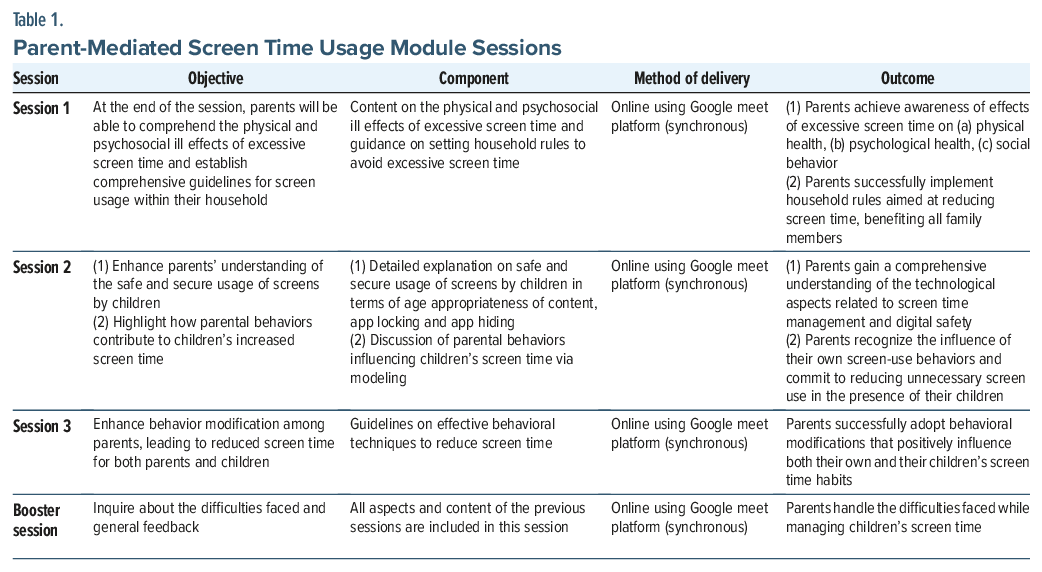
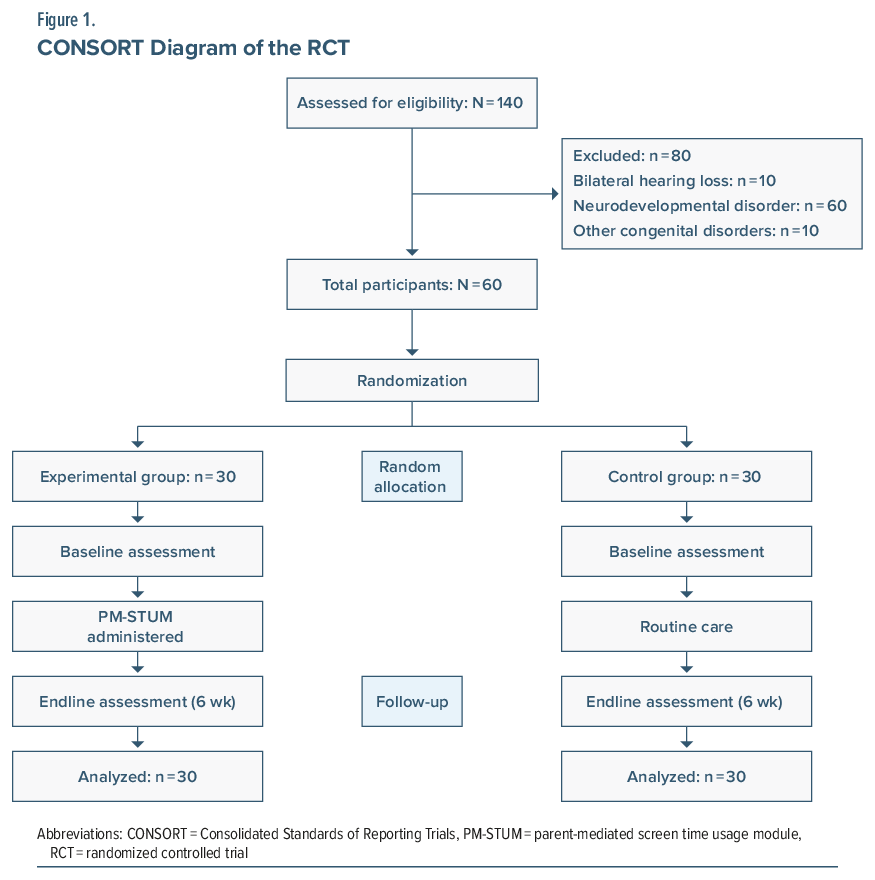
The intervention was delivered in a group setting, with each group comprising 10 parents. Sessions were conducted synchronously to encourage active parental participation. Booster sessions were held 3 weeks after the initial intervention, during which parents were asked about any difficulties in following the module, and tailored solutions were provided. The control group received routine care. Data were collected at baseline and 6 weeks postintervention, as illustrated in the study flow diagram (Figure 1). Data collection occurred July 15–September 15, 2023; the intervention was delivered in 3 sessions over 10 days (October 5–14, 2023), and booster sessions took place November 3–5, 2023. Outcome assessment was conducted 6 weeks after the intervention (January 5–10, 2024). The control group also continued with their scheduled outpatient department visits for consultation, receiving routine care/treatment as usual.
Assessment Scales
Screen time. To assess screen time, a 24-hour screen time diary was used, which is a parent-reported structured template filled out by either parent of the child. Detailed hour-to-hour logs for screen time usage, purpose of using the screen, duration of hours spent on screen, and most visited sites/apps were documented.
Behavioral outcomes. The Strengths and Difficulties Questionnaire (SDQ),13 which is a parent-rated standardized scale of 25 items, was used as a measure for behavioral outcomes. This tool yields the score for 5 scales: (1) emotional problems scale, (2) conduct problems scale, (3) hyperactivity scale, (4) peer problems scale, and (5) prosocial scale. Each item is scored on a 3-point scale (0 = not true, 1 = somewhat true, 2 = certainly true) and reflects if a child faces any difficulties while dealing with other children and adults in their day-to-day life across these domains. The total difficulties score (range, 0–40) is calculated by summing the 4 problem subscales. Scores are categorized as normal (0–13), borderline (14–16), and abnormal (17–40).
Sleep quality. The Child Sleep Habit Questionnaire (CSHQ),14 a parent-rated standardized scale, was used to assess sleep quality. The CSHQ consists of 33 items rated on a 3-point Likert scale (rarely =1, sometimes =2, usually =3), assessing sleep quality of children across 8 domains: (1) bedtime resistance, (2) sleep onset delay, (3) sleep duration, (4) sleep anxiety, (5) night waking, (6) parasomnia, (7) sleep-disordered breathing, and (8) daytime sleepiness to rule out possible difficulties with sleep. The total sleep disturbance score is calculated by summing the item scores. Consistent with the original validation by Owens et al,15 a total score >41 was considered indicative of clinically significant sleep problems, while scores ≤41 were considered within the normal range.
Physical activity. The Physical Activity Questionnaire (PAQ),16 a 10-item standardized scale, was used to assess the level of physical activity. The PAQ evaluates general physical activity over the past 7 days across multiple domains (school, leisure, recess, and weekends). Each item is rated on a 5-point scale (1=low activity, 5=high activity), and the mean summary score is calculated to reflect overall activity level. The questionnaire does not provide validated cutoffs or mild/moderate/severe categories. Therefore, physical activity was analyzed as a continuous variable, and improvement was defined as the mean summary score over the study period.
Statistical Analysis
Postintervention assessment, analysis, and interpretation of data were carried out using both descriptive and inferential statistics. Since all participants completed the study and adhered to the assigned intervention protocol, the results from the intention-to-treat (ITT) and per-protocol analyses were identical. ITT analysis is reported. Data were analyzed using SPSS version 20.0. Descriptive statistics, including means and standard deviations, were used to summarize the data. Inferential statistics were applied to examine the effect of the intervention. Repeated-measures analysis of variance (RMANOVA) was used to assess differences across time points and between the 2 groups. The within-subject factor was “time” (ie, pre-and postintervention), while the between-subject factor was “group” (experimental vs control). A significant time×group interaction indicated a differential response to the intervention across the 2 groups. The level of statistical significance was set at P<.05 (2-tailed).
RESULTS
Demographic Characteristics
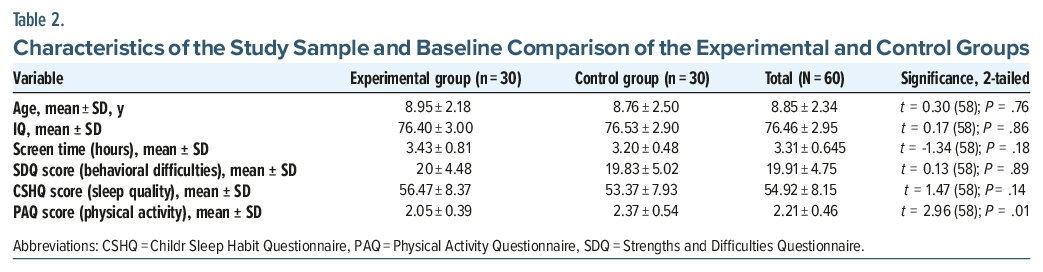
The study flow diagram of patient participation is shown in Figure 1. A total of 60 children were randomized to either arm with 30 children in each arm. The experimental and control groups were comparable at baseline with respect to sociodemographic variables such as age (years) (8.95 ±2.18 vs 8.76±2.50), IQ (76.40±3.00 vs 76.53±2.90), birth order, and parental education, as presented in Table 2. The experimental group and control group did not differ significantly on baseline screen time scores (hours), behavioral outcomes (SDQ scores), sleep quality (CSHQ scores), and physical activity (PAQ scores). The information on screen time behavior of family and children is available in Supplementary Table 1.
Screen Time
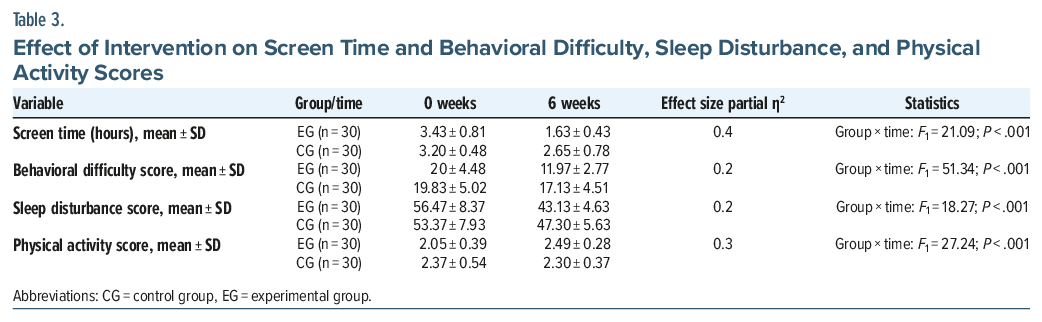
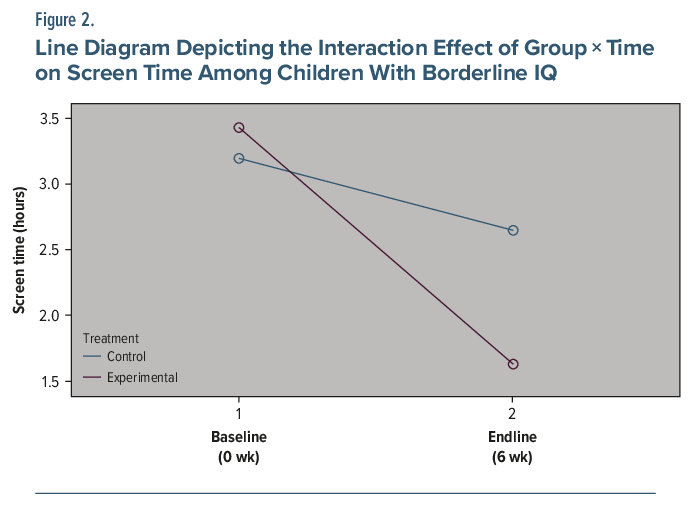
There was a significant reduction in screen time in the experimental group. There was a significant interaction effect of group ×time (F1,58 =51.346, P <.001), indicating a differential reduction in screen time in the intervention group compared to the control group (Table 3 and Figure 2).
Behavioral Difficulties
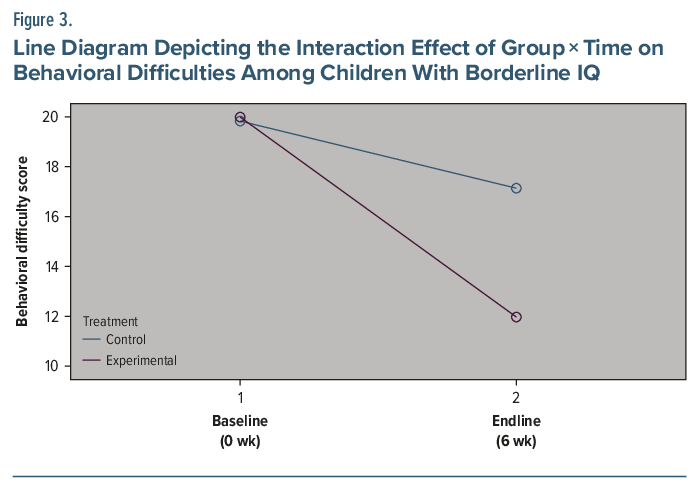
A significant reduction in behavioral difficulties was observed in the experimental group. The mean score decreased from 20.00±4.48 to 11.97±2.77 postintervention. RMANOVA showed a significant group×time interaction (F1,58 =21.092, P <.001), suggesting a significantly greater improvement in the experimental group (Table 3 and Figure 3).
Sleep Disturbances
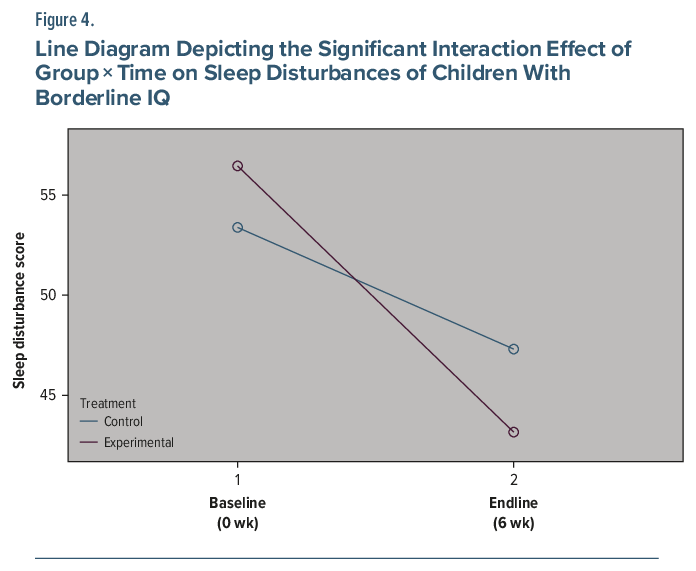
There was a significant improvement in sleep quality in the experimental group. The mean sleep disturbance score decreased from 56.47 ±8.37 to 43.13±4.63. There was a significant group×time interaction (F1,58 =18.270, P <.001), indicating that the improvement over time was more pronounced in the experimental group (Table 3 and Figure 4).
Physical Activity
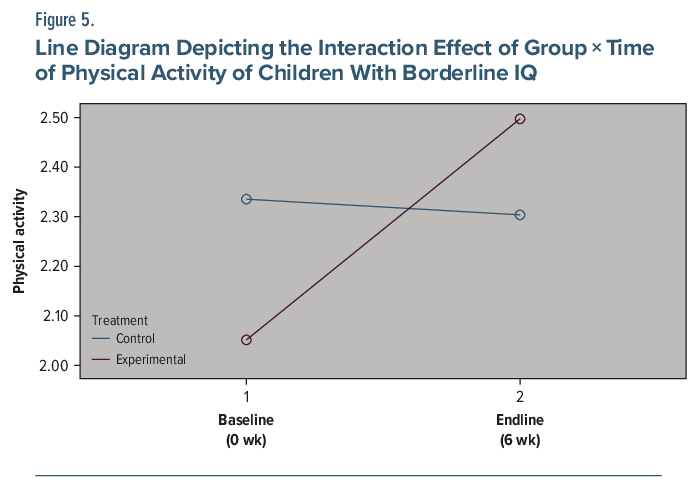
A significant increase in physical activity was observed in the experimental group, with the mean score rising from 2.05±0.39 to 2.49±0.28. There was a significant group ×time interaction (F1,58 =27.246, P <.001), indicating a greater increase in activity levels in the intervention group (Table 3 and Figure 5).
Feasibility and Difficulties Faced by Parents
During the intervention, parents reported several practical challenges in implementing the recommendations. Some parents had limited familiarity with technology and were advised to focus on behavioral strategies, allowing children to learn through observation. Engaging children in household chores was challenging for some families; parents were encouraged to maintain patience and consistency, recognizing that habits take time to develop. A common issue reported was children refusing to eat without screens; parents were guided to replace screens at mealtimes with a promise of desirable reward afterward, helping break this pattern. Additionally, parents with high mobile use due to work responsibilities were counseled on the importance of positive reinforcement and modeling desired behaviors. Overall, the strategies were considered feasible by most parents, though consistent application required ongoing support and persistence.
DISCUSSION
The present study revealed that the PM-STUM is effective in reducing children’s screen time and in improving behavioral difficulties of children. In screen time, there is a marginal reduction in the mean score among children with borderline IQ. Similar results were found in a systematic review and meta-analysis by Jones et al,17 which reported that screen time interventions were effective overall in reducing children’s screen use compared with control groups. The interventions had a small standardized mean difference (0.11; 95% CI, 0.08–0.15) but positive effect on decreasing screen time. Techniques that combined goals, feedback, and planning were especially linked to better outcomes.
The findings of the present study are consistent with prior evidence linking screen time with behavioral difficulties in adolescents.18,19 A population-based study conducted among Indonesian adolescents across the pre-, peak, and postpeak periods of the COVID-19 pandemic found that reduced screen time was associated with fewer emotional, conduct, and prosocial behavior problems, particularly during the peak period. Reduced screen exposure may also indirectly promote greater social interaction and increased time spent with peers and family, which are important protective factors for adolescent mental health.20 In line with these findings, the current study demonstrated a significant reduction in behavioral difficulties following a parent-mediated intervention. Together, these results suggest that parent-mediated interventions may improve behavioral outcomes by fostering healthier daily routines, including reduced screen use and enhanced family and social engagement.
The sleep-related findings of the present study should be considered in the context of mixed evidence from prior research on screen time interventions. A systematic review and meta-analysis by Martin et al21 found that interventions aimed at controlling children’s screen use, particularly those involving parental regulation, were associated with improvements in sleep outcomes. Similarly, a randomized controlled study by Lin et al22 demonstrated that a parent-focused educational program effectively reduced children’s screen time and improved sleep quality, highlighting the importance of structured parental involvement. In contrast, a cluster randomized trial by Pedersen et al23 found that limiting recreational screen media use within families did not significantly improve sleep, suggesting that intervention content, intensity, or context may influence outcomes. Moreover, the authors reported that the study was underpowered. Despite these mixed results, the present study found a significant improvement in sleep quality in the experimental group following a parent-mediated intervention, with mean sleep disturbance scores decreasing from 56.47 ± 8.37 to 43.13 ± 4.63 and a significant group × time interaction (F1,58 = 18.270, P < .001). Together, these findings indicate that parent-mediated interventions that provide structured guidance and consistent involvement can positively influence adolescent sleep, particularly when screen use is effectively managed.
The significant increase in physical activity observed in the experimental group of the present study demonstrates that parent-mediated interventions can effectively promote physical activity even without a structured exercise component. Unlike multicomponent school-based programs that include supervised physical activity sessions or sports curricula, such as the 12-week urban school intervention which directly increased activity through scheduled exercise and health education,24 our intervention focused on modifying daily routines, providing parental guidance, and reducing sedentary behaviors including screen time. Similarly, family-based screen time reduction trials, such as the SCREENS cluster randomized trial, have shown that limiting recreational screen use can indirectly increase children’s leisure-time activity.25 Systematic reviews also support those interventions targeting daily routines, and screen time behaviors can produce modest but meaningful increases in physical activity.26 These findings suggest that parent-mediated strategies can enhance activity levels indirectly by reducing sedentary time and encouraging more movement in everyday contexts, highlighting a complementary pathway to structured school-based exercise programs.
This study represents the first attempt from the Indian subcontinent to develop a parent-mediated psychoeducation module targeting screen time, specifically designed for children with borderline intellectual functioning. A key limitation was that, as the intervention was delivered online, exact adherence to the prescribed guidelines could not be objectively monitored. Additionally, outcomes were assessed only at 6 weeks postintervention, which may be insufficient to capture long-term behavioral changes. The short duration also limited the assessment of physical activity outcomes, particularly changes in weight and body mass index. Furthermore, the intervention primarily focused on screen use and sleep-related behaviors and did not include explicit strategies to promote physical activity; thus, observed changes in physical activity may have been indirect. Future interventions should incorporate targeted components to encourage physical activity and consider the development of a separate, structured guide to improve sleep patterns.
Article Information
Published Online: July 23, 2026. https://doi.org/10.4088/PCC.25m04135
© 2026 Physicians Postgraduate Press, Inc.
Submitted: November 7, 2025; accepted March 19, 2026.
To Cite: Kumari S, Sharma N, Sharma S, et al. Reducing screen time in children with borderline IQ: a randomized controlled trial of a parent-mediated screen time usage module. Prim Care Companion CNS Disord. 2026;28(4):25m04135.
Author Affiliations: National Institute of Nursing Education, Postgraduate Institute of Medical Education and Research, Chandigarh, India (S. Kumari, N. Sharma, S. Sharma); Department of Psychiatry, Postgraduate Institute of Medical Education and Research, Chandigarh, India (N. Chauhan, A. Sharma).
Corresponding Author: Nitasha Sharma, PhD, National Institute of Nursing Education, Postgraduate Institute of Medical Education and Research, Chandigarh, India ([email protected]).
Relevant Financial Relationships: None.
Funding/Support: None.
Acknowledgement: The authors would like to thank all the study participants.
Supplementary Material: Available at Psychiatrist.com.
Clinical Points
- Screen time management is crucial for children with borderline IQ; parent-mediated interventions are effective in reducing screen time and can also improve sleep, physical activity, and behavior.
- Children with borderline IQ often struggle with self-regulation and consistency; therefore, parental involvement is critical for managing screen time and promoting healthy routines.
References (26)

- Parent J, Sanders W, Forehand R. Youth screen time and behavioral health problems: the role of sleep duration and disturbances. J Dev Behav Pediatr. 2016;37(4):277–284.
- Muppalla SK, Vuppalapati S, Reddy Pulliahgaru A, et al. Effects of excessive screen time on child development: an updated review and strategies for management. Cureus. 2023;15(6):e40608.
- G CS, V H, Tumati KR, et al. The impact of screen time on sleep patterns in school-aged children: a cross-sectional analysis. Cureus. 2024;16(2):e55229.
- Almaqhawi A, Albarqi M. The effects of technology use on children’s physical activity: a cross-sectional study in the Eastern province of Saudi Arabia. J Med Life. 2022;15(10):1240–1245. CrossRef
- Radesky JS, Christakis DA. Increased screen time: implications for early childhood development and behavior. Pediatr Clin North Am. 2016;63(5):827–839.
- Robinson TN, Banda JA, Hale L, et al. Screen media exposure and obesity in children and adolescents. Pediatrics. 2017;140(Suppl 2):S97–S101.
- Jain S, Shrivastava S, Mathur A, et al. Prevalence and determinants of excessive screen viewing time in children aged 3-15 years and its effects on physical activity, sleep, eye symptoms and headache. Int J Environ Res Public Health. 2023;20(4):3449. PubMed
- Raj D, Ahmad N, Mohd Zulkefli NA, et al. Stop and play digital health education intervention for reducing excessive screen time among preschoolers from low socioeconomic families: cluster randomized controlled trial. J Med Internet Res. 2023;25:e40955. PubMed
- Ramsey Buchanan L, Rooks-Peck CR, Finnie RKC, et al. Reducing recreational sedentary screen time: a community guide systematic review. Am J Prev Med. 2016;50(3):402–415. PubMed
- Barnevik Olsson M, Holm A, Westerlund J, et al. Children with borderline intellectual functioning and autism spectrum disorder: developmental trajectories from 4 to 11 years of age. Neuropsychiatric Dis Treat. 2017;13:2519–2526. PubMed CrossRef
- Baglio G, Blasi V, Sangiuliano Intra F, et al. Social competence in children with borderline intellectual functioning: delayed development of theory of mind across all complexity levels. Front Psychol. 2016;7:1604.
- Ray S, Bhutia E, Meena RK. Screen time and associated factors in early adolescent age group experience from a North Indian center. Cureus. 2025;17(6):e85878.
- Strengths and Difficulties Questionnaire (SDQ) [Internet]. Seattle (WA): University of Washington. 2024. https://depts.washington.edu/dbpeds/Screening%20Tools/Strengths_and_Difficulties_Questionnaire.pdf
- Children’s Sleep Habits Questionnaire [Internet]. Njaap.org; 2024. https://njaap.org/wp-content/uploads/2016/04/Childrens-Sleep-Habits-Questionnaire.pdf
- Owens JA, Spirito A, McGuinn M, et al. The Children’s Sleep Habits Questionnaire (CSHQ): psychometric properties of a survey instrument for school-aged children. Sleep. 2000 Dec 15;23(8):1043–51.
- Kowalski KC. The Physical Activity Questionnaire for Older Children (PAQ-C) and Adolescents (PAQ-A) manual. [Internet]. Prismsports.org. 2024. https://www.prismsports.org/UserFiles/file/PAQ_manual_ScoringandPDF.pdf
- Jones A, Armstrong B, Weaver RG, et al. Identifying effective intervention strategies to reduce children’s screen time: a systematic review and meta-analysis. Int J Behav Nutr Phys Act. 2021;18(1):126. PubMed
- Tezol O, Yildiz D, Yalcin S, et al. Excessive screen time and lower psychosocial well-being among preschool children. Arch Pediatr. 2022;29(1):61–66. PubMed
- Guerrero MD, Barnes JD, Chaput JP, et al. Screen time and problem behaviors in children: exploring the mediating role of sleep duration. Int J Behav Nutr Phys Act. 2019;16(1):105. PubMed CrossRef
- Wiguna T, Minayati K, Kaligis F, et al. The influence of screen time on behaviour and emotional problems among adolescents: a comparison study of the pre-peak, and post-peak periods of COVID-19. Heliyon. 2023;10(1):e23325. PubMed
- Martin KB, Bednarz JM, Aromataris EC. Interventions to control children’s screen use and their effect on sleep: a systematic review and meta-analysis. J Sleep Res. 2021;30(3):e13130.
- Lin YM, Kuo SY, Chang YK, et al. Effects of parental education on screen time, sleep disturbances, and psychosocial adaptation among Asian preschoolers: a randomized controlled study. J Pediatr Nurs. 2021;56:e27–e34. PubMed
- Pedersen J, Rasmussen MGB, Sørensen SO, et al. Effects of limiting recreational screen media use on physical activity and sleep in families with children: a cluster randomized clinical trial. JAMA Pediatr. 2022;176(8):741–749. PubMed
- Petrušič T, Trajković N, Bogataj Š. Twelve-week game-based school intervention improves physical fitness in 12–14-year-old girls. Front Public Health. 2022;10:831424. PubMed
- Ahmed KR, Hasan MM, Hossain MZ, et al. Effectiveness of a school based multicomponent intervention on physical activity and screen time among urban adolescents: a cluster randomised controlled trial. J Sci Med Sport. 2022.
- Lai NM, Lau Y, Wong VW, et al. The effectiveness of school-based interventions for reducing screen time and increasing physical activity: a systematic review and meta-analysis. Int J Behav Nutr Phys Act. 2024.
Please sign in or purchase this PDF for $40.