
Abstract
Objective: Lumateperone is an FDA-approved atypical antipsychotic to treat schizophrenia, bipolar I or II depression, and major depressive disorder (MDD). Post hoc analyses of a randomized, phase 3, double-blind, placebo-controlled trial (Study 501) evaluated the efficacy of lumateperone 42 mg adjunctive to antidepressant therapy (ADT) in demographic and clinical subgroups of patients with MDD with inadequate ADT response.
Methods: Adults with DSM-5 criteria for MDD with inadequate response to 1–2 courses of ADT, Montgomery- Åsberg Depression Rating Scale (MADRS) Total score ≥24, Clinical Global Impression Scale–Severity (CGI-S) score ≥4, and Quick Inventory of Depressive Symptomatology–Self-Report 16-item (QIDS-SR-16) score ≥14 were randomized 1:1 to 6-week oral lumateperone 42 mg+ADT or placebo+ADT. Efficacy was evaluated in the overall population and patient subgroups by demographic (age, sex, race, ethnicity, and region) and baseline disease characteristics (MADRS Total score, ADT type, number of ADT failures [in current episode and lifetime], and presence of anxious distress).
Results: The modified intent-to-treat population comprised 481 patients (lumateperone+ADT, n = 239; placebo+ADT, n = 242). Lumateperone+ADT significantly improved MADRS Total score (least squares mean difference [LSMD], −4.9; P < .0001), CGI-S score (LSMD, −0.7; P < .0001), and QIDS-SR-16 Total score (LSMD, −2.4; P < .0001) at Day 43 versus placebo+ADT. Lumateperone+ADT significantly improved MADRS Total score (P < .01) across all demographic subgroups and baseline disease severity versus placebo+ADT. Significant improvements (P < .05) in CGI-S, QIDS-SR-16 Total scores, and MADRS response and remission rates were also observed across most subgroups.
Conclusion: Lumateperone+ADT demonstrated robust efficacy over placebo+ADT across a broad range of demographic and clinical subgroups of patients with MDD.
Clinical Trials Registration:
ClinicalTrials.gov identifier: NCT04985942
Prim Care Companion CNS Disord 2026;28(6):26m04289
Author affiliations are listed at the end of this article.
From the Editors

Are you a healthcare provider?
Add your NPI to personalize your JCP experience.
Major depressive disorder (MDD) is a highly burdensome disorder characterized by heterogeneous symptoms and variable disease progression, with variations in age of onset, duration of depressive episodes, and number of lifetime episodes.1 The lifetime prevalence of MDD is estimated to be between 5% and 17%, with rates nearly twice as high in women than in men.2 Importantly, recent studies also suggest an increasing incidence of MDD in the general population, especially in younger age cohorts, partly related to the impact of the COVID-19 pandemic.2–4
Pharmacologic treatment for MDD typically involves standard antidepressant therapy (ADT) with selective serotonin reuptake inhibitors (SSRIs) and serotonin- norepinephrine reuptake inhibitors (SNRIs). However, approximately 50% of patients have an inadequate response to initial ADT, with additional lines of treatment associated with lower remission rates and higher relapse rates.5 Notably, studies have shown that demographic and clinical characteristics may influence the response to ADT, with lower response rates or longer time to achieve a response observed in patients with more severe or persistent depression, psychiatric and medical comorbidities, anxious distress, anhedonia, and atypical depressive features.6–8
The goal of MDD treatment is symptom remission with full functional recovery; however, remission is often difficult to achieve.1 Although ADTs are widely prescribed, initial treatment is often decided on a trial-and-error basis, and response is typically assessed after 4–6 weeks; this leaves patients with inadequate response and persistent symptoms, which are a known risk factor for recurrence.9,10
For patients with inadequate response to first-line ADT, clinicians rely on several strategies for further lines of treatment, including dose optimization, switching to another ADT, or augmenting with another agent to improve treatment outcomes.11,12 Evidence from meta-analyses has demonstrated that augmentation strategies with an atypical antipsychotic are effective in these patients,13–15 although these treatments are associated with burdensome adverse events.16–19 Furthermore, delayed response to ADT may increase health care costs, prolong the depressive episode, and increase the likelihood of premature treatment discontinuation.20 Therefore, awareness of patient characteristics that may influence treatment response could promote better clinical decision-making and improve outcomes in patients with MDD with inadequate response to ADT.
Lumateperone is an atypical antipsychotic approved by the US Food and Drug Administration in adult patients for the treatment of schizophrenia, depressive episodes associated with bipolar I and II as monotherapy or adjunctive therapy with lithium or valproate, and MDD as adjunctive therapy to ADT.21 Lumateperone modulates several key neurotransmitters implicated in serious mental illness, acting as a potent serotonin 5-hydroxytryptamine receptor 2A (5-HT2A) receptor antagonist, a dopamine D2 receptor presynaptic partial agonist and postsynaptic antagonist, a D1 receptor–dependent indirect modulator of α-amino-3-hydroxy-5-methyl-4-isoxazole propionic acid and N-methyl-D-aspartate currents, and a serotonin reuptake inhibitor.22,23 The mechanism of action of lumateperone in MDD is unknown; it could be mediated through a combination of antagonist activity at central serotonin 5-HT2A receptors and partial agonist activity at central dopamine D2 receptors.21,24
The efficacy of adjunctive lumateperone in patients with MDD with inadequate response to ADT has been demonstrated in 2 phase 3, randomized, double- blind, placebo-controlled clinical trials (Study 501 [NCT04985942]25 and Study 502 [NCT05061706]26). In both studies, the primary and key secondary efficacy endpoints were met. These included change from baseline to Day 43 in Montgomery-Åsberg Depression Rating Scale (MADRS) Total score27 and Clinical Global Impression Scale–Severity (CGI-S) score,28 respectively. Subgroup analyses were performed on data from Study 501 to investigate the efficacy of adjunctive lumateperone across various baseline demographic and clinical characteristics in patients with MDD with inadequate response to ADT.
METHODS
Study Design and Patients
Detailed methods for Study 501 (ClinicalTrials.gov identifier: NCT04985942) have been previously published.25 Briefly, the trial (conducted from July 2021 to February 2024) consisted of a screening period of up to 2 weeks, a 6-week double-blind treatment period, and a 1-week safety follow-up period; participants were randomized 1:1 to oral lumateperone 42 mg + ADT or placebo + ADT.
Male or female outpatients aged 18–65 years who met Diagnostic and Statistical Manual of Mental Disorders, Fifth Edition (DSM-5)29 criteria for MDD, confirmed using the Mini-International Neuropsychiatric Interview,30 were included in the study. Participants had a current major depressive episode (MDE) of ≥8 weeks and ≤18 months in duration. Patients also had inadequate response to 1–2 antidepressant monotherapies of at least the minimum effective dose for ≥6 weeks’ duration in the current MDE, with inadequate response ( < 50% improvement in MADRS Total score) confirmed by the Antidepressant Treatment Response Questionnaire.31–33 Additional clinical inclusion criteria included MADRS Total score ≥24, CGI-S score ≥4, and Quick Inventory of Depressive Symptomatology–Self-Report 16-item (QIDS-SR-16) Total score ≥14.
Exclusion criteria included a lifetime psychiatric diagnosis other than MDD (eg, schizophrenia, schizoaffective disorder, bipolar I disorder, other psychotic disorders), alcohol/substance use disorders (within 6 months), and significant risk for suicidal behavior. Although anxiety disorders (eg, panic attack, generalized anxiety disorder) as a primary disorder were exclusionary, patients with anxiety symptoms were included.
Study protocols complied with the Declaration of Helsinki and Good Clinical Practice guidelines and were approved by an institutional review board or ethics committee/government agency; written informed consent was obtained from participants.
Outcomes of Interest
Changes from baseline to Day 43 with lumateperone+ADT versus placebo+ADT in patient subgroups categorized by baseline demographic and clinical characteristics were analyzed for MADRS Total score (primary efficacy parameter), CGI-S score (secondary efficacy parameter), and the QIDS-SR-16 (additional efficacy parameter).34 The demographic characteristics assessed were age (≤40 or >40 years), sex (male or female), race (White or non-White), ethnicity (Hispanic/Latino or not Hispanic/Latino), and region (US or non-US), while the clinical characteristics assessed were disease severity (baseline MADRS Total score < 32 or ≥32), type of ADT (SSRI or SNRI/other), number of ADT failures in the current episode (1 or 2), number of lifetime ADT failures (1 or 2), and presence/absence of anxious distress. Anxious distress was DSM-5 defined as the presence of ≥2 anxiety symptoms on most days—including feeling keyed up or tense, feeling unusually restless, difficulty concentrating due to worry, fear that something awful might happen, and feeling that one might lose control of oneself—and was confirmed by the Anxious Distress Mini-International Neuropsychiatric Interview module at screening.
Statistical Analysis
Changes from baseline to Day 43 in MADRS Total score (primary efficacy parameter) were analyzed in patient subgroups as protocol-defined supportive analyses, while changes in CGI-S score (secondary efficacy parameter) and the QIDS-SR-16 (patient-reported outcome) in patient subgroups were analyzed post hoc. Changes in MADRS Total score and CGI-S score in patient subgroups were analyzed in the modified intent-to-treat (mITT) population, defined as all randomized patients who received ≥1 dose of study drug and had a baseline MADRS Total score and ≥1 on-study drug postbaseline MADRS Total score. Change from baseline to Day 43 in QIDS-SR-16 Total score was analyzed in the ITT population, defined as all randomized patients who received ≥1 dose of study drug and had a baseline MADRS Total score. Baseline was defined as the last measurement prior to the first dose of randomized study drug.
For MADRS Total score and CGI-S score, estimates and P values for comparisons of lumateperone+ADT versus placebo+ADT in patient subgroups were analyzed using a mixed-effects model for repeated measures with treatment group, site (or pooled site), visit, subgroup, treatment-group-by-subgroup, subgroup-by-visit, treatment-group-by-visit, and treatment-by- subgroup-by-visit interactions as fixed effects and baseline and baseline-by-visit as covariates using observed data only. For MADRS response (≥50% decrease from baseline in MADRS Total score) and remission (MADRS Total score ≤10) in each patient subgroup, odds ratio estimates and P values were based on a logistic regression model with terms for treatment and baseline MADRS Total score; patients with a missing MADRS Total score at the visit were considered nonresponders or nonremitters.
An unstructured covariance matrix was used to model the correlation among repeated measurements within patients, and effect sizes (ES) were calculated as the least squares mean difference (LSMD)/pooled within-subject error standard deviation of change from baseline at Day 43. For QIDS-SR-16 Total score, estimates and P values for lumateperone+ADT versus placebo+ADT comparisons in patient subgroups were based on an analysis of covariance model with terms for treatment group, subgroup, treatment-group-by-subgroup, and site (or pooled site) as factors and baseline Total score as the covariate. Statistical hypothesis tests were performed at the 2-sided 5% significance level for main effects, and confidence intervals (CIs) were 2-sided 95% CIs. P values for these post hoc subgroup analyses were not adjusted for multiplicity and should be interpreted as nominal.
RESULTS
Demographics
A total of 481 patients were included in the mITT population (lumateperone + ADT, 239; placebo + ADT, 242); most patients completed double-blind treatment (lumateperone + ADT, 92.1%; placebo + ADT, 95.9%). Baseline demographic and clinical characteristics were generally similar between groups in the mITT population. The mean patient age was 45 years, and the majority of participants were female (lumateperone + ADT, 65.3%; placebo + ADT, 66.1%) and White (lumateperone + ADT, 74.5%; placebo + ADT, 78.9%).
Efficacy Outcomes
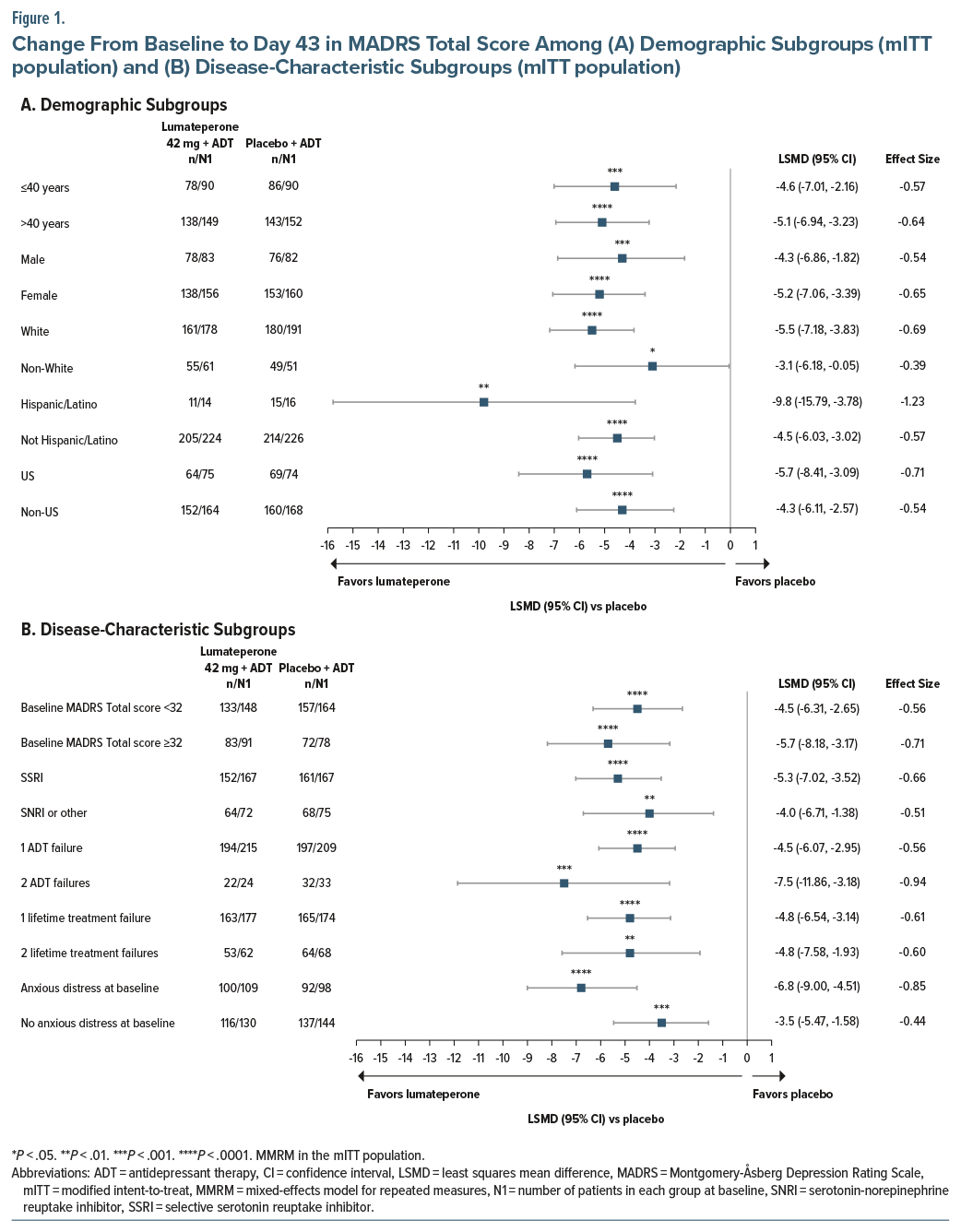
In the mITT population, lumateperone+ADT significantly improved the primary endpoint of MADRS Total score from baseline to Day 43 versus placebo+ADT (LSMD versus placebo, −4.9; 95% CI, −6.38 to −3.44; ES, −0.61; P < .0001) and the key secondary endpoint of CGI-S score (LSMD, −0.7; 95% CI, −0.85 to −0.48; ES, −0.67; P < .0001).25 Lumateperone + ADT also significantly improved QIDS-SR-16 Total score from baseline to Day 43 versus placebo+ADT (LSMD, −2.4; 95% CI, −3.23 to −1.51; ES, −0.50; P < .0001).25 Consistent improvement in MADRS Total score at Day 43 with lumateperone+ADT versus placebo+ADT was observed in all demographic subgroups assessed (age, sex, race, ethnicity, and region) (Figure 1). Similarly, lumateperone +ADT significantly improved MADRS Total score from baseline to Day 43 irrespective of baseline disease characteristics (disease severity, type of ADT, number of ADT failures in the current episode, and presence/absence of anxious distress).
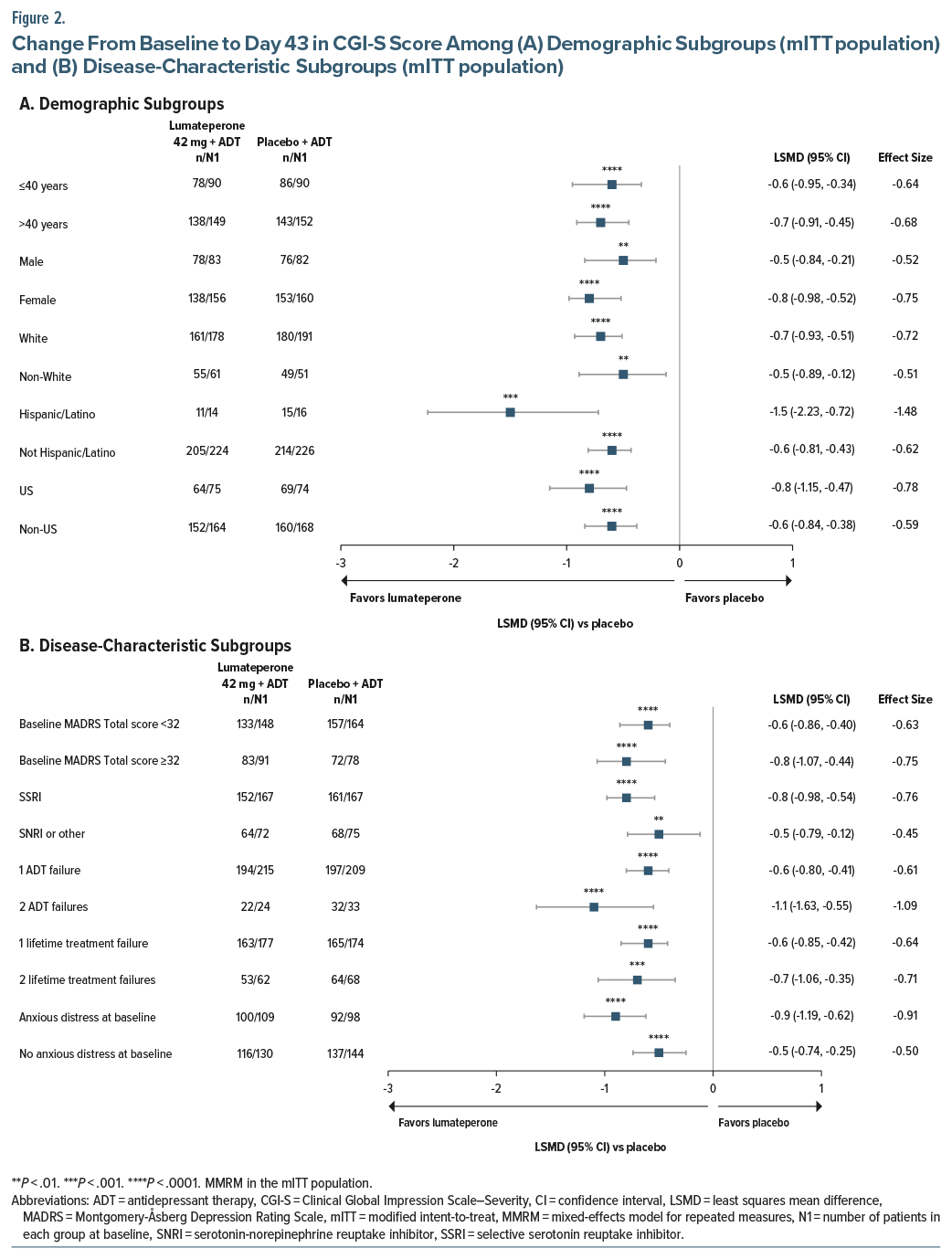
In all patient subgroups, treatment with lumateperone + ADT consistently led to statistically significant improvements (P < .05) in CGI-S score versus placebo+ADT from baseline to Day 43, irrespective of age, sex, race, ethnicity, region, baseline severity, ADT type, number of prior ADT failures in the current episode, or baseline anxious distress (Figure 2).
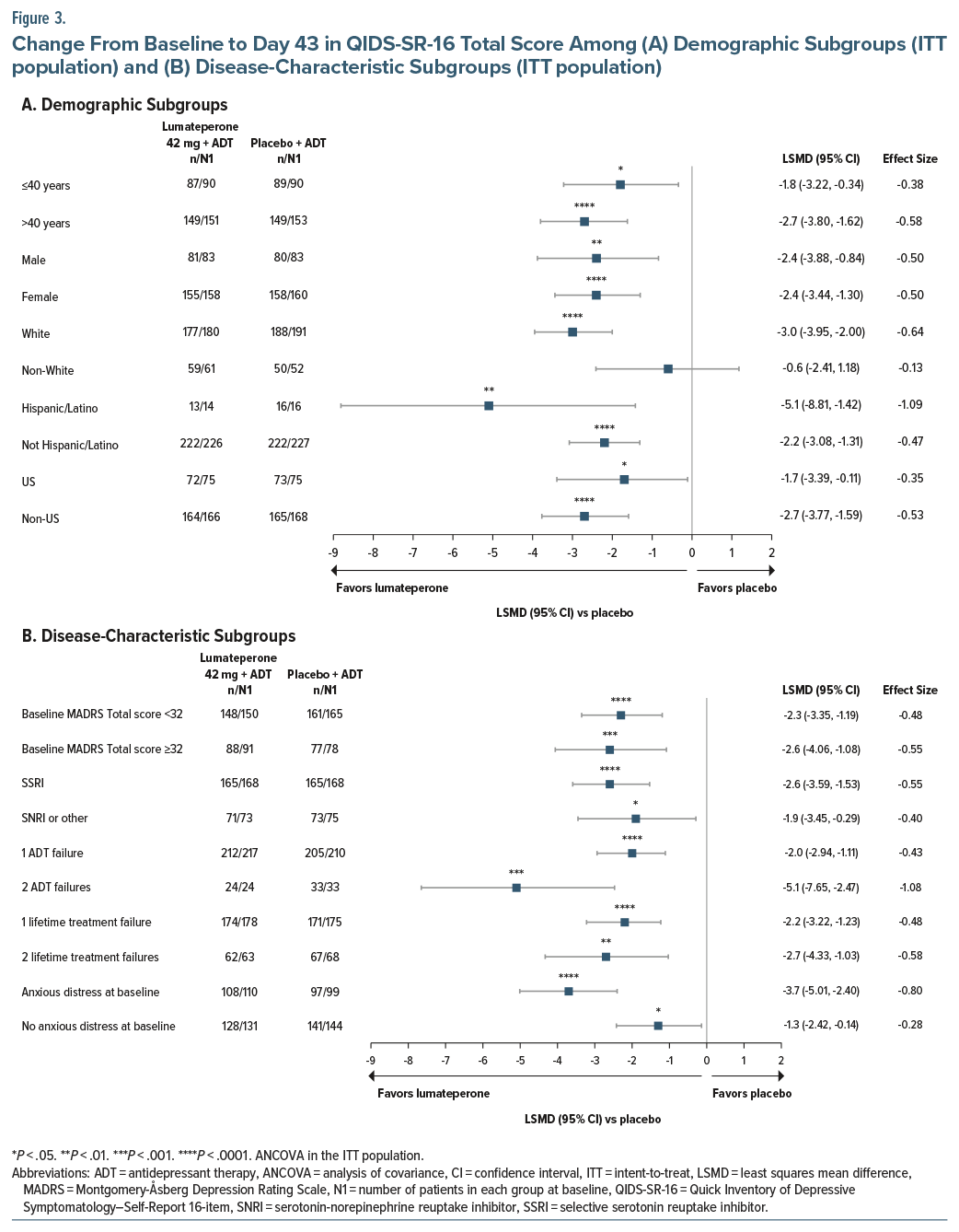
Similarly, lumateperone+ADT significantly improved (P < .05) QIDS-SR-16 Total score at Day 43 compared with placebo+ADT across most patient subgroups, except for race (White, P < .0001; non-White, P = .5011) (Figure 3A and 3B).
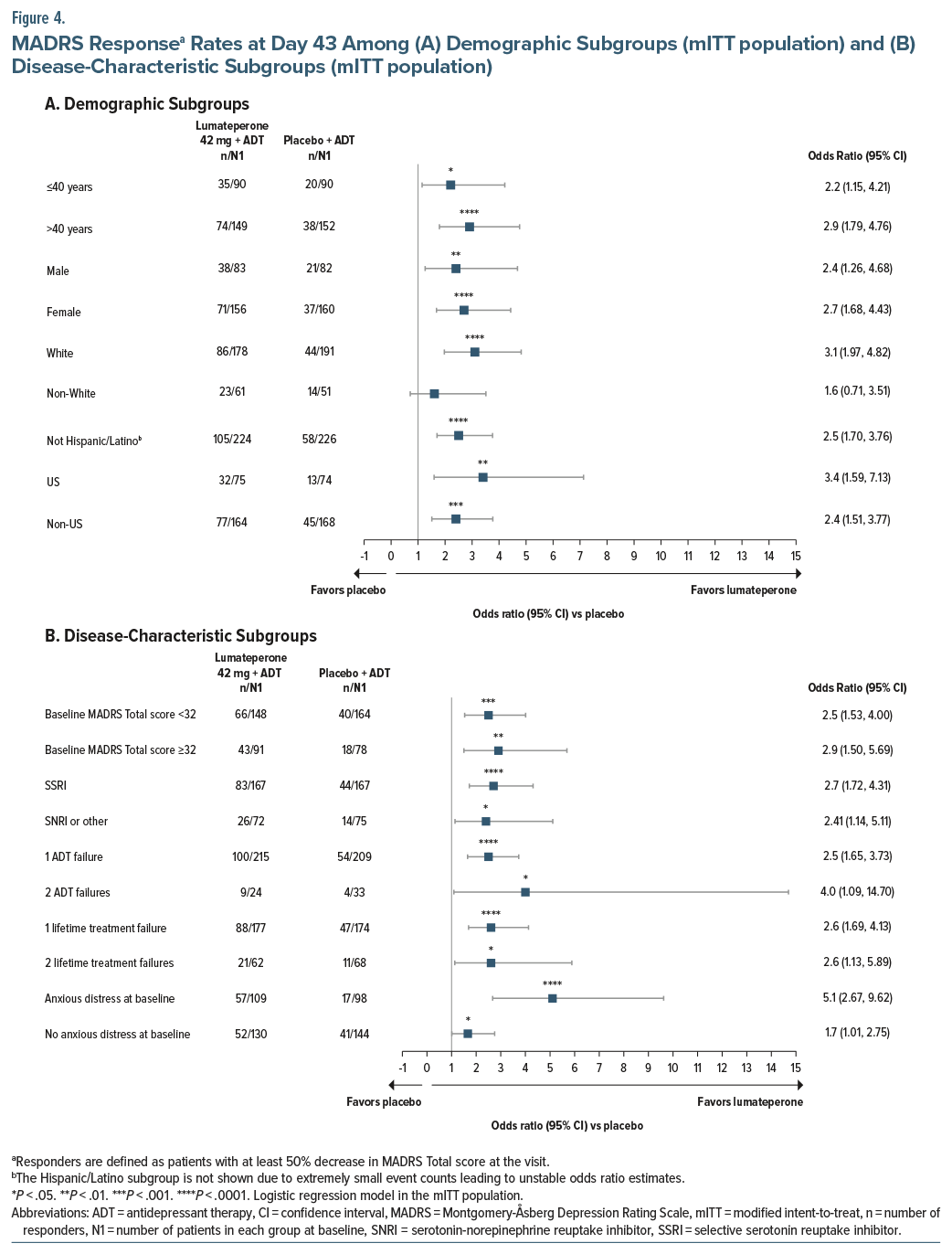
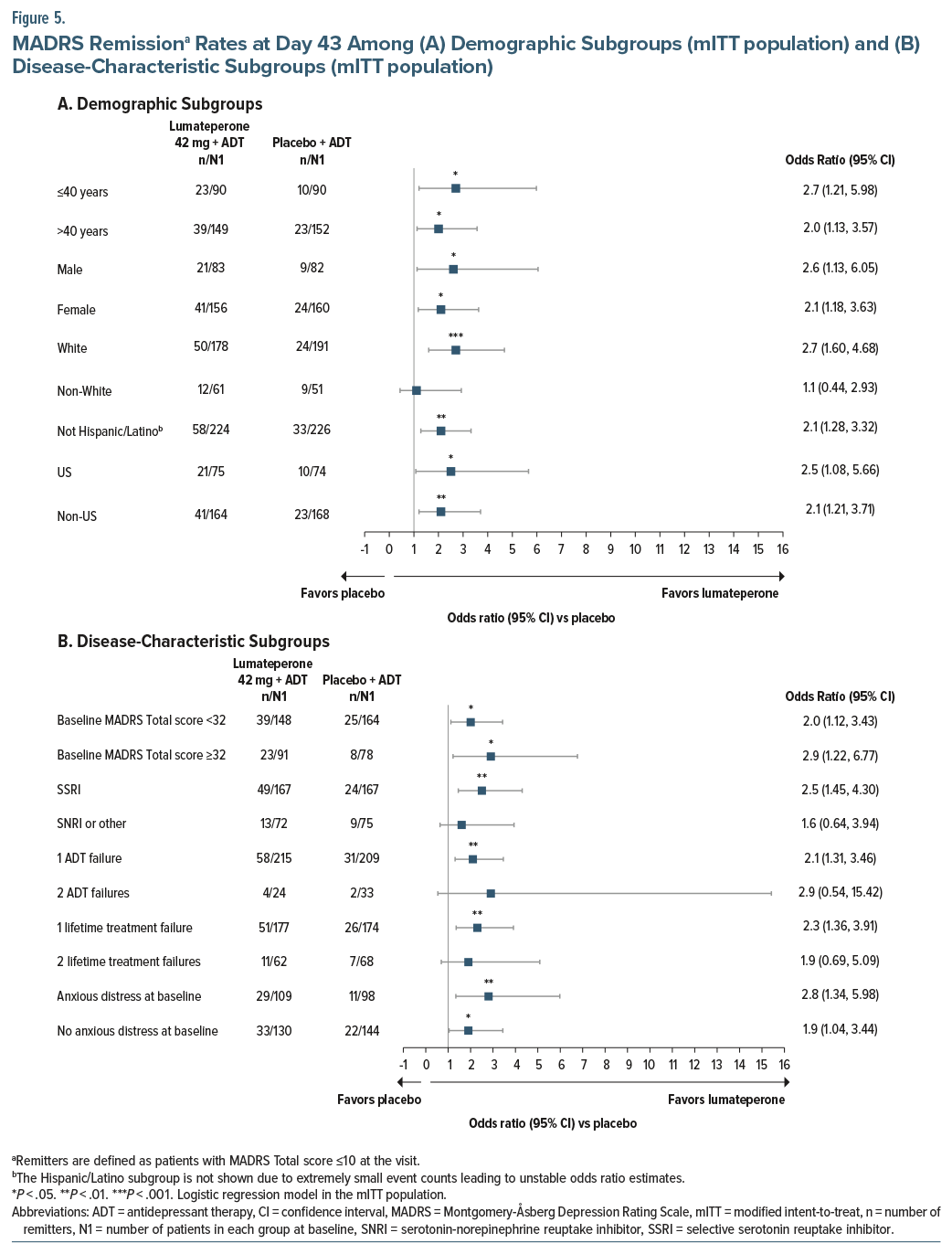
Significantly more patients treated with lumateperone + ADT than those treated with placebo + ADT achieved MADRS response (≥50% improvement in MADRS Total score from baseline) and remission (MADRS Total score ≤10) in each subgroup categorized by demographic and clinical characteristics (Figures 4 and 5). Treatment with lumateperone + ADT consistently led to statistically significant improvement (P < .05) in MADRS response at Day 43 compared with placebo + ADT across subgroups for age, region, and disease severity but not for race (White, P < .0001; non-White, P = .2660) or ethnicity (Hispanic/Latino, P = .0938; not Hispanic/ Latino, P < .0001) (Figure 4A). In the Hispanic/Latino subgroup, 4/14 patients receiving lumateperone + ADT achieved a response, whereas no responses were observed among the 16 patients receiving placebo+ADT. In the non-Hispanic/Latino subgroup, responses were observed in 105/ 224 patients receiving lumateperone + ADT and 58/ 226 receiving placebo+ADT. Additionally, significantly higher odds of achieving a MADRS response (P < .05) were observed across all disease- characteristic subgroups (Figure 4B).
Statistically significant improvements (P < .05) in MADRS remission at Day 43 were observed with lumateperone+ADT versus placebo+ADT across subgroups for age, sex, region, disease severity, and the presence or absence of anxious distress (Figures 5A and 5B). However, these effects were not observed for race (White, P = .0002; non-White, P = .7936), ethnicity (Hispanic/Latino, P = .1009; not Hispanic/Latino, P = .0028), type of ADT (SNRI/other, P = .3141; SSRI, P = .0010), number of ADT failures in the current episode (multiple, P = .2127; single, P = .0023), or number of lifetime ADT failures (1 lifetime ADT failure, P = .0019; 2 lifetime ADT failures, P = .2189). Among the Hispanic/Latino patients, remission occurred in 4/ 14 patients receiving lumateperone+ADT and 0/ 16 receiving placebo+ADT. In the non-Hispanic/Latino subgroup, remission occurred in 58/224 patients receiving lumateperone+ADT and 33/226 receiving placebo+ADT.
DISCUSSION
In these subgroup analyses in patients with MDD with an inadequate response to ADT, consistent improvement with lumateperone 42 mg+ADT versus placebo+ADT was demonstrated across demographic and disease-characteristic subgroups, suggesting that the efficacy of lumateperone was not limited to specific patient profiles or symptoms. Statistically significant differences favoring adjunctive lumateperone over placebo were observed in core depressive symptoms (MADRS Total score), global illness severity (CGI-S score), and self-reported depression symptoms (QIDS-SR-16 Total score) across all subgroups, including age, sex, race, ethnicity, baseline illness severity, region, number of ADT failures (both within the current episode and lifetime failures), treatment with an SSRI/SNRI or another ADT, and presence/absence of anxious distress, with the exception of White versus non-White for the QIDS-SR-16 Total score at Day 43. Previous studies have suggested that certain patient demographic and clinical characteristics, such as male sex, older age, and a higher number of previous MDEs, may be related to poorer ADT efficacy in MDD.35–37 Our findings support the use of adjunctive lumateperone in patients with MDD with inadequate response to ADT across the range of patient characteristics assessed.
Statistical significance is not sufficient to demonstrate treatment efficacy; therefore, clinical meaningfulness should also be considered.38 In our analyses, differences in MADRS Total score at Day 43 between treatment groups indicated that all patients treated with lumateperone+ADT had clinically relevant as well as statistically significant improvement, regardless of demographic subgroups and baseline disease severity. Importantly, because adjunctive lumateperone is prescribed to patients with inadequate response to various classes of ADT, clinically meaningful MADRS Total score improvements were also observed in patients treated with lumateperone+ADT versus placebo+ADT regardless of ADT class.
Anxious distress is a common and challenging symptom that is associated with increased depression severity, poorer cognitive and physical functioning, greater medical comorbidity, decreased quality of life, and increased suicidality.6,39,40 In Study 501, in which almost half of patients met DSM-5 criteria for anxious distress at baseline, prespecified analyses demonstrated that patients with anxious distress treated with lumateperone+ADT versus placebo+ADT had statistically significant improvement in change from baseline to Day 43 in MADRS Total score (LSMD, –15.6 versus –8.9; P < .0001) and CGI-S score (LSMD, –1.7 versus –0.8; P < .0001).25 In our analyses, differences in MADRS Total score suggested that improvement in depressive symptoms was both statistically significant and clinically meaningful in patients with and without anxious distress treated with lumateperone + ADT, with similar results observed for the CGI-S score.
Patient-reported outcomes, such as the QIDS-SR-16 Total score, provide valuable information about symptom severity, functioning, and quality of life; they are important measures of treatment success in MDD and help address the issues related to potential clinician biases in symptom assessment.41 In these post hoc analyses, QIDS-SR-16 Total score results supported clinician-rated measures, showing that lumateperone+ADT was effective across all patient subgroups, including patients with difficult-to-treat anxious distress.
Treatment response in depression is commonly defined as a ≥50% reduction in MADRS Total score, indicating a corresponding overall reduction in symptom severity.42–44 At Day 43, lumateperone+ADT showed significant improvement in MADRS response rates compared with placebo+ADT across demographic and clinical subgroups as well as disease-characteristic subgroups.
In addition to differences in MADRS Total score change from baseline, the clinical relevance of a treatment for MDD is also evaluated by the proportion of patients who achieve remission.45 In our analyses, significantly greater proportions of patients treated with lumateperone+ADT versus placebo+ADT achieved remission across demographic and illness characteristic subgroups, including age, sex, region, baseline disease severity, and the presence or absence of anxious distress, further indicating that treatment with adjunctive lumateperone was both statistically significant and clinically meaningful.
Limitations of this study include those typical of post hoc subgroup analyses, such as lack of adjustment for multiple comparisons and short-term primary study duration; therefore, P values should be interpreted with caution. In addition, the Study 501 trial was not powered to demonstrate statistical significance for subgroup analyses, and the small sample subgroup sizes may have increased statistical variability. Furthermore, strict inclusion and exclusion criteria may limit generalizability to the wider population of individuals with MDD.
CONCLUSION
In summary, because many patients with MDD have inadequate response to ADT, it is important that new treatments demonstrate efficacy across a broad range of characteristics. These post hoc analyses demonstrated that adjuvant lumateperone treatment led to significant and clinically relevant improvements across demographic and disease subgroups in patients with MDD with inadequate response to ADT. Notably, these improvements with lumateperone+ADT extended to subgroups in which less robust efficacy has previously been reported in ADT trials, such as older patients and those with anxious distress, although further studies are warranted to confirm these preliminary findings.
Article Information
Published Online: 03, 2026. https://doi.org/10.4088/PCC.26m04289
© 2026 Physicians Postgraduate Press, Inc.
Submitted: May 28, 2026; accepted August 3, 2026.
To Cite: Durgam S, Earley WR, Migliore R, et al. Efficacy of lumateperone 42 mg in major depressive disorder: subgroup analysis of a phase 3 randomized, placebo-controlled trial. Prim Care Companion CNS Disord 2026;28(6):26m04289.
Author Affiliations: Former employee of Intra-Cellular Therapies, a Johnson & Johnson company, Bedminster, New Jersey (Durgam); Intra-Cellular Therapies, a Johnson & Johnson company, Bedminster, New Jersey (Earley, Migliore, Lakkis); Department of Psychiatry, University of Toronto, Toronto, ON, Canada (McIntyre); Massachusetts General Hospital and Harvard Medical School, Boston, Massachusetts (Fava).
Corresponding Author: Suresh Durgam, MD, former employee of Intra-Cellular Therapies, a Johnson & Johnson company, 135 US Highway 202/206, Ste 6, Bedminster, NJ 07921 ([email protected]).
Author Contributions: S Durgam, WR Earley, R Migliore, and H Lakkis participated in study design and study conduct. All authors participated in data analysis/interpretation and writing/critical review and approved the final manuscript for publication. All authors agree to be accountable for all aspects of the work.
Financial Disclosures: Drs Earley and Lakkis and Mr Migliore are full-time employees of Intra-Cellular Therapies, a Johnson & Johnson company. Dr Durgam is a former employee of Intra-Cellular Therapies, a Johnson & Johnson company. Dr McIntyre has received research grant support from CIHR/GACD/National Natural Science Foundation of China (NSFC) and the Milken Institute; and speaker/consultation fees from Lundbeck, Janssen, Alkermes, Neumora Therapeutics, Boehringer Ingelheim, Sage, Biogen, Mitsubishi Tanabe Pharma, Purdue, Pfizer, Otsuka, Takeda, Neurocrine, NeuraWell, Sumitomo Pharma America, Bausch Health, Axsome Therapeutics, Novo Nordisk, Kris Pharma, Sanofi, Eisai, Intra-Cellular Therapies, NewBridge Pharmaceuticals, Viatris, AbbVie, and Atai Life Sciences. Dr Fava reports the following disclosures related to the last 3 years: Research Support: AbbVie; Acadia Pharmaceuticals; Aditum Bio Management Company, LLC; Allergan, Alkermes, Inc.; Altimate Health Corporation; Alto Neuroscience, Inc.; Ancora Bio, Inc.; Angelini S.p.A; Aptinyx; Arbor Pharmaceuticals LLC; Avanir Pharmaceuticals Inc.; Axsome; Benckiser Pharmaceuticals, Inc.; BioClinica, Inc.; Biogen; BioHaven; BioShin Limited; Cambridge Science Corporation; Centrexion Therapeutics Corporation; Cerecor; Cybin IRL Limited; Damona Pharmaceuticals; EmbarkNeuro; Eliem Therapeutics Ltd.; Gate Neurosciences, Inc.; Genomind, LLC; Gentelon, LLC; Gerbera Therapeutics, Inc.; Happify; Johnson & Johnson; Lundbeck Inc.; Marinus Pharmaceuticals; Medpace, Inc.; Methylation Sciences, Inc.; Millennium Pharmaceuticals, Inc.; Minerva Neurosciences; Neuralstem; Neurocrine Biosciences, Inc.; NeuroRx Inc.; Novaremed; Novartis; Otsuka; Pfizer; Premier Research International; Praxis Precision Medicines; Protagenic Therapeutics, Inc.; Relmada Therapeutics Inc.; Reckitt; Shenox Pharmaceuticals; Stanley Medical Research Institute (SMRI); Taisho; Takeda; University of Michigan; Vistagen; WinSanTor, Inc.; Xenon Pharmaceuticals, Inc.; National Institute of Drug Abuse (NIDA); National Institutes of Health (NIH); National Institute of Mental Health (NIMH); and PCORI. M Fava has not done any personal consulting. Any consulting he has done has been on behalf of Massachusetts General Hospital, except for Revival Therapeutics and Sensorium Therapeutics. Speaking/ Publishing: Lecture given at Global Medical Education, Inc. Mood Disorders Summit, November 2020. Stock/Other Financial Options: Equity Holdings: Compellis; Neuromity; Psy Therapeutics; Revival Therapeutics; Sensorium Therapeutics. Royalty/patent, other income: Patents for Sequential Parallel Comparison Design (SPCD), licensed by MGH to Pharmaceutical Product Development, LLC (PPD) (US_7840419, US_7647235, US_7983936, US_8145504, US_8145505); and patent application for a combination of Ketamine plus Scopolamine in Major Depressive Disorder (MDD), licensed by MGH to Biohaven. Patents for Pharmacogenomics of Depression Treatment with Folate (US_9546401, US_9540691). Copyright for the MGH Cognitive & Physical Functioning Questionnaire (CPFQ), Sexual Functioning Inventory (SFI), Antidepressant Treatment Response Questionnaire (ATRQ), Discontinuation-Emergent Signs & Symptoms (DESS), Symptoms of Depression Questionnaire (SDQ), and SAFER; Belvoir; Lippincott, Williams & Wilkins; Wolters Kluwer; World Scientific Publishing Co. Pte. Ltd.
Funding/Support: This study was funded by Intra-Cellular Therapies, a Johnson & Johnson company, Bedminster, New Jersey.
Role of the Sponsor: Intra-Cellular Therapies, a Johnson & Johnson company, was responsible for the design, analysis, interpretation, and submission of this manuscript.
Previous Presentation: Poster presented at the 64th Annual Meeting of the American College of Neuropsychopharmacology (ACNP); Nassau, Bahamas; January 12–15, 2026.
Acknowledgments: The authors thank all the study investigators, research staff, and patients for their participation. Medical writing support was provided by Keri Ramessar, PhD, of Nucleus Global, an Inizio company, and funded by Intra-Cellular Therapies, a Johnson & Johnson company.
Clinical Points
- Adjunctive lumateperone improved depression symptoms across a broad range of patients with major depressive disorder (MDD), with generally consistent effects across demographic and clinical subgroups, including age, sex, baseline depression severity, antidepressant class, number of prior antidepressant treatment failures, and presence of anxious distress.
- The findings support considering augmentation with lumateperone to antidepressant treatment, based on the patient’s overall clinical presentation rather than any single demographic or illness characteristic, particularly when depression symptoms persist despite an adequate antidepressant trial.
- Consistent efficacy across heterogeneous patient subgroups may be particularly relevant to primary care, where patients with MDD commonly differ in symptom severity, treatment history, and background antidepressant therapy.
References (45)

- Malhi GS, Mann JJ. Depression. Lancet. 2018;392(10161):2299–2312.
- Bains N, Abdijadid S. Major depressive disorder. StatPearls [Internet]. Accessed May 7, 2025. https://www.ncbi.nlm.nih.gov/books/NBK559078/
- Moreno-Agostino D, Wu YT, Daskalopoulou C, et al. Global trends in the prevalence and incidence of depression: a systematic review and meta-analysis. J Affect Disord. 2021;281:235–243.
- Goodwin RD, Dierker LC, Wu M, et al. Trends in U.S. depression prevalence from 2015 to 2020: the widening treatment gap. Am J Prev Med. 2022;63(5):726–733.
- Rush AJ, Trivedi MH, Wisniewski SR, et al. Acute and longer-term outcomes in depressed outpatients requiring one or several treatment steps: a STAR*D report. Am J Psychiatry. 2006;163(11):1905–1917. PubMed CrossRef
- Fava M, Rush AJ, Alpert JE, et al. Difference in treatment outcome in outpatients with anxious versus nonanxious depression: a STAR*D report. Am J Psychiatry. 2008;165(3):342–351.
- Howland RH, Wilson MG, Kornstein SG, et al. Factors predicting reduced antidepressant response: experience with the SNRI duloxetine in patients with major depression. Ann Clin Psychiatry. 2008;20(4):209–218.
- Pizzagalli DA. Toward a better understanding of the mechanisms and pathophysiology of anhedonia: are we ready for translation?. Am J Psychiatry. 2022;179(7):458–469. CrossRef
- Voegeli G, Cléry-Melin ML, Ramoz N, et al. Progress in elucidating biomarkers of antidepressant pharmacological treatment response: a systematic review and meta-analysis of the last 15 years. Drugs. 2017;77(18):1967–1986. CrossRef
- Nierenberg AA, Husain MM, Trivedi MH, et al. Residual symptoms after remission of major depressive disorder with citalopram and risk of relapse: a STAR*D report. Psychol Med. 2010;40(1):41–50. PubMed CrossRef
- Papakostas GI, Jackson WC, Rafeyan R, et al. Inadequate response to antidepressant treatment in major depressive disorder. J Clin Psychiatry. 2020;81(3):OT19037COM5.
- Dodd S, Bauer M, Carvalho AF, et al. A clinical approach to treatment resistance in depressed patients: what to do when the usual treatments don’t work well enough? World J Biol Psychiatry. 2021;22(7):483–494. CrossRef
- Nelson JC, Papakostas GI. Atypical antipsychotic augmentation in major depressive disorder: a meta-analysis of placebo-controlled randomized trials. Am J Psychiatry. 2009;166(9):980–991. PubMed CrossRef
- Nuñez NA, Joseph B, Pahwa M, et al. Augmentation strategies for treatment resistant major depression: a systematic review and network meta-analysis. J Affect Disord. 2022;302:385–400.
- Papakostas GI, Shelton RC, Smith J, et al. Augmentation of antidepressants with atypical antipsychotic medications for treatment-resistant major depressive disorder: a meta-analysis. J Clin Psychiatry. 2007;68(6):826–831. PubMed CrossRef
- Kishimoto T, Hagi K, Kurokawa S, et al. Efficacy and safety/tolerability of antipsychotics in the treatment of adult patients with major depressive disorder: a systematic review and meta-analysis. Psychol Med. 2023;53(9):4064–4082. CrossRef
- Oluboka OJ, Habert J, Khullar A, et al. Urgency to treat and early optimized treatment in major depressive disorder: consequences of delayed treatment, barriers to implementation, and practical strategies for clinicians. CNS Spectr. 2025;30(1):e54. CrossRef
- Jha MK, Mathew SJ. Pharmacotherapies for treatment-resistant depression: how antipsychotics fit in the rapidly evolving therapeutic landscape. Am J Psychiatry. 2023;180(3):190–199.
- Jain R, Higa S, Keyloun K, et al. Treatment patterns during major depressive episodes among patients with major depressive disorder: a retrospective database analysis. Drugs Real World Outcomes. 2022;9(3):477–486. CrossRef
- Leuchter AF, Cook IA, Hunter AM, et al. A new paradigm for the prediction of antidepressant treatment response. Dialogues Clin Neurosci. 2009;11(4):435–446.
- Caplyta (lumateperone). Prescribing information. Intra-Cellular Therapies. Inc; 2025.
- Snyder GL, Vanover KE, Zhu H, et al. Functional profile of a novel modulator of serotonin, dopamine, and glutamate neurotransmission. Psychopharmacol (Berl). 2015;232(3):605–621.
- Titulaer J, Radhe O, Danielsson K, et al. Lumateperone-mediated effects on prefrontal glutamatergic receptor-mediated neurotransmission: a dopamine D1 receptor dependent mechanism. Eur Neuropsychopharmacol. 2022;62:22–35. CrossRef
- Khoodoruth MAS, Estudillo-Guerra MA, Pacheco-Barrios K, et al. Glutamatergic system in depression and its role in neuromodulatory techniques optimization. Front Psychiatry. 2022;13:886918.
- Durgam S, Earley WR, Kozauer SG, et al. Lumateperone as adjunctive therapy in patients with major depressive disorder: results from a randomized, double-blind, phase 3 trial. J Clin Psychiatry. 2025;86(4):25m15848.
- Durgam S, Earley WR, Kozauer SG, et al. Adjunctive lumateperone in patients with major depressive disorder: results from a randomized, double-blind, phase 3 trial. Am J Psychiatry. 2025;182(12):1072–1082. CrossRef
- Montgomery SA, Åsberg M. A new depression scale designed to be sensitive to change. Br J Psychiatry. 1979;134(4):382–389.
- Guy W. ECDEU Assessment Manual for Psychopharmacology. Rockville, MD: U.S. Department of Health, Education, and Welfare; 1976.
- American Psychiatric Association. Diagnostic and Statistical Manual of Mental Disorders, 5th Edition: DSM-5. Washington, DC: American Psychiatric Association; 2013.
- Sheehan DV, Lecrubier Y, Sheehan KH, et al. The Mini-International Neuropsychiatric Interview (MINI): the development and validation of a structured diagnostic psychiatric interview for DSM-IV and ICD-10. J Clin Psychiatry. 1998;59(20):22–33.
- Chandler GM, Iosifescu DV, Pollack MH, et al. RESEARCH: validation of the Massachusetts General Hospital Antidepressant Treatment History Questionnaire (ATRQ). CNS Neurosci Ther. 2010;16(5):322–325.
- Fava M. Diagnosis and definition of treatment-resistant depression. Biol Psychiatry. 2003;53(8):649–659.
- Fava M, Davidson KG. Definition and epidemiology of treatment-resistant depression. Psychiatr Clin North Am. 1996;19(2):179–200.
- Rush AJ, Trivedi MH, Ibrahim HM, et al. The 16-Item Quick Inventory of Depressive Symptomatology (QIDS), clinician rating (QIDS-C), and self-report (QIDS-SR): a psychometric evaluation in patients with chronic major depression. Biol Psychiatry. 2003;54(5):573–583.
- Ansseau M, Demyttenaere K, Heyrman J, et al. Objective: remission of depression in primary care: the Oreon study. Eur Neuropsychopharmacol. 2009;19(3):169–176. PubMed CrossRef
- Khan A, Brodhead AE, Schwartz KA, et al. Sex differences in antidepressant response in recent antidepressant clinical trials. J Clin Psychopharmacol. 2005;25(4):318–324. PubMed
- Tedeschini E, Levkovitz Y, Iovieno N, et al. Efficacy of antidepressants for late-life depression: a meta-analysis and meta-regression of placebo-controlled randomized trials. J Clin Psychiatry. 2011;72(12):1660–1668. PubMed CrossRef
- Moncrieff J, Kirsch I. Empirically derived criteria cast doubt on the clinical significance of antidepressant-placebo differences. Contemp Clin Trials. 2015;43:60–62. PubMed
- Chan HN, Rush AJ, Nierenberg AA, et al. Correlates and outcomes of depressed out-patients with greater and fewer anxious symptoms: a CO-MED report. Int J Neuropsychopharmacol. 2012;15(10):1387–1399. PubMed CrossRef
- Fava M, Rush AJ, Alpert JE, et al. What clinical and symptom features and comorbid disorders characterize outpatients with anxious major depressive disorder: a replication and extension. Can J Psychiatry. 2006;51(13):823–835. PubMed CrossRef
- IsHak WW, Mirocha J, Christensen S, et al. Patient-reported outcomes of quality of life, functioning, and depressive symptom severity in major depressive disorder comorbid with panic disorder before and after SSRI treatment in the STAR*D trial. Depress Anxiety. 2014;31(8):707–716. PubMed CrossRef
- Kennedy SH. Beyond response: aiming for quality remission in depression. Adv Ther. 2022;39(suppl 1):20–28. PubMed
- Bandelow B, Baldwin DS, Dolberg OT, et al. What is the threshold for symptomatic response and remission for major depressive disorder, panic disorder, social anxiety disorder, and generalized anxiety disorder? J Clin Psychiatry. 2006;67(9):1428–1434. PubMed CrossRef
- Azorin JM, Sapin C, Weiller E. Effect of asenapine on manic and depressive symptoms in bipolar I patients with mixed episodes: results from post hoc analyses. J Affect Disord. 2013;145(1):62–69. PubMed CrossRef
- Rush AJ, Kraemer HC, Sackeim HA, et al. Report by the ACNP Task Force on response and remission in major depressive disorder. Neuropsychopharmacology. 2006;31(9):1841–1853. PubMed
This PDF is free for all visitors!