
Abstract
Objective: Cardiovascular disease (CVD) is the leading cause of morbidity and mortality in the United States, and older military veterans are at particularly high risk. This study aims to determine the prevalence and temporal stability of CVD in a nationally representative sample of older US veterans and identify correlates of CVD and related multimorbidity.
Methods: Data were analyzed from 1,944 veterans aged ≥60 years from the 2025–2026 National Health and Resilience in Veterans Study (NHRVS). Weighted z-tests, multivariable logistic regression, and Bonferroni-corrected comparisons assessed CVD prevalence trends relative to the 2019–2020 NHRVS and identified correlates.
Results: Overall CVD prevalence was 25.7% (n = 486), unchanged from the 2019-2020 NHRVS (25.2%; P= .69), as were rates of heart disease (19.0% vs 19.2%) and myocardial infarction (8.3% vs 10.1%). Stroke/TIA prevalence was higher in 2025–2026 (6.3% vs 4.5%; P= .005), though comparability was limited by the addition of TIA in the later wave. CVD was associated with significantly higher odds of major depression (odds ratio [OR]= 1.88), gambling disorder (OR = 1.69), sleep disorder (OR = 1.90), and insomnia (OR=1.68) but lower odds of lifetime suicide attempt (OR = 0.31), alongside higher odds of respiratory disease (OR = 1.98), kidney disease (OR = 1.85), and chronic pain (OR = 1.65). Independent correlates included older age (OR = 1.06), male sex (OR = 2.17), hypertension (OR = 1.48), hypercholesterolemia (OR = 1.66), diabetes (OR = 1.98), and cumulative trauma burden (OR = 1.10).
Prim Care Companion CNS Disord 2026;28(6):26m04309
Author affiliations are listed at the end of this article.
From the Editors

Are you a healthcare provider?
Add your NPI to personalize your JCP experience.
For several decades, cardiovascular disease (CVD) has remained the leading cause of morbidity and mortality in the United States.1 Advanced age is one of the strongest risk factors for CVD,2 and US veterans, who are on average about 20 years older than nonveterans (median ages of 64 vs 44 years), are also at heightened risk for CVD compared to nonveterans.3–5 For example, a study of the 2019–2020 cohort of the National Health and Resilience in Veterans Study found that 25.2% of older US veterans reported a diagnosis of CVD (ie, heart disease, heart attack, or stroke).6 As the US veteran population continues to age and demographics shift, ongoing evaluation is needed to characterize CVD risk, current prevalence, and burden.
Various factors increase cardiovascular risk and mortality, including male sex, black and Hispanic racial and ethnic identity, lower income, lower educational attainment, and unmarried/unpartnered status.7–10 In addition to these sociodemographic factors, clinical risk factors and conditions such as hypertension, high cholesterol, and diabetes account for a substantial proportion of CVD risk.1,11 Although clinical risk factors are among the strongest direct predictors of cardiovascular events, sociodemographic factors may also be linked to CVD risk by shaping exposure to and management of these conditions.12
Within this multidimensional risk profile, psychiatric conditions are increasingly recognized as important contributors to cardiovascular morbidity. Posttraumatic stress disorder (PTSD), depression, anxiety disorders, and substance use disorders are highly prevalent among veterans and have been associated with an increased risk of CVD, adverse cardiac events, and cardiovascular mortality.6,13–17 Trauma exposure, including combat and military sexual trauma, is also associated with cumulative psychological burden, including increased risk of PTSD, depression, and suicidal ideation (SI), which may further elevate long-term cardiovascular risk.18,19
A range of physical health conditions has also been linked to CVD. These include sleep disorders, chronic pain, chronic kidney disease (CKD), inflammatory conditions (eg, arthritis), and respiratory disorders (eg, asthma), all of which have been linked to increased cardiovascular risk and worse outcomes.20–24 Frailty and functional impairment further compound risk and may serve as both predictors and consequences of CVD in older adults.25 Veterans with CVD are more likely than nonveterans to report difficulties with basic self-care tasks and challenges managing everyday activities.6 These interrelated associations underscore the need for contemporary integrated analyses of cardiovascular risk.
The demographic composition of the US veteran population is evolving, with changes in education, marital status, and income observed in recent cohorts.26,27 Over the next 3 decades, the veteran population is projected to become more diverse, with the proportion of racial and ethnic minority veterans rising from 27.5% in fiscal year 2024 to 39.1% by 2053.28 These shifts have important implications for understanding disparities in CVD risk and outcomes. However, nationally representative data on the prevalence and correlates of CVD in contemporary veteran samples remain limited.
Ongoing surveillance of CVD prevalence is essential for public health planning and resource allocation, as accurate and up-to-date estimates support epidemiological monitoring and help quantify disease burden.29 Accordingly, the present study builds upon prior work by providing an updated assessment of the epidemiology of CVD in a nationally representative sample of US military veterans aged 60 years and older. The specific aims were to assess this sample and (1) characterize the current lifetime prevalence of CVD; (2) examine national trends in CVD prevalence relative to data collected in 2019–2020, with additional consideration of transient ischemic attack (TIA); (3) identify sociodemographic, military, trauma, and clinical correlates of CVD; and (4) evaluate associations between CVD and a broad range of mental and physical health conditions. Collectively, these analyses provide a comprehensive and contemporary characterization of cardiovascular health among older US veterans.
METHODS
Sample
A total of 1,944 US veterans aged 60 years and older participated in the 2025–2026 National Health and Resilience in Veterans Study (NHRVS), which surveyed a nationally representative sample of 2,636 veterans from December 16, 2025, to January 12, 2026. Participants completed a 40-minute, anonymous, web-based survey and were recruited from KnowledgePanel, a probability-based online survey panel operated by Ipsos, a multinational survey research company. Participant households were sampled using the US Postal Service Delivery Sequence File. Participants were given internet access and computers by Ipsos when necessary. The panel comprises over 50,000 US households that cover approximately 98% of the US adult population. Panel members are recruited using address-based sampling techniques that include telephone and nontelephone households, cell-phone-only households, and households regardless of Internet access. Panel members who endorsed military service (affirmative response to the question: “Have you ever served on active duty in the US Armed Forces, Military Reserves, or National Guard?”) were eligible to complete the survey. A total of 3,485 veterans from KnowledgePanel were invited to participate, and 2,636 qualified for and completed the study (75.6% participation rate). Of these, a total of 1,944 were aged 60 years or older (73.7%) and are the focus of the current study. To permit generalizability of results to the US veteran population, the Ipsos statistical team computed poststratification weights using the following benchmark distributions of US military veterans from the most contemporaneous August 2024 Veteran Supplement of the US Census Bureau’s Current Population Survey30: age, gender, race/ethnicity, Census region by metropolitan status, education, household income, branch of service, and years in service. All participants provided electronic informed consent prior to study participation, and the VA Connecticut Health Care System Human Subjects Subcommittee approved this study. The de-identified dataset was accessed for research purposes on April 28, 2026. The authors did not have access to information that could identify individual participants during or after data collection.
Measures
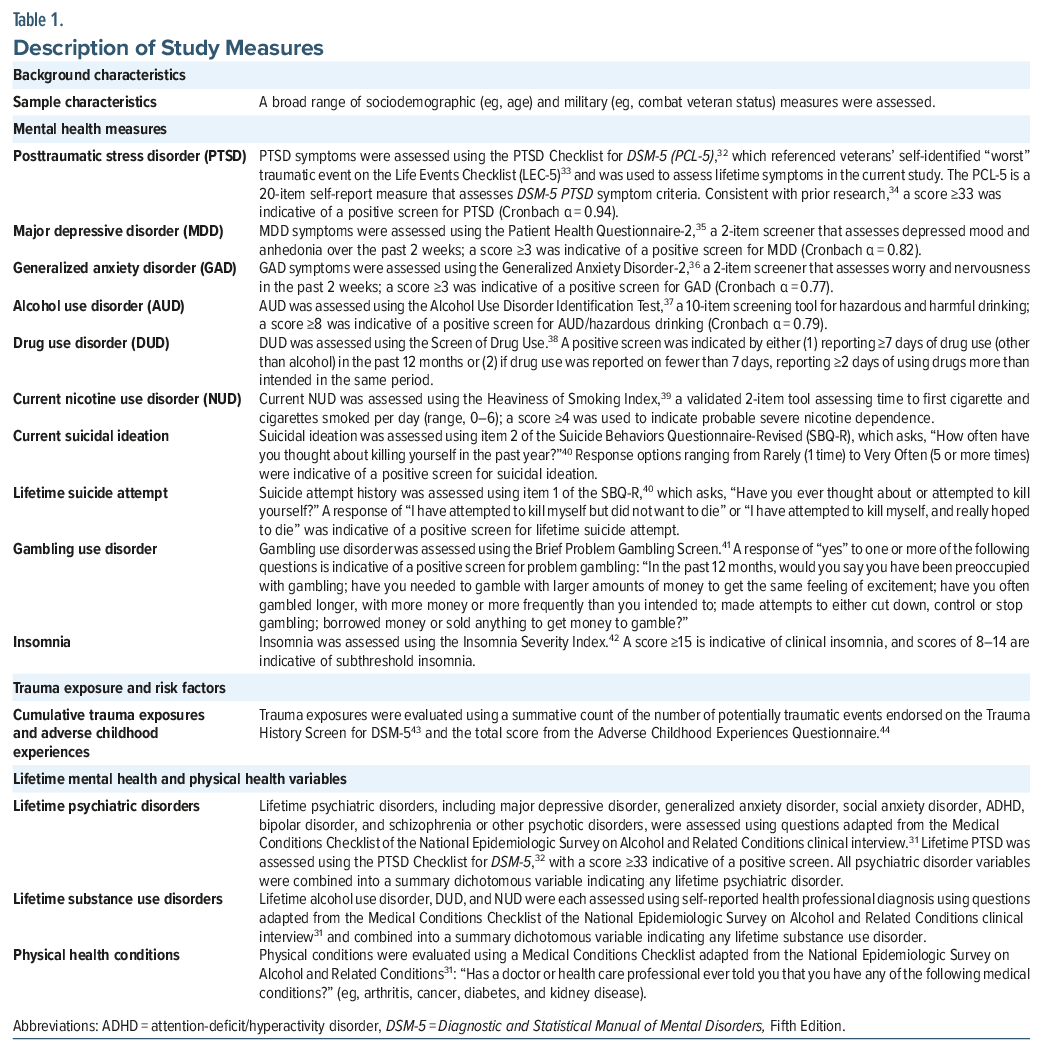
Cardiovascular disease status. A response of “Yes” to any of the following questions adapted from the Medical Conditions Checklist of the National Epidemiologic Survey on Alcohol and Related Conditions clinical interview31: (1) “Has a doctor or health care professional ever told you that you have heart disease (such as coronary artery disease, congestive heart failure)”; (2) “Has a doctor or health care professional ever told you that you have had a heart attack (myocardial infarction)”; or (3) “Has a doctor or health care professional ever told you that you have had a stroke or transient ischemic attack?” was indicative of a positive screen for CVD. Table 1 describes all additional military, sociodemographic, clinical, mental health, and physical health measures included in the study.
Data Analysis
Data analyses proceeded in 5 steps. First, 2-proportion z-tests were conducted to compare the weighted prevalence of composite CVD and each specific CVD condition (heart disease, myocardial infarction [MI], and stroke or TIA) between veterans aged 60 years and older who participated in the 2025–2026 and 2019–2020 waves of the NHRVS. Bonferroni correction was applied to account for multiple comparisons (adjusted α = .0125). Second, independent-samples t-tests and χ2 analyses were conducted to compare sociodemographic, military, and clinical characteristics between veterans with and without CVD. Third, a multivariable binary logistic regression analysis was conducted to identify independent correlates of CVD status. To maximize sensitivity to potential correlates and minimize the risk of type II error, variables associated with CVD status at P <.20 in bivariate analyses were entered as candidate predictors in this model, a liberal inclusion threshold commonly recommended for exploratory multivariable model building.45 Fourth, a series of multivariable binary logistic regression analyses was conducted to examine the associations between CVD status and mental and physical health conditions. Multivariable analyses of current mental health conditions were adjusted for age, sex, and cumulative trauma burden; analyses of physical health conditions and suicidality measures were adjusted for age, sex, cumulative trauma burden, and lifetime psychiatric and substance use disorders. Odds ratios (ORs) and 95% CIs were computed to quantify the magnitude and direction of associations. Raw unweighted sample sizes are reported; prevalence estimates and regression analyses used poststratification-weighted data to permit generalizability to the US veteran population. Missing data (<5%) were imputed using chained equations. All analyses were conducted using IBM SPSS Statistics (version 30.0.0).
RESULTS
Overall Sample Characteristics
The sample comprised US military veterans aged 60 years and older (mean age = 74.1 years; SD = 8.0; range = 60–99), the majority of whom were male (93.7%) and white, non-Hispanic (82.7%).
Prevalence of CVD
In the 2019–2020 NHRVS (N = 3,001), over one-quarter of veterans aged 60 years and older (25.2%; n = 757) reported a diagnosis of CVD.6 Regarding specific conditions, 19.2% (n = 582) reported heart disease, 10.1% (n = 290) a heart attack, and 4.5% (n = 138) a stroke. In the full sample, 17.2% (n = 523) reported 1 condition, 7.5% (n = 215) 2 conditions, and 0.5% (n = 19) all 3 conditions.
In the 2025–2026 wave (N = 1,944), a comparable proportion of veterans aged 60 years and older reported a CVD diagnosis (25.7%; n = 486). Regarding specific conditions, 19.0% (n = 359) reported heart disease, 8.3% (n = 154) a heart attack, and 6.3% (n = 121) a stroke or TIA. In the full sample, 18.9% (n = 356) reported 1 condition, 5.8% (n = 112) 2 conditions, and 1.0% (n = 18) all 3 conditions. There were no missing data for the CVD variables.
The overall prevalence of any CVD did not differ significantly between the 2019–2020 and 2025–2026 (25.2% vs 25.7%; z = −0.40, P=.69) NHRVS waves, nor did the prevalence of heart disease (19.2% vs 19.0%; z = 0.18, P= .86). Although the prevalence of heart attack was nominally higher in 2019–2020 than in 2025–2026 (10.1% vs 8.3%; z = 2.12, P= .034), this difference did not survive Bonferroni correction for multiple comparisons (adjusted α=.0125). The prevalence of stroke/TIA was higher in 2025–2026 than in 2019–2020 (6.3% vs 4.5%; z= −2.79, P= .005); however, this difference should be interpreted with caution, as TIA was not assessed in the 2019–2020 wave, limiting direct comparability across waves.
Sample Characteristics by CVD Status
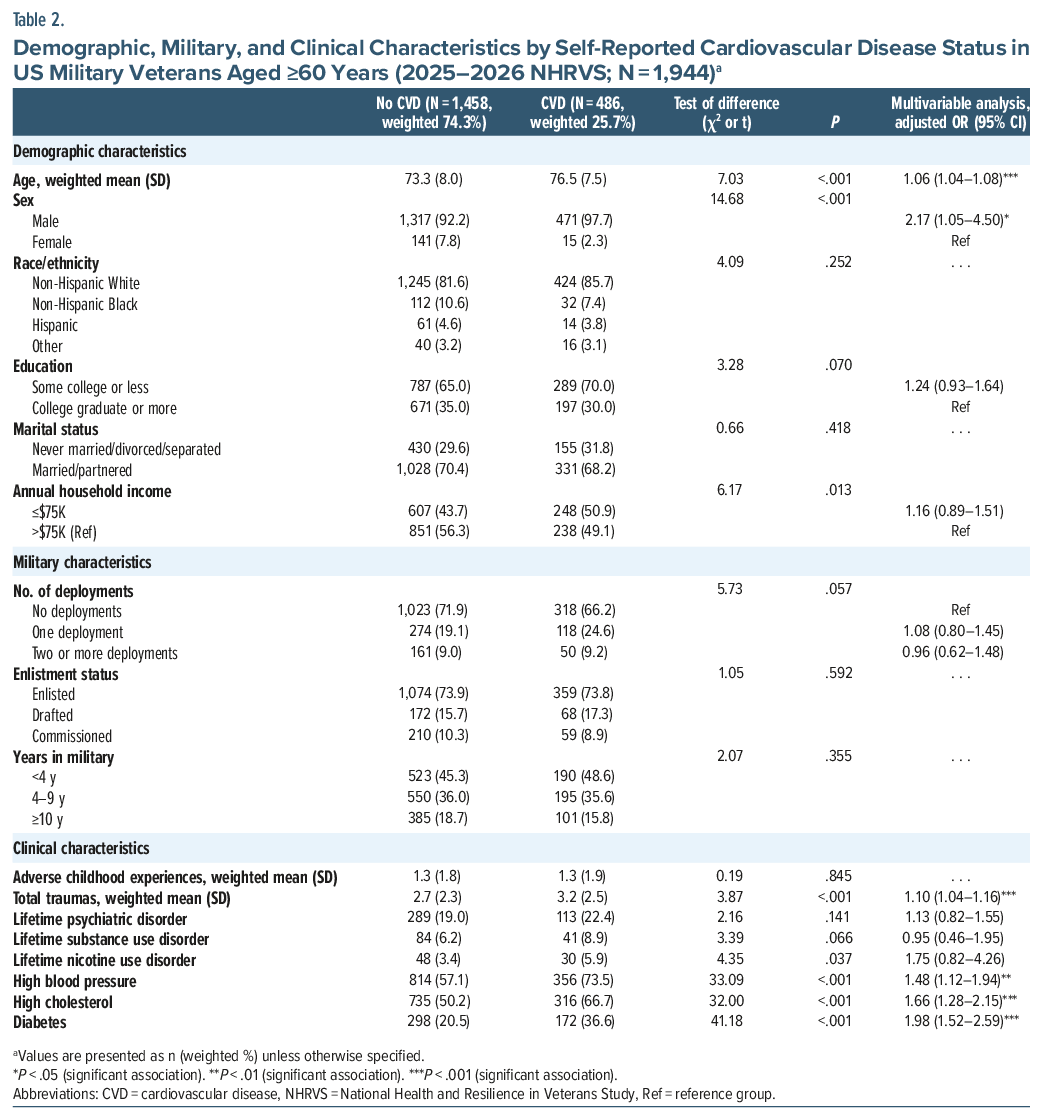
Table 2 shows sample characteristics by CVD status. Relative to veterans without CVD, those with CVD were significantly older and more likely to be male and to have a lower annual household income. With respect to clinical characteristics, veterans with CVD reported significantly greater cumulative trauma burden and were significantly more likely to report a lifetime nicotine use disorder diagnosis. Consistent with established cardiometabolic risk factors, veterans with CVD were also significantly more likely to report diagnoses of high blood pressure, high cholesterol, and diabetes. Race/ethnicity, educational attainment, marital status, number of deployments, enlistment status, years of military service, adverse childhood experiences, and lifetime psychiatric and substance use disorders did not differ significantly between groups (all P values > .05).
Multivariable Analysis of Risk Correlates of CVD
Multivariable analysis revealed that older age (OR = 1.06, 95% CI = 1.04–1.08), male sex (OR = 2.17,
95% CI = 1.05–4.50), cumulative trauma burden (OR = 1.10, 95% CI = 1.04–1.16), and comorbid hypertension (OR = 1.48, 95% CI = 1.12–1.94), hypercholesterolemia (OR = 1.66, 95% CI = 1.28–2.15), and diabetes (OR = 1.98, 95% CI = 1.52–2.59) were independently associated with CVD.
Health Conditions by CVD Status
In Table 3, bivariate analyses of mental health and psychiatric-related physical health conditions indicated that, relative to veterans without CVD, those with CVD were significantly more likely to screen positive for major depressive disorder, gambling disorder, any sleep disorder (eg, sleep apnea), and clinical insomnia. No significant differences between groups were observed for generalized anxiety disorder, PTSD, alcohol use disorder, drug use disorder, migraine, epilepsy, Parkinson disease, mild cognitive impairment/dementia/Alzheimer disease, or concussion or traumatic brain injury. None of the suicidality measures, including lifetime suicide attempt, past-year SI, or future suicidal intent, differed significantly between groups.
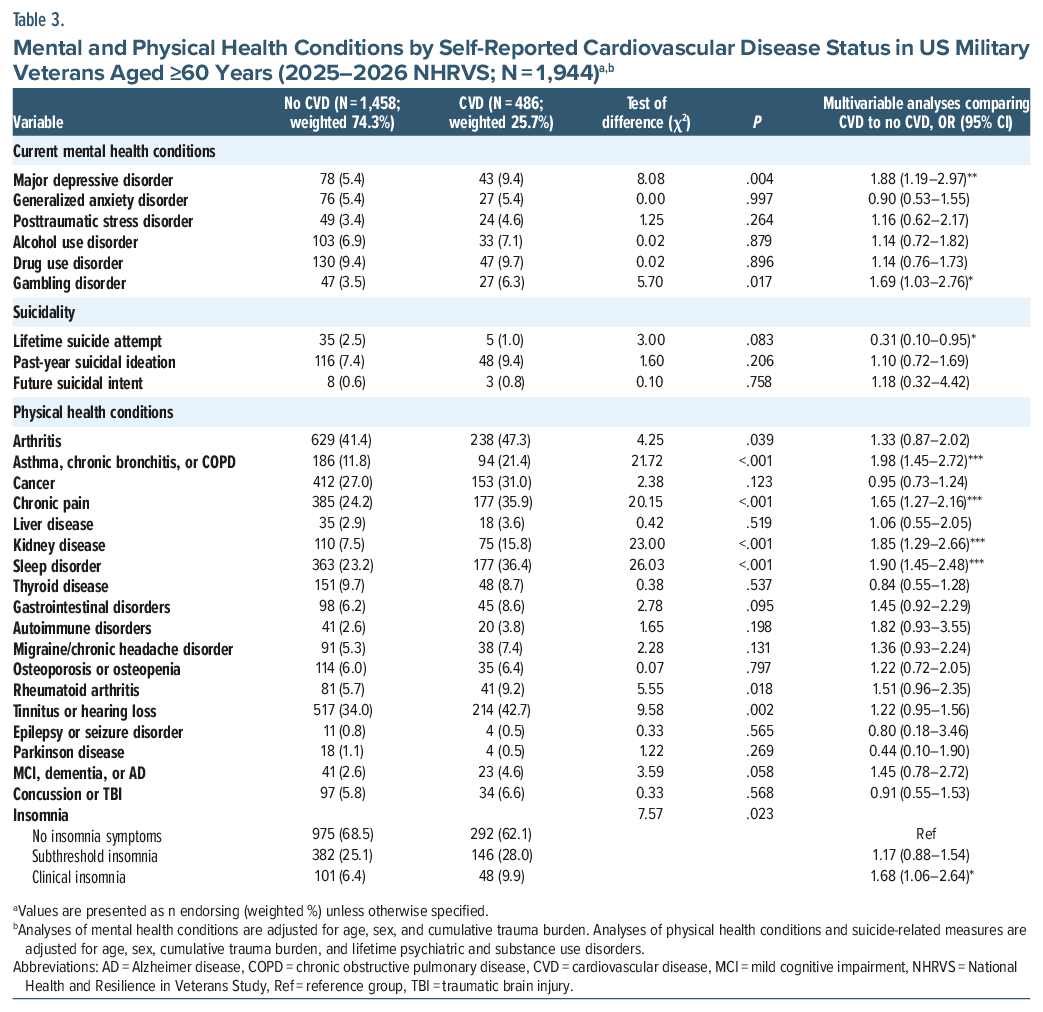
Multivariable analyses revealed that, after adjusting for sociodemographic, trauma, and health variables, veterans with CVD had higher odds of major depressive disorder (OR = 1.88, 95% CI = 1.19–2.97), gambling disorder (OR = 1.69, 95% CI = 1.03–2.76), sleep disorder (OR = 1.90, 95% CI = 1.45–2.48), and clinical insomnia (OR = 1.68, 95% CI = 1.06–2.64) but lower odds of lifetime suicide attempt (OR = 0.31, 95% CI = 0.10–0.95).
With respect to other current physical health conditions, veterans with CVD were significantly more likely to report diagnoses of asthma, chronic bronchitis, or chronic obstructive pulmonary disease (COPD); chronic pain; and kidney disease, as well as tinnitus or hearing loss, arthritis, and rheumatoid arthritis. Cancer, liver disease, thyroid disease, gastrointestinal disorders, autoimmune disorders, and osteoporosis did not differ significantly between groups. After adjustment, CVD remained associated with higher odds of asthma, chronic bronchitis, or COPD (OR = 1.98, 95% CI=1.45–2.72), chronic pain (OR = 1.65, 95% CI = 1.27–2.16), and kidney disease (OR = 1.85, 95% CI = 1.29–2.66).
DISCUSSION
In this nationally representative study of US veterans aged 60 years and older, the lifetime prevalence of CVD remained high and largely unchanged between the 2019–2020 and 2025–2026 NHRVS waves (25.2% vs 25.7%; P = .69).6 The prevalence of heart disease was stable across waves (19.2% vs 19.0%; P= .86), and while the prevalence of MI was nominally lower in 2025–2026 than in 2019–2020 (8.3% vs 10.1%; P = .034), this difference did not survive Bonferroni correction and should be interpreted cautiously; nonetheless, it may warrant further investigation as a potential signal of improving acute MI management or secular trends in statin and antiplatelet use in this population.1 The higher prevalence of stroke/TIA in 2025–2026 relative to 2019–2020 (6.3% vs 4.5%; P= .005) should similarly be interpreted with caution, as TIA was not assessed in the earlier wave, limiting direct comparability. Collectively, these findings suggest a persistent and substantial burden of CVD among older US veterans and underscore the importance of continued epidemiologic surveillance to monitor trends over time.
CVD was also associated with a broad range of co-occurring mental and physical health conditions, including major depressive disorder, gambling disorder, sleep disorder, clinical insomnia, respiratory disease, chronic pain, and kidney disease. Notably, CVD was associated with a lower likelihood of lifetime suicide attempt. Multivariable analyses identified older age, male sex, cumulative trauma burden, and cardiometabolic conditions, including hypertension, hypercholesterolemia, and diabetes, as independent correlates of CVD. These findings are consistent with prior research demonstrating that CVD risk in older adults is associated with multiple demographic, clinical, and behavioral factors,46–48 and they extend this literature by identifying cumulative trauma burden as a distinct upstream risk factor and characterizing the broad mental health multimorbidity associated with CVD in a nationally representative veteran sample. They also highlight the extensive multimorbidity burden associated with CVD in this population and underscore the need for integrated, multidisciplinary approaches to prevention and treatment.
Mental health conditions emerged as significant correlates of CVD, particularly major depressive disorder and gambling disorder. The association between depression and CVD is well documented and likely bidirectional, with depression increasing the risk for incident CVD and adverse cardiovascular outcomes and CVD contributing to the onset or worsening of depressive symptoms.49 The observed association with gambling disorder is less well understood but may reflect shared underlying vulnerabilities, including impulsivity, reward-processing dysregulation, and maladaptive coping strategies.50–52 From a behavioral perspective, gambling may also function as a compensatory activity in the context of reduced physical functioning or social isolation among older adults with chronic illness.53 Problematic gambling has been linked to poorer mental and physical health, including a higher prevalence of comorbid chronic conditions associated with CVD.54 Longitudinal studies are needed to clarify whether this association reflects a direct relationship, shared risk factors, or downstream consequences of chronic CVD.
The lower likelihood of lifetime suicide attempt among veterans with CVD is a counterintuitive finding that warrants cautious interpretation. One possible explanation is a survivor effect, whereby individuals at the highest risk for both CVD and suicidal behavior may be underrepresented in a living, community-dwelling sample due to earlier mortality.55,56 Alternatively, veterans with CVD and comorbidities may have greater engagement with health care systems, increasing opportunities for mental health screening and intervention.1,57 Psychosocial factors, including resilience and more positive expectations regarding aging, have also been associated with better functioning among older veterans with chronic illness and may attenuate suicide risk in this subgroup.58 Additionally, veteran identity, perceived purpose in life, and unit cohesion, factors associated with resilience and meaning-making among those who have survived serious illness, may serve as protective buffers against suicidal behavior in this population.59–61 Longitudinal studies with mortality follow-up are needed to disentangle potential mechanisms, including the role of survivor bias.
The physical health conditions observed are biologically linked to cardiovascular pathology. Sleep disorders, particularly obstructive sleep apnea and insomnia, are associated with hypertension, endothelial dysfunction, and heightened cardiovascular mortality risk due to repeated nocturnal intermittent hypoxia and autonomic dysregulation.62 Similarly, chronic respiratory diseases such as COPD contribute to systemic inflammation, hypoxemia, and hypoxia, which accelerate atherosclerosis and increase CVD risk.63 In addition, chronic pain has been associated with sustained stress-system activation involving neuroendocrine and inflammatory networks and increased use of medications (eg, opioids) that can adversely affect cardiovascular risk.64 CKD is also an amplifier of CVD through mechanisms such as vascular calcification, renin-angiotensin system upregulation, oxidative stress, and chronic inflammation, reflecting crosstalk with the pathogenesis of atherosclerosis.65 While the associations from this study are consistent with established biological mechanisms, they should be interpreted with caution, as the potential for bidirectional relationships in some associations cannot be ruled out (eg, CVD causing sleep disorders via obstructive and central sleep apnea or chronic pain emerging because of functional limitations in CVD66,67).
The strong associations observed between CVD and cardiometabolic risk factors identified as independent correlates in this study reinforce well-established biological pathways linking hypertension, hypercholesterolemia, and diabetes to cardiovascular risk. These conditions contribute to endothelial dysfunction, chronic low-grade inflammation, oxidative stress, and atherosclerotic plaque formation, thereby increasing the risk of coronary events and adverse cardiovascular outcomes.68–70 The coexistence of diabetes with hypertension may further elevate the risk of MI and stroke and accelerate vascular damage.71 Hypertension, in particular, has been identified as a leading modifiable risk factor for CVD, accounting for 48% of strokes and 18% of coronary events.70 In addition, behavioral factors such as physical inactivity, poor diet, and tobacco use remain prevalent in older populations and may exacerbate cardiometabolic dysfunction and CVD risk.72–74 Given the cross-sectional design, however, it is not possible to determine the temporal ordering of these associations; some conditions, such as congestive heart failure, may themselves contribute to worsening metabolic dysregulation, and bidirectional relationships cannot be excluded.
Cumulative trauma burden may represent a distinct risk factor in US veterans, given the elevated prevalence of lifetime traumatic exposures in this population.75,76 Trauma is associated with CVD risk through multiple pathways, including biological mechanisms involving immune system dysregulation, elevated inflammation, and accelerated biological aging,77 as well as behavioral mechanisms such as poor diet and a sedentary lifestyle, a high prevalence of obesity, and co-occurring smoking.78 These mechanisms suggest that cumulative trauma burden operates as a multifactorial upstream exposure that may contribute to cardiovascular risk through both biological dysregulation and downstream health behaviors.
These findings have direct implications for the clinical management of CVD in older veterans. With respect to mental health, evidence-based treatments for MDD, including cognitive behavioral therapy and supervised aerobic exercise, have demonstrated improvements in both depressive symptoms and cardiovascular health and should be integrated into CVD care.79,80 The novel association with gambling disorder, while requiring replication, suggests the value of routine screening for problem gambling in this population, given its potential downstream effects on health behavior and chronic disease management.81 The simultaneous physical health multimorbidity identified, which spanned sleep disorders, respiratory disease, chronic pain, and kidney disease, underscores the importance of multicomponent disease management approaches incorporating pulmonary rehabilitation and smoking cessation, cognitive behavioral therapy for insomnia and continuous positive airway pressure for sleep apnea, exercise-based interventions for pain, and guideline-directed CKD management.82–85 The strong associations with cardiometabolic risk factors underscore the value of integrated prevention models that address hypertension, hypercholesterolemia, and diabetes concurrently, for example, through lifestyle counseling in primary care settings.86 Taken together, these findings support integrated, multidisciplinary care that addresses both medical and behavioral health domains in older veterans with CVD while improving the access to and continuity of primary care.87
More broadly, these results support the need for integrated behavioral and cardiovascular care approaches that incorporate routine mental and physical health assessment and intervention into CVD management, as the consistency of these associations across two independent samples (2019–2020 and 2025–2026) suggests a reproducible pattern of multimorbidity. Recognizing such patterns may facilitate more proactive, targeted strategies for screening, monitoring, and treatment, ultimately improving outcomes among older US veterans with CVD.
Several limitations should be noted. First, although the sample was nationally representative, it was predominantly composed of older, male, non-Hispanic white veterans, which may limit generalizability to women veterans and racial/ethnic minority veterans—populations with distinct CVD risk profiles who were underrepresented in the current sample. Second, the cross-sectional design precludes conclusions about causality between CVD and associated health conditions. Third, the “heart disease” category encompasses both coronary artery disease and congestive heart failure, conditions with distinct etiologies, mechanisms, and risk factor profiles,1,88 which limits the mechanistic interpretation of findings. Fourth, the novel association with gambling disorder may be subject to residual confounding by socioeconomic status and functional impairment that was not fully captured in the current models. Fifth, CVD and other conditions were assessed via self-report of clinician diagnoses, which may introduce recall or reporting bias, and the absence of objective clinical data precludes verification of diagnoses and limits characterization of CVD severity and subtype.
CONCLUSIONS
This study provides an updated, nationally representative assessment of CVD among US veterans aged 60 years and older and demonstrates that the burden of CVD remains high and stable over time, with a potential increase in reported stroke or TIA. CVD in this population is characterized by substantial multimorbidity spanning psychiatric, sleep, respiratory, pain-related, renal, and cardiometabolic domains, with a particular emphasis on cumulative trauma burden as a distinct upstream psychosocial risk factor. Given that CVD remains the leading cause of morbidity and mortality in the United States, continued epidemiologic surveillance in high-risk populations such as older veterans is essential to monitor trends and identify emerging risk patterns, particularly in the postpandemic era. The observed clustering of mental and physical health conditions underscores the need for integrated, multidisciplinary prevention and treatment strategies that address both medical and behavioral health domains in primary care and general psychiatry. Future studies using more diverse samples and longitudinal designs are needed to clarify temporal relationships and underlying mechanisms linking CVD with its associated comorbidities and to evaluate interventions aimed at reducing the cumulative burden of disease in this high-risk population.
Article Information
Published Online: November 19, 2026. https://doi.org/10.4088/PCC.26m04309
© 2026 Physicians Postgraduate Press, Inc.
Submitted: June 18, 2026; accepted August 25, 2026.
To Cite: Yang A, Manaswi A, Fischer MW, et al. Prevalence and mental and physical health correlates of cardiovascular disease among older US veterans: results from the 2025–2026 National Health and Resilience in Veterans Study. Prim Care Companion CNS Disord. 2026;28(6):26m04309.
Author Affiliations: Scarsdale High School, Scarsdale, New York (Yang); Yale University, New Haven, Connecticut (Manaswi); VA Connecticut Healthcare System, West Haven, Connecticut (MW Fischer, Na); US Department of Veterans Affairs National Center for PTSD, VA Connecticut Healthcare System, West Haven, Connecticut (IC Fischer, Pietrzak); Department of Psychiatry, Yale School of Medicine, New Haven, Connecticut (IC Fischer, Na, Pietrzak); Icahn School of Medicine at Mount Sinai, New York, New York (Ripp); Department of Social and Behavioral Sciences, Yale School of Public Health, New Haven, Connecticut (Pietrzak).
Corresponding Author: Robert H. Pietrzak, PhD, MPH, National Center for PTSD, VA Connecticut Healthcare System, 950 Campbell Avenue, West Haven, CT 06516 ([email protected]).
Financial Disclosure: None.
Funding/Support: None.
Acknowledgments: The authors thank the veterans who participated in the National Health and Resilience in Veterans Study.
ORCID: Robert H. Pietrzak: https://orcid.org/0000-0002-5561-6414
Clinical Points
- About 1 in 4 older US veterans has cardiovascular disease, and this prevalence has remained stable over the past 5 years, underscoring the importance of sustained cardiovascular disease screening and risk-factor management in this population.
- Cardiovascular disease (CVD) among older veterans is accompanied by extensive multimorbidity, including depression, insomnia, respiratory disease, chronic pain, and kidney disease, highlighting the importance of monitoring for these co-occurring conditions alongside cardiovascular care.
- Cumulative trauma burden was independently associated with CVD beyond traditional risk factors such as hypertension and diabetes, suggesting that trauma history may be a relevant consideration in cardiovascular risk assessment for this population.
References (88)

- Palaniappan LP, Allen NB, Almarzooq ZI, et al. 2026 heart disease and stroke statistics: a report of US and global data from the American Heart Association. Circulation. 2026;153(9):e275–e906. PubMed
- North BJ, Sinclair DA. The intersection between aging and cardiovascular disease. Circ Res. 2012;110(8):1097–1108. PubMed
- Georgescu MF, Fischer IC, Beydoun MA, et al. Negative aging stereotypes in U.S. military veterans: results from the National Health and Resilience in Veterans Study. Int Psychogeriatr. 2024;36(9):838–843. PubMed
- S. Department of Veterans Affairs. Profile of Veterans: 2017. National Center for Veterans Analysis and Statistics. Published March 2019. https://www.va.gov/vetdata/docs/SpecialReports/Profile_of_Veterans_2017.pdf
- Assari S. Veterans and risk of heart disease in the United States: a cohort with 20 years of follow up. Int J Prev Med. 2014;5(6):703–709. PubMed
- Arechiga CG, Yang R, Pietrzak RH. Prevalence, correlates, and mental and physical health burden of cardiovascular disease in older U.S. military veterans. PLOS Ment Health. 2024;1(7):e0000192. CrossRef
- Gao Z, Chen Z, Sun A, et al. Gender differences in cardiovascular disease. Med Nov Technol Devices. 2019;4:100025.
- Cheung Q, Wharton S, Josse A, et al. Ethnic variations in cardiovascular disease (CVD) risk factors and associations with prevalent CVD and CVD mortality in the United States. PLoS One. 2025;20(3):e0319617. PubMed
- Minhas AMK, Jain V, Li M, et al. Family income and cardiovascular disease risk in American adults. Sci Rep. 2023;13(1):279. PubMed
- Hashem SM, Khosravi MJ, Kazemi A, et al. The association between marital status and the risk of cardiovascular, cancer, and all-cause mortality: an updated systematic review and meta-analysis. JRSM Cardiovasc Dis. 2025;14:20480040251396281. PubMed
- Sowers JR, Epstein M, Frohlich ED. Diabetes, hypertension, and cardiovascular disease: an update. Hypertension. 2001;37(4):1053–1059. PubMed
- Teshale AB, Htun HL, Owen A, et al. The role of social determinants of health in cardiovascular diseases: an umbrella review. J Am Heart Assoc. 2023;12(13):e029765. PubMed
- Coughlin SS. Post-traumatic stress disorder and cardiovascular disease. Open Cardiovasc Med J. 2011;5:164–170. PubMed
- Li X, Zhou J, Wang M, et al. Cardiovascular disease and depression: a narrative review. Front Cardiovasc Med. 2023;10:1274595. PubMed
- Celano CM, Daunis DJ, Lokko HN, et al. Anxiety disorders and cardiovascular disease. Curr Psychiatry Rep. 2016;18(11):101. PubMed
- Zarei F, Simani M, Moghaddam HR, et al. A review of cardiovascular diseases in substance use disorders: current knowledge and future perspectives. Addict Health. 2025;17:1722.
- Day E, Rudd JHF. Alcohol use disorders and the heart. Addiction. 2019;114(9):1670–1678. PubMed
- Boscarino JA. Posttraumatic stress disorder and mortality among U.S. Army veterans 30 years after military service. Ann Epidemiol. 2006;16(4):248–256. PubMed
- Lutwak N, Dill C. Military sexual trauma increases risk of post-traumatic stress disorder and depression thereby amplifying the possibility of suicidal ideation and cardiovascular disease. Mil Med. 2013;178(4):359–361. PubMed CrossRef
- Park SJ, Park J, Kim BS, et al. The impact of sleep health on cardiovascular and all-cause mortality in the general population. Sci Rep. 2025;15(1):30034.
- Rönnegård AS, Schillemans T, Äng B, et al. Chronic widespread pain and the risk of cardiovascular disease-a systematic review and meta-analysis. Pain. 2026;167(6):1295–1307. PubMed
- Go AS, Chertow GM, Fan D, et al. Chronic kidney disease and the risks of death, cardiovascular events, and hospitalization. N Engl J Med. 2004;351(13):1296–1305. PubMed
- Zhou Z, Gao J, Sun M, et al. Arthritis and increased risk of cardiovascular disease: is there an interaction with other chronic diseases? A nationwide cohort study. BMC Cardiovasc Disord. 2025;25(1):883. PubMed
- Jiang Y, Huang X, Yu D, et al. Asthma and the risk of cardiovascular diseases and mortality: a meta-analysis of cohort studies. Ther Adv Respir Dis. 2025;19:17534666251333965. PubMed
- Johnson N, Qu J, Wagatsuma K, et al. Frailty and cardiovascular disease: a bidirectional relationship with clinical implications. Front Cardiovasc Med. 2025;12:1684701.
- Wang ZJ, Dhanireddy P, Prince C, et al. 2020 survey of veteran enrollees’ health and use of health care: data findings report.Veterans Health Administration. Department of Veterans Affairs; 2021.
- Trilogy Federal LLC, Westat Inc. 2024 survey of veteran enrollees’ health and use of health care. Veterans Health Administration. Department of Veterans Affairs; 2024.
- US Department of Veterans Affairs. VetPop2023: projections of our nation’s veteran population and their characteristics. In: US Department of Veterans Affairs; 2023.
- Williams BA, Voyce S, Sidney S, et al. Establishing a national cardiovascular disease surveillance system in the United States using electronic health record data: key strengths and limitations. J Am Heart Assoc. 2022;11(8):e024409. PubMed
- S. Census Bureau. Current Population Survey, August 2024: Veterans Supplement Technical Documentation. U.S. Census Bureau; 2024.
- Pietrzak RH, Goldstein RB, Southwick SM, et al. Medical comorbidity of full and partial posttraumatic stress disorder in US adults: results from Wave 2 of the National Epidemiologic Survey on Alcohol and Related Conditions. Psychosom Med. 2011;73(8):697–707. PubMed CrossRef
- Weathers FW, Litz BT, Keane TM, et al. The PTSD Checklist for DSM-5 (PCL-5). 2013. Scale available from the National Center for PTSD at. ptsd.va.gov
- Weathers FW, Blake DD, Schnurr PP, et al. The life events Checklist for DSM-5 (LEC-5). 2013. Instrument available from the National Center for PTSD at. ptsd.va.gov
- Bovin MJ, Marx BP, Weathers FW, et al. Psychometric properties of the PTSD Checklist for Diagnostic and Statistical Manual of Mental Disorders-Fifth Edition (PCL-5) in veterans. Psychologic Assess. 2016;28(11):1379–1391. PubMed CrossRef
- Kroenke K, Spitzer RL, Williams JBW. The Patient Health Questionnaire-2: validity of a two-item depression screener. Med Care. 2003;41(11):1284–1292. PubMed
- Kroenke K, Spitzer RL, Williams JBW, et al. Anxiety disorders in primary care: prevalence, impairment, comorbidity, and detection. Ann Intern Med. 2007;146(5):317–325.
- Babor TF, Higgins-Biddle JC, Saunders JB, et al. The Alcohol Use Disorders Identification Test: Guidelines for Use in Primary Care. World Health Organization; 2001.
- Tiet QQ, Leyva YE, Moos RH, et al. Screen of Drug Use: diagnostic accuracy of a new brief tool for primary care. JAMA Intern Med. 2015;175(8):1371–1377. PubMed
- Heatherton TF, Kozlowski LT, Frecker RC, et al. Measuring the heaviness of smoking: using self-reported time to the first cigarette of the day and number of cigarettes smoked per day. Br J Addict. 1989;84(7):791–799.
- Osman A, Bagge CL, Gutierrez PM, et al. The Suicide Behaviors Questionnaire-Revised (SBQ-R): validation with clinical and nonclinical samples. Assessment. 2001;8(4):443–454. PubMed
- Volberg RA, Williams RJ. Developing a Brief Problem Gambling Screen using clinically validated samples of at-risk, problem and pathological gamblers. In: Report to the Alberta Gaming Research Institute. Alberta Gaming Research Institute. University of Lethbridge; 2003.
- Bastien CH, Vallières A, Morin CM. Validation of the Insomnia Severity Index as an outcome measure for insomnia research. Sleep Med. 2001;2(4):297–307. PubMed
- Carlson EB, Smith SR, Palmieri PA, et al. Development and validation of a brief self-report measure of trauma exposure: the Trauma History Screen.. Psychol Assess. 2011;23(2):463–477. PubMed
- Felitti VJ, Anda RF, Nordenberg D, et al. Relationship of childhood abuse and household dysfunction to many of the leading causes of death in adults: the adverse childhood experiences (ACE) study. Am J Prev Med. 1998;14(4):245–258. PubMed CrossRef
- Hosmer DW, Lemeshow S, Sturdivant RX. Applied Logistic Regression. 3rd ed.. Wiley; 2013.
- Odden MC, Shlipak MG, Whitson HE, et al. Risk factors for cardiovascular disease across the spectrum of older age: the Cardiovascular Health Study. Atherosclerosis. 2014;237(1):336–342.
- Cabrera MA, de Andrade SM, Mesas AE. A prospective study of risk factors for cardiovascular events among the elderly. Clin Interv Aging. 2012;7:463–468. PubMed
- Ruan Y, Guo Y, Zheng Y, et al. Cardiovascular disease and associated risk factors among older adults in six low-and middle-income countries: results from SAGE Wave 1. BMC Public Health. 2018;18(1):778. PubMed
- Ogunmoroti O, Osibogun O, Spatz ES, et al. A systematic review of the bidirectional relationship between depressive symptoms and cardiovascular health. Prev Med. 2022;154:106891. PubMed
- Ioannidis K, Hook R, Wickham K, et al. Impulsivity in gambling disorder and problem gambling: a meta-analysis. Neuropsychopharmacology. 2019;44(8):1354–1361. PubMed
- Grant JE, Odlaug BL, Chamberlain SR. Neural and psychological underpinnings of gambling disorder: a review. Prog Neuropsychopharmacol Biol Psychiatry. 2016;65:188–193. PubMed
- Neophytou K, Theodorou M, Artemi TF, et al. Gambling to escape: a systematic review of the relationship between avoidant emotion regulation/coping strategies and gambling severity. J Contextual Behav Sci. 2023;27:126–142.
- Landreat MG, Cholet J, Bronnec MG, et al. Determinants of gambling disorders in elderly people—a systematic review. Front Psychiatry. 2019;10:837. PubMed
- Stevens H, Cooper L, Agroia H. How does gambling correlate with chronic health conditions? Mo Med. 2025;122(2):144–149. PubMed
- Shrauner W, Lord EM, Nguyen XT, et al. Frailty and cardiovascular mortality in more than 3 million US Veterans. Eur Heart J. 2022;43(8):818–826. PubMed
- Weiner J, Richmond TS, Conigliaro J, et al. Military veteran mortality following a survived suicide attempt. BMC Public Health. 2011;11:374. PubMed
- Zulman DM, Pal CC, Wagner TH, et al. Multimorbidity and healthcare utilisation among high-cost patients in the US veterans Affairs health care system. BMJ Open. 2015;5(4):e007771. PubMed
- Yang A, Manaswi A, Fischer MW, et al. Psychosocial and health factors associated with functional difficulties among older U.S. veterans with cardiovascular disease. J Aging Health. 2026.
- Adams RE, Urosevich TG, Hoffman SN, et al. Social and psychological risk and protective factors for veteran well-being: the role of veteran identity and its implications for intervention. Mil Behav Health. 2019;7(3):304–314. PubMed
- Straus E, Norman SB, Tripp JC, et al. Purpose in life and conscientiousness protect against the development of suicidal ideation in U.S. military veterans with PTSD and MDD: results from the National Health and Resilience in Veterans Study. Chronic Stress (Thousand Oaks). 2019;3:2470547019872172. CrossRef
- Sher L. The impact of relationships within combat units on post-deployment suicide risk. Behav Sci (Basel). 2024;14(11):1040. PubMed
- Sarode R, Nikam PP. The impact of sleep disorders on cardiovascular health: mechanisms and interventions. Cureus. 2023;15(11):e49703. PubMed
- Brassington K, Selemidis S, Bozinovski S, et al. Chronic obstructive pulmonary disease and atherosclerosis: common mechanisms and novel therapeutics. Clin Sci (Lond). 2022;136(6):405–423. PubMed
- Zhang Y, Wu X, Gao F, et al. Pain in the body, harm to the heart: advances in research on the impact of chronic pain on cardiovascular diseases. Front Cardiovasc Med. 2025;12:1629145.
- Duni A, Liakopoulos V, Rapsomanikis KP, et al. Chronic kidney disease and disproportionally increased cardiovascular damage: does oxidative stress explain the burden?. Oxid Med Cel Longev. 2017;2017:9036450.
- Anker SD, von Haehling S, Germany R. Sleep-disordered breathing and cardiovascular disease. Indian Heart J. 201668(Suppl 1):S69-S76.
- Cheng H, Wu H, Shao L, et al. Pain and functional disability in older adults with cardiovascular disease: a cross-national comparison of India, China, and Mexico. J Pain. 2026;40:106182. PubMed
- Gallo G, Volpe M, Savoia C. Endothelial dysfunction in hypertension: current concepts and clinical implications. Front Med (Lausanne). 2022;8:798958. PubMed
- Petrie JR, Guzik TJ, Touyz RM. Diabetes, hypertension, and cardiovascular disease: clinical insights and vascular mechanisms. Can J Cardiol. 2018;34(5):575–584. PubMed
- Poznyak AV, Sadykhov NK, Kartuesov AG, et al. Hypertension as a risk factor for atherosclerosis: cardiovascular risk assessment. Front Cardiovasc Med. 2022;9:959285.
- Anyaogu CN, Momodu PA, Okobi OE, et al. Impact of blood pressure control on stroke and myocardial infarction risk in hypertensive patients with and without diabetes: a narrative review. Cureus. 2025;17(7):e88984.
- Hajduk AM, Chaudhry SI. Sedentary behavior and cardiovascular risk in older adults: a scoping review. Curr Cardiovasc Risk Rep. 2016;10(1):5. PubMed
- Tourlouki E, Matalas AL, Panagiotakos DB. Dietary habits and cardiovascular disease risk in middle-aged and elderly populations: a review of evidence. Clin Interv Aging. 2009;4:319–330. PubMed
- Liu M, Zheng M, He S. Association between tobacco smoking and heart disease in older adults: a cross-sectional study based on the Chinese Longitudinal Healthy Longevity Survey. Ann Transl Med. 2023;11(2):63. PubMed
- Rossi FS, Nillni Y, Fox AB, et al. The association between lifetime trauma exposure typologies and mental health outcomes among veterans. Psychiatry Res. 2023;326:115321.
- Wisco BE, Marx BP, Wolf EJ, et al. Posttraumatic stress disorder in the US veteran population: results from the National Health and Resilience in Veterans Study. J Clin Psychiatry. 2014;75(12):1338–1346. PubMed CrossRef
- Sumner JA, Cleveland S, Chen T, et al. Psychological and biological mechanisms linking trauma with cardiovascular disease risk. Transl Psychiatry. 2023;13(1):25. PubMed
- van den Berk-Clark C, Secrest S, Walls J, et al. Association between posttraumatic stress disorder and lack of exercise, poor diet, obesity, and co-occurring smoking: a systematic review and meta-analysis. Health Psychol. 2018;37(5):407–416. PubMed
- Strachowski D, Khaylis A, Conrad A, et al. The effects of cognitive behavior therapy on depression in older patients with cardiovascular risk. Depress Anxiety. 2008;25(8):E1–E10.
- Gonzalez-Garcia X, Garcia A, García-Pazo P, et al. Lifestyle interventions as adjuvant treatments for depression: an umbrella review of systematic reviews and meta-analyses. Complement Ther Med. 2026;98:103336. PubMed
- Moreira D, Dias P, Azeredo A, et al. A systematic review on intervention treatment in pathological gambling. Int J Environ Res Public Health. 2024;21(3):346. PubMed
- Coleman SRM, Menson KE, Kaminsky DA, et al. Smoking cessation interventions for patients with chronic obstructive pulmonary disease: a narrative review with implications for pulmonary rehabilitation. J Cardiopulm Rehabil Prev. 2023;43(4):259–269. PubMed
- Sweetman A, Lack L, Catcheside PG, et al. Cognitive and behavioral therapy for insomnia increases the use of continuous positive airway pressure therapy in obstructive sleep apnea participants with comorbid insomnia: a randomized clinical trial. Sleep. 2019;42(12):zsz178. PubMed
- Ambrose KR, Golightly YM. Physical exercise as non-pharmacological treatment of chronic pain: why and when. Best Pract Res Clin Rheumatol. 2015;29(1):120–130. PubMed
- Verma S, Katwal S, Akula HR, et al. Guideline-directed medical therapy for diabetic kidney disease: advances in primary and secondary prevention. Cureus. 2026;18(1):e101867. PubMed
- Morrison F, Shubina M, Turchin A. Lifestyle counseling in routine care and long-term glucose, blood pressure, and cholesterol control in patients with diabetes. Diabetes Care. 2012;35(2):334–341. PubMed
- Zhang Y, Stokes J, Anselmi L, et al. Can integrated care interventions strengthen primary care and improve outcomes for patients with chronic diseases? A systematic review and meta-analysis. Health Res Pol Syst. 2025;23(1):5. CrossRef
- Gheorghiade M, Sopko G, De Luca L, et al. Navigating the crossroads of coronary artery disease and heart failure. Circulation. 2006;114(11):1202–1213. PubMed
Please sign in or purchase this PDF for $40.