
Lessons Learned at the Interface of Medicine and Psychiatry
The Psychiatric Consultation Service at Massachusetts General Hospital sees medical and surgical inpatients with comorbid psychiatric symptoms and conditions. During their twice-weekly rounds, Dr Stern and other members of the Consultation Service discuss diagnosis and management of hospitalized patients with complex medical or surgical problems who also demonstrate psychiatric symptoms or conditions. These discussions have given rise to rounds reports that will prove useful for clinicians practicing at the interface of medicine and psychiatry.
Prim Care Companion CNS Disord 2026;28(6):26f04276
Author affiliations are listed at the end of this article.
From the Editors

Are you a healthcare provider?
Add your NPI to personalize your JCP experience.
Have you ever wondered how many of your patients develop persistent trauma-related symptoms following serious medical illness (SMI) or treatment? Have you suspected that being mechanically ventilated, undergoing invasive procedures, surviving a prolonged hospitalization, or living with a serious chronic illness might be as psychologically distressing as more traditionally recognized traumatic events? Have you thought about ways in which you might be able to prevent or mitigate these trauma-related responses, including posttraumatic stress disorder (PTSD), to facilitate your patients’ recovery? If so, the following case vignette and discussion should prove useful.
CASE VIGNETTE
Ms P, a 32-year-old woman with cystic fibrosis (CF), with a G542X/1078delT genotype, was hospitalized with a CF exacerbation (with a forced expiratory volume in 1 second [FEV1] of 28%, requiring nasal cannula oxygen of 6 L/min at rest, which was increased from her baseline of 2 L/min) and was being evaluated urgently for a lung transplant. The psychiatry department was consulted for Ms P’s anxiety, in the context of her CF exacerbation and medical interventions.
Ms P was diagnosed with CF at the age of 5 years, while she was experiencing frequent lung infections and having difficulty gaining weight. CF was diagnosed by a positive sweat chloride test in the context of her chronic productive cough, recurrent pneumonias, steatorrhea, and failure to thrive. She was referred to an accredited CF center and was treated with percussive therapies, antibiotics, and pancreatic enzymes. Although she gained weight and her CF exacerbations became less frequent, her childhood was marked by numerous medical visits and recurrent hospitalizations. She underwent multiple evaluations (including pulmonary function tests [PFTs]) and invasive tests, including blood draws and arterial
blood gases. She became phobic of blood draws (with anxious anticipation, uncertainty, and pain) and of PFTs (due to a fear of finding declining values and what they might mean for her future). During her hospitalizations, she required intravenous (IV) access and eventually the insertion of a port for easier venous access and IV administration of antibiotics. These procedures were also associated with pain and fear. Over time, Ms P’s FEV1 decreased to 35%. Unfortunately, given her mutations, Ms P was not yet eligible for CF transmembrane conductance regulator modulators, a class of medications that has been transformative for individuals suffering from CF.
Now, with declining pulmonary function and an increased oxygen requirement, Ms P felt anxious and scared about being hospitalized. Her pulmonologists discussed that she might require bilevel positive airway pressure, which she had undergone intermittently; this also made her afraid, as the mask for the technique made her feel claustrophobic, which exacerbated her dyspnea. Although she still had her chest port, she required several additional peripheral IVs. She remarked that being in the hospital reminded her of her prior admissions and the painful procedures that characterized them. She felt as though she would be unable to remain in the hospital overnight by herself and that she needed someone to advocate for her. Although her parents arranged to stay with her on alternate nights, she was not sure if she would be able to tolerate lung transplantation and the treatments it would require; she was terrified of being intubated, of receiving prolonged ventilation, of having multiple tubes and IV lines, and of facing an extended hospitalization.
What Is Medical PTSD, and How Does It Relate to Medical Traumatic Stress?
Medical traumatic stress (MTS) describes trauma-related psychological responses that arise during or after serious illness, injury, medical procedures, or frightening treatment experiences. Although MTS is increasingly recognized clinically, it is not a formal Diagnostic and Statistical Manual of Mental Disorders, Fifth Edition, Text Revision (DSM-5-TR), diagnosis.1,2 Medical PTSD (mPTSD), by contrast, refers to patients who meet full DSM-5-TR criteria for PTSD after a traumatic medical event.2 The clinical presentation of PTSD varies across patients, but it includes intrusive symptoms that are specific to the traumatic event(s) (eg, intrusive memories, dreams, flashbacks of the medical events or interventions), avoidance of stimuli associated with the trauma (eg, avoidance of clinics, hospitals, other triggers), changes in mood and cognition specific to the event, and changes in arousal and reactivity associated with the event (eg, hypervigilance, exaggerated startle responses, sleep disturbances, and irritability, especially in the context of triggers such as being hospitalized).2
Unlike traditional PTSD, in which the threat is external and typically in the past, MTS and mPTSD arise from an ongoing internal threat.3 Serious illness, recurrent treatments, persistent symptoms, and fear of disease recurrence mean that the source of danger often remains present rather than resolved. The enduring somatic threat (EST) model provides one framework for understanding the development of MTS and mPTSD.3,4 EST conceptualizes medical trauma as an ongoing somatic threat that directs attention toward the body.3 Accordingly, unlike traditional PTSD (in which therapy often focuses on extinguishing fear responses to a past event), patients with mPTSD must learn to cope with an ongoing and legitimate threat posed by chronic illness or future medical deterioration.
These ongoing responses to MTS are often compounded by psychosocial factors, including experiences of discrimination and bias, which further exacerbate the threat response and complicate the process of natural recovery.5 For example, racial discrimination has been shown to independently predict PTSD symptom severity in trauma-exposed black adults, thereby compounding the effects of MTS.5 Individuals who grow up with chronic medical conditions such as CF experience repeated painful procedures, frightening exacerbations, prolonged hospitalizations, and ongoing uncertainty regarding disease progression. Over time, health care environments themselves may become conditioned reminders of prior trauma, reinforcing fear, helplessness, and avoidance.
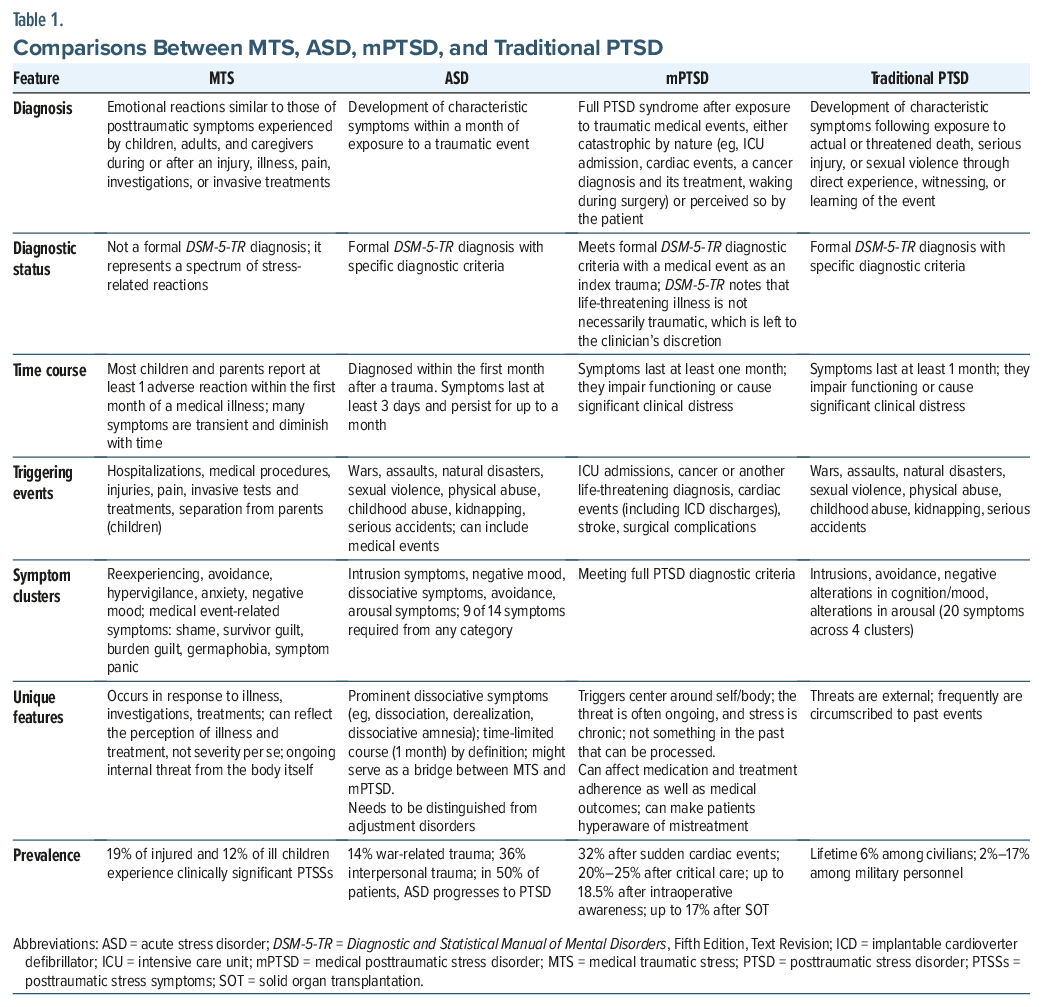
mPTSD has been associated with debilitating mental health symptoms and a decreased quality of life, as well as with worse medical outcomes. In survivors of cancer or stroke, mPTSD is associated with poorer physical functioning and a decreased mental and physical quality of life.3 In clinical practice, MTS and mPTSD frequently overlap; subthreshold trauma-related symptoms can be functionally impairing and warrant the same clinical attention as full syndromal mPTSD. Table 1 provides a comparison of MTS, acute stress disorder (ASD), mPTSD, and traditional PTSD.1,3,4,6–10
How Common Are Trauma-Related Symptoms and PTSD Following SMI, and How Is MTS Recognized in Clinical Practice?
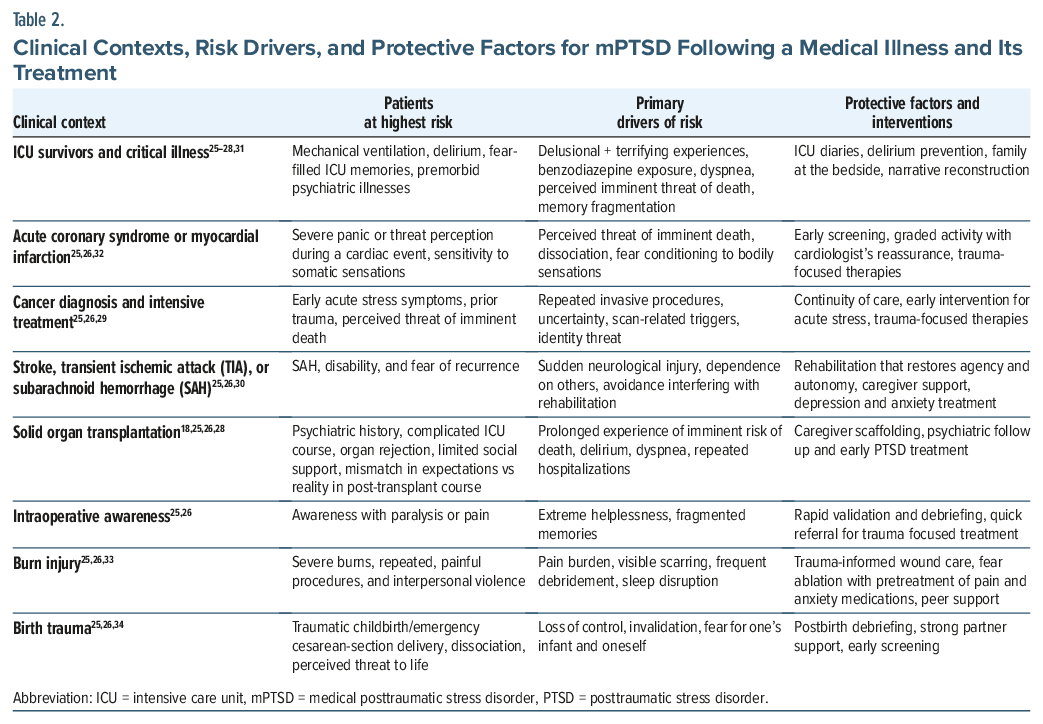
mPTSD can develop across a wide range of medical settings but often goes unrecognized. In primary care settings, patients rarely present with a self-identified diagnosis of PTSD; instead, missed visits, somatic distress, medication avoidance, or heightened anxiety around medical care often herald the diagnosis. Recent meta-analyses report that 20%–25% of patients meet criteria for PTSD following a critical illness.11,12 Among patients who have experienced intraoperative awareness, up to 18.5% develop PTSD,13 while the prevalence of childbirth-related PTSD varies from 4% to 7%,14 with a higher rate found in those following a cesarean section than in those following a vaginal delivery.15–17 Moreover, roughly one-third (32%) of patients who have suffered a sudden cardiac arrest report significant PTSD symptoms, and 20% experience PTSD following shocks from an implantable cardioverter defibrillator.10 In solid organ recipients, the cumulative incidence of clinician-ascertained transplant-specific PTSD ranges from 10% to 17%.18 In addition, the risk for PTSD varies substantially across medical contexts, and it is shaped by the type of illness or procedure and by the patient’s subjective experience and subsequent care environment. Moreover, some of these medical experiences (eg, being treated in an ICU, receiving an organ transplant, suffering a sudden cardiac arrest) produce rates of PTSD that are similar to, or higher than, those seen after being exposed to combat.6 Table 2 summarizes common high-risk clinical contexts along with key drivers and modifiable protective factors of MTS.
In addition to classic manifestations (eg, hyperarousal, hypervigilance, and avoidance), patients with MTS can present with somatic complaints that may be difficult to distinguish from medical comorbidities.9 For example, a patient who presents with gastrointestinal complaints (eg, diarrhea, constipation, or pain) with a negative workup in the context of a recent ICU admission should alert clinicians to the possibility of underlying mPTSD. Patients may also find visiting a clinic to be triggering, and missed appointments may qualify as a form of avoidance (allowing them to avoid having bloodwork or undergoing other tests).
Since PTSD symptom trajectories are heterogeneous,19,20 the Society of Critical Care Medicine recommends serial screenings with validated screening tools within 2–4 weeks following a hospital discharge.21 Both the Clinician-Administered PTSD Scale for DSM-5 (CAPS-5)22 and the PTSD Checklist for DSM-5 (PCL-5)23 are recommended by the American Academy of Family Physicians for patients in primary care settings.9 The CAPS-5 is a 30-item, time-intensive clinician-administered scale, while the PCL-5 is a 20-item self-reported checklist. The Primary Care PTSD Screen for DSM-5 (PC-PTSD-5) offers a validated 5-item screen suitable for initial assessment.24 In primary care settings, the PC-PTSD-5 is a practical first-line screen that is often paired with open-ended questions to contextualize the patient’s prior medical experiences. For example, “How have the memories of [. . .] been affecting you?” “How do these memories come back to you?” “How was it for you to come to this appointment?” and “How are these symptoms affecting your daily life?”
Beyond screening and diagnosis, the PCL-5 is also commonly used to monitor symptom severity over time and assess treatment response in both clinical practice and research. In contrast, the PC-PTSD-5 is intended solely as a screening instrument. The CAPS-5 can be repeated by trained clinicians to evaluate longitudinal changes when a comprehensive assessment is needed.
Who Is At Greatest Risk for Developing PTSD Following a Medical Illness or Its Treatment, and Which Factors May Be Protective?
The development of mPTSD depends on one’s baseline vulnerability and subjective experience during and after a medical event. Factors that increase one’s susceptibility to mPTSD include preexisting trauma, early childhood adversity, depression, anxiety, and a lower baseline level of psychosocial functioning.25,26 During the medical crisis itself, factors that increase the risk of mPTSD include experiencing an intense fear of imminent death and helplessness, with the most consistent predictor for mPTSD being peritraumatic dissociation (ie, feeling detached from one’s body and emotionally numb, experiencing derealization, or having fragmented memories).26 These responses overlap with core features of ASD and may represent an early manifestation of trauma-related psychopathology. Delirium and dyspnea during one’s ICU stay can increase the risk of developing post–intensive care unit (ICU) PTSD.27,28 Certain medications (eg, lorazepam) might make it difficult for patients to process events that occurred in the ICU; hence, they can increase the risk of developing PTSD.28 After a medical event, poor perceived social support, ongoing psychosocial stressors, barriers to care, and frequent reminders of the illness all increase the risk of mPTSD.18,25,26,29,30 Bodily sensations, medical procedures, and persistent physical sequelae can each serve as recurrent trauma reminders.
Protective factors include a strong therapeutic alliance, opportunities to develop a coherent illness narrative (eg, through ICU diaries), and structured follow-up that supports early identification and intervention.26,28,31 Fortunately, many of these risk factors and protective factors are modifiable with routine care (eg, good communication, continuity of care, reframing expectations), thereby highlighting the role of primary care in prevention and treatment. Table 2 summarizes evidence on mPTSD following medical illness or treatment, highlighting clinical contexts with elevated prevalence, the most consistently replicated drivers of risk, and protective factors supported by systematic reviews, meta-analyses, and randomized trials.18,25,26,28–34
How Does Caring for a Medically Ill Patient Contribute to MTS and Trauma-Related Symptoms Among Family Members and Other Caregivers?
Family members of critically ill patients face substantial psychological burdens, with the prevalence of PTSD ranging from 3% to 62%, of anxiety from 2% to 80%, and of depression from 4% to 94%.35 These wide ranges reflect differences in patient populations, the timing of assessments, and measurement tools used to identify disorders, although the consistent finding is that a significant proportion of family caregivers develop clinically meaningful trauma-related symptoms. In one study of family members of COVID-19 ICU patients, roughly two-thirds (64%) had clinically significant PTSD symptoms at 3 months, with female and Hispanic family members at particularly elevated risk.36 Among caregivers of neurocritically ill ICU patients, 16%–22% had persistent PTSD symptoms at 6 months, with early screening during the ICU stay revealing a high specificity (92%–95%) for predicting chronic PTSD.37
Witnessing a loved one’s suffering, fearing their death, feeling helpless in the face of a medical crisis, and navigating complex treatment decisions all constitute potentially traumatic experiences. A loved one’s death in the ICU results in more prolonged distress.38,39 These symptoms can impair family members’ ability to understand medical information, make decisions about care, maintain employment, and carry out daily activities.39 Importantly, family members’ traumatic stress can persist even after a patient recovers (an experience often missed by providers).39
Risk factors for family caregiver traumatic stress include younger age, being a spouse or partner rather than another family member, having a lower socioeconomic status, and being female.36,40 Protective factors include having well-organized, family-centered care, consistent communication from the same clinicians, and opportunities for bedside engagement and participation in care. Proactive goals-of-care meetings reduce the prevalence of PTSD from 69% to 45%, anxiety from 67% to 45%, and depression from 56% to 29%.35,41 However, some well-intentioned interventions (eg, condolence letters or meetings without an ICU physician being present) may worsen PTSD symptoms.35,42
How Does MTS Affect Engagement in Care, Adherence, and Health Outcomes?
MTS creates a paradox: The health care system becomes both the source of threat and the path to recovery. When traumatic stress develops from a medical event (rather than from combat, an assault, or a disaster), medications, clinics, and procedures serve as recurrent traumatic reminders that patients attempt to actively avoid. Patients with mPTSD have more than twice the risk of medication nonadherence compared to those without PTSD (OR=2.08, 95% CI, 1.03–4.18).43 In survivors of stroke and transient ischemic attacks, this effect is particularly pronounced: Two-thirds (67%) of patients with PTSD are nonadherent to medication regimens compared to 35% without PTSD (even after controlling for depression).44 Patients often report that thinking about their medications makes them anxious, reminds them of their ongoing risk, and leads them to skip doses to avoid these thoughts.45
Difficulty engaging in health care can be linked to other aspects of MTS. For example, patients who experienced delirium with delusional memories in the ICU show significantly higher rates of PTSD symptoms that increase over time rather than resolve, rising from 6.7% at 3 months to 18.1% at 12 months postdischarge.19 These patients subsequently avoid follow-up appointments, delay seeking care when symptoms worsen, and disengage from rehabilitation programs because the health care setting itself triggers reexperiencing symptoms. In these cases, the hospital environment (with its noise, sleep disruption, loss of control, and frightening images from delirium) becomes part of the trauma, making return visits psychologically distressing.
This avoidance results in measurable health consequences. In patients with acute coronary syndrome who develop mPTSD from their cardiac event, the risk of recurrent cardiac events and mortality doubles over the subsequent 3 years.3 This elevated risk is multifactorial and is linked to medication nonadherence, avoidance of cardiac rehabilitation and follow-up appointments, engagement in unhealthy coping behaviors, and chronic physiological stress. Similarly, among ICU survivors, high levels of discomfort during their admission (including pain, sleep deprivation, and use of restraints) further reduced quality of life and impaired functional recovery due to post-ICU psychiatric symptoms (OR=3.8, 95% CI, 1.4–10.3).46 Taken together, patterns (eg, missed appointments, medication nonadherence, and procedural avoidance) may reflect, in part, trauma-related avoidance linked to prior medical experiences, which warrants clinical attention.
How Can MTS Be Addressed in Primary Care Settings, and When Is Referral for PTSD-Focused Treatment Indicated?
Primary care providers (PCPs) are often the first to recognize and respond to trauma-related symptoms that emerge after a medical illness or its treatment. This is especially true when these symptoms manifest indirectly through patterns (eg, avoidance of care, distress during visits, or difficulty adhering to treatment recommendations). Initial management in primary care should focus on stabilizing the physiological and experiential drivers that perpetuate traumatic stress. In practice, this means optimizing pain control, resolving sleep disturbances, and reducing dyspnea, nausea, and other ongoing somatic symptoms that reinforce threat perception. Addressing these factors often minimizes symptom intensity and improves the capacity for engagement before formal trauma-focused treatment is introduced.
A trauma-informed approach is essential in this population.8,47 Specifically, it is most useful for PCPs to emphasize predictability (eg, explaining what will happen during visits), restore elements of control to the patient (offering choices when possible), and minimize unexpected or invasive elements of care. These adjustments are particularly relevant for patients who exhibit distress in medical settings or during procedures.
Brief, targeted psychosocial interventions can be incorporated directly into primary care encounters without requiring a formal psychotherapy referral. These interventions include psychoeducation that links symptoms to prior medical experiences, normalization of trauma responses, and teaching simple relaxation strategies (eg, grounding, paced breathing) for use during triggering situations (eg, procedures or clinic visits). In this population, the goal is not full trauma processing at this stage; instead, the aim is to improve one’s tolerance of care and reduce avoidance.
Pharmacologic treatment can be considered when symptoms are persistent or interfere with functioning. Selective serotonin reuptake inhibitors (SSRIs) and venlafaxine remain first-line options, particularly when symptoms extend beyond situational distress or are accompanied by depression or generalized anxiety.48 Medication selection should be guided by the presence of comorbid medical illnesses, side effect profiles, and drug interactions. In contrast to specialty settings, the role of pharmacotherapy in primary care is often to reduce symptom burden sufficiently to allow reengagement with medical care and participation in psychotherapy when needed. Prazosin may be considered for trauma-related nightmares, although the evidence is mixed; the 2023 US Department of Veterans Affairs/Department of Defense guidelines suggest against prazosin for overall PTSD symptoms but weakly recommended it for nightmares, specifically.49 Benzodiazepines should, in general, be avoided given their risks for dependence, interference with fear extinction, and the potential to worsen trauma-related outcomes.48
Adjunctive approaches that target procedural or situational distress may be particularly valuable in medically ill populations. Medical hypnosis is a low-risk, accessible approach to reduce anxiety, distress, and symptom burden, and it may improve patient tolerance of necessary medical interventions.50 Hypnosis can be delivered in brief sessions (typically 10–20 minutes) or taught as self-hypnosis for use between visits, making it feasible within integrated medical teams. Within primary care settings, it is best conceptualized as a supportive technique that enhances coping and engagement rather than as a definitive treatment for mPTSD.
Collaborative care models that integrate care management, evidence-based pharmacotherapy, and behavioral interventions have demonstrated effectiveness in reducing PTSD symptoms in trauma survivors, with a 25-site US trauma center trial showing significant symptom reduction at 6 months when protocols were well-implemented.51 Same-day integrated mental health services in primary care more than double the odds of PTSD diagnosis and triple the odds of treatment initiation compared to primary care alone.52 For primary care patients who may be less ready to engage in trauma-focused psychotherapy than specialty mental health patients, collaborative care and motivational interviewing may provide the additional support needed to promote treatment engagement.53
Referral to specialty mental health care should be guided less by symptoms alone and more by persistence, functional impact, and failure of initial interventions. Referral is indicated when symptoms remain clinically significant beyond their expected duration and interfere with medical care or daily functioning or when the traumatic medical experience continues to dominate the patient’s illness narrative. Additional indications include diagnostic uncertainty, complexity due to comorbid psychiatric conditions, or safety concerns (eg, thoughts of suicide).
In specialty settings, trauma-focused psychotherapies (including cognitive processing therapy, prolonged exposure, and eye movement desensitization and reprocessing) are the mainstay of treatment. For patients with ongoing medical illness, these therapies can be adapted to account for persistent somatic threat while maintaining their core therapeutic mechanisms.54 Close coordination between PCPs and mental health clinicians is critical, particularly for patients whose trauma-related symptoms interfere with adherence, follow-up, or procedural care. In these cases, ongoing communication and shared treatment planning can help align psychiatric and medical goals, reducing fragmentation and improving overall outcomes.
What Happened to Ms P?
Ms P was diagnosed with mPTSD in the context of a chronic childhood illness with multiple exposures to fearful and painful medical events, who was now facing an especially anxiety-producing, medically serious, and existential threat. The psychiatry team offered a multimodal plan to help her cope with symptoms of mPTSD while she was in the hospital.
- They explained her diagnosis to Ms P and her family and what it meant in the context of her experiences.
- They devised a trauma-informed approach for the team to implement with Ms P, including providing clear explanations of tests, procedures, and interventions; giving Ms P choices and control whenever possible; asking for permission before examinations and procedures; and prioritizing pain control.
- They shared resources (eg, handouts, apps, videos) with Ms P and made plans for the subsequent visits to teach her relaxation techniques, such as progressive muscle relaxation, grounding techniques, and mindfulness when facing particularly painful or anxiety-producing interventions.
- They discussed medication management strategies, including the initiation of an SSRI (eg, escitalopram) for long-term symptom management. Adjunctive options were considered based on her symptom profile, including prazosin for trauma-related nightmares and as-needed pregabalin for breakthrough anxiety.
- Finally, a long-term outpatient plan was established, including ongoing medication management, trauma-focused psychotherapy (eg, cognitive-behavioral therapy), and close coordination with primary care to support longitudinal management of her mPTSD.
- Because she was undergoing lung transplant evaluation, the psychiatry team worked closely with the transplant team to prepare her for the anticipated hospitalization and perioperative course. This included discussing expected procedures and postoperative recovery, identifying likely trauma triggers in advance, reinforcing coping strategies, and emphasizing continuity of psychiatric care before and after transplantation. While Ms P has a long road ahead, her symptoms became more understandable within the framework of MTS. She entered the transplant evaluation process with a trauma-informed treatment plan, greater confidence in her coping strategies, and coordinated psychiatric follow-up before and after transplantation.
CONCLUSION
MTS is increasingly recognized as a clinically meaningful spectrum of trauma-related responses following serious illness and medical treatment, while mPTSD refers to patients who meet full DSM-5-TR criteria for PTSD following medical trauma. These responses may include intrusive recollections of illness or treatment, avoidance of medical settings or procedures, negative alterations in mood and cognition, and hyperarousal symptoms triggered by ongoing medical care or bodily sensations. Importantly, trauma-related symptoms following SMI are common; recent meta-analyses report that 20%–25% of patients meet criteria for PTSD following a critical illness. While the risk for PTSD varies substantially across medical contexts, it is shaped by the type of illness or procedure and by the patient’s subjective experience and subsequent care environment. After a medical event, limited social support, psychosocial stressors, barriers to care, and repeated reminders of illness (eg, bodily sensations, procedures, or persisting sequelae) further increase risk for mPTSD. Patients with MTS frequently avoid follow-up appointments, delay seeking care when symptoms worsen, and disengage from rehabilitation programs because the health care setting itself triggers reexperiencing symptoms. In these cases, the hospital environment can become part of the trauma, making return visits psychologically distressing. In addition, family members who witness a loved one’s suffering, fear their death, feel helpless in the face of a medical crisis, and navigate complex treatment decisions all constitute potentially traumatic experiences that may persist even after the death of their loved one. Because primary care clinicians often serve as the longitudinal anchor for medically ill patients, trauma-informed communication, attention to procedural distress, and early recognition of avoidance behaviors may meaningfully improve engagement, adherence, and recovery.
Article Information
Published Online: November 12, 2026. https://doi.org/10.4088/PCC.26f04276
© 2026 Physicians Postgraduate Press, Inc.
Submitted: May 13, 2026; accepted July 18, 2026.
To Cite: Gunther M, Morfin Rodriguez AE, Suleiman M, et al. Medical traumatic stress and medical posttraumatic stress disorder following illness and treatment: what primary care providers need to know. Prim Care Companion CNS Disord. 2026;28(6): 26f04276.
Author Affiliations: Department of Psychiatry and Behavioral Sciences, Stanford University, School of Medicine, Stanford, California (Gunther, Morfin Rodriguez, Suleiman, Sher, Maldonado); Department of Psychiatry, Massachusetts General Hospital and Harvard Medical School, Boston, Massachusetts (Morfin Rodriguez, Stern).
Corresponding Author: Matthew Gunther, MD, MA, Department of Psychiatry and Behavioral Sciences, School of Medicine, Stanford University, 401 Quarry Rd, Stanford, CA 94305 ([email protected]).
Gunther, Morfin Rodriguez, and Suleiman are co-first authors; Sher, Maldonado, and Stern are co-senior authors.
Financial Disclosure: Dr Stern has received royalties from Elsevier for editing textbooks on psychiatry. Drs Gunther, Morfin Rodriguez, Suleiman, Sher, and Maldonado report no proprietary or commercial interest in any product mentioned or concept discussed in this article.
Funding/Support: None.
Clinical Points
- Medical posttraumatic stress disorder has been associated with debilitating mental health symptoms and a decreased quality of life, as well as with worse medical outcomes.
- The Primary Care PTSD Screen for DSM-5 offers a practical initial screening tool in primary care settings, while more comprehensive assessments (eg, the PTSD Checklist for DSM-5 or the Clinician-Administered PTSD Scale for DSM-5) may help characterize symptom burden and monitor response to treatment when administered longitudinally; they can be supplemented by asking open-ended questions to contextualize the patient’s prior medical experiences.
- Many contributors to medical traumatic stress risk and recovery are modifiable through routine clinical care (eg, good communication, continuity of care, and reframing expectations). Protective factors include having well-organized, family-centered care, consistent communication from the same clinicians, and opportunities for bedside engagement and participation in care.
- Health care providers can emphasize predictability (eg, explaining what will happen during visits), restore elements of control to the patient (offering choices when possible), and minimize unexpected or invasive elements of care.
- Referral to a mental health provider is indicated when symptoms persist beyond their expected duration, interfere with medical care or functioning, or when the traumatic medical experience dominates the patient’s illness narrative.
References (54)

- Cuneo AA, Outram S, Marsac ML, et al. Medical traumatic stress in cystic fibrosis: a qualitative analysis. J Cyst Fibros Off J Eur Cyst Fibros Soc. 2023; 22(4):763–771.
- American Psychiatric Association. Diagnostic and Statistical Manual of Mental Disorders. Fifth Edition, Text Revision. American Psychiatric Association Publishing; 2022.
- Edmondson D. An enduring somatic threat model of posttraumatic stress disorder due to acute life-threatening medical events. Soc Personal Psychol Compass. 2014;8(3):118–134. CrossRef
- McBain S, Cordova MJ. Medical traumatic stress: integrating evidence-based clinical applications from health and trauma psychology. J Trauma Stress. 2024; 37(5):761–767. CrossRef
- Bird CM, Webb EK, Schramm AT, et al. Racial discrimination is associated with acute posttraumatic stress symptoms and predicts future posttraumatic stress disorder symptom severity in trauma-exposed Black adults in the United States. J Trauma Stress. 2021;34(5):995–1004. CrossRef
- Creamer M, Wade D, Fletcher S, et al. PTSD among military personnel. Int Rev Psychiatry. 2011;23(2):160–165.
- Geoffrion S, Goncalves J, Robichaud I, et al. Systematic review and meta-analysis on acute stress disorder: Rates following different types of traumatic events. Trauma Violence Abuse. 2022;23(1):213–223. CrossRef
- Marsac ML, Kassam-Adams N, Hildenbrand AK, et al. Implementing a trauma-informed approach in Pediatric health care Networks. JAMA Pediatr. 2016;170(1): 70–77.
- Sartor Z, Kelley L, Laschober R. Posttraumatic stress disorder: evaluation and treatment. Am Fam Physician. 2023;107(3):273–281.
- Seas FS, Harrell R, Sorrell A, et al. Addressing PTSD in implantable cardioverter defibrillator patients: State-of-the-art management of ICD shock and PTSD. Curr Cardiol Rep. 2023;25(9):1029–1039.
- Parker AM, Sricharoenchai T, Raparla S, et al. Posttraumatic stress disorder in critical illness survivors: a metaanalysis. Crit Care Med. 2015;43(5):1121–1129.
- Righy C, Rosa RG, Da SRTA, et al. Prevalence of post-traumatic stress disorder symptoms in adult critical care survivors: a systematic review and meta-analysis. Crit Care. 2019;23(1):213.
- Cyr S, Guo DX, Marcil MJ, et al. Posttraumatic stress disorder prevalence in medical populations: a systematic review and meta-analysis. Gen Hosp Psychiatry. 2021;69:81–93. CrossRef
- Heyne CS, Kazmierczak M, Souday R, et al. Prevalence and risk factors of birth-related posttraumatic stress among parents: a comparative systematic review and meta-analysis. Clin Psychol Rev. 2022;94:102157. CrossRef
- Chen Y, Yang X, Guo C, et al. Prevalence of post-traumatic stress disorder following Caesarean section: a systematic review and meta-analysis. J Womens Health. 2020;29(2):200–209. CrossRef
- Froeliger A, Deneux-Tharaux C, Seco A, et al. On behalf of the TRAnexamic Acid for Preventing Postpartum Hemorrhage After Vaginal Delivery (TRAAP) Study Group*. Posttraumatic stress disorder symptoms 2 months after vaginal delivery. Obstet Gynecol. 2022;139(1):63–72. PubMed
- Froeliger A, Deneux-Tharaux C, Loussert L, et al. Posttraumatic stress disorder 2 months after cesarean delivery: a multicenter prospective study. Am J Obstet Gynecol. 2024;231(5):543.e1–543.e36. PubMed
- Davydow DS, Lease ED, Reyes JD. Posttraumatic stress disorder in organ transplant recipients: a systematic review. Gen Hosp Psychiatry. 2015;37(5): 387–398. PubMed CrossRef
- Kooken RWJ, Tilburgs B, Slooter AJC, et al. Determinants of ICU memories and the impact on the development and trajectory of post-traumatic stress symptoms: a multicenter longitudinal cohort study. Intensive Care Med. 2025;51(11): 2021–2030. PubMed
- Li Y, Zhang J, Wei C, et al. A longitudinal latent class growth analysis of PTSD symptom development in mechanically ventilated ICU patients. Sci Rep. 2025; 15(1):38907. CrossRef
- Mikkelsen ME, Still M, Anderson BJ, et al. Society of critical care Medicine’s International Consensus Conference on prediction and identification of long-term Impairments after critical illness. Crit Care Med. 2020;48(11): 1670–1679. PubMed CrossRef
- Weathers FW, Bovin MJ, Lee DJ, et al. The Clinician-Administered PTSD Scale for DSM–5 (CAPS-5): development and initial psychometric evaluation in military veterans. Psychol Assess. 2018;30(3):383–395. PubMed CrossRef
- Forkus SR, Raudales AM, Rafiuddin HS, et al. The Posttraumatic Stress Disorder (PTSD) Checklist for DSM–5: a systematic review of existing psychometric evidence. Clin Psychol Sci Pract. 2023;30(1):110–121. CrossRef
- Prins A, Bovin MJ, Smolenski DJ, et al. The Primary Care PTSD Screen for DSM-5 (PC-PTSD-5): development and evaluation within a veteran primary care sample. J Gen Intern Med. 2016;31(10):1206–1211. PubMed CrossRef
- Brewin CR, Andrews B, Valentine JD. Meta-analysis of risk factors for posttraumatic stress disorder in trauma-exposed adults. J Consult Clin Psychol. 2000;68(5):748–766. PubMed CrossRef
- Ozer EJ, Best SR, Lipsey TL, et al. Predictors of posttraumatic stress disorder and symptoms in adults: a meta-analysis. Psychol Bull. 2003;129(1):52–73. PubMed CrossRef
- Sher Y, Desai N, Sole J, et al. Dyspnea and dyspnea-associated anxiety in the ICU patient population: a narrative review for C-L psychiatrists. J Acad Consult-Liaison Psychiatry. 2024;65(1):54–65. PubMed
- Davydow DS, Gifford JM, Desai SV, et al. Posttraumatic stress disorder in general intensive care unit survivors: a systematic review. Gen Hosp Psychiatry. 2008; 30(5):421–434. PubMed CrossRef
- Kangas M, Henry JL, Bryant RA. Posttraumatic stress disorder following cancer. A conceptual and empirical review. Clin Psychol Rev. 2002;22(4):499–524. PubMed CrossRef
- Janssen EPJ, Spauwen PJJ, Bus BAA, et al. Prevalence of posttraumatic stress disorder after stroke: a systematic literature review. J Psychosom Res. 2024;187: 111914. PubMed
- Jones C, Bäckman C, Capuzzo M, et al. Intensive care diaries reduce new onset post traumatic stress disorder following critical illness: a randomised, controlled trial. Crit Care. 2010;14(5):R168. PubMed
- Edmondson D, Richardson S, Falzon L, et al. Posttraumatic stress disorder prevalence and risk of recurrence in acute coronary syndrome patients: a meta-analytic review. PloS One. 2012;7(6):e38915. PubMed CrossRef
- Giannoni-Pastor A, Eiroa-Orosa FJ, Fidel Kinori SG, et al. Prevalence and predictors of posttraumatic stress symptomatology among burn survivors: a systematic review and meta-analysis. J Burn Care Res Off Publ Am Burn Assoc. 2016;37(1):e79–e89.
- Dekel S, Stuebe C, Dishy G. Childbirth-induced posttraumatic stress syndrome: a systematic review of prevalence and risk factors. Front Psychol. 2017;8:560. PubMed
- Zante B, Camenisch SA, Schefold JC. Interventions in post-intensive care syndrome-family: a systematic literature review. Crit Care Med. 2020;48(9): e835–e840. PubMed
- Amass T, Van Scoy LJ, Hua M, et al. Stress-related disorders of family members of patients admitted to the intensive care unit with COVID-19. JAMA Intern Med. 2022;182(6):624–633. PubMed
- Choi KW, Shaffer KM, Zale EL, et al. Early risk and resiliency factors predict chronic posttraumatic stress disorder in caregivers of patients admitted to a neuroscience ICU. Crit Care Med. 2018;46(5):713–719. PubMed
- Kentish-Barnes N, Chevret S, Valade S, et al. A three-step support strategy for relatives of patients dying in the intensive care unit: a cluster randomised trial. Lancet. 2022;399(10325):656–664. PubMed
- Herridge MS, Azoulay É. Outcomes after critical illness. N Engl J Med. 2023; 388(10):913–924.
- Hwang DY, Oczkowski SJW, Lewis K, et al. Society of critical care medicine guidelines on family-centered care for adult ICUs: 2024. Crit Care Med. 2025; 53(2):e465–e482. CrossRef
- Lautrette A, Darmon M, Megarbane B, et al. A communication strategy and brochure for relatives of patients dying in the ICU. N Engl J Med. 2007;356(5):469–478. PubMed CrossRef
- Kentish-Barnes N, Chevret S, Champigneulle B, et al. Effect of a condolence letter on grief symptoms among relatives of patients who died in the ICU: a randomized clinical trial. Intensive Care Med. 2017;43(4):473–484. PubMed
- Taggart WL, Shaffer JA, Edmondson D, et al. Posttraumatic stress disorder and nonadherence to medications prescribed for chronic medical conditions: a meta-analysis. J Psychiatr Res. 2018;102:102–109. PubMed
- Kronish IM, Edmondson D, Goldfinger JZ, et al. Posttraumatic stress disorder and adherence to medications in survivors of strokes and transient ischemic attacks. Stroke. 2012;43(8):2192–2197. PubMed CrossRef
- Liyanage-Don N, Birk J, Cornelius T, et al. Medications as traumatic reminders in patients with stroke/transient ischemic attack-induced posttraumatic stress disorder. Stroke. 2021;52(1):321–324. PubMed
- Ronflé R, Hermitant J, Conti-Zolin C, et al. Impact of self-perceived discomfort in critically ill patients on the occurrence of psychiatric symptoms in post-intensive care syndrome (PICS): a prospective observational study. PloS One. 2025;20(6): e0324099. CrossRef
- Fletcher KE, Steinbach S, Lewis F, et al. Hospitalized medical patients with posttraumatic stress disorder (PTSD): review of the literature and a roadmap for improved care. J Hosp Med. 2021;16(1):38–43. PubMed
- Schnurr PP, Hamblen JL, Wolf J, et al. The management of posttraumatic stress disorder and acute stress disorder: Synopsis of the 2023 U.S. Department of Veterans Affairs and U.S. Department of Defense Clinical Practice Guideline. Ann Intern Med. 2024;177(3):363–374. PubMed
- Raskind MA, Peskind ER, Chow B, et al. Trial of prazosin for post-traumatic stress disorder in military veterans. N Engl J Med. 2018;378(6):507–517. PubMed
- Walter N, Leyva MT, Hinterberger T, et al. Hypnosis as a non-pharmacological intervention for invasive medical procedures - a systematic review and meta-analytic update. J Psychosom Res. 2025;192:112117. CrossRef
- Zatzick D, Jurkovich G, Heagerty P, et al. Stepped collaborative care targeting posttraumatic stress disorder symptoms and comorbidity for US trauma care systems: a randomized clinical trial. JAMA Surg. 2021;156(5):430–474.
- Bohnert KM, Sripada RK, Mach J, et al. Same-day integrated mental health care and PTSD diagnosis and treatment among VHA primary care patients with positive PTSD screens. Psychiatr Serv. 2016;67(1):94–100. PubMed
- Seal KH, Abadjian L, McCamish N, et al. A randomized controlled trial of telephone motivational interviewing to enhance mental health treatment engagement in Iraq and Afghanistan veterans. Gen Hosp Psychiatry. 2012;34(5):450–459. PubMed CrossRef
- Haerizadeh M, Sumner JA, Birk JL, et al. Interventions for posttraumatic stress disorder symptoms induced by medical events: a systematic review. J Psychosom Res. 2020;129:109908. PubMed CrossRef
Please sign in or purchase this PDF for $40.