
Lessons Learned at the Interface of Medicine and Psychiatry
The Psychiatric Consultation Service at Massachusetts General Hospital sees medical and surgical inpatients with comorbid psychiatric symptoms and conditions. During their twice-weekly rounds, Dr Stern and other members of the Consultation Service discuss diagnosis and management of hospitalized patients with complex medical or surgical problems who also demonstrate psychiatric symptoms or conditions. These discussions have given rise to rounds reports that will prove useful for clinicians practicing at the interface of medicine and psychiatry.
Prim Care Companion CNS Disord 2026;28(6):26f04233
Author affiliations are listed at the end of this article.
From the Editors

Are you a healthcare provider?
Add your NPI to personalize your JCP experience.
Have you ever wondered whether someone with autism spectrum disorder (ASD) could comply with posttransplantation medical care? Have you thought that communication challenges and sensory sensitivities in those with ASD would preclude successful posttransplant recovery? Have you struggled over the ethical dilemmas raised by offering life-saving treatment while protecting a vulnerable individual from potential psychological trauma? If you have grappled with these questions, the following case vignette and discussion should prove useful.
CASE VIGNETTE
Mr A, a 25-year-old man, was referred for a pretransplant psychosocial evaluation in advance of a possible lung transplant. At the age of 22 months, he underwent a mitral valve patch and ventricular septal defect repair due to an atrioventricular defect. However, recently, his pulmonary hypertension worsened, and his assessment indicated that he needed a lung transplant. His history also included having level 3 ASD.
Mr A had limited language skills; therefore, most of his history was obtained from his mother. Mr A lived at home with his mother, sister, and his mother’s boyfriend; although his parents separated, they shared conservatorship. His weekdays were spent with his mother, and the weekends were spent with his father. He required extensive assistance, as he functioned at the developmental level of a 4-or 5-year-old child. Regional resources for those with ASD were available, but his supports diminished after Mr A reached the age of 18 years. Previously, Mr A benefited from ongoing applied behavior analysis (ABA) therapy, but his family struggled to secure consistent psychiatric follow-up, partly due to mental health clinicians being uncomfortable with Mr A’s medical comorbidity. He attended an adult day program, which he enjoyed, but continued participation in this program would be problematic due to the increased risk of posttransplant infection.
Mr A’s mother was aware of the possible postoperative complications, and she was concerned that Mr A would reject or despise transplant-related interventions; she reported that Mr A found prolonged hospitalizations intolerable, given that his home was his “happy place.” She reported that environmental changes typically precipitated behavioral regression or agitation. A hospitalization with a 12-day intensive care unit (ICU) stay a year earlier required the continuous bedside presence of Mr A’s mother and father, as medical staff were ill-equipped to manage his symptoms (eg, he pulled out a peripherally inserted catheter when left unsupervised, and he required sedatives to manage episodic agitation). Obtaining blood samples required extensive maternal support, and his medications needed to be crushed and mixed with applesauce so that they could be swallowed.
Although Mr A’s mother wanted to do everything possible to prolong Mr A’s life, she feared that he would struggle with a prolonged posttransplant hospitalization, the interventions required, pain, isolation from his home and his sister, and posttransplant limitations on his behavior. She thought that he would not understand what was being done to him and that he would have extreme difficulty cooperating with the postoperative care (eg, ventilatory weaning, physical and occupational therapy, and even staying in bed or in his room). Nevertheless, she was ready to assist him in any way that she could.
DISCUSSION
What Is ASD, And How Does It Manifest?
ASD is defined by the American Psychiatric Association as a neurodevelopmental condition characterized by persistent deficits in reciprocal social communication and social interaction, along with restricted, repetitive patterns of behavior, interests, or activities.1 To meet diagnostic criteria, symptoms must be present from early childhood and must cause clinically significant functional impairment. ASD affects approximately 2% of 8-year-old children in the United States and about 2% of adults.1
ASD is conceptualized as a “spectrum” because clinical manifestations are highly variable. It ranges from individuals with intellectual disability and limited language to those with above-average intellectual functioning who primarily struggle with social pragmatics, such as speaking at an appropriate volume, maintaining appropriate physical distance, or interpreting gestures and facial expressions.2 Sensory differences are common and may include hyper-or hyporeactivity to pain, temperature, sounds, or textures, as well as unusual sensory-seeking behaviors, such as excessive smelling or visual fascination with lights.2,3 The Diagnostic and Statistical Manual of Mental Disorders, Fifth Edition, defines 3 severity levels for ASD based on the amount of support required for daily functioning, independent of cognitive ability.
Level 1: requiring support. Individuals at this level can function with minimal assistance, but they experience noticeable difficulties. In social communication, they may have difficulty initiating conversations, demonstrate atypical or unsuccessful responses to social cues, and appear to have decreased interest in social engagement. They may also struggle with transitioning between activities and have difficulties with organization and planning that interfere with independence.2
Level 2: requiring substantial support. This level reflects moderate impairment that requires more intensive intervention compared to level 1. In social communication, individuals exhibit marked deficits in verbal and nonverbal communication, limited initiation of social interactions, and reduced or atypical responses to social cues, even with supports in place. Restricted and repetitive behaviors are obvious to casual observers, and they interfere with functioning across contexts, with significant distress or difficulty when changing focus or routines.2 This is the most common level, with nearly half (46%–49%) of diagnosed individuals classified as level 2.3,4
Level 3: requiring very substantial support. This level represents severe impairment that requires intensive daily support. In social communication, individuals demonstrate severe deficits that significantly impair functioning, with very limited initiation of social interactions, and minimal response to others’ social engagements. Restricted and repetitive behaviors include inflexible patterns, extreme difficulty coping with change, and behaviors that markedly interfere with functioning across settings, often accompanied by significant distress when shifting focus or routines.2
How Is Pretransplant Psychosocial Evaluation Conducted?
Psychosocial evaluation is a routine component of solid organ transplant candidacy assessment in the United States. The Organ Procurement and Transplantation Network (OPTN) acknowledges that transplant programs commonly consider “nonmedical” factors (eg, adherence and social support) but also cautions that these domains can raise ethical concerns (such as bias, inconsistent use of standards, stereotyping, and a lack of transparency). Therefore, the OPTN has urged transplant centers to develop evaluation processes that are transparent, evidence-based, and revisable, while balancing ethical principles (eg, utility, justice, and respect for persons).5 However, in practice, there has been no universally accepted template for how psychosocial evaluations should be conducted, or which disciplines (eg, psychiatry, social work, surgery) should conduct them. As a result, psychosocial policies and practices vary widely among clinicians and transplant centers, even though the clinical domains of the evaluation have been well-described. Winder and colleagues6 highlighted that “psychosocial clearance” does not rely solely on responses in checkboxes. Instead, it represents nuanced judgments that fluctuate over time and that depend on the procedures by which teams gather, interpret, and communicate psychosocial data.6
Transplant candidates are frequently first evaluated by a transplant social worker. Transplant psychiatrists often become involved when the transplant candidate’s situation is more complex (eg, when there is diagnostic uncertainty, neurodevelopmental disability, behavioral risk, significant psychiatric comorbidity, or concerns about capacity and consent). Hence, transplant psychiatrists meet with the transplant candidate and their family and gather data from the medical record, the transplant team’s social workers, and the rest of the medical team. While this evaluation is often completed in 1 visit, several visits may be needed to establish a relationship, gather longitudinal data, and provide much-needed information.
Several structured tools facilitate the completion of a consistent psychosocial assessment and help teams to speak with a shared language. These tools include the Psychosocial Assessment of Candidates for Transplantation,7 the Transplant Evaluation Rating Scale,8 and the Stanford Integrated Psychosocial Assessment for Transplantation (SIPAT).3–6,9 The SIPAT, in particular, evaluates multiple clinically relevant domains (ie, readiness and illness management, social support, psychological stability, and lifestyle or substance-use related risk) and has demonstrated strong inter-rater reliability and prospective associations with both psychosocial and medical outcomes posttransplantation.9,10
However, the use of tools does not replace the core clinical task. When a case involves ASD, the “whole picture” matters. The most consequential domain often becomes the support system (eg, whether support is present, how it functions, how it handles stress, and whether it truly understands the transplant journey). The family unit is evaluated to determine whether it can withstand the stress of transplantation and its aftermath. Although some families anticipate that transplant is a single event, psychiatric consultants evaluate whether they grasp the reality of the first posttransplant year (including uncertainty, setbacks, prolonged monitoring, and the emotional peaks and valleys that can strain even highly motivated caregivers). In addition, team interactions may reveal health-seeking behaviors, follow-through, communication patterns, and the degree to which self-management or supported management can be achieved.
The goal of a psychosocial evaluation is to establish a prognosis. The team tries to anticipate predictable pitfalls, identify modifiable risk factors for poor graft outcomes, and develop a plan to reduce those risks. Vague, binary “clearance” language flattens nuance and creates false reassurance.6 A case-based nuanced approach improves the transparency of the process by labeling expectations and potential outcomes, so that teams and caregivers can prepare for contingencies.
What Does the Recovery From Lung Transplantation Entail (Immediately and Over the Long Term)?
Lung transplantation is the “gold standard” treatment for respiratory failure that is refractory to medical management. The postoperative course following lung transplantation varies. Typically, the immediate postoperative period is characterized by ICU management, with a primary focus placed on the prevention of primary graft dysfunction (PGD).11 PGD is a form of acute respiratory distress syndrome that can arise immediately after lung transplantation; it is characterized by pulmonary edema and hypoxemia, and it occurs in up to one-fourth of patients.12 Preventive care focuses on lung-protective ventilation; if it occurs, treatment is supportive, with early consideration of extra-corporeal membrane oxygenation (ECMO) when it is severe.11 Table 1 summarizes the major early and late complications, their incidence, and associated mortality impact.
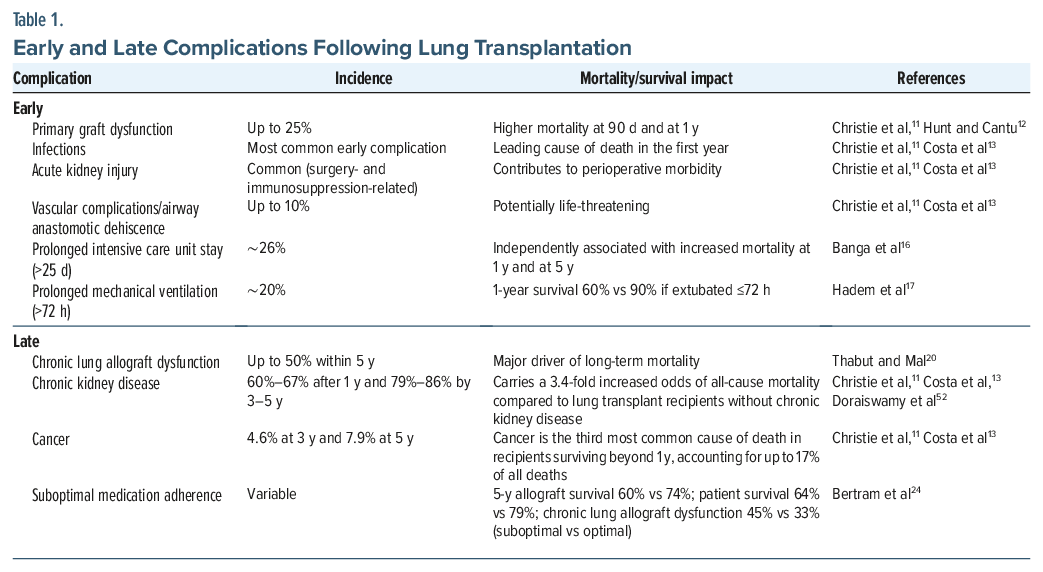
The median ICU stay after lung transplantation is 9 days, with several factors (including PGD, elevated mean pulmonary artery pressures, delirium, and the need for ECMO) affecting the course.14,15 In uncomplicated cases, the median duration of mechanical ventilation after lung transplantation is 26–46 hours, with roughly one-third (35%) of patients being extubated within 24 hours, two-thirds (68%) by 48 hours, and four-fifths (80%) by 72 hours.17,18
Hospitalization following lung transplantation can be challenging. Immediately after the surgery, patients have several chest tubes placed, which can be painful and leave a scar after their surgery. Patients must cooperate with ventilator weaning. If it is prolonged due to PGD, it can be painful and provoke dyspnea and psychological distress. In some patients, restraints are used if they attempt to dislodge tubes (eg, endotracheal tube for ventilation, nasogastric tube for medications and nutrition, and intravenous lines) due to delirium or discomfort. Mobilization after the surgery is essential; therefore, engagement with physical and occupational therapists is integral to recovery. The quality of life and lung function reveal the most noticeable improvements between 2 weeks and 3 months posttransplant, with relatively stable trajectories thereafter.19
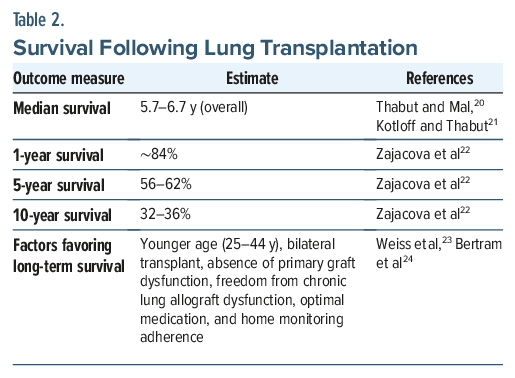
The current median survival rate following lung transplantation is between 5.7 and 6.7 years. However, this figure has improved over time, with a notable increase from 3.5 years in the 1990s to 11.2 years in those with transplants that were performed between 2011 and 2020.20,21 Table 2 presents current survival benchmarks and factors associated with favorable outcomes.
What Neuropsychiatric Complications Are Associated With Lung Transplantation?
Lung transplantation can be complicated by a bevy of neuropsychiatric conditions. Within 5–7 days after lung transplantation, approximately 40% of patients develop delirium, a neuropsychiatric condition that is characterized by inattention and deficits in cognition, mood, and behavior.15,25,26 Risk factors for postlung transplant delirium include obesity, worse preoperative cognitive functioning, pretransplant frailty, impaired intraoperative cerebral perfusion pressures, increased ischemic time, grade 3 PGD, pre-and postoperative benzodiazepine use, and higher steroid dosing posttransplantation.15,27–29 Patients who develop delirium after a lung transplant stay in the ICU and hospital longer.15,26 Moreover, postlung transplant delirium is associated with a greater risk of mortality.25,27,30 Although no studies have identified delirium in adults with ASD undergoing surgery, a small cohort study of children with ASD who underwent an outpatient surgical procedure (eg, tonsillectomy) found no difference in the rates of delirium when it was examined as a secondary outcome.31
Since delirium can be terrifying, with patients being disoriented and confused and occasionally with paranoia and delusions about the staff, patients may be at risk of dislodging their lines and devices while confused, afraid, or uncomfortable. Not infrequently, patients are placed in restraints for the patients’ safety.32 However, this intervention can also make patients feel less in control. Patients with ASD are apt to feel even more frightened with these interventions, although they might be at higher risk for device/line dislodgement. Moreover, patients can experience other neuropsychiatric complications, such as posterior reversible encephalopathy syndrome, catatonia, and the neuropsychiatric side effects of immunosuppressants (eg, steroids and calcineurin inhibitors) in the immediate postoperative period.29
For those with ASD, being in an ICU is especially challenging given overstimulation, unfamiliar routines, restricted communication, and invasive procedures, which often lead to heightened anxiety, behavioral dysregulation, or complete interpersonal withdrawal.33 Such patients may have difficulty communicating their needs, distress, dyspnea, or pain, which can lead to anxiety, fear, and nonadherence.34
In addition to immediate postsurgical neuropsychiatric complications, lung transplantation is associated with an increased risk of depression, anxiety, and transplant-related posttraumatic stress disorder (PTSD). Up to one-third (30%) of lung transplant recipients have at least 1 major depressive episode within 2 years after lung transplantation.35 Panic disorder is also common, occurring in 18% of patients within 2 years of their transplant.35
Finally, PTSD occurs in up to 15% of lung transplant recipients.36,37 In a meta-analysis of 48 studies of ICU survivors, 1 in 5 critical care survivors was affected by PTSD.38 Lung transplant recipients experience many traumatic events during their journey: from life-threatening deterioration and dyspnea due to their primary lung disease, to the lung transplant surgery and associated recovery (eg, chest tubes, pain), to the ICU environment, and finally, to the life-threatening postlung transplant complications, such as rejection and infections.39 For those with respiratory failure in the ICU, dyspnea and recollection of traumatic experiences are associated with PTSD.40 Delirium is also a risk factor for the development of PTSD.41 Moreover, the use of restraints, which is associated with delirium and mechanical ventilation, can also contribute to the risk of PTSD.32
Is ASD a Contraindication to Transplantation?
Guidelines for transplantation vary among institutions; moreover, consensus guidelines do not list ASD as an absolute contraindication to lung transplantation. Instead, recommendations focus on distinguishing between static developmental conditions (such as ASD) and progressive cognitive decline, which constitutes an absolute contraindication to transplantation.11 Psychiatric conditions or cognitive impairment have been considered as relative contraindications only when they have the “potential to interfere with medical adherence without sufficient support systems.”11
Much of the lung transplant literature has focused on the care of pediatric patients. A study of 504 pediatric lung transplant recipients found no significant differences in 60-day graft survival, 3-year graft survival, causes of death, or rejection rates between children with a cognitive delay, a possible delay, or no delay.42 Wall et al43 studied 343 transplant programs and found a wide variation in programs’ guidelines with regard to transplant eligibility for patients with intellectual disability and/or genetic disease, with adult programs having the most stringent guidelines.43 There is currently no known literature examining cases of adult patients with ASD undergoing lung transplant evaluation.
The American Academy of Pediatrics highlighted that transplant evaluations should focus on adaptive functioning within a patient’s psychosocial environment, rather than on the diagnosis. The presence of committed and able caregivers, who can include extended family, home nurses, and therapists, is of upmost importance.44
It is illegal under federal law to discriminate based on disability in transplant listing decisions. The Americans with Disabilities Act and the Rehabilitation Act require individualized assessments and reasonable modifications to ensure access to transplant services for qualified individuals with disabilities. External review committees can help to ensure fairness and prevent discrimination.44
What Accommodations Are Needed for Those With Level 3 ASD?
Level 3 ASD is characterized by severe deficits in verbal and nonverbal social communication skills, markedly limited initiation of social interactions, and minimal response to the social overtures from others, along with inflexible behavior and extreme difficulty coping with change. These individuals require substantial support for daily functioning; therefore, it is imperative that the support they need is assessed.45
Psychosocial evaluations of those with ASD should not focus solely on cognitive ability. Instead, they require a comprehensive assessment of adaptive functioning and support systems, with attention paid to sensory sensitivities, communication needs, caregiver capacity/ability, and behavioral challenges surrounding medical procedures. Behavioral and emotional problems are more important predictors of transplant success than is the extent of physical or cognitive disability.44
If possible, the evaluation should involve (directly or indirectly) a multidisciplinary team, which includes staff with expertise in developmental disabilities. If patients are not accustomed to essential medical procedures despite child life and behavioral interventions, posttransplant care may not be possible, regardless of their disability status.44 The evaluation should also address caregiver burden and family functioning, as the intensity of care required may fluctuate after transplant. Guardianship and conservatorship laws vary among states. If a patient has a guardian or conservator, they should play a role in the evaluation and informed consent process. Financial counseling should also be discussed with social work and case management.
What Ethical Issues Arise In This Patient Population?
Medical ethics is often at the forefront of difficult medical decisions, which are inherent in organ transplantation. The 4 principles of medical ethics are autonomy (ie, respecting patient’s choice), beneficence (ie, doing good for the patient, including advocating for vulnerable populations), nonmaleficence (ie, doing no harm to the patient), and justice (ie, fairness in treatment and resource allocation).46 Ethics is inseparable from clinical medicine, as the physicians have an ethical obligation to benefit the patient, to avoid or minimize harm, and to respect the values and preferences of the patient.46 When making difficult medical decisions, there is often conflict among 2 or more of these principles.
Conflict may arise between beneficence (offering an intervention that will statistically prolong a patient’s life and increase their quality of life) and maleficence (potentially causing more harm to the patient, by subjecting vulnerable patients to more suffering and decreasing their psychological quality of life). This can also be complicated by the fact that while there are good statistics on general prognosis after lung transplantation from the beneficence perspective, the direct statistics on risks in this complicated case advising the principle of nonmaleficence are limited and must be inferred. Thus, clinicians are left to make predictions based on the best evidence available, while considering a patient’s unique situation and risk factors. Not surprisingly, the lung transplant team will advocate for beneficence, while psychiatry often highlights the considerations of nonmaleficence. Furthermore, there can be a conflict between autonomy and justice, as it is almost always inherent when evaluating a patient’s suitability for transplantation from both a medical and psychosocial perspective.
In addition to the 4 principles of medical ethics, the utilitarian perspective, the effort to maximize the greatest benefit for the greatest number of patients, must also be considered.44 In transplant ethics, utility requires that the net overall good be maximized by balancing benefits and harms, and commonly accepted medical contraindications incorporate this principle by excluding individuals whose conditions make successful transplantation unlikely.44 In this population, utilitarian perspective must consider whether the anticipated benefit of transplantation is comparable to what would be expected for a similarly aged candidate without ASD. Critically, the available evidence does not support the assumption that intellectual disability per se diminishes graft survival.42 However, these population-level data may not fully capture the risks specific to a patient with level 3 ASD functioning at a 4 – to 5-year-old developmental level, whose documented behavioral challenges could plausibly increase the risk of perioperative complications and compromise the fidelity of posttransplant care. In the pediatric literature, it has been acknowledged that while nonadherence is commonly cited as a disqualifying barrier for patients with disabilities, it is also highly prevalent in other populations (particularly adolescents), and patients with disabilities who require caregiver assistance with medications may paradoxically have higher oversight and improved adherence.44
An unstated difficulty in the utilitarian perspective concerns the baseline life expectancy of a patient with level 3 ASD, which directly affects the calculation of life-years gained from transplantation. Individuals with ASD have increased rates of premature mortality compared to the general population, with co-occurring intellectual disability further amplifying this risk.2 Therefore, an equivalent posttransplant life expectancy for a patient with ASD and a neurotypical patient of the same age is an empirically unsupported simplification.
Who Makes the Decision and Consents for Transplant Surgery?
Transplant candidacy is determined through a multidisciplinary transplant selection process, not by a single clinician. The OPTN recognizes that psychosocial and contextual factors are often considered in candidacy assessments but emphasizes that criteria should be transparent, consistently applied, and nondiscriminatory, with careful attention to justice and respect for persons, particularly for vulnerable populations.5 In transplant candidates with ASD or intellectual and developmental disability, professional guidance similarly supports individualized assessment that prioritizes adaptive functioning in the patient’s real-world environment and the stability of caregiving supports, rather than diagnosis-based exclusion.44,47 Evidence from pediatric transplant cohorts also suggests that when patients with intellectual disability receive a transplant, long-term outcomes can be comparable, which reinforces the importance of equitable access to evaluation and listing processes.48,49
After a transplant selection committee meeting, there are generally 3 possible outcomes: approval for listing, deferral (with conditions), or decline. Deferral is not a permanent decision; the candidate is re-evaluated after the identified conditions have been addressed. The psychosocial evaluation guidelines emphasize that specific treatments and interventions should be recommended to ameliorate identified contraindications, providing a “roadmap” for the patient to achieve eligibility and success posttransplant. If patient is declined, programs are encouraged to document the reasons for decline, inform the patient, and advise the patient that they may seek evaluation at another program with different risk threshold.5
Consent is handled in a similar fashion, with the threshold question being decision-making capacity for transplant-specific consent. When a patient has capacity, they provide informed consent. When capacity is limited, consent is provided by the legally authorized surrogate (eg, a guardian or conservator), with the transplant team clarifying the decision-maker early and documenting the framework for substituted judgment and best-interest decision-making.4,47 However, “consent for transplant” is not made at a single moment in time. It extends into the postoperative course and long-term care, particularly during periods when capacity may fluctuate due to delirium, sedation, encephalopathy, or psychiatric decompensation. In practice, the team continues to seek the patient’s assent when possible, anticipates points of distress or refusal, and builds a plan that supports adherence and reduces suffering while remaining ethically defensible and nondiscriminatory.44,49
What Can Be Done to Support Patients and Their Family Members Once Lung Transplantation Has Been Approved?
Psychiatrists can support the treatment team by providing ASD-informed care, preventing and treating neuropsychiatric complications, and supporting the family, caregivers, and health care providers. Psychiatrists can also educate team members on the characteristics of ASD and outline principles of caring for people with ASD in critical care settings.
Health care providers should be aware of, and prepare for, special challenges that people with ASD face, including sensory sensitivities, communication barriers, and behavioral issues. Reviewing the management of critical care emergencies in children with ASD can guide the care of adults with ASD.34
Providing a sensory-friendly critical care environment is crucial for people with ASD. Such modifications (eg, dimming lights, reducing noise levels/turning off unnecessary alarms, using noise-canceling headphones, reducing clutter in the room, and providing familiar comfort items, such as blankets and stuffed animals) can significantly decrease anxiety and distress in children and adults with ASD.34 Providing sensory tools (such as fidget toys, chewable items, or weighted blankets) can offer additional comfort and help with distress during medical interventions.
Enabling effective communication in the form of simplified language, visual aids, use of augmentative and alternative communication tools, and involvement of caregivers in the communication process is also essential to provide efficient critical care.34 Appreciating nonverbal cues, such as grimacing, body postures, and vital signs, is also a key part of effective communication.
Behavioral management strategies are paramount in caring for people with ASD in critical care settings. These include de-escalation techniques, predictable scheduled routines, calm verbal interactions, providing clear explanations of procedures, and using visual cues and schedules.34
Employing multidisciplinary teams and collaborating closely with them are especially helpful. Effective caring for people with ASD postlung transplantation involves surgeons, intensivists, pulmonologists, nurses, pharmacists, social workers, psychiatrists, occupational and physical therapists (O/PT), speech and language pathologists (SLP), dietitians, and other providers. O/PT can be especially helpful in establishing routines and schedules, as well as helping with the sensory experience. SLPs address the unique communication needs of people with ASD and create and implement tailored communication strategies.34 If early child-life specialists or behavioral therapists are available, they can be helpful in caring for these patients. Psychiatrists can suggest and identify additional resources and lead the team in the behavioral care of patients with ASD.
The most important part of the multidisciplinary team is family, which in the case of Mr A was his parents. They can help with communication, adherence, distress tolerance and comfort, and advocacy.33 They provide expertise on the patient’s sensory needs, communication style, and behavioral needs and are necessary allies in their care. Psychiatrists can advocate on the family’s behalf and educate them about their unique roles with the patient. Psychiatrists can also support the family, as they are at increased risk for PTSD.29,50
Psychiatrists can support patients by recommending prevention and treatment of such neuropsychiatric complications as delirium, acute stress disorder, and PTSD.29 Many of the interventions mentioned here use nonpharmacologic support. Supporting communication, enhancing the sleep-wake cycle, mobilizing, and managing sensory stimulation are all important interventions. Psychiatrists can also be proactive in considering medications that might be needed to treat delirium, anxiety, or acute stress disorder/PTSD,29 with special consideration paid to a patient’s neurodivergence and prior experience with medications. ICU diaries may be recommended to decrease PTSD symptom burden in patients and their families,51 although this tool was not investigated in patients or families of people with ASD.
What Happened to Mr A?
A multidisciplinary meeting (including representatives from the lung transplant service, thoracic surgery, anesthesia, infectious disease, nutrition, social work, and psychiatry) reconvened to review Mr A’s complex neurodevelopmental and medical history. They acknowledged his high postoperative care risks, as well as the likelihood of prolonged hospitalization, but concluded that transplantation could be pursued with the assistance of a robust, structured, support system. A listing plan was shaped around explicit prerequisites: in-hospital stabilization and caregiver engagement during the immediate posttransplant period, meticulous medical optimization of his pulmonary hypertension and hemodynamics, and coordination with transitional pediatric-adult services. A joint family meeting with Mr A’s mother, sister, and father clarified expectations, educated them about potential complications, and obtained a cautious, but informed, willingness to proceed, contingent on the development of an extensive support structure.
Psychiatry played a central role in this case, ensuring that the decision was driven by Mr A’s best interests rather than assumptions. The case exemplifies the tension between beneficence and nonmaleficence. From the perspective of beneficence, lung transplantation offers the potential for life-prolonging therapy. These benefits are particularly meaningful given his young age, a factor associated with favorable long-term transplant outcomes.23,24 Importantly, the current available literature has not associated intellectual disability with reduced recipient or graft survival after lung transplantation, and the American Academy of Pediatrics has stated that intellectual disability alone should not be a contraindication to the referral, acceptance, or listing for solid organ transplant.42,44
However, the principle of nonmaleficence raises substantial concerns specific to Mr A’s situation. His level 3 ASD, with functioning at a 4 – to 5-year-old developmental level, limited language, and documented intolerance of prolonged hospitalizations, raises the possibility that the posttransplant course could inflict significant physical and psychological suffering that he would be unable to comprehend or contextualize. His prior 12-day ICU stay demonstrated the severity of these challenges, including episodic agitation requiring sedation, dislodgement of lines, and the need for continuous parental presence.
The principles of autonomy and justice further complicated this evaluation. Mr A lacks the capacity to provide informed consent or to express a preference regarding transplantation; his conservators (his parents) serve as surrogate decision-makers, guided by a best-interest standard. His mother’s ambivalence during our initial evaluation reflected the genuine difficulty of substituted judgment when the patient cannot articulate values or preferences. From the standpoint of justice, denying transplantation to Mr A solely based on his ASD diagnosis would constitute unjustified discrimination and may violate the Americans with Disabilities Act.44 However, it is ethically permissible to consider the impact of his disability on the likelihood of successful graft survival, quality of life, and adherence to posttransplant medical regimens. The psychosocial evaluation, therefore, did not focus intrinsically on Mr A’s disability, but on the practical feasibility of posttransplant care. This includes the reliability and sustainability of his caregiver support system (noting the split conservatorship and diminished community resources after the age of 18 years), his capacity to tolerate essential posttransplant activities (eg, blood draws, medication administration, spirometry, and infection precautions that would preclude his adult day program), and the feasibility of behavioral and psychiatric supports in the hospital to manage the anticipated perioperative distress.
When viewed from a utilitarian standpoint, the uncertainty surrounding the benefits of transplantation does not justify excluding Mr A, but it does necessitate transparency. The transplant team acknowledged that the expected benefit calculation for Mr A is more ambiguous compared to a typical candidate. This uncertainty was carefully weighed against the ethical principle that intellectual and developmental disabilities alone should not serve as a contraindication to transplantation.
The psychiatric consultant proposed a pathway to anchor pre-and posttransplant care. Core elements included behavioral and environmental stabilization through predictable routine and sensory-modulation strategies, intensive caregiver training for both parents, and the use of simple and consistent communication tools to enhance engagement, safety de-escalation prioritization, and careful management of lines and devices. A cautious pharmacologic framework favored low-dose, closely monitored as-needed strategies. The plan integrated ABA-informed supports and coordination with staff trained in behavioral interventions.
CONCLUSIONS
Psychosocial evaluations are conducted routinely as part of the assessment for solid organ transplantation in the United States; moreover, they consider nonmedical factors (eg, adherence and social support) that can raise ethical concerns (such as bias, inconsistent use of standards, stereotyping, and a lack of transparency). Since psychosocial policies and practices vary at transplant centers, how psychosocial evaluations are conducted and who should conduct them (eg, psychiatry, social work, surgery) is a matter of debate. In addition, the family unit is evaluated to determine whether it can withstand the stress of transplantation.
Hospitalization following lung transplantation can be challenging (with pain, dyspnea, delirium, use of restraints, and psychological distress) that may provoke some patients to dislodge tubes and intravenous lines. Patients with ASD are apt to feel even more frightened by these experiences, which can complicate the recovery process. In addition to posttransplant delirium, lung transplantation is associated with an increased risk of depression, anxiety, and transplant-related PTSD. Given their impairments in communication and need for routines, providing behavioral management strategies is essential when caring for people with ASD in critical care settings.
Article Information
Published Online: November 10, 2026. https://doi.org/10.4088/PCC.26f04233
© 2026 Physicians Postgraduate Press, Inc.
Submitted: March 18, 2026; accepted July 1, 2026.
To Cite: Nolasco D, Hussain F, Sher Y, et al. Organ transplantation in individuals with autism spectrum disorder: managing evaluation, consent, and treatment adherence. Prim Care Companion CNS Disord2026;28(6):26f04233.
Author Affiliations: Department of Psychiatry and Behavioral Sciences, Stanford University School of Medicine, Palo Alto, California (Nolasco, Hussain, Sher); Department of Surgery–Abdominal Transplantation Stanford University School of Medicine, Palo Alto, California (Hussain); Department of Medicine–Pulmonary, Allergies and Critical Care, Stanford University School of Medicine, Palo Alto, California (Sher); Department of Psychiatry, Harvard Medical School, Boston, Massachusetts (Stern); Department of Psychiatry, Massachusetts General Hospital, Boston, Massachusetts (Stern).
Corresponding Author: Diego Nolasco, MD, Department of Psychiatry and Behavioral Sciences, Stanford University, 401 Quarry Rd, Palo Alto, CA 94304 ([email protected]).
Nolasco and Hussain are co-first authors; Sher and Stern are senior authors.
Financial Disclosure: Dr Stern has received royalties from Elsevier for editing textbooks on psychiatry. Drs Nolasco, Hussain, and Sher report no relevant disclosures.
Funding/Support: None.
Clinical Points
- Autism spectrum disorder (ASD) is not a contraindication for lung transplantation evaluation or candidacy; however, careful evaluation of the patient and their support system is needed, examining a patient’s ability to successfully undergo transplantation and recovery and considering general and unique complications associated with lung transplantation and accommodations needed to support the patient.
- Several structured tools (eg, the Psychosocial Assessment of Candidates for Transplantation, the Transplant Evaluation Rating Scale, and the Stanford Integrated Psychosocial Assessment for Transplantation) facilitate the completion of a psychosocial assessment that evaluates clinically relevant domains (eg, readiness for transplant, social supports, psychological stability, and substance use).
- For those with ASD, being in an ICU is especially challenging, given overstimulation, unfamiliar routines, and invasive procedures, leading to difficulty with communicating, anxiety, behavioral dysregulation, and nonadherence.
- Level 3 ASD is characterized by severe deficits in verbal and nonverbal social communication skills, markedly limited initiation of social interactions, and minimal response to the social overtures from others, along with extreme difficulty coping with change; these individuals require substantial support for daily functioning.
- Providing a sensory-friendly critical care environment (eg, dimming lights, reducing noise levels/turning off unnecessary alarms, using noise-canceling headphones, reducing clutter in the room, and providing familiar comfort items) can decrease anxiety and distress in people with ASD.
References (52)

- American Psychiatric Association. Diagnostic and Statistical Manual of Mental Disorders. Fifth Edition. Text Revision: American Psychiatric Association; 2022.
- Autism Spectrum Disorder in Primary Care, Westby A, Coburn-Pierce M. Am Fam Physician. 2025;112(3):301–312.
- Constantino JN, Charman T. Diagnosis of autism spectrum disorder: reconciling the syndrome, its diverse origins, and variation in expression. Lancet Neurology. 2016;15(3):279–291. PubMed CrossRef
- Gardner L, Gilchrest C, Campbell JM. Intellectual, adaptive, and behavioral functioning associated with designated levels of support in a sample of autistic children referred for tertiary assessment. J Autism Devel Disord. 2024;54(11):4145–4151. CrossRef
- Organ Procurement and Transplantation Network. General Considerations in Assessment for Transplant Candidacy; 2025. https://www.hrsa.gov/optn/professionals/resources/ethical-considerations/general-considerations-in-assessment-for-transplant-candidacy
- Winder GS, Fernandez AC, Perumalswami PV, et al. Reexamining psychosocial clearance: a procedural framework for psychosocial evaluation in liver transplantation. Liver Transpl. 2024;30(4):431–442. CrossRef
- Olbrisch ME, Levenson JL, Hamer R. The PACT: a rating scale for the study of clinical decision-making in psychosocial screening of organ transplant candidates. Clin Transpl. 1989;3:164–169. CrossRef
- Twillman RK, Manetto C, Wellisch DK, et al. The Transplant Evaluation Rating Scale: a revision of the psychosocial levels system for evaluating organ transplant candidates. Psychosomatics. 1993;34(2):144–153. PubMed
- Maldonado JR, Dubois HC, David EE, et al. The Stanford Integrated Psychosocial Assessment for Transplantation (SIPAT): a new tool for the psychosocial evaluation of pre-transplant candidates. Psychosomatics. 2012;53(2):123–132. PubMed CrossRef
- Maldonado JR, Sher Y, Lolak S, et al. The Stanford Integrated Psychosocial Assessment for Transplantation: a prospective study of medical and psychosocial outcomes. Psychosom Med. 2015;77(9):1018–1030.
- Christie JD, Raemdonck DV, Fisher AJ. Lung transplantation. N Engl J Med. 2024;391(19):1822–1836.
- Hunt ML, Cantu E. Primary graft dysfunction after lung transplantation. Curr Opin Organ Transpl. 2023;28(3):180–186.
- Costa J, Benvenuto LJ, Sonett JR. Long-term outcomes and management of lung transplant recipients. Best Pract Res Clin Anaesthesiol. 2017;31(2):285–297.
- Kurihara C, Manerikar A, Querrey M, et al. Clinical characteristics and outcomes of patients with COVID-19–associated acute respiratory distress syndrome who underwent lung transplant. JAMA. 2022;327(7):652–661. CrossRef
- Sher Y, Mooney J, Dhillon G, et al. Delirium after lung transplantation: association with recipient characteristics, hospital resource utilization, and mortality. Clin Transpl. 2017;31(5).
- Banga A, Mohanka M, Mullins J, et al. Hospital length of stay after lung transplantation: independent predictors and association with early and late survival. J Heart Lung Transpl Off Publ Int Soc Heart Transpl. 2017;36(3):289–296. PubMed CrossRef
- Hadem J, Gottlieb J, Seifert D, et al. Prolonged mechanical ventilation after lung transplantation: a single-center study. Am J Transpl Off J Am Soc Transpl Am Soc Transpl Surg. 2016;16(5):1579–1587.
- Schwarz S, Benazzo A, Dunkler D, et al. Ventilation parameters and early graft function in double lung transplantation. J Heart Lung Transpl Off Publ Int Soc Heart Transpl. 2021;40(1):4–11. CrossRef
- Bleisch B, Schuurmans MM, Klaghofer R, et al. Health-related quality of life and stress-related post-transplant trajectories of lung transplant recipients: a three-year follow-up of the Swiss Transplant Cohort Study. Swiss Med Wkly. 2019;149: w20019. CrossRef
- Thabut G, Mal H. Outcomes after lung transplantation. J Thorac Dis. 2017;9(8):2684–2691.
- Kotloff RM, Thabut G. Lung transplantation. Am J Respir Crit Care Med. 2011;184(2):159–171.
- Zajacova A, Dupont LJ, De Leyn P, et al. Characteristics and outcomes of 1500 lung transplantations in the Leuven Lung Transplant Program: turning past lessons into tomorrow’s foundations. Transpl Int Off J Eur Soc Organ Transpl. 2025;38:15495. CrossRef
- Weiss ES, Allen JG, Merlo CA, et al. Factors indicative of long-term survival after lung transplantation: a review of 836 10-year survivors. J Heart Lung Transpl Off Publ Int Soc Heart Transpl. 2010;29(3):240–246. PubMed CrossRef
- Bertram A, Fuge J, Suhling H, et al. Adherence is associated with a favorable outcome after lung transplantation. PLOS ONE. 2019;14(12):e0226167. PubMed CrossRef
- Anderson BJ, Chesley CF, Theodore M, et al. Incidence, risk factors, and clinical implications of post-operative delirium in lung transplant recipients. J Heart Lung Transpl. 2018;37(6):755–762. PubMed CrossRef
- Smith PJ, Rivelli SK, Waters AM, et al. Delirium affects length of hospital stay after lung transplantation. J Crit Care. 2015;30(1):126–129.
- Dalton T, Snyder LD, Buckley EB, et al. Pretransplant physical frailty, postoperative delirium, and short-term outcomes among older lung transplant recipients. Exp Gerontol. 2022;163:111781. CrossRef
- Mody GN, Choi B, Townsend K, et al. Steroid dosing and delirium after lung transplant surgery. Gen Hosp Psychiatry. 2022;76:57–59.
- Sher Y, Zimbrean P. Psychiatric aspects of organ transplantation in critical care: an update. Crit Care Clin. 2017;33(3):659–679.
- DeBolt CL, Gao Y, Sutter N, et al. The association of post-operative delirium with patient-reported outcomes and mortality after lung transplantation. Clin Transpl. 2021;35(5):14275. CrossRef
- O’Brien EM, Stricker PA, Harris KA, et al. Perioperative management and outcomes in patients with autism spectrum disorder: a retrospective cohort study. Anesth Analg. 2024;138(2):438–446. PubMed
- Franks ZM, Alcock JA, Lam T, et al. Physical restraints and post-traumatic stress disorder in survivors of critical illness. Syst Rev Meta-Anal Ann Am Thorac Soc. 2021;18(4):689–697.
- Zoromba MA, El-Gazar HE, Mohammed HH, et al. Beyond the monitor: integrating family expertise into ICU care for patients with autism spectrum disorder. Nurs Crit Care. 2026;31(1):70261.
- Al-Beltagi M, Saeed NK, Bediwy AS, et al. Management of critical care emergencies in children with autism spectrum disorder. World J Crit Care Med. 2025;14(2):99975.
- Dew MA, Rosenberger EM, Myaskovsky L, et al. Depression and anxiety as risk factors for morbidity and mortality after organ transplantation. Syst Rev Meta-Anal Transpl. 2015;100(5):988–1003. CrossRef
- Chernyak Y, Teh L. Medically induced exacerbation of PTSD following lung transplantation: a case series. J Clin Psychol Med Settings. 2020;27(2):305–309. PubMed
- Davydow DS, Lease ED, Reyes JD. Posttraumatic stress disorder in organ transplant recipients: a systematic review. Gen Hosp Psychiatry. 2015;37(5):387–398. PubMed
- Righy C, Rosa RG, Silva RTA, et al. Prevalence of post-traumatic stress disorder symptoms in adult critical care survivors: a systematic review and meta-analysis. Crit Care. 2019;23(1):213. PubMed
- Gries CJ, Dew MA, Curtis JR, et al. Nature and correlates of post-traumatic stress symptomatology in lung transplant recipients. J Heart Lung Transpl. 2013;32(5):525–532. PubMed CrossRef
- Worsham CM, Banzett RB, Schwartzstein RM. Dyspnea, acute respiratory failure, psychological trauma, and post-ICU mental health: a caution and a call for research. Chest. 2021;159(2):749–756. PubMed
- Grover S, Sahoo S, Chakrabarti S, et al. Post-traumatic stress disorder (PTSD) related symptoms following an experience of delirium. J Psychosom Res. 2019;123:109725. PubMed
- Lee JY, Mullis DM, Zawadzki RS, et al. Long-term outcomes after lung transplantation in children with intellectual disabilities. Pediatr Transpl. 2024;28(5):e14807.
- Wall A, Lee GH, Maldonado J, et al. Genetic disease and intellectual disability as contraindications to transplant listing in the United States: a survey of heart, kidney, liver, and lung transplant programs. Pediatr Transpl. 2020;24(7):e13837. PubMed CrossRef
- Statter MB, Noritz G, Committee on bioethics COCWD, et al. Children with intellectual and developmental disabilities as organ transplantation recipients. Pediatrics. 2020;145(5):e20200625. PubMed
- Hyman SL, Levy SE, Myers SM. Council on children with disabilities, section on developmental and behavioral pediatrics. Identification, evaluation, and management of children ith autism spectrum disorder. Pediatrics. 2020;145(1):e20193447. PubMed
- Varkey B. Principles of clinical ethics and their application to practice. Med Princ Pr. 2021;30(1):17–28.
- Ross LF. Ethics of organ transplantation in persons with intellectual disability. J Pediatr. 2021;235:6–9. PubMed
- Wightman A, Bradford MC, Hsu E, et al. Prevalence and long-term outcomes of solid organ transplant in children with intellectual disability. J Pediatr. 2021;235:10–17 4. PubMed
- Disability NC. Organ transplant discrimination against people with disabilities. In: Part of the Bioethics and Disability Series; 2019. Published online.
- Maabreh RS, Rababa M, Al-Za’areer MS, et al. Prevalence, severity, and associated factors of post-traumatic stress disorder (PTSD) symptoms among parents of children diagnosed with autism: a cross-sectional study. J Educ Health Promot. 2025;14:435. PubMed
- Gazzato A, Scquizzato T, Imbriaco G, et al. The effect of intensive care unit diaries on posttraumatic stress disorder, anxiety, and depression: a systematic review and meta-analysis of randomized controlled trials. Dimens Crit Care Nurs. 2022;41(5):256–263. PubMed
- Doraiswamy M, Obole E, Botros M, et al. Looking beyond the allograft survival: long-term, 5-year renal outcome in lung transplant recipients. Transplant Proc. 2021;53(10):3065–3068. https://doi.org/10.1016/j.transproceed.2021.09.037 CrossRef
Please sign in or purchase this PDF for $40.