
Have you ever wondered why people engage in risky behaviors? Have you been unsure about what your patients will endure after sustaining a traumatic injury? Have you been uncertain about what you can say or do to help them cope with affective, behavioral, and cognitive reactions to a traumatic amputation? Have you puzzled over what traits, skills, or experiences might facilitate their coping? If you have, the following case vignette and discussion should prove useful.
CASE VIGNETTE
Mr B, a 55-year-old veteran with a history of posttraumatic stress disorder (PTSD), major depressive disorder, insomnia, and (unspecified) anxiety, shot himself in the head a decade ago in a suicide attempt while impaired by alcohol and clonazepam. The bullet entered the left side of his neck and exited through his forehead. His injuries required more than 20 operations (including removal of his left eye).
Prior to his suicide attempt, Mr B had been married with 2 children, he enjoyed riding motorcycles, and he had been employed by the same company for 2 decades. He used to look in the mirror and think how lucky he was to have a good-paying job, a beautiful wife, and a wonderful home.
Although Mr B had no history of substance abuse, executive dysfunction/impulsivity, brain injuries, or suicidal ideation before his suicide attempt, he had struggled with anxiety, depression, and PTSD from his combat experience, during which he “saw a lot that I can’t un-see and did things that I can’t undo.” Mr B believed that his PTSD led to his suicide attempt, despite being treated with bupropion for depression and taking as-needed clonazepam for anxiety; he suffered from hypervigilance, insomnia, intrusive memories, and irritability, which interfered with his relationships. Unfortunately, a physical injury at work forced him to change job roles, and it ultimately led to a pay cut that resulted in financial stress.
When Mr B discovered his wife’s infidelity, she said that she did not love him and questioned whether she ever had. After they divorced, he worked extra hours to pay bills and child support. He felt that “everything I ever cared about and worked for was taken from me; there was nothing left.” On the night that he shot himself, he learned that his wife’s lover was going to be staying in their home for the weekend with his children. That evening, a friend visited and brought some bourbon, which Mr B combined with clonazepam, something he had not done before. He drank until he had nearly blacked out, which was a new milestone for him.
DISCUSSION
Why Do People Engage in Risky Behaviors?
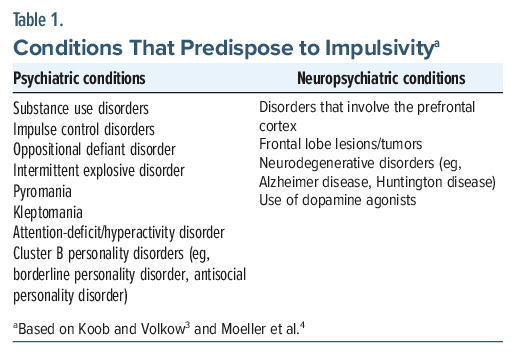
Risk-taking involves a complex interplay between perceived benefits and potential harms. Many factors (eg, an individual’s neurobiology and skill set, societal norms, the expected impact on others, and the frequency with which the behavior is manifested) play a role in what is deemed an “acceptable” risk. Adolescence, a period marked by strong desires for social acceptance and novelty-seeking, is characterized by greater risk-taking, with less regard for the adverse consequences of one’s actions. Adolescents tend to be sensitive to the social context of their actions (eg, attempting to increase their social rank and avoid social exclusion) and prone to having lower self-esteem.1 A major contributing factor to these behavioral manifestations, as revealed through neuroimaging studies, is thought to involve reorganization of brain circuits during adolescence (ie, circuitry that impacts executive functioning and social cognition).2 Moreover, there are a bevy of psychiatric and neuropsychiatric conditions that predispose individuals to impulsivity (Table 1).3,4
What Types of Accidents Lead to Traumatic Injuries?
Traumatic injuries, often a consequence of impulsive acts, result in high health care utilization and are a potent driver of morbidity, mortality, and health care costs. Moreover, roughly 1.5–1.8 million people in the United States are hospitalized for traumatic injuries each year.5 Their economic burden is substantial, reaching $42 billion in 2021.6
Falls are the leading cause of hospitalizations following trauma, accounting for roughly three-fourths of US trauma admissions.6 Motor vehicle collisions are also a major contributor, ranking second among reasons for trauma-related hospitalizations.5 Assaults and penetrating wounds are less common than falls and crashes, yet they result in a disproportionate share of admissions with high severity, resource use, and downstream morbidity. National cost analyses of assault-related care show that assaults account for the largest share of emergency department (ED) costs, while firearm-related injuries contributed the largest share of inpatient costs, reflecting higher acuity despite a lower volume of cases.7
Less common means of injury account for a smaller share of admissions, but they can produce outsized, lifelong disability and disfigurement. Traumatic amputation illustrates this point, and global analyses document a large and evolving burden of traumatic amputation worldwide.8 In the US ED surveillance, many traumatic amputations involve the loss of digits, which are frequently associated with consumer products (eg, doors, saws, and lawn mowers).9 In contrast, major limb amputations are more often associated with high-energy accidents (eg, motor vehicle collisions).10 Occupational injuries are prevalent, with workers’ compensation and surveillance studies identifying elevated risk for injuries in industrial settings (including manufacturing plants, mining facilities, and other machinery-intensive worksites where cutting, pressing, and powered equipment serve as common hazards).11,12
Mental health comorbidity amplifies the risk of traumatic injuries and worsens outcomes after injury, involving self-directed and non–self-directed trauma. Psychiatric conditions also contribute to trauma through impaired judgment, disinhibition, risk-taking, intoxication or withdrawal, sleep disruption, and increased exposure to violence or unsafe environments.13,14
What Do Individuals Think and Feel Following an Injury That Results in the Traumatic Loss of a Limb or That Will Need an Amputation to Save Their Life?
Amputation after a traumatic injury threatens a person’s bodily integrity and can lead to a myriad of thoughts and emotions.15 These reactions also are provoked by the mechanisms of the injury and the limb affected. For example, individuals who face the amputation of a leg often become preoccupied with how their amputation will affect future ambulation, whereas those facing an amputation of their dominant arm may be most concerned about learning to perform tasks with their nondominant limb.
Amputation due to traumatic injury is often an urgent or emergent surgery. Compared to those with chronic conditions (eg, peripheral vascular disease), who may require amputation after years of medical management, there is frequently much less time for individuals to process the information before having surgery. Some patients with significant traumatic injuries may not realize that they needed an amputation until after surgery.
Postoperatively, grief is common. Much like the unexpected loss of a loved one, individuals often experience Kubler-Ross classic stages of grief (eg, denial, anger, bargaining, depression, and acceptance) following the loss of a limb.16,17 While many patients may experience these stages, they do not always proceed in one specific order. Denial may manifest as being unable to look at the surgical site, as they are unable to acknowledge that their limb is no longer there. Anger may be revealed by comments made to family members or medical providers, who are blamed for not taking additional steps to salvage their limb. Alternatively, anger may manifest inward, especially if the patient survived a traumatic event when others did not or if the patient perceives themself as the party responsible for the accident. Preoperative bargaining can occur when nonemergency surgery is required; some individuals try to delay surgery, thinking that alternatives to surgery must be available. Depression can show itself as social withdrawal and a lack of motivation to engage with medical care (eg, primary care follow-up and medication adherence). Acceptance occurs when people realize that they have lost their limb and engage in future-oriented thinking. For some individuals, this does not occur until they are well into their rehabilitation program.
Some individuals also develop significant anxiety regarding their postoperative recovery.18 They may be faced with unanswered questions, for example, “What does rehabilitation entail? Will my activities of daily living be compromised? How will my amputation adversely impact my work and home life? How will others react when they see me?” While some of these questions may be answered easily during the initial hospitalization and the early stages of recovery, others persist and require support from health care providers, friends, and family during their recovery.
What Skills, Traits, and Experiences Can Facilitate Coping?
Humanity has long pondered tragedy and suffering, as well as what allows us to survive challenging experiences. In the Discourses of Epictetus, written nearly 2 millennia ago, this Greek Stoic philosopher shared his belief that it was the act of choosing one’s behavior in the face of hardship that allowed a person to survive trauma and to live a better life.19 Viktor Frankl, the author of Man’s Search for Meaning, discussed his time in a concentration camp; he attributed his survival to finding meaning in every experience.20 Although many have attempted to define and label this ineffable variable (eg, resilience and grit), the concept is still being debated. Regardless, diverse behavioral, experiential, and biological phenotypes appear to contribute to coping in the face of adversity.
The APA Dictionary of Psychology21 reported that the most potent factors for psychological resilience involve the ways in which individuals view and engage with the world and apply coping strategies. Moreover, the development of coping skills and the creation of adaptive cognitive strategies serve as the focus for many psychotherapies, including cognitive-behavioral therapy. Cognitive characteristics (such as a high level of intellectual functioning, efficient self-regulation, coping styles, and optimism) and developmental characteristics (eg, having a secure attachment style and a robust social network) increase resilience to stressors.22 Having overcome challenging or stressful experiences often improves one’s ability to cope. Those who have successfully mastered mild or moderate stressors (eg, the end of a relationship or a parent’s illness) appear resilient to other stressors.23,24 Such stress inoculation occurs when an individual develops an adaptive stress response and higher-than-average resilience to the adverse effects of subsequent, uncontrollable stressors.25
Resilience is undoubtedly influenced by genetic factors; however, little is known about its underlying mechanisms. Genome-wide association studies have identified several promising genes.26 Differences in the catechol-O-methyltransferase gene, which produces an enzyme that is crucial for the metabolism of catecholamine neurotransmitters (eg, dopamine, epinephrine, norepinephrine), seem to impact the level of cortisol in a person’s body,27 modulate neurotic traits,28 and alter the manner in which people interpret the affect of others.29 Investigations into the SLC6A4 gene, which creates a serotonin transporter that is targeted by many antidepressant medications, identified a functional polymorphism (5-HTTLPR) that is linked to higher scores on validated resilience scales.30
Peer support interventions can help with coping, allowing patients to ask nuanced questions about short- and long-term expectations and to share difficult emotions. Peer support also improves psychosocial well-being and reduces functional limitations.31
Community and social connection facilitate coping for most patients. Given the tendency for patients to become more isolated postamputation, 32 patients with increased traits of extroversion and a greater reliance on others for emotional support may fare better. Engagement in religious practices and emotional support from others increase active coping and planning.33
Acceptance and commitment therapy is a structured therapy that focuses on effective coping with grief, loss, anxiety, and pain. Treatment focuses on 6 core skills: (1) remaining in the present, (2) identifying thoughts and emotions, (3) clarifying personal hopes and values, (4) committing to actions that are aligned with a person’s hopes and values, (5) accepting unwanted feelings, and (6) distancing oneself from thoughts that interfere with desired actions.34 Other therapeutic interventions include existential therapies, such as meaning-centered psychotherapy (to address crises related to sense of self, function, and their role in society and relationships after amputations).32
What Can Health Care Providers, Friends, and Family Members Say or Do When Interacting With Individuals Who Have Sustained a Traumatic Amputation?
Following an amputation, health care providers should assess an individual’s physical and emotional recovery. Screening for common mental health problems can be accomplished through the use of validated screening instruments that can detect problems and facilitate conversations about pharmacologic treatment and psychotherapy. Emotional validation helps to normalize an individual’s emotional adjustment to life after an amputation.
Following amputation, many individuals focus on what they have lost or on activities that they will not be able to do, especially those who have lived an active lifestyle before their traumatic injury.35 Similarly, individuals who have engaged with social supports and used problem-solving techniques tend to have less psychological distress following amputation. Thus, providing encouragement to patients, assessing their degree of social support, and keeping them actively engaged in their recovery are useful strategies when working with someone following an amputation.
What Does the Physical and Emotional Rehabilitation Entail Following a Traumatic Injury?
After amputation of a lower extremity, physical rehabilitation typically consists of in-hospital recovery, preprosthetic rehabilitation, limb healing, prosthetic fitting, and prosthetic rehabilitation, during which the individual relearns to ambulate safely with their new prosthesis.36 This typically takes an average of 5 months, especially when there are postoperative complications (eg, infection or wound dehiscence).
With upper extremity amputations, physical recovery encompasses in-hospital recovery, a preprosthetic phase, and a prosthetic phase. Prosthetic fitting for upper extremity amputations tends to occur earlier than fitting of a lower extremity, and fitting within 30 days of surgery is usually recommended following an upper extremity amputation.37,61 As with lower extremity amputations, timelines are patient-specific and can be affected by poor wound healing, postoperative infection, or other complications.
Due to the fluctuating nature of psychiatric symptoms during recovery after limb loss, routine psychiatric screening has been recommended by the US Department of Veterans Affairs during each phase of the postamputation recovery.38 As physical rehabilitation progresses, many individuals note that their psychiatric symptoms improve, likely in part due to an improved outlook on their ability to function with a prosthetic limb. However, screening for emotional distress should continue, as psychiatric symptoms often increase when transitioning their home to a rehabilitation facility.39
Family support can also play an important role in an individual’s recovery; however, the traumatic injury can also take a physical and emotional toll on family caregivers. Caregiver burnout can be common, especially as the patient adjusts to changes in their own mobility and independence. In some instances, psychotherapy may be beneficial to help navigate complex interpersonal dynamics (eg, couples therapy, family therapy, and interpersonal therapy).
Support groups for those who have sustained an amputation can also play a vital role in the emotional recovery following amputation. Most patients who participate in peer-support recovery groups find that they aid in their recovery, with nearly 95% of patients recommending them to others.40 Like those with substance use disorders, peers can provide a layer of social support and a unique opportunity to discuss shared experiences.
How Often Do Individuals Develop an Acute Stress Disorder, PTSD, or Depression?
Psychiatric symptoms can fluctuate throughout an individual’s recovery following an amputation. Routine screening, evaluation, and referral to higher levels of care are key to adequately treating the mental health aspects of recovery following amputation. One recent meta-analysis that reviewed data from nearly 10,000 individuals who sustained an amputation estimated that about one-third met criteria for depression.41 Risk factors for depression have included body image disturbances, an avoidant coping style, and more restricted activities, whereas having a strong social support network appeared to be an important and modifiable protective factor.
Multiple validated screening instruments are available to help identify individuals who are at increased risk for depression, for example, the Patient Health Questionnaire-9,42 which is widely used in primary care settings. However, these instruments are intended for screening rather than diagnosis, and patients with high scores on a depression screening warrant further clinical evaluation.
With regard to developing an acute stress disorder (which develops within 30 days of a traumatic event) and PTSD (which lasts longer than 30 days after a traumatic event), the first 6 months following amputation is the period when individuals are at greatest risk for developing symptoms.43 Roughly 20% of patients evaluated within 6 months of a traumatic amputation meet criteria for the diagnosis.44 In addition, approximately one-fourth of patients with a traumatic upper-extremity amputation screened positive for PTSD.45
Several brief, validated screening tools are available to identify patients at risk for developing PTSD following a traumatic injury (eg, the PTSD Checklist for DSM-5,46 which is a 20-item self-report measure that evaluates the severity of PTSD symptoms over the past month). The Injured Trauma Survivor Screen,47 while not specific for amputations, was developed for individuals who sustained a traumatic injury and required care at a level 1 trauma center. It consists of 9 “yes/no” questions to assess for trauma-related symptoms. The Primary Care PTSD Screen for DSM-5 is a 5-item tool developed for use in primary care and general medical settings and may serve as an ideal initial screening tool for many primary care clinicians.48
What Predisposes Some Individuals to Feel That Life Is No Longer Worth Living Following a Traumatic Injury?
Unlike the invisible scars often left by psychological trauma, the physical evidence of traumatic injury is readily apparent. Such traumatic events evoke complex and varied responses. Survivors’ reactions are affected by their experiences, the accessibility of support, inherent coping skills, and the response of the larger community.49 Most responses, even when severe, are understandable and do not reflect psychopathology.49 However, some symptoms persist and lead to functional impairment, with withdrawal from interpersonal relationships. Those with prior traumas, maladaptive coping, or a lack of social support are at heightened risk for posttraumatic disordered thinking.50
One common response to trauma is the development of a “foreshortened future.” This is a belief that life will end prematurely or that normal life events will fail to occur.51 Fundamentally, these are beliefs about hope, fears, and expectations, whether they are distorted or accurate. Such thoughts are likely to predominate in the days following a traumatic injury when uncertainty remains high. While these worries are often understandable and fade with time, persistent negative beliefs reflect the cognitive criteria for a diagnosis of PTSD.52
In mental health practices, sentiments about the “life worth living” are most often seen in the context of thoughts about suicide. Indeed, traumatically injured individuals are 4 times more likely to attempt suicide.53 However, for those who practice palliative care, contemplation of a “life worth living” often suggests something more; it may convey a perspective on quality of life, worries about suffering, or even preferences about medical interventions. Such conversations are now recommended early after traumatic injuries.54 Ultimately, these sentiments about life may be cursory feelings or perhaps a symptom of something greater; nevertheless, they represent something human and worthy of further exploration.
Like the traits and experiences that increase resilience in the face of trauma, several cognitive, biological, and developmental traits have been associated with worse outcomes. Whereas cognitive flexibility has been associated with positive responses to trauma, an inability to accept change or to radically accept situations can lead to maladaptive schemas, which are self-defeating emotional and cognitive patterns that were established in childhood and subsequently repeated throughout life. Learned helplessness is one such mental framework, in which a person is conditioned to believe that they are unable to change their circumstances and that they will struggle to adapt even when change is possible.55
These schemas can lead to being reliant on maladaptive coping strategies (eg, using drugs and alcohol to numb the pain and suffering provoked by helplessness). When traumatic injuries interfere with one’s ability to use adaptive coping strategies (eg, engaging in exercise or hobbies that previously brought them joy), maladaptive strategies are often employed.
Perceived burdensomeness (ie, the belief that one is a liability to others) is particularly damaging. Individuals are prone to suicide when they feel less attached to a social network (eg, family, relatives, religious groups). The more they feel as though they are a burden to that social group, and the less they believe that they can become integrated within a social community, the higher their risk of becoming a burden.56
Genetic factors also increase one’s vulnerability to traumatic experiences and to developing maladaptive coping strategies and schemas. Severe adverse childhood events negatively affect the development of stress response systems, in some cases causing long-lasting damage. The hypothalamic-pituitary-adrenal (HPA) axis is responsible for many functions, including regulating metabolism, but it also helps to produce cortisol in times of stress to free up energy for the flight-or-fight mechanism. Several studies have linked specific polymorphisms in FKBP5 (such as rs1360780), a gene that encodes a protein that modulates receptor sensitivity to glucocorticoid hormones such as cortisol, to increased vulnerability to early-life stress, including childhood maltreatment, neglect, and maternal trauma exposure.57
Furthermore, recent evidence suggests that developmental psychosocial trauma can lead to epigenetic modifications, which result in downstream effects on gene transcriptional regulation and seemingly impact rates of developing alcohol use disorder and PTSD.58,59 Numerous studies of rodents and primates suggest that animals abused by their mothers during the first few weeks of life show delayed independence and fewer stress management skills in adulthood.60 Similar long-lasting alterations, including changes in central nervous system circuits, have been found in studies of human survivors of childhood trauma, in whom long-lasting alterations in HPA axis functioning affect cortisol regulation and increase vulnerability to stress-related phenotypes.60
What Happened to Mr B?
Mr B recalled waking up in the hospital 3 weeks after he shot himself. He had sustained 22 facial fractures and undergone 12 surgeries “to reconstruct my face like a jigsaw puzzle and put me back together like Humpty Dumpty.” His left eye was removed (meaning that he would no longer be able to ride a motorcycle), and he lost a piece of his tongue, which caused a substantial speech impairment.
After a 4-month hospital stay (involving medical/surgical and involuntary psychiatric treatment), Mr B felt he had an opportunity to get his “life back together.” Upon his hospital discharge, he moved in with his brother’s family, reconnected with friends at the local Veterans of Foreign Wars post, and established care at the local Department of Veterans Affairs mental health clinic.
Bupropion was resumed, and gabapentin was started (for anxiety). Mr B entered therapy and was connected to a peer support specialist, psychiatrist, and clinical social worker/psychotherapist. Mr B now believes that they gave him the tools to navigate his struggles and help him appreciate “that I matter … that I’m good and smart and have things to contribute and that I can recognize what I can and can’t control.” Now, 10 years after his suicide attempt, Mr B still faces prominent psychosocial stressors. His ex-wife has retained custody of their children, his new wife struggles with uncontrolled alcohol use disorder, and his brother has relapsed on drugs and alcohol. Despite these challenges, Mr B has not become depressed. He completed college and regularly speaks to veterans about suicide prevention. He has myriad interests and intentionally lost 60 lb in the past year through diet, exercise, and use of medications. He reports that he feels better than he has in years.
CONCLUSION
Risk-taking involves a complex interplay of perceived benefits and harms that is shaped by an individual’s neurobiology and skill set, as well as by societal norms and the expected impact of one’s behavior on others; this contributes to what is deemed an “acceptable” risk. However, the process by which people weigh the risks and benefits of their decisions is often bypassed in the setting of intoxication (with disinhibition), social pressure, and the exuberance of youth. Moreover, myriad conditions predispose to impulsivity and thoughtlessness, which can have dire consequences (eg, traumatic injuries with disability, which can be followed by grief, depression, guilt, and PTSD).
Unfortunately, compared to amputations that result from chronic conditions, there is much less time to process the news following a traumatic injury requiring surgery, and some individuals may not even become aware that they needed an amputation until the completion of surgery. Following an amputation, many individuals focus on what they have lost or on activities that they will be unable to do, especially those who have lived an active lifestyle before their traumatic injury. This may lead to depression (that can reveal itself as social withdrawal and a lack of motivation to engage with posthospital care and rehabilitation) and PTSD (that can be manifest by intrusive recollections of the accident, nightmares, and avoidance of reminders of the trauma). Recovery and coping often rely on creations of community and social connections.
Article Information
Published Online: September 15, 2026. https://doi.org/10.4088/PCC.26f04215
© 2026 Physicians Postgraduate Press, Inc.
Submitted: February 20, 2026; accepted May 26, 2026.
To Cite: Powell D, McGehee T, Wilkerson D, et al. The aftermath of risking life and limb: acute reactions and subsequent adaptation. Prim Care Companion CNS Disord 2026;28(5):26f04215.
Author Affiliations: Department of Psychiatry, MedStar Georgetown University Hospital, Washington, DC (Powell, McGehee); Department of Family and Preventive Medicine, Emory University School of Medicine, Atlanta, Georgia (Wilkerson, Robbins-Welty); Departments of Medicine and Psychiatry and Behavioral Sciences, Emory University School of Medicine and Grady Memorial Hospital, Atlanta, Georgia (Robbins-Welty); Department of Psychiatry, University of Vermont Medical Center, Burlington, Vermont (Appold, MacDonald); Larner College of Medicine at the University of Vermont, Burlington, Vermont (Appold, MacDonald, Rustad); Department of Psychiatry Geisel School of Medicine at Dartmouth, Lebanon, New Hampshire (Rustad); White River Junction VA Medical Center, White River Junction, Vermont (Rustad); Department of Psychiatry, Massachusetts General Hospital/Harvard Medical School, Boston, Massachusetts (Stern).
Drs Powell, McGehee, Wilkerson, Robbins-Welty, Appold, MacDonald, and Rustad are co-first authors; Dr Stern is the senior author.
Corresponding Author: Daniel Powell, MD, 2115 Wisconsin Ave NW, Suite 200, Washington, DC ([email protected]).
Financial Disclosure: Dr Rustad is employed by the US Department of Veterans Affairs, but the opinions expressed in this presentation do not reflect those of the Department of Veterans Affairs. Dr Stern has received royalties from Elsevier for editing textbooks on Psychiatry. Drs Powell, McGehee, Wilkerson, Robbins-Welty, Appold, and MacDonald report no conflicts of interest.
Funding/Support: None.
Clinical Points
- Traumatic injuries (often the result of impulsive and thoughtless behaviors) are potent drivers of disability, disfigurement, posttraumatic stress disorder, traumatic brain injuries, mortality, and high health care costs.
- Thoughts and emotions following traumatic injuries often depend upon the reason for the injury, the accident’s impact on others, and the importance of the missing limb to the injured individual and their function.
- Screening for common mental health problems can be accomplished with use of validated screening instruments that can assist with early detection of problems and facilitate conversations about pharmacologic treatment and psychotherapy.
- Peer support (with individuals who have had a similar amputation) can facilitate coping, the asking of nuanced questions about short- and long-term expectations, and the sharing of difficult emotions.
- Acceptance and commitment therapy can promote psychological flexibility by remaining in the present moment, identifying thoughts and emotions, clarifying personal hopes and values, committing to actions that are aligned with those hopes and values, accepting that unwanted feelings will occur, and distancing oneself from thoughts that interfere with desired actions.
References (61)

- Wang W, Evans K, Schweizer S. Social and non-social risk-taking in adolescence. Sci Rep. 2025;15(1):6880.
- Dayan J, Bernard A, Olliac B, et al. Adolescent brain development, risk-taking and vulnerability to addiction. J Physiol Paris. 2010;104(5):279–286. PubMed CrossRef
- Koob GF, Volkow ND. Neurobiology of addiction: a neurocircuitry analysis. Lancet Psychiatry. 2016;3(8):760–773.
- Moeller FG, Barratt ES, Dougherty DM, et al. Psychiatric aspects of impulsivity. Am J Psychiatry. 2001;158(11):1783–1793.
- DiMaggio C, Ayoung-Chee P, Shinseki M, et al. Traumatic injury in the United States: in-patient epidemiology 2000-2011. Injury. 2016;47(7):1393–1403.
- Coaston TN, Cho NY, Vadlakonda A, Academic Trauma Research Consortium (ATRIUM), et al. Inpatient trauma care costs in the US from 2012 to 2021. JAMA Netw Open. 2025;8(9):e2533204. CrossRef
- Barry LE, Crealey GE, Nguyen NTQ, et al. Hospital costs and fatality rates of traumatic assaults by mechanism in the US, 2016-2018. JAMA Netw Open. 2022;5(6):e2218496. CrossRef
- Yuan B, Hu D, Gu S, et al. The global burden of traumatic amputation in 204 countries and territories. Front Public Health. 2023;11:1258853. CrossRef
- Sadoma BR, Sheets NW, Plurad DS, et al. Traumatic amputations treated in US emergency departments: a review of the NEISS database. Am Surg. 2023;89(10):4123–4128. CrossRef
- Barmparas G, Inaba K, Teixeira PG, et al. Epidemiology of post-traumatic limb amputation: a National Trauma Databank analysis. Am Surg. 2010;76(11):1214–1222. PubMed CrossRef
- McCall BP, Horwitz IB. An assessment and quantification of the rates, costs, and risk factors of occupational amputations: analysis of Kentucky workers’ compensation claims, 1994-2003. Am J Ind Med. 2006;49(12):1031–1038. PubMed CrossRef
- Largo TW, Rosenman KD. Surveillance of work-related amputations in Michigan using multiple data sources: results for 2006-2012. Occup Environ Med. 2015;72(3):171–176. PubMed CrossRef
- Richmond-Rakerd LS, Milne BJ, Houts RM, et al. Mental health conditions are associated with increased risk of subsequent self-harm, assault and unintentional injuries in two nations. Nat Ment Health. 2026;4(1):102–111.
- Sariaslan A, Arseneault L, Larsson H, et al. Risk of subjection to violence and perpetration of violence in persons with psychiatric disorders in Sweden. JAMA Psychiatry. 2020;77(4):359–367. CrossRef
- Jo SH, Kang SH, Seo WS, et al. Psychiatric understanding and treatment of patients with amputations. Yeungnam Univ J Med. 2021;38(3):194–201. CrossRef
- Spiess KE, McLemore A, Zinyemba P, et al. Application of the five stages of grief to diabetic limb loss and amputation. J Foot Ankle Surg. 2014;53(6):735–739. PubMed CrossRef
- Kübler-Ross E. On Death and Dying. Simon & Schuster; 1969.
- Bergo MFDC, Prebianchi HB. Emotional aspects present in the lives of amputees: a literature review. Psicol Teor Prat. 2018;20(1):47–60.
- Epictetus, Matheson PE. The Discourses of Epictetus. Heritage Press; 1968.
- Frankl VE. Man’s Search for Meaning. Beacon Press; 2006.
- American Psychological Association. Dictionary of Psychology. American Psychological Association; 2015.
- Richardson GE. The metatheory of resilience and resiliency. J Clin Psychol. 2002;58(3):307–321.
- Feder A, Nestler EJ, Charney DS. Psychobiology and molecular genetics of resilience. Nat Rev Neurosci. 2009;10(6):446–457. PubMed
- Russo SJ, Murrough JW, Han MH, et al. Neurobiology of resilience. Nat Neurosci. 2012;15(11):1475–1484. PubMed
- Southwick SM, Charney DS. The science of resilience: implications for the prevention and treatment of depression. Science. 2012;338(6103):79–82. PubMed CrossRef
- Maul S, Giegling I, Fabbri C, et al. Genetics of resilience: implications from genome-wide association studies and candidate genes of the stress response system in posttraumatic stress disorder and depression. Am J Med Genet. B, Neuropsychiatric Genet Official Publ Int Soc Psychiatric Genet. 2020;183(2):77–94. PubMed CrossRef
- Walder DJ, Trotman HD, Cubells JF, et al. Catechol-O-methyltransferase modulation of cortisol secretion in psychiatrically at-risk and healthy adolescents. Psychiatr Genet. 2010;20(4):166–170. PubMed CrossRef
- Montag C, Jurkiewicz M, Reuter M. The role of the catechol-O-methyltransferase (COMT) gene in personality and related psychopathological disorders. CNS Neurological Disord Drug Targets. 2012;11(3):236–250. PubMed CrossRef
- Wichers M, Aguilera M, Kenis G, et al. The catechol-O-methyl transferase Val158Met polymorphism and experience of reward in the flow of daily life. Neuropsychopharmacol Official Publ Am Coll Neuropsychopharmacol. 2008;33(13):3030–3036. PubMed CrossRef
- González-Giraldo Y, Forero DA. Association between resilience and a functional polymorphism in the serotonin transporter (SLC6A4) gene: a meta-analysis. EXCLI J. 2020;19:1174–1183. PubMed CrossRef
- Costa-Parke A, Di Lella AM, Walker A, et al. Peer support for individuals with major limb loss: a scoping review. Can Prosthet Orthot J. 2023;6(1):42170. PubMed
- Roşca AC, Baciu CC, Burtăverde V, et al. Psychological consequences in patients with amputation of a limb: an interpretative phenomenological analysis. Front Psychol. 2021;12:537493.
- Pereira MG, Ramos C, Lobarinhas A, et al. Satisfaction with life in individuals with a lower limb amputation: the importance of active coping and acceptance. Scand J Psychol. 2018;59(4):414–421. PubMed CrossRef
- Dindo L, Van Liew JR, Arch JJ. Acceptance and commitment therapy: a transdiagnostic behavioral intervention for mental health and medical conditions. Neurotherapeutics. 2017;14(3):546–553. PubMed
- Dunn DS. Well-being following amputation: salutary effects of positive meaning, optimism, and control. Rehabil Psychol. 1996;41(4):285–302. CrossRef
- Grover P, Karuppan CM. The lower limb-loss rehabilitation continuum (LLRC): a framework for program design and implementation. Disabil Rehabil. 2024;46(8):1652–1661. PubMed
- Solarz MK, Thoder JJ, Rehman S. Management of major traumatic upper extremity amputations. Orthop Clin North Am. 2016;47(1):127–136.
- Singh R, Ripley D, Pentland B, et al. Depression and anxiety symptoms after lower limb amputation: the rise and fall. Clin Rehabil. 2009;23(3):281–286. PubMed CrossRef
- Lee SP, Maluotoga M, Thind R, et al. Utilization and perception of peer support after lower limb loss in the United States: potential benefits on mobility outcomes. Arch Phys Med Rehabil. 2024;105(5):939–946. PubMed
- Singh S, Saini R, Mathur R, et al. Prevalence of depression following limb amputation: a systematic review and meta-analysis. J Psychosom Res. 2024;181:111677. PubMed
- Kroenke K, Spitzer RL, Williams JB. The PHQ-9: validity of a brief depression severity measure. J Gen Intern Med. 2001;16(9):606–613. PubMed
- Pedras S, Preto I, Carvalho R, et al. Traumatic stress symptoms following a lower limb amputation in diabetic patients: a longitudinal study. Psychol Health. 2019;34(5):535–549. PubMed CrossRef
- Sahu A, Gupta R, Sagar S, et al. Psychiatric comorbidity after traumatic limb amputation: a neglected entity. Ind Psychiatry J. 2017;26(2):228–232. PubMed
- Kearns NT, Powers MB, Jackson WT, et al. Posttraumatic stress disorder symptom clusters and substance use among patients with upper limb amputations due to traumatic injury. Disabil Rehabil. 2019;41(26):3157–3164. PubMed CrossRef
- Weathers FW, Litz BT, Keane TM, et al. The PTSD Checklist for DSM-5 (PCL-5). Washington, DC: National Center for PTSD; 2013.
- Hunt JC, Chesney SA, Brasel K, et al. Six-month follow-up of the injured trauma survivor screen: clinical implications and future directions. J Trauma Acute Care Surg. 2018;85(2):263–270. PubMed CrossRef
- Center for Substance Abuse Treatment (US). Trauma-Informed Care in Behavioral Health Services. Rockville, MD: Substance Abuse and Mental Health Services Administration. Treat Improv Protoc Tip Ser No. 57. 2014.
- Prins A, Bovin MJ, Kimerling R, et al. The Primary Care PTSD Screen for DSM-5; 2015. (PC-PTSD-5).
- Ozer EJ, Best SR, Lipsey TL, et al. Predictors of posttraumatic stress disorder and symptoms in adults: a meta-analysis. Psychol Bull. 2003;129(1):52–73. PubMed CrossRef
- Ratcliffe M, Ruddell M, Smith B. What is a “sense of foreshortened future?” A phenomenological study of trauma, trust, and time. Front Psychol. 2014;5:1026. PubMed CrossRef
- Mann SK, Marwaha R, Torrico TJ. Posttraumatic Stress Disorder. In: StatPearls [Internet]. Treasure Island, FL. StatPearls Publishing; 2024.
- March J, Sareen J, Gawaziuk M, et al. Increased suicidal activity following major trauma: a population-based study. J Trauma Acute Care Surg. 2014;76(1):180–184.
- American College of Surgeons Trauma Quality Improvement Program. ACS TQIP Palliative Care Best Practices Guidelines. Chicago, IL; 2017.
- Overmier JB, Seligman ME. Effects of inescapable shock upon subsequent escape and avoidance responding. J Comp Physiol Psychol. 1967;63(1):28–33. PubMed CrossRef
- Lieberman A, Gai AR, Rogers ML, et al. Targeting perceived burdensomeness to reduce suicide risk. Behav Ther. 2023;54(4):696–707. PubMed
- Gerritsen L, Milaneschi Y, Vinkers C, et al. HPA axis genes, and their interaction with childhood maltreatment, are related to cortisol levels and stress-related phenotypes. Neuropsychopharmacology. 2017;42(12):2446–2455. PubMed
- Lee RS, Oswald LM, Wand GS. Early life stress as a predictor of co-occurring alcohol use disorder and post-traumatic stress disorder. Alcohol Res. 2018;39(2):147–159. PubMed
- Sheerin CM, Lancaster EE, York TP, et al. Epigenome-wide study of posttraumatic stress disorder symptom severity in a treatment-seeking adolescent sample. J Trauma Stress. 2021;34(3):607–615. PubMed
- Feder A, Charney DS, Collins K. Neurobiology of Resilience. In: Southwick SM, Litz BT, Charney DS, et al, eds. Resilience and Mental Health. New York, NY: Cambridge University Press; 2011.
- Heim C, Shugart M, Craighead WE, et al. Neurobiological and psychiatric consequences of child abuse and neglect. Dev Psychobiol. 2010;52(7):671–690. PubMed CrossRef
- Webster JB, Crunkhorn A, Sall J, et al. Clinical practice guidelines for the rehabilitation of lower limb amputation: an update from the Department of Veterans Affairs and Department of Defense. Am J Phys Med Rehabil. 2019;98(9):820–829. PubMed CrossRef
Please sign in or purchase this PDF for $40.