
Abstract
Background: Schizophrenia is a chronic and debilitating psychiatric disorder often accompanied by comorbid conditions, notably anxiety, depressive symptoms, and substance use disorders. These comorbidities further complicate the clinical profile, reduce treatment compliance, and worsen prognosis, particularly in first-episode schizophrenia, which is less discussed in the Indian context. While extensive research exists globally, data from the Indian context, particularly on early-phase schizophrenia, remain sparse.
Methods:This cross-sectional observational study was conducted over 18 months (November 2023 to May 2025) in the department of psychiatry of a tertiary care teaching hospital in Northern India. The study included 170 patients aged 18–60 years, diagnosed with schizophrenia of less than 5 years duration per International Classification of Diseases, Eleventh Revision criteria. Assessment tools included the Positive and Negative Syndrome Scale (PANSS), Hamilton Anxiety Rating Scale (HAM-A), Hamilton Depression Rating Scale (HAM-D), and World Health Organization Alcohol, Smoking and Substance Involvement Screening Test Version 3.0 for substance use evaluation.
Results: Results revealed that 32.9% of patients had moderate to severe anxiety symptoms (HAM-A score ≥ 25), and 16.5% had moderate to severe depressive symptoms (HAM-D score ≥ 20). Substance use was common, particularly tobacco (31.2%), alcohol (12.9%), cannabis (11.8%), and opioids (5.3%); however, substance use did not correlate highly with the severity of schizophrenia as measured by the PANSS. Significant positive correlations emerged between anxiety (HAM-A) and PANSS total, negative, and general psychopathology scores, while depressive symptoms (HAM-D) correlated moderately with all PANSS components (ρ=0.242–0.439, P<.001). However, substance use showed no significant correlation with schizophrenia severity.
Conclusion: These findings highlight the critical need for early screening and comprehensive management for anxiety and depressive symptoms in schizophrenia, as their presence significantly correlates with illness severity and may influence long-term functional outcomes.
Trial Registration: Clinical Trials Registration-India identifier: CTRI/2023/11/059495.
Prim Care Companion CNS Disord 2026;28(4):26m04210
Author affiliations are listed at the end of this article.
From the Editors

Are you a healthcare provider?
Add your NPI to personalize your JCP experience.
Schizophrenia is one of the most complex psychiatric disorders, marked by profound disturbances in cognition, perception, affect, and behavior. Worldwide, about 24 million individuals (approximately 0.32% of the population) are affected, with an adult prevalence of approximately 0.4%. The National Mental Health Survey (2015–2016) of India by the National Institute of Mental Health and Neuro-Sciences (NIMHANS) reported a point prevalence of 0.5%, showing the significant local burden.1 In India, the National Mental Health Survey (2015–2016) conducted by NIMHANS reported a point prevalence of 0.5% and a lifetime prevalence of 1.4% for schizophrenia, underscoring its considerable impact on the country’s mental health burden.2 Although schizophrenia is chiefly characterized by psychotic features including delusions, hallucinations, and disorganized thinking, its clinical course is often complicated by psychiatric comorbidities, which substantially impair the prognosis of affected patients, especially during early stages of the illness (eg, anxiety,1 depression,2 or substance use disorders [SUDs]).3,4 Anxiety disorders are commonly observed among individuals with schizophrenia. Studies suggest that approximately 45% of patients fulfill the criteria for at least 1 anxiety disorder, with social anxiety being the most prevalent subtype, affecting nearly 17% of patients.5,6 Depressive symptoms are common in schizophrenia, affecting up to 40% of individuals. These symptoms can lead to reduced motivation, more frequent relapses, difficulties in social interactions, and a higher risk of suicide.7 Substance use represents another common comorbidity with reports of up to 63% of schizophrenia patients consuming tobacco, alcohol, cannabis, and opioids. These substances often exacerbate psychotic symptoms, interfere with medication adherence, and lead to frequent hospitalizations.8–10
Despite the global data, Indian literature remains limited in exploring the collective burden of these comorbidities during early-phase schizophrenia. Factors such as sociocultural differences, limited resources, and delays in diagnosis further complicate recognition and management.11,12 The objective of this study was to assess the prevalence and severity of anxiety, depression, and substance use in early-phase schizophrenia (5 years or less duration of illness) and to spotlight culturally specific elements in this group that may enhance integrated treatment approaches.
METHODS
This study was a cross-sectional observational study for the assessment of the prevalence and severity of anxiety, depressive symptoms, and substance use in patients with early-phase schizophrenia (< 5 years duration) that may differ from chronic schizophrenia regarding comorbidities. The study design was approved by the institutional ethics committee and was also registered with the Clinical Trial Registry-India (CTRI/2023/11/059495). The study was conducted among patients with a diagnosis of early-phase schizophrenia at outpatient and inpatient services in a tertiary care hospital in Northern India. The data collection and analysis were carried out over a period of 18 months (November 2023 to May 2025). Sample size was calculated based on the formula by Lemeshow et al13 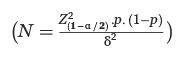 with the expectation of 164 participants, which was rounded up to 170 due to potential nonrespondents. Since the study involved an observational cohort, we calculated that a final sample size of 170 patients would confer sufficient power and allow for statistical analysis at the P value level of .05 (2-tailed) with a 95% confidence level, accounting for potential nonresponder dropout.
The sample consisted of patients with a diagnosis of schizophrenia per International Classification of Diseases, Eleventh Revision (ICD-11) criteria14 for less than 5 years who were aged 18–60 years. Criteria for exclusion consisted of individuals with major psychiatric comorbidities or insufficient capacity to cooperate. Patients with active suicidal ideas, violent and uncooperative behavior, or intellectual disability were excluded from the study. Consecutive patients diagnosed with schizophrenia and meeting inclusion criteria were recruited from the outpatient and inpatient departments. After obtaining informed consent, demographic and clinical data were collected. Vital signs and baseline laboratory investigations (complete blood count, serum electrolytes, renal and liver function tests, lipid profile, fasting blood sugar, and electrocardiogram) were recorded. Study measures included the following standard instruments: Positive and Negative Syndrome Scale (PANSS)15 for the symptom severity in schizophrenia; Hamilton Anxiety Rating Scale (HAM-A)16 for anxiety symptoms and its severities; Hamilton Depression Rating Scale (HAM-D)17 for depression symptoms and their severities; World Health Association Alcohol, Smoking and Substance Involvement Screening Test Version 3.018 (ASSIST) for substance involvement risk; and Abnormal Involuntary Movement Scale (AIMS)19 for extrapyramidal symptoms (EPS).
Statistical Analysis
Frequencies were calculated in Excel, and analyses were performed using IBM SPSS v.23. For continuous variables, we calculated mean and SD or median and interquartile range. Categorical variables were expressed as n (%). Besides the bivariate correlations, a multivariate regression procedure was also applied as a stepwise method to find independent predictors of anxiety and depression severity. The analysis was controlled for confounders thought to influence the return to work, namely, age, gender, social class, and type of schizophrenia. The multivariate model, which was fitted on the entire cohort, was intended to give greater insight in understanding how comorbid symptoms would relate with severity of schizophrenia.
RESULTS
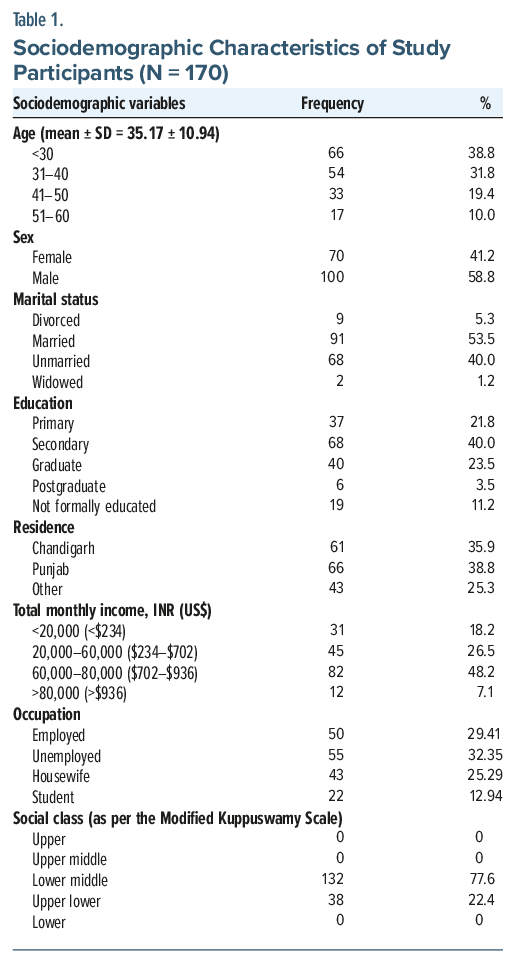
One hundred seventy patients with early-phase schizophrenia (ICD-11 criteria; illness duration less than 5 years) were included. The average age of the participants was 35.17 ± 10.94 years, and most were male (58.8%). Most patients (94.1%) had a gradual onset of the disease, and 85.3% had a continuous fluctuating course. Availability of sociodemographic and clinical variables did not reflect any significant difference between early-phase and more chronic presentations, supporting the notion that this cohort represents a typical early-phase schizophrenia population.
Clinical data also showed high rates of anxiety (70.6%) and depressive symptoms (16.5%), as well as substance use, especially tobacco (31.2%) and alcohol (12.9%). Notably, anxiety and depressive symptoms were significantly correlated with PANSS score, whereas substance use was not associated with the severity of schizophrenia (contrary to previous studies), indicating the need for further research.
Sociodemographic Characteristics
Table 1 presents the sociodemographic characteristics of the 170 participants diagnosed with schizophrenia. We further explored the impact of social class and schizophrenia subtype on comorbidities. Social class was assessed using the Modified Kuppuswamy Scale, and the findings showed no meaningful differences of anxiety or depression prevalence among social class categories. Schizophrenia subtypes (ICD-11) were also assessed, and although anxiety and depression were relatively consistent across diagnoses, additional investigations into subtype-derived comorbidity patterns could inform this area further. The results indicate that those factors may be associated with symptom presentation, but preexisting characteristics do not appear to strongly impact severity association between schizophrenia and comorbidity in this expanded cohort. The effects of schizophrenia subtype on comorbidity patterns need to be further examined in future studies.
Clinical Characteristics
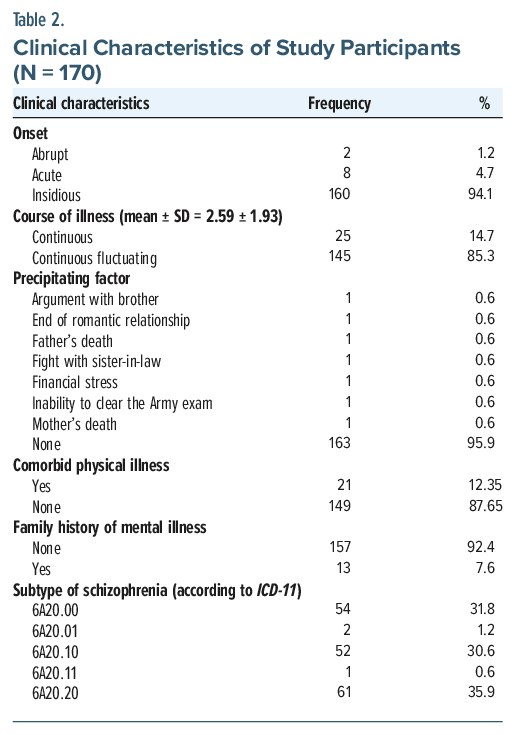
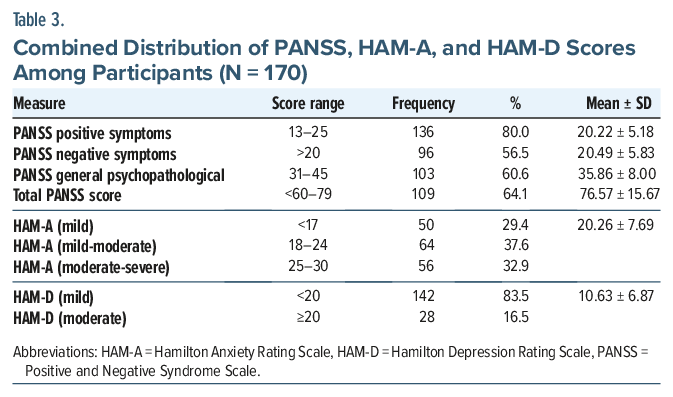
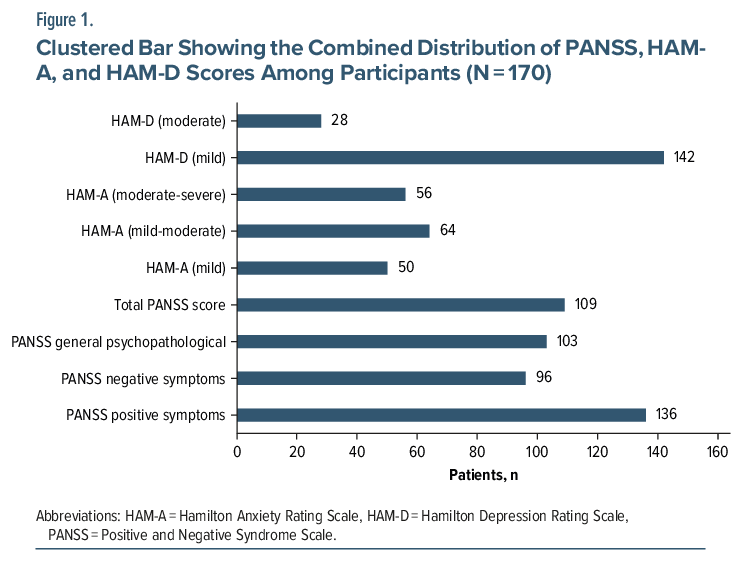
Table 2 presents the clinical features of the participants. Table 3 and Figure 1 represent the clinical assessment of the study participants (N = 170), which revealed moderate to severe symptomatology in schizophrenia, along with high rates of comorbid anxiety and depressive symptoms.
Substance Use Profile (ASSIST)
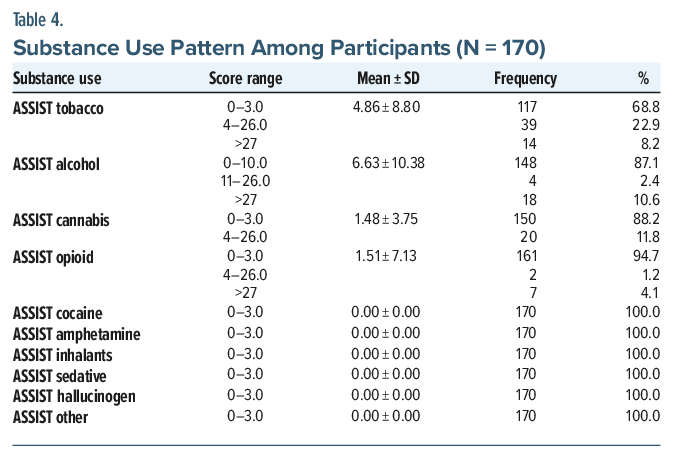
Substance use was prevalent, especially tobacco (31.2%) and alcohol (12.9%) use. Cannabis use was reported by 11.8% of patients, while opioids were used by 5.3%, as shown in Table 4.
AIMS Score
A notable finding in this study was that all 170 participants had an AIMS score of 0, indicating the absence of EPS in the sample population.
Correlation of PANSS Scores and Comorbid Symptoms
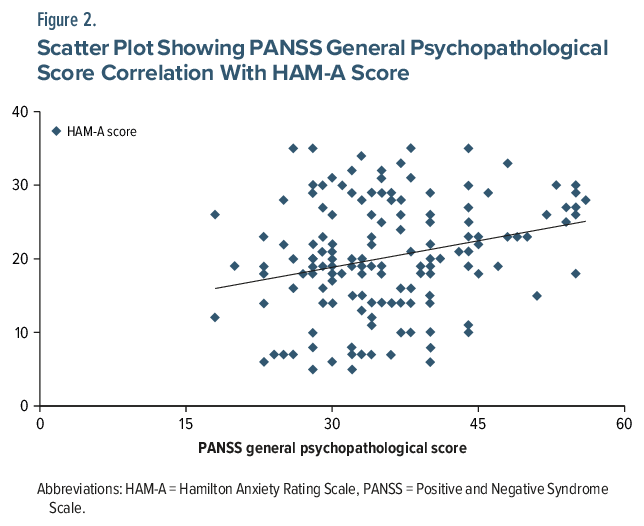
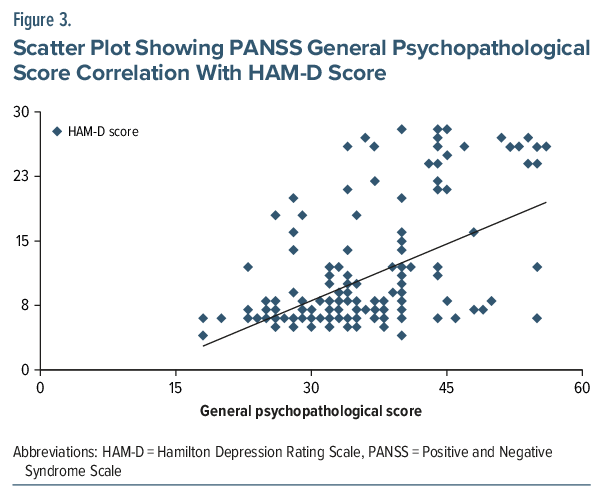
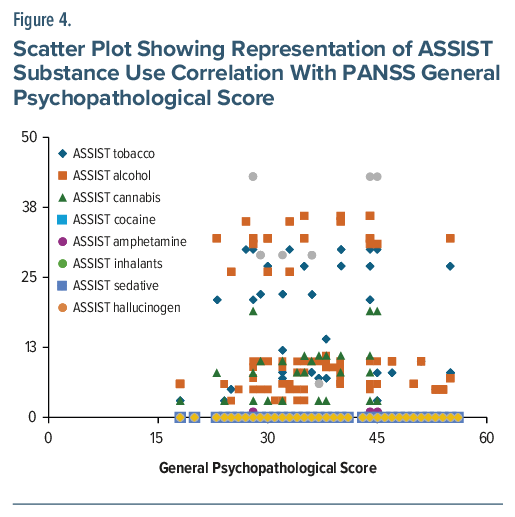
Spearman correlations were undertaken to examine associations between PANSS scores and comorbid symptoms. HAM-A scores weakly but significantly correlated with PANSS total (ρ=0.219, P= .004), negative (ρ=0.174, P=.023), and general psychopathology scores (ρ=0.227, P=.003). HAM-D scores showed moderate correlations with all PANSS domains: total (ρ=0.394), positive (ρ=0.242), negative (ρ=0.279), and general (ρ=0.439); all P<.001. HAM-A correlations were statistically significant but clinically weak, with effect sizes in the weak range (ρ<0.30). The correlations were clinically meaningful and moderate in strength, especially with the PANSS general (r = 0.35) and negative symptom scores (r=0.33), suggesting a stronger clinical association. No statistically significant correlation was observed between substance use (tobacco, alcohol, cannabis, or opioids) and PANSS scores (P >.05 for all), as depicted in Figure 2, Figure 3, and Figure 4.
All 170 participants had an AIMS score of 0, indicating no observed EPS. This finding may seem implausible given the sample size and clinical context. However, this result is likely due to the prescreening process, in which patients with significant EPS were screened out from the study. Additionally, all participants were receiving treatment with atypical antipsychotics, which are known to have a lower incidence of EPS. This methodological approach may have contributed to the absence of EPS in the sample, and future studies may consider including patients with EPS for a more representative clinical profile.
With the large sample size (N=170), the P values for the anxiety symptoms (HAM-A) were significant at a .01 level, but effect sizes were small, indicating that although there was a statistical association between anxiety scores and schizophrenia symptom severity, they had little notable clinical implication (eg, ρ=0.174, indicating that anxiety symptoms account for only 3% of the variance in PANSS negative symptoms). Such a finding does not establish any meaningful clinical association, and weak correlations should be reevaluated for their clinical relevance. By contrast, depression scores (HAM-D) displayed more robust and clinically meaningful correlations by associating across all PANSS domains, which is consistent with the schizophrenia literature.
DISCUSSION
The current study examined self-reported anxiety, depressive symptoms, and substance use and their association with illness severity among patients with schizophrenia. The results demonstrate that prevailing comorbid anxiety and depression are prevalent, and the higher PANSS scores associated with the presence of these conditions indicates an urgent need for integrated mental health care. Of note, although anxiety demonstrated a statistically significant association with PANSS scores, its clinical relevance was marginal, with small effect sizes (ρ<0.30). This highlights the need for more rigorous clinical evaluation of how debilitating anxiety actually is in terms of its impact on schizophrenia, which may not be as significant as previously believed.
The demographic profile revealed a young, predominantly male sample, consistent with known epidemiologic trends for schizophrenia, which typically manifests in early adulthood with higher prevalence in males.14–16 Most patients (94.1%) had an insidious onset and a continuous, fluctuating course (85.3%), aligning with the chronic nature of the disorder. Additionally, 12.35% of participants had a comorbid physical illness, reinforcing the well-documented association between schizophrenia and other psychiatric or medical conditions.17–20 The presence of family history in 7.6% of cases suggests a genetic predisposition, further supported by studies highlighting familial aggregation in schizophrenia.21 A total of 70.6% of participants exhibited anxiety symptoms, including one-third of the sample with moderate to severe daytime anxiety symptoms. We detected significant associations between HAM-A scores and PANSS total, negative, and general psychopathology subscales (all P <.01), but the weak effect sizes (ρ=0.174–0.227) suggest that these findings are statistically detectable yet not clinically meaningful. Anxiety’s role in aggravating schizophrenia severity, therefore, needs to be reevaluated as a coexisting condition in early-phase schizophrenia. These findings reinforce the clinical need for assessment of depressive symptoms in patients with schizophrenia. The findings of the index study are supported by previous research and highlight the high prevalence and clinical significance of anxiety comorbidity in schizophrenia.4–6 The consistent association between anxiety symptoms and increased PANSS scores in the index study reinforces the notion that anxiety significantly worsens the overall symptomatology in schizophrenia. Furthermore, the current study’s observation of higher anxiety levels in patients with longer illness duration supports the hypothesis that anxiety symptoms may progressively emerge throughout the illness. The co-occurrence of anxiety with schizophrenia has been linked to increased psychotic symptom severity, particularly in domains such as persecutory delusions and auditory hallucinations. Anxiety symptoms also exacerbate cognitive dysfunction, contributing to difficulties in attention, executive functioning, and working memory, all of which are already impaired in schizophrenia.4 HAM-D scores moderately correlated with all PANSS domains, and 16.5% of patients experienced depressive symptoms. These findings are consistent with previous literature, suggesting that depression is clinically important in relation to severity of schizophrenia. Moderate effect sizes (ρ=0.242–0.439) indicate that depression is a strong modifier of the positive, negative, and general psychopathology symptoms of schizophrenia. This association aligns with studies indicating depression’s impact on increased suicidality, poor adherence, and higher hospitalization rates.3,7 Notably, the study highlighted that depressive symptoms are more prevalent in the early stages of schizophrenia and are associated with increased suicidal ideation and poorer functional outcomes. These findings emphasize the importance of screening and interventional models that target psychotic and depressive symptoms concurrently, improving patient care and outcomes. But, in view of the weak correlations of anxiety with schizophrenia severity, clinical management recommendations should prioritize depressive symptoms, which correlate more strongly with schizophrenia severity. The effect of anxiety may need more refined treatment approaches early in the disease process.22
Substance use included tobacco (31.2%), alcohol (12.9%), cannabis (11.8%), and opioids (5.3%), but there was no significant correlation with PANSS scores. This finding is interesting, particularly given research suggesting substance use is relatively tightly linked with schizophrenia severity. The finding being null could be due to the ASSIST tool being oriented on risk (rather than formal SUDs), the low prevalence of some drugs, and severely ill patients having been excluded who are more likely to show a substance-severity link. Additional investigation into this null result is required to explore whether factors such as culture, access to treatment, or the duration of illness could account for these findings. This differs from prior findings,9,10 possibly due to sample characteristics or exclusion criteria. But certainly, the presence of SUDs in patients with schizophrenia is associated with exacerbation of psychotic symptoms, increased hospitalization rates, and poorer overall prognosis. These findings highlight the critical need for integrated treatment strategies that concurrently address both psychotic and substance use disorders to enhance patient outcomes.23
The study findings show the importance of assessing multiple domains of psychopathology to implement comprehensive treatment planning. The study underscores the importance of screening comorbidities using the HAM-A, HAM-D, and ASSIST tools. Integrated care models are essential, particularly in resource-limited settings like India, where fragmented services hinder holistic treatment.11,12
Another notable observation in the current study was the differential impact of comorbidities on schizophrenia symptoms. While anxiety and depression primarily influenced positive symptoms and general psychopathology scores (Figures 2 and 3), substance use had a more pronounced effect on negative symptoms and overall functional outcomes (Table 3 and Figure 4). This nuanced understanding of how comorbid conditions interact with different symptom domains can guide the development of personalized treatment strategies tailored to the unique needs of each patient.
The present study provides valuable insights into the prevalence and impact of comorbid psychiatric conditions in schizophrenia patients within the Indian health care context. It highlights the need for integrated mental health care models that address psychotic and neurotic symptoms and substance use simultaneously. Routine screening for anxiety, depression, and substance use, along with targeted pharmacologic and psychosocial interventions, can improve clinical outcomes and quality of life.
Causal inference cannot be made from this study owing to its cross-sectional design, which is a limitation. The study did not consider the medication history (history of antipsychotics, antidepressants, and anxiolytics) for analyses performed; therefore, this is also mentioned as a limitation. We found no data allowing for an assessment of bidirectional relationships between anxiety and schizophrenia severity, and the temporal ambiguity in prioritizing comorbidities versus incipient schizophrenia remains unsolved.5 In addition, given the absence of longitudinal follow-up, the long-term consequences of anxiety and depression with regard to the evolution of schizophrenia are unclear. Furthermore, the sample was drawn from a tertiary care center in North India, which may limit generalizability to other populations. Additionally, the study did not account for ongoing psychopharmacologic treatments (especially antipsychotics, antidepressants, and anxiolytics), which could affect both PANSS and HAM-A/HAM-D scores. However, this methodological gap is relevant, as reported symptom severity may be affected by commonly used pharmacologic side effects and interactions. Future studies assigning the paradoxical roles of comorbidities should account for medication use to better understand these comorbidities. Also, the lack of longitudinal follow-up restricts insights into how these comorbidities affect long-term treatment outcomes and whether the comorbidity evolves differently over time in early-versus chronic-phase schizophrenia.
As such, the cross-sectional design of this study precludes causal inference. It is unknown, therefore, whether anxiety and severity of the other schizophrenia symptoms influence each other bidirectionally or if greater severity of psychotic symptoms leads to more anxiety. The temporal ambiguity of comorbidities in early-phase schizophrenia makes it difficult to determine whether depressive symptoms are part of schizophrenia or represent comorbid depresssive disorder. Future longitudinal studies should assess temporal relationships and causality between these comorbidities in schizophrenia.
CONCLUSION
Accordingly, this study adds to the understanding of psychiatric comorbidity patterns among patients with early-phase schizophrenia in a North Indian tertiary care teaching hospital. The study established a burden of anxiety (70.6%) and depressive symptomatology (16.5%), where depression is found to be clinically meaningful in relation to symptom severity in schizophrenia. At the same time, anxiety symptoms, although statistically significant, were weakly related and likely clinically relevant. These results support the idea that comorbid psychiatric illnesses, most notably depression, still add considerably to the clinical burden of schizophrenia. Despite frequent reporting of substance use—particularly tobacco (53.6%), alcohol (19.4%), and cannabis (30.8%)—no statistically significant associations were noted for severity of substance use with PANSS scores. This null finding is contrary to existing literature and must be explored further, especially with a goal of understanding the impact that cultural, treatment access/cost/uptake, or illness duration factors have on early-phase schizophrenia. Nevertheless, the presence of substance use remains clinically important due to its potential impact on treatment adherence and relapse.
Clinically, the findings underscore the need for regular screening of depression based on a common validated instrument such as the HAM-D implicating a clinically significant correlation with severity of schizophrenia. Although HAM-A screening for anxiety is relevant, the weak association of HAM-A score with schizophrenia indicates that early-phase schizophrenia may require treatment strategies other than clinical management of anxiety. Early detection can facilitate adjusted prognosis assessment and personalized treatment plans, thereby enhancing the therapeutic effect. The findings highlight how the whole spectrum of psychiatric needs must be considered in integrated care models, particularly comorbidity with depression in early-phase schizophrenia, from a public health perspective. They should include pharmacologic and psychosocial therapies (a comprehensive management) with special emphasis on anxiety and depression counseling, particularly during the initial stages of illness. The culturally appropriate, task-shifting integrative approaches that utilize pharmacotherapy and psychological and social support systems are particularly needed in low-resource settings such as India. We particularly recommend attention to depression as a clinically relevant factor influencing the severity of schizophrenia, while anxiety may deserve more targeted and individual interventions. These interventions can enhance long-term recovery, promote patient engagement, and improve the overall quality of life in individuals living with schizophrenia.
Article Information
Published Online: August 20, 2026. https://doi.org/10.4088/PCC.26m04210
© 2026 Physicians Postgraduate Press, Inc.
Submitted: February 10, 2026; accepted May 14, 2026.
To Cite: Pandey P, Sidana A, Arora P. Prevalence of anxiety, depressive symptoms, and substance use in schizophrenia. Prim Care Companion CNS Disord 2026;28(4):26m04210.
Author Affiliations: Department of Psychiatry, Government Medical College and Hospital, Chandigarh, India (Pandey, Sidana); Department of Psychiatry, Maharishi Markandeshwar Institute of Medical Sciences and Research, Mullana, India (Arora).
Corresponding Author: Prinka Arora, MD, Department of Psychiatry, Maharishi Markandeshwar Institute of Medical Sciences and Research, Mullana, India ([email protected]).
Financial Disclosure: None.
Funding/Support: None.
Acknowledgement: The authors thank the patients who participated in the study and faculty of the Department of Psychiatry, Government Medical College and Hospital, Chandigarh, India.
Clinical Points
- Depression is a clinically relevant factor influencing the severity of schizophrenia, while anxiety may deserve more targeted and individual interventions.
- In integrated care models, the whole spectrum of psychiatric needs must be considered, particularly comorbidity with depression in early-phase schizophrenia, from a public health perspective.
References (23)

- World Health Organization. Schizophrenia. Geneva: WHO; 2022. https://www.who.int/news-room/fact-sheets/detail/schizophrenia
- Gururaj G, Varghese M, Benegal V, et al. National Mental Health Survey of India, 2015–16: Prevalence, Patterns and Outcomes. 129. Bengaluru: NIMHANS Publication No.; 2016.
- Ulas H, Aydin A, Guney E, et al. Comorbid anxiety disorder and quality of life in patients with schizophrenia. Psychiatry Investig. 2017;14(6):682–688.
- Huppert JD, Weiss KA, Lim R, et al. Quality of life in schizophrenia: contributions of anxiety and depression. Schizophr Res. 2001;51(2–3):171–180. PubMed CrossRef
- Yapici E, Kora K, Aydemir O, et al. Anxiety disorders in schizophrenia. Eur Psychiatry. 2013;28(Suppl 1):1. PubMed
- McGorry PD, Hartmann JA, Spooner R, et al. Beyond the "at risk mental state" concept: transitioning to transdiagnostic psychiatry. World Psychiatry. 2018;17(2):133–142. PubMed CrossRef
- Zisook S, McAdams LA, Kuck J, et al. Depressive symptoms in schizophrenia. Am J Psychiatry. 1999;156(11):1736–1743. PubMed CrossRef
- Degenhardt L, Hall WD. The relationship between tobacco use, substance use disorders and mental health: results from the World Mental Health Surveys. Lancet Psychiatry. 2014;1(3):221–229.
- Chakraborty K, Basu D, Kumar KG. Substance abuse in schizophrenia: a study from India. Subst Use Misuse. 2014;49(1–2):14–25.
- Goodwin RD, Lyons JS, McNally RJ. Panic attacks in schizophrenia. Schizophr Res. 2002;58(2–3):213–220. PubMed CrossRef
- Fusar-Poli P, Salazar de Pablo G, Correll CU, et al. Prevention of psychosis: advances in detection, prognosis, and intervention. JAMA Psychiatry. 2020;77(7):755–765. PubMed CrossRef
- Akerman M, Bessaha ML, El-Bassel N. Co-occurring mental illness and substance use disorders among individuals with schizophrenia. Curr Psychiatry Rep. 2018;20(8):1–10. PubMed
- Lemeshow S, Hosmer DW, Klar J, et al. Adequacy of sample size in health studies. World Health Organization; 1990:1–4.
- World Health Organization. International Classification of Diseases for Mortality and Morbidity Statistics (11th revision). Geneva: WHO; 2019.
- Kay SR, Opler LA, Lindenmayer JP. The Positive and Negative Syndrome Scale (PANSS): rationale and standardisation. Br J Psychiatry. 1989;155(7):59–65. PubMed
- Hamilton M. A rating scale for depression. J Neurol Neurosurg Psychiatry. 1960;23(1):56–62. PubMed CrossRef
- Hamilton M. The assessment of anxiety states by rating. Br J Med Psychol. 1959;32:50–55. PubMed CrossRef
- WHO ASSIST Working Group. The Alcohol, Smoking and Substance Involvement Screening Test (ASSIST): development, reliability, and feasibility. Addict Abingdon Engl. 2002;97(9):1183–1194. PubMed CrossRef
- Guy W. ECDEU Assessment Manual for Psychopharmacology. US Department of Health, Education, and Welfare, Public Health Service, Alcohol, Drug Abuse, and Mental Health Administration, National Institute of Mental Health, Psychopharmacology Research Branch, Division of Extramural Research Programs; 1976.
- Buckley PF, Miller BJ, Lehrer DS, et al. Psychiatric comorbidities and schizophrenia. Schizophr Bull. 2009;35(2):383–402. PubMed CrossRef
- Sullivan PF, Daly MJ, O’Donovan M. Genetic architectures of psychiatric disorders: the emerging picture and its implications. Nat Rev Genet. 2012;13(8):537–551. PubMed CrossRef
- Upthegrove R, Marwaha S, Birchwood M. Depression and schizophrenia: cause, consequence, or a trans-diagnostic issue?. Schizophr Bull. 2017;43(2):240–244. PubMed CrossRef
- Regier DA, Farmer ME, Rae DS, et al. etal. Comorbidity of mental disorders with alcohol and other drug abuse: results from the Epidemiologic Catchment Area (ECA) study. JAMA Psychiatry. 1990;264(19):2511–2518. PubMed
Please sign in or purchase this PDF for $40.