
Abstract
Importance: Daily fantasy sports (DFS) have rapidly become a major component of the global gambling industry, with platforms offering users the opportunity to draft fantasy teams and compete for real monetary rewards based on real-world sports performance. This article compares India’s DFS expansion with current US trends, examining regulatory environments, market dynamics, and mental health implications. Emphasis is placed on vulnerable groups, including adolescents, individuals with preexisting psychiatric conditions, and populations with socioeconomic disadvantage. The analysis explores pathways linking DFS engagement to addiction risk and related psychological harms, with attention to contextual cultural factors.
Observations: Evidence from India indicates that DFS participation can escalate involvement in additional betting activities and contribute to mental health problems such as compulsive gambling behaviors, anxiety, and stress-related disorders. These patterns offer insights for US policymakers and public health stakeholders as they respond to the rapid growth of online sports wagering. Cross-national differences in cultural attitudes, regulatory enforcement, and media integration are examined to identify strategies with potential for effective adaptation.
Conclusions: The findings underscore the need for evidence-based regulatory approaches, targeted public health interventions, and culturally tailored awareness initiatives to mitigate gambling-related harms in both countries. Recommendations are provided to guide policymakers, clinicians, and industry stakeholders in protecting vulnerable populations amid the continued expansion of DFS and online sports betting.
Prim Care Companion CNS Disord 2026;28(3):25nr04142
Author affiliations are listed at the end of this article.
From the Editors

Are you a healthcare provider?
Add your NPI to personalize your JCP experience.
Daily fantasy sports (DFS) have rapidly become a major component of the global gambling industry, with platforms offering users the opportunity to draft fantasy teams and compete for real monetary rewards based on real-world sports performance. The meteoric rise of DFS has been particularly evident in India and the United States. In India, DFS has expanded despite the country’s strict gambling laws, particularly the Public Gambling Act of 1867, which prohibits most forms of gambling. In the United States, the growing acceptance of online gambling, including DFS, is facilitated by state-level legalizations, which are reshaping the gambling landscape.
DFS operators argue that their platforms are not gambling but rather games of skill. This distinction allows them to circumvent legal restrictions in many jurisdictions. However, growing concerns about the impact of DFS on mental health, particularly in vulnerable populations, have raised important questions about the long-term consequences of this form of betting.
This article examines the rise of DFS in both India and the United States, exploring the mental health risks, particularly addiction and related psychological disorders. It also investigates the unique cultural and social dynamics that may influence DFS participation and the subsequent health impacts in these 2 countries.
SOCIETAL AND LEGAL CONTEXT OF DFS IN INDIA AND THE UNITED STATES
Expansion of DFS Markets in India
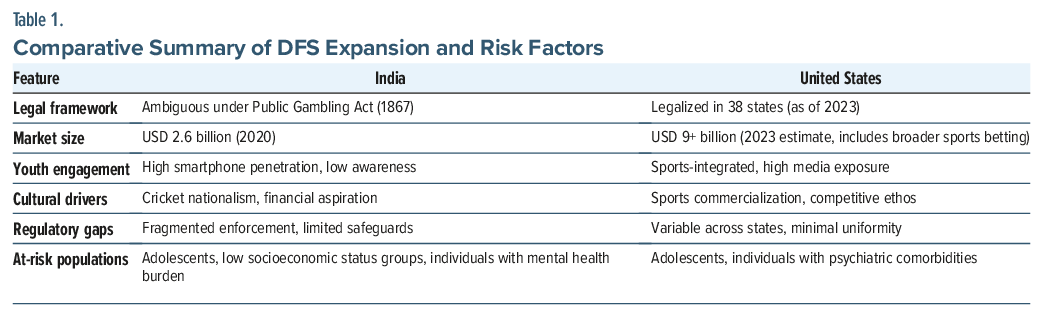
DFS in India has witnessed explosive growth, particularly since the introduction of platforms such as Dream11 in 2008. By 2020, the DFS industry in India was valued at approximately $2.6 billion, with a user base growing more than 25 times since 2016.1 India’s digital ecosystem, bolstered by mobile internet access, has enabled these platforms to reach millions of people, particularly young adults and adolescents.1 Despite legal ambiguities surrounding gambling in India, DFS platforms operate by claiming that their services are based on skill rather than chance, allowing them to sidestep many legal prohibitions.2
Regulatory Transformation and Market Integration in the United States
In the United States, the landscape is markedly different. Online sports betting, including DFS, has been legalized in over 38 states as of 2023.3 The landmark Supreme Court decision in 2018 overturned the federal ban on sports betting, opening the door for individual states to legalize and regulate gambling.3 Since then, DFS has experienced significant growth, especially with the mainstream integration of platforms such as FanDuel and DraftKings into professional sports broadcasts. The US market for DFS is expected to continue to expand, with revenue projections for 2023 surpassing $9 billion.3
The convergence of sports, media, and gambling has created a high-profile ecosystem in the United States that attracts millions of participants. With this growth, however, concerns about gambling addiction, mental health disorders, and the long-term social costs of gambling-related harms have increased. Table 1 provides a summary of DFS expansion and risk factors.
MENTAL HEALTH RISKS ASSOCIATED WITH DFS
The rapid expansion of DFS has raised concerns regarding potential mental health risks, particularly among adolescents and individuals with underlying psychiatric vulnerabilities. While DFS platforms are often framed as entertainment or skill-based activities, their use of financial incentives and repeated engagement may increase risk for problematic behaviors over time.
Mental health risks associated with DFS participation do not arise from a single pathway. Rather, engagement occurs within a broader context that includes individual vulnerability, platform design features that reinforce repeated participation, and social and developmental factors. Adolescents and individuals with preexisting anxiety, depression, or impulse-control difficulties may be especially susceptible to these influences.
Evidence from the broader gambling literature suggests that the relationship between gambling behaviors and mental health is frequently bidirectional. Preexisting psychiatric symptoms may increase risk for problematic engagement, while sustained participation may contribute to worsening psychological distress, including stress, anxiety, and gambling-related behaviors. These dynamics highlight the importance of examining DFS participation within a psychiatric and public health framework.
The sections that follow examine specific contributors to mental health risk in greater detail, including platform-based reinforcement mechanisms, nonpsychiatric consequences, and psychiatric risk factors and outcomes.
PLATFORM DESIGN AND REINFORCEMENT MECHANISMS
The design and structure of DFS platforms play a central role in promoting repeated engagement and sustained participation. DFS platforms incorporate features commonly observed in gambling and gaming environments, including frequent contests, immediate outcomes, and variable rewards. These design elements may reinforce repeated use and increase the likelihood of prolonged engagement over time.4,5
DFS contests are typically organized around short cycles, allowing users to enter multiple competitions within a brief period. Outcomes are determined quickly, with wins, losses, and near-miss results providing frequent feedback. Leaderboards, rankings, and performance metrics further enhance engagement by encouraging users to compare their performance with others. Together, these features may increase time spent on platforms and promote continued participation.
Gamification is another prominent component of DFS platform design. Visual cues, progress indicators, bonuses, and promotional incentives are commonly used to maintain user interest and encourage repeated entry into contests. In some cases, platforms provide notifications or time-limited offers that prompt users to return and participate again. These strategies may create a sense of urgency and anticipation that reinforces ongoing engagement.
The combination of financial stakes and variable outcomes is particularly relevant to reinforcement processes.6 Intermittent rewards, including occasional wins or narrowly missed outcomes, may encourage continued participation even when overall financial returns are inconsistent. Over time, these reinforcement patterns can make disengagement more difficult, particularly in environments that emphasize frequent play and rapid feedback.7,8 DFS participants have also reported engagement in a substantially broader range of gambling activities than non-DFS gamblers, a pattern associated with greater gambling frequency and severity.9
While these design features are not inherently harmful, their widespread use within DFS platforms raises concerns regarding their potential contribution to excessive engagement. When combined with high accessibility and social normalization, such features may increase exposure to risk among susceptible users. For these reasons, platform design represents an important consideration in evaluating the public health implications of DFS participation.
ADOLESCENT APPEAL AND SOCIAL PRESSURES
Adolescents represent a particularly vulnerable population with respect to DFS participation due to high levels of digital engagement and ongoing social and developmental processes. DFS platforms are embedded within sports culture and online environments that are already highly salient to adolescents, increasing the likelihood of exposure and interest.8,10 The combination of competition, sports fandom, and the possibility of financial reward contributes to the appeal of DFS among younger users. Although data specific to DFS participation among adolescents remain limited, evidence from the broader literature on digital wagering suggests that online gambling among youth is not uncommon. A systematic review found that approximately 5%–15% of adolescents report engaging in online gambling, with online participation associated with a higher risk of problematic gambling behaviors compared with offline gambling.11 These findings highlight the potential risks associated with digitally mediated wagering environments and underscore the relevance of examining emerging platforms such as DFS within adolescent populations.
In India, adolescent engagement with DFS has increased alongside widespread smartphone access and the cultural prominence of cricket. DFS platforms frequently align participation with major sporting events and popular leagues, framing engagement as both a demonstration of sports knowledge and a socially valued activity. For some adolescents, particularly those facing financial constraints, DFS may be perceived as a potential avenue for monetary gain. While empirical data characterizing socioeconomic patterns of adolescent DFS participation remain limited, the perceived appeal of financial reward may influence engagement in contexts where economic mobility is highly valued.
In the United States, adolescents are exposed to DFS through extensive media integration and normalization within professional sports ecosystems. Advertising during televised games, sponsorships, and digital promotions contribute to the perception of DFS as a routine component of sports consumption.8,12 Social influences, including peer participation and online communities centered around sports and fantasy competition, may further reinforce interest among adolescents. Although financial motivation may also be present, participation in the US context is often framed around entertainment, competition, and sports expertise rather than direct income generation.
Across both countries, social normalization and peer influence play an important role in shaping adolescent engagement with DFS. Visibility of participation among friends, online communities, and media representations may reduce perceived risk and increase willingness to engage.13–15 Adolescents may be less likely to recognize the potential harms associated with DFS when participation is portrayed as socially acceptable or endorsed by sports figures and digital media platforms.
Together, these social and cultural factors help explain why adolescents may be drawn to DFS platforms and why early engagement can occur prior to full awareness of associated risks. Understanding the social drivers of adolescent participation is essential for informing prevention strategies and regulatory approaches aimed at reducing gambling-related harm among youth.
NONPSYCHIATRIC IMPACTS OF DFS PARTICIPATION
Participation in DFS may be associated with a range of nonpsychiatric consequences that affect adolescents, families, and broader social functioning. These impacts extend beyond mental health outcomes and include financial strain, disruption of academic and developmental processes, and challenges in social relationships. While not all individuals who engage in DFS experience harm, these consequences are particularly relevant for adolescents due to their developmental stage and limited financial autonomy.
Financial harm represents one of the most prominent nonpsychiatric consequences of DFS participation.16 Adolescents typically lack independent income and may rely on parental resources or informal means to support engagement with DFS platforms. Financial losses incurred through repeated participation can place strain on household finances and contribute to conflict within families. In some cases, adolescents may increase participation in an effort to recover losses, further compounding financial stress. These dynamics may be especially consequential in households with limited economic resources.
DFS engagement may also interfere with academic performance and broader developmental processes. Time spent participating in contests, monitoring outcomes, or engaging with related digital content may displace time allocated to schoolwork, extracurricular activities, and rest. Excessive engagement can reduce attention to academic responsibilities and limit participation in activities that support social and cognitive development. During adolescence, such disruptions may have lasting implications for educational attainment and social functioning.
Social consequences can also arise in the context of sustained DFS participation. Adolescents who devote significant time and attention to DFS platforms may withdraw from in-person social interactions, family activities, or peer relationships. Reduced engagement in offline social environments may affect the development of interpersonal skills and contribute to social isolation. These nonpsychiatric impacts often interact with other risk factors and may contribute to broader patterns of functional impairment over time.
Together, financial, academic, and social consequences highlight the importance of examining DFS participation beyond psychiatric outcomes alone. These nonpsychiatric impacts represent meaningful sources of harm that may precede or coexist with mental health difficulties and should be considered when evaluating the broader public health implications of DFS engagement among adolescents.3
PSYCHIATRIC RISK FACTORS AND MENTAL HEALTH CONSEQUENCES
In addition to nonpsychiatric impacts, participation in DFS may be associated with a range of psychiatric risks, particularly among individuals with preexisting mental health vulnerabilities. Evidence from the broader gambling and behavioral addiction literature suggests that certain psychiatric conditions may increase susceptibility to problematic engagement with wagering activities.17,18 These vulnerabilities are especially relevant in adolescence, a developmental period characterized by ongoing emotional regulation and impulse control.10,19
Preexisting psychiatric symptoms such as anxiety, depression, heightened impulsivity, and difficulties with emotional regulation may increase the likelihood of initiating DFS participation and contribute to challenges in moderating engagement.3,10 Population-based case-control data demonstrate a strong association between problem gambling and anxiety disorders, with individuals experiencing gambling problems significantly more likely to meet criteria for an anxiety disorder compared with matched controls in the general population.20 Individuals experiencing psychological distress may engage in DFS as a form of distraction or coping, increasing exposure to repeated wagering behaviors. In these contexts, DFS participation may become more difficult to regulate, particularly when reinforced by competitive or financial incentives.21
Sustained DFS engagement may also contribute to the development or exacerbation of psychiatric symptoms. Population-based data further indicate that DFS participants demonstrate substantially higher levels of problem gambling severity compared with non-DFS gamblers, including significantly greater representation in moderate-risk and problem gambling categories.9 Short-term consequences can include increased stress, anxiety related to financial outcomes, and emotional distress following losses. Over time, repeated engagement and escalating involvement may increase the risk of developing gambling-related disorders, particularly when participation becomes compulsive or interferes with daily functioning. In a representative US sample, individuals who participated in DFS exhibited significantly higher rates of psychiatric distress compared with other gamblers, including approximately a fourfold increase in the odds of past-year suicidal ideation.9 These outcomes may occur alongside or contribute to comorbid mental health conditions.
Importantly, the relationship between DFS participation and mental health appears to be bidirectional. Psychiatric vulnerabilities may increase the likelihood of problematic DFS engagement, while continued participation may worsen existing symptoms or contribute to the emergence of new psychological difficulties. Adolescents may be particularly susceptible to these dynamics due to developmental factors and limited capacity for risk appraisal and impulse regulation.3,17,18
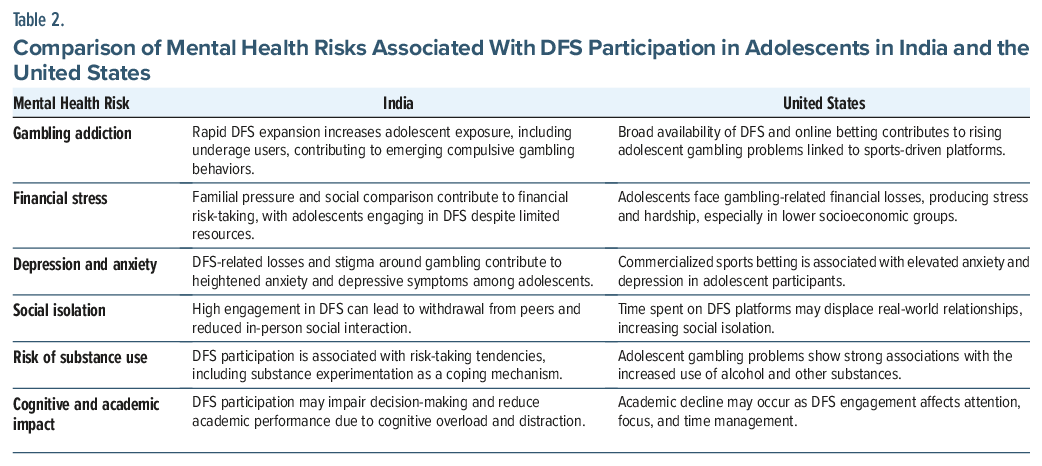
Taken together, these findings highlight the importance of examining DFS participation within a psychiatric and public health framework. Understanding how individual vulnerability and repeated engagement interact is essential for identifying at-risk populations and informing prevention and intervention strategies aimed at mitigating gambling-related harm. Table 2 provides a summary of mental health risks associated with DFS participation in adolescents.
PREVENTION AND INTERVENTION STRATEGIES
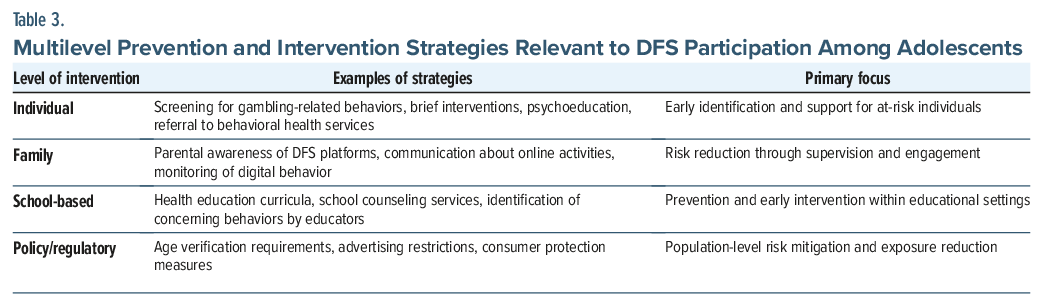
Addressing the potential harms associated with DFS participation requires a coordinated, multilevel approach that includes individual, family and school-based, and policy-level interventions. Given the increasing accessibility of DFS platforms and their integration into digital and sports media environments, preventive strategies are particularly important for adolescents and other vulnerable populations.
Individual-Level Interventions
At the individual level, early identification of problematic DFS engagement is critical. Screening for gambling-related behaviors and risk factors during routine health care encounters may help identify adolescents at risk for excessive or maladaptive participation. Brief interventions, psychoeducation, and referral to behavioral health services may support individuals experiencing difficulty regulating DFS engagement. For adolescents with co-occurring psychiatric conditions, integrated approaches that address both mental health symptoms and gambling-related behaviors may be especially beneficial.
Family and School-Based Interventions
Families and schools play an important role in prevention and early intervention. Parental awareness of DFS platforms and open communication regarding online activities may help reduce risk and promote healthier digital behaviors. Schools may incorporate education on gambling-related risks into existing health curricula or counseling services and provide support for students exhibiting concerning patterns of engagement. School-based mental health services can also facilitate early identification and referral when needed.
Policy and Regulatory Interventions
At the policy level, stronger regulatory oversight may reduce adolescent exposure to DFS and associated harms.3 Measures such as robust age-verification systems, clearer consumer protections, and restrictions on advertising that targets or appeals to youth may help limit risk. Regulatory standards remain variable across jurisdictions, highlighting the need for coordinated public health approaches that balance market growth with protections for vulnerable populations. Collaboration among policymakers, public health professionals, and industry stakeholders is essential for developing and implementing effective safeguards.
Together, these prevention and intervention strategies underscore the importance of addressing DFS participation through a comprehensive public health framework. Multilevel efforts that combine individual support, family and educational engagement, and policy-based protections may help mitigate gambling-related harm as DFS platforms continue to expand. Table 3 provides a summary of prevention and intervention strategies relevant to DFS participation among adolescents.
CONCLUSION
The rapid growth of DFS in both India and the United States presents significant challenges to public health, particularly in terms of mental health and addiction risks. Adolescents, already vulnerable to mental health issues, are at particular risk of developing gambling-related disorders. The increasing normalization of DFS and other forms of online gambling requires urgent attention from policymakers, public health officials, and the wider community.
To mitigate the risks associated with DFS, governments and regulatory bodies must implement strict measures to limit access to these platforms by minors and ensure compliance with age-verification standards. Public health campaigns should also focus on raising awareness of the mental health risks associated with DFS participation. Clinical interventions, such as integrating brief gambling risk screenings into pediatric visits, providing school-based counseling, and referral services, are essential to identify and support adolescents at risk. Parental involvement is also critical, with parents receiving school-based education and resources to monitor their children’s online behaviors and engage in open discussion about the potential harms of DFS.
Both India and the United States have much to learn from their experiences in managing the rise of DFS. By sharing knowledge and implementing evidence-based strategies, these countries can help protect vulnerable populations from the harmful effects of gambling while promoting healthier, more sustainable forms of engagement with sports.
Article Information
Published Online: June 25, 2026. https://doi.org/10.4088/PCC.25nr04142
© 2026 Physicians Postgraduate Press, Inc.
Submitted: November 19, 2025; accepted March 16, 2026.
To Cite: Gupta M, Khurana P, Sharma A, et al. Daily fantasy sports as an emerging public health concern: a comparative public health perspective of digital wagering and youth vulnerability. Prim Care Companion CNS Disord 2026;28(3):25nr04142.
Author Affiliations: Loma Linda University, Loma Linda, California (M. Gupta); Mahatma Jyotirao Phoole University, Jaipur, India (Khurana); University of Oklahoma College of Medicine, Oklahoma City, Oklahoma (Sharma); Rutgers New Jersey Medical School, Newark, New Jersey (Rangolia); Department of Psychiatry, Wright State University, Dayton, Ohio (N. Gupta).
Corresponding Author: Mayank Gupta, MD, Loma Linda University, Loma Linda, California ([email protected]).
Financial Disclosure: None.
Funding/Support: None.
Clinical Points
- Widespread access and increasing popularity of daily fantasy sports (DFS) in both India and the United States can impact mental health issues, particularly among vulnerable populations such as adolescents, individuals with preexisting mental health conditions, and those from lower socioeconomic backgrounds.
- DFS platforms exploit features designed to promote sustained user engagement, such as intermittent rewards, gamification, and competition, which can foster compulsive behavior and increase mental health implications, particularly relating to gambling addiction.
- Adolescent use of DFS platforms can contribute to issues of financial strain, disrupted social development, and negative self-image.
- Potential strategies to prevent negative consequences of DFS usage include stronger enforcement of regulations and age restrictions, education and awareness, support services, and parental involvement.
References (21)

- Deliwala J. Impact and Growth Potential of Fantasy Sports in India. IJIRT. 2025; 11(10).
- Legality of Online Fantasy Sports League Games. Indian Soc Leg Res. Oct. 2020; 19. https://indiansocietyforlegalresearch.in/2020/10/19/legality-of-online-fantasy-sports-league-games-3/. Accessed April 27, 2025
- Shaffer HJ, Korn DA. Gambling and related mental disorders: a public health analysis. Annu Rev Public Health. 2002;23:171–212.
- Petry NM, Zajac K, Ginley MK. Behavioral addictions as mental disorders: to Be or not to Be?. Annu Rev Clin Psychol. 2018;14:399–423.
- Grant JE, Potenza MN, Weinstein A, et al. Introduction to behavioral addictions. Am J Drug Alcohol Abuse. 2010;36(5):233–241.
- Ronzitti S, Soldini E, Lutri V, et al. Types of gambling and levels of harm: a UK study to assess severity of presentation in a treatment-seeking population. J Behav Addict. 2016;5(3):439–447. PubMed CrossRef
- Griffiths M. Internet gambling: issues, concerns, and recommendations. Cyberpsychology Behav Impact Internet Multimed Virtual Real Behav Soc. 2003;6(6):557–568.
- King D, Delfabbro P, Griffiths M. The convergence of gambling and digital media: implications for gambling in young people. J Gambl Stud. 2010;26(2):175–187.
- Nower L, Caler KR, Pickering D, et al. Daily fantasy sports players: gambling, addiction, and mental health problems. J Gambl Stud. 2018;34(3):727–737.
- Derevensky JL, Hayman V, Gilbeau L. Behavioral addictions: excessive gambling, gaming, internet, and smartphone use among children and adolescents. Pediatr Clin North Am. 2019;66(6):1163–1182.
- Montiel I, Ortega-Barón J, Basterra-González A, et al. Problematic online gambling among adolescents: a systematic review about prevalence and related measurement issues. J Behav Addict. 2021;10(3):566–586.
- Exposure to and engagement with gambling marketing in social media: reported impacts on moderate-risk and problem gamblers - PubMed. Accessed April 27, 2025.
- Potenza MN. Should addictive disorders include non-substance-related conditions?. Addiction. 2006;101(s1):142–151.
- Hing N, Russell A, Tolchard B, et al. Risk factors for gambling problems: an analysis by gender. J Gambl Stud. 2016;32(2):511–534.
- Bonnaire C, Baptista D. Internet gaming disorder in male and female young adults: the role of alexithymia, depression, anxiety and gaming type. Psychiatry Res. 2019;272:521–530.
- Gupta R, Derevensky JL. Adolescents with gambling problems: from research to treatment. J Gambl Stud. 2000;16(2-3):315–342. doi:10.1023/a:1009493200768. CrossRef
- Blaszczynski A, Nower L. A pathways model of problem and pathological gambling. Addiction. 2002;97(5):487–499.
- Richard J, King SM. Annual Research Review: emergence of problem gambling from childhood to emerging adulthood: a systematic review. J Child Psychol Psychiatry. 2023;64(4):645–688.
- Brevers D, Noël X. Pathological gambling and the loss of willpower: a neurocognitive perspective. Socioaffective Neurosci Psychol. 2013;3:21592.
- Sundqvist K, Wennberg P. Problem gambling and anxiety disorders in the general Swedish population – a case control study. J Gambl Stud. 2022;38(4):1257–1268.
- Griffiths M. Gambling addiction on the internet. In: Internet Addiction: A Handbook and Guide to Evaluation and Treatment. John Wiley & Sons, Inc.;2011:91–111.
Please sign in or purchase this PDF for $40.