
Lessons Learned at the Interface of Medicine and Psychiatry
The Psychiatric Consultation Service at Massachusetts General Hospital sees medical and surgical inpatients with comorbid psychiatric symptoms and conditions. During their twice-weekly rounds, Dr Stern and other members of the Consultation Service discuss diagnosis and management of hospitalized patients with complex medical or surgical problems who also demonstrate psychiatric symptoms or conditions. These discussions have given rise to rounds reports that will prove useful for clinicians practicing at the interface of medicine and psychiatry.
Prim Care Companion CNS Disord 2026;28(6):26f04264
Author affiliations are listed at the end of this article.
From the Editors

Are you a healthcare provider?
Add your NPI to personalize your JCP experience.
Have you started to become concerned that more aging veterans are developing mild cognitive impairment (MCI)? Have you been uncertain about how and when they should be evaluated and treated? Have you felt ill-prepared to advise them about their options and the resources available to them in the community? If you have, the following case vignette and discussion should prove useful.
CASE VIGNETTE
Mr A, a 65-year-old man with a history of autoimmune pancreatitis (which had responded to prednisone and pancrelipase), was referred for psychiatric follow-up along with his wife by his primary care provider. Neuropsychological testing had revealed impaired memory (both verbal and nonverbal). He scored 27/30 on the Mini-Mental State Examination (MMSE)1; he missed 3 points related to short-term memory. Laboratory testing (including levels of vitamin B12, folate, vitamin D, human immunodeficiency virus, thyroid-stimulating hormone [TSH], and rapid plasma reagin/Venereal Disease Research Laboratory testing) was unremarkable, and a computed tomographic (CT) study of his head revealed mild cerebellar atrophy as the only abnormality. Based on the history provided by his wife and the results of neuropsychological testing, Mr A was diagnosed with MCI and started on donepezil 5 mg by mouth daily.
Mr A had retired 1 year earlier from his job as an executive, following which he began working part-time at a home improvement store. Although his schedule varied, he managed successfully, aided by a calendar. On occasion, he felt overwhelmed when several customers requested his assistance at the same time. Both he and his wife said that he was handling stress well. However, she reported that Mr A sometimes left the water running in the sink, left items cooking on the stove after food preparation, became confused about names and the ages of grandchildren, repeated stories, and did not seem to remember conversations after more than a few minutes. Occasionally, he had angry outbursts. Neither of his parents had dementia (his father passed away in his early 90s secondary to sepsis), and his mother passed away in her late 70s (secondary to complications of congestive heart failure).
Years earlier, Mr A was the unseat-belted driver in a motor vehicle collision with a bus in which he went headfirst through the windshield and lost consciousness. Almost 20 years ago, a tree fell on his head (which resulted in loss of consciousness). In addition, he fell from a ladder that had collapsed and suffered another traumatic brain injury (TBI). Mr A and his wife reported that he had at least 5 other concussions.
DISCUSSION
Which Health Problems Are Increasingly Experienced By Aging Veterans?
America is aging. The US population is older today than it has ever been.2 This has resulted in a “silver tsunami,” with the baby boomer generation (those born between 1946 and 1964) reaching the age of 65 years. This group represents 18% of the US population, accounting for 60 million people,2 of whom 8 million are veterans. Moreover, they represent nearly half of the entire US veteran population.3
Compared to their civilian peers, veterans frequently face higher rates of chronic and complex physical and mental health conditions, and they develop them earlier in life.4 This is likely linked to the stressors encountered in military service (including strenuous physical activity, deployments to hostile areas, and frequent exposure to environmental toxins).5 Many veterans also suffer from moral injury (ie, harm that results from perpetrating, witnessing, or failing to prevent acts that transgress one’s own values and beliefs), making them feel unworthy of seeking health care services due to feelings of shame and guilt,6,7 which can delay both diagnosis and treatment.
Aging veterans suffer from higher rates and an earlier onset of obesity than civilians. This condition has multiple downstream deleterious effects and gives rise to a host of comorbidities8 (including diabetes and its end-organ complications9). Osteoarthritis is also more common among veterans than civilians,10 and it adversely affects daily function and independent living. Even after accounting for age and lifestyle factors, cardiovascular disease (eg, coronary artery disease [CAD]) and hypertension are also more prevalent in veterans.11 Over one-third (38%) of veterans also started using tobacco products during their military service,12 which, in addition to burn pits and other toxic exposures, contributes to the higher incidence of chronic obstructive pulmonary disease (COPD)13 and the strong association of certain cancers (including prostate and bladder cancer) with veterans.
Older adult veterans suffer from a higher burden of comorbidities,4 and this can result in a greater use of polypharmacy than their civilian counterparts.4,14 Both medical conditions and the medications used to treat them can contribute to cognitive impairment, especially when they are combined with other chronic conditions that are overrepresented in veterans (eg, obstructive sleep apnea [OSA],15 alcohol use disorder,16 and TBIs),17 and polypharmacy that leads to drug-drug interactions.
Unfortunately, individuals with MCI are at increased risk of developing Alzheimer disease (AD) and other dementias.18 This is especially concerning, since a review of Veterans Affairs (VA) health records indicates that the prevalence and incidence of MCI increased sharply after 2010.19
Veterans have a unique risk profile for dementia. Posttraumatic stress disorder (PTSD) is a comorbidity suffered by a significant portion of older veterans. The presence of this disorder can lead to lower levels of cognitive and physical functioning.20 PTSD and dementia appear to have a bidirectional relationship (ie, PTSD predisposes veterans to develop late-onset dementia and dementia increases the risk for delayed-onset PTSD).21
The projected prevalence of US veterans with all types of dementia in FY 2033 is 753,089. This number is nearly 1% higher (+6,635 veterans) than the estimate in FY 2021 (746,454 veterans), according to the VA’s published statistical projections from 2021 and 2023.22 Along with their civilian peers, older veterans are challenged by accessing the health care system while living with disabilities and the complexities of aging.
What Is MCI, and How Is It Screened For and Diagnosed?
MCI occupies a pivotal space in veterans’ health care; it serves as an early marker of neurodegenerative risk and as a signal for the broader demographic wave that is reshaping health care systems, that is, the so-called “silver tsunami.” Revised guidelines from the 2024 National Institute on Aging and the Alzheimer’s Association better characterized the diagnosis and staging of AD across its course: preclinical phase, MCI, and dementia.23 These guidelines incorporated blood-based biomarkers alongside traditional cerebrospinal fluid (CSF) and positron emission tomography (PET) biomarkers, thereby improving accessibility to a biological diagnosis. Unfortunately, although these updates have represented a major advance in the biological definition and staging of AD, guidance for the day-to-day clinical workflow when evaluating older adults who present with prodromal or early cognitive symptoms of MCI or a mild neurocognitive disorder lags behind diagnostic staging.23,24
MCI is a heterogeneous clinical syndrome that may foreshadow the onset of a myriad of neurodegenerative conditions (eg, AD or other AD–related dementias [ADRDs], including vascular contributors to cognitive impairment and dementia, Parkinson disease, frontotemporal lobar degeneration, Lewy body disease, and dementia of mixed etiologies).23,25 The variability in diagnostic criteria and evaluation processes of MCI complicates implementation of clinical guidelines.19,24,26,27
The spectrum of cognitive changes associated with normal aging ranges from normal cognitive decline of aging to pathological conditions. Cognitive functions (such as sustained attention, copying figures, and accessing remote and procedural memories) are generally preserved with aging, whereas divided attention, learning new information, verbal fluency, and reaction time tend to decline gradually. Sensory impairments, decreased muscle bulk, mild postural changes, and psychomotor slowing are also part of the normal aging process. These changes typically evolve slowly, which contributes to the spectrum from normal aging to subjective cognitive decline, to MCI, and eventually to dementia, if progression develops.28
In 2020, the US Preventive Services Task Force issued a statement concluding that the evidence was insufficient to determine if the benefits outweighed the harms of universal screening for cognitive impairment in asymptomatic older adults.27 However, when patients, family members, or clinicians became concerned, a comprehensive clinical assessment was warranted. Although there is no formal universal cognitive assessment screening policy within the Veterans Health Administration (VHA), targeted screening and quality improvement initiatives have been implemented under the Age-Friendly Health Systems (AFHS) framework.29 This preemptive approach is particularly relevant given that nearly half of VHA patients are aged 65 years or older, and age remains the strongest risk factor for AD, ADRD, and MCI.19,30
The AFHS seeks to empower clinicians to align care for every older adult based on their unique health goals and priorities. A proactive approach screens, prevents, identifies, treats, and manages dementia, depression, and delirium for all older veterans.31
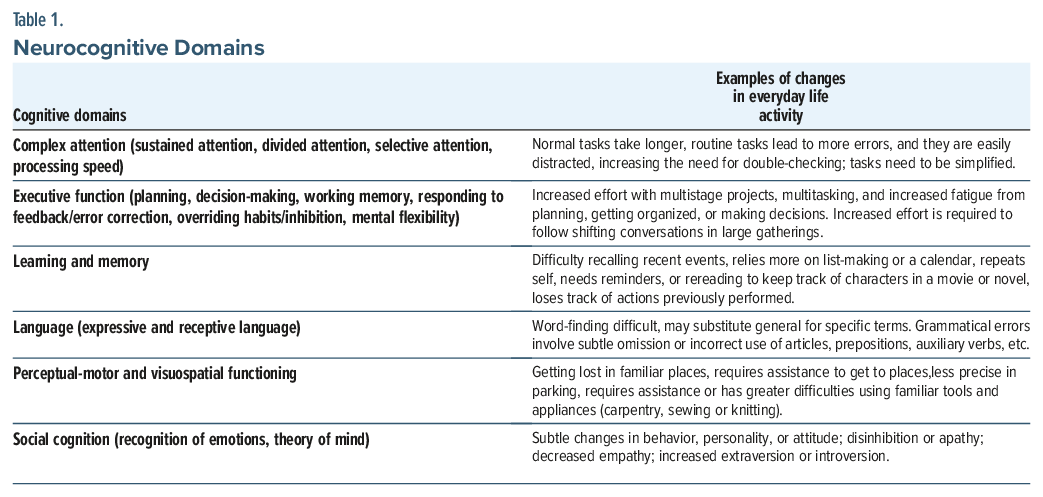
MCI reflects a modest decline from a person’s prior performance in attention, executive functioning, learning and memory, language, perceptual-motor skills, and social cognition (Table 1), based on a patient’s concerns or those of a knowledgeable informant or their clinician. The impairment should be documented through use of standardized neuropsychological tests or some other quantified clinical assessment. However, these neurocognitive deficits do not interfere in a meaningful way with a patient’s independence in social or occupational functioning, although greater effort or use of compensatory strategies may be required. The changes must not occur exclusively in the context of delirium and must not be better explained by another mental disorder (eg, major depressive disorder or schizophrenia).24,25,32,33
MCI can be further classified into amnestic and nonamnestic subtypes, each of which may involve single or multiple neurocognitive domains: single-domain amnestic MCI, single-domain nonamnestic MCI, multidomain amnestic MCI, and multidomain nonamnestic MCI.24,26 Single-domain MCI is more common than multiple-domain MCI. Nonamnestic subtypes involve deficits in executive function, while amnestic subtypes primarily involve memory deficits and are associated with a higher risk of progression to AD.24,26 Because of the patient’s ability to function independently, cognitive changes are often attributed to normal aging, which leads to underdiagnosis, underreporting, and delays in care. Once cognitive and behavioral symptoms begin to interfere with independence in daily activities, the diagnosis transitions to dementia.25,33,34
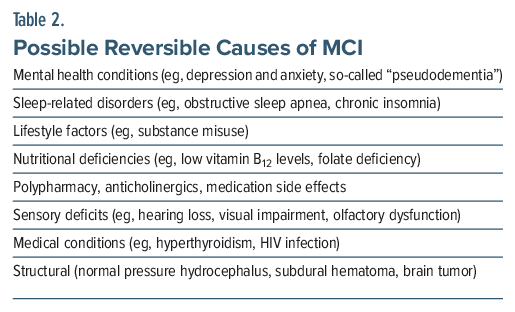
To address barriers in making the diagnosis of MCI and dementia, the Alzheimer’s Association published the Diagnostic Evaluation, Testing, Counseling, and Disclosure of Suspected Alzheimer’s Disease and Related Disorders Clinical Practice Guideline in 2024,25 which has a focused patient-centered approach that is applicable across all clinical settings and outlines a structured diagnostic process in 3 steps: (1) determining the overall level of cognitive impairment, (2) characterizing the patient’s cognitive-behavioral syndrome, and (3) developing a differential diagnosis that includes reversible and contributing causes (Table 2).24,25.
The guideline highlights the importance of partnering with the patient and/or their care partner to establish shared goals and to assess decision-making capacity, particularly when anosognosia or impaired insight is present. A comprehensive clinical history from the patient and an informant is essential to establish a timeline of the onset, progression, and severity of deficits across cognitive, neuropsychiatric, sensory, motor, and functional domains.
Functional assessment is critical when attempting to distinguish MCI from dementia, as independence in activities of daily living (ADLs) (eg, bathing, dressing, toileting, transferring, maintaining continence, and feeding oneself) and instrumental activities of daily living (IADLs) (eg, using the phone, shopping, preparing food, housekeeping, doing laundry, using transportation, taking medications correctly, and managing finances) is generally preserved in MCI. Commonly used tools include the Katz Index of Independence in Activities of Daily Living, the Lawton Instrumental Activities of Daily Living Scale, and the Functional Assessment Staging Tool.
Physical examinations should include a focused neurological examination and mental status evaluation, along with the use of a validated brief cognitive screening tool. The Montreal Cognitive Assessment (MoCA) and the Saint Louis University Mental Status examination are generally more sensitive than the MMSE for the detection of MCI. In highly educated individuals or those with borderline intellectual findings, referral for formal neuropsychological testing should be considered.
Laboratory testing should be individualized based on the patient’s risk factors, but the initial evaluation may include TSH, a vitamin B12 level, a complete blood cell count, a comprehensive metabolic panel, inflammatory markers, and other tests that can identify reversible contributors, such as metabolic abnormalities, infections, or nutritional deficiencies. Structural neuroimaging (with magnetic resonance imaging [MRI] or CT, if MRI is contraindicated or unavailable) is also recommended. If diagnostic uncertainty persists, referral to a dementia subspecialist is appropriate.24,25
Which Factors Can Predispose Veterans to Developing MCI?
In addition to risks faced by those in the general population, veterans have also been exposed to toxic substances during their military service, leading to an increased risk for developing dementia.
Nonmodifiable Risk Factors
The strongest risk factor for progression from MCI to dementia is advancing age. Depending on the definition used for MCI, the risk for dementia ranged from 0 to 0.06 in those aged 40–54 years, from 0.37 to 0.52 in those aged 55–69 years, and from 0.77 to 1.0 in those aged 70–85 years.35 In addition, nonmodifiable risk factors include male sex and a family history of dementia. The apolipoprotein E (APOE) ε4 allele is the most common genetic risk factor associated with the progression of MCI to AD. However, results have been mixed as to whether there is a difference in the progression between carriers and those who have homozygotes of the allele, rendering it a less useful tool for predicting progression to AD.36
Modifiable Risk Factors
Chronic medical conditions (CAD, atrial fibrillation, cerebrovascular accidents [CVAs], hypertension, hypercholesterolemia, diabetes mellitus, COPD, chronic pain, and tobacco and alcohol use) are associated with an increased risk of MCI. Of these conditions, vascular disease has been considered the most likely to lead to progression of cognitive impairment. In one study, a high body mass index was associated with slower progression from MCI to dementia.37 In a study of 870 patients with MCI, smokers showed a more rapid decline in functional performance.38 Other modifiable risk factors include hearing impairment, with hearing problems being one of the most prevalent service-connected disabilities among veterans. In 2020, more than 1.3 million veterans were receiving disability compensation for hearing loss.39 In a cohort study of 4,358 patients, hearing impairment was associated with increased risk of MCI and an accelerated rate of cognitive decline.40
Inflammation has garnered a great deal of attention as a possible pathway for cognitive decline, particularly the inflammatory processes in both the central and peripheral nervous systems. The primary immune cell in the brain, microglia, produces proinflammatory mediators (such as cytokines, chemokines, and adhesion molecules for defense against pathogens and routine cleanup of cell debris). Under some conditions, however, these cells become overactivated and produce an overabundance of these proinflammatory mediators. If this prolific state becomes a chronic inflammatory response, neurons can be damaged, paving the way for a host of neurodegenerative diseases.41
Cross-talk between the peripheral and central nervous system (CNS) can be either protective when functioning normally or pathogenic when dysfunctional. The blood-brain barrier (BBB) becomes disrupted in chronic inflammatory conditions and allows for the infiltration of peripheral immune cells into the CNS.42
Growing evidence also highlights chronic stress as disruptive to the hypothalamic-pituitary-adrenal (HPA) axis, primarily through increased cortisol secretion. Since the HPA axis is the major neuroendocrine mediator of stress responses, disruption can lead to both systemic immune imbalances and organ-specific consequences. Impaired HPA axis feedback can result in glucocorticoid receptor resistance and paradoxical cortisol dysregulation, setting the stage for a proinflammatory state.43
Numerous studies have shown a link between elevated immune mediators and markers associated with PTSD.44 Rheumatoid arthritis patients with PTSD have higher serum cytokine concentrations than those without PTSD.45 Many veterans also suffer from OSA that remains untreated due to the severity of their traumatic nightmares and the inability to tolerate anything on their face at night. OSA by itself, with its 2 components of intermittent hypoxia and sleep fragmentation, has been implicated as an inflammatory state.46,47 In one large military cohort study, PTSD or OSA/insomnia were bidirectionally predictive for the new onset of the other condition, suggesting a common inflammatory course of illness.48 One meta-analysis revealed consistently elevated concentrations of inflammatory markers in patients with AD and postulated that their presence may be useful as a predictor for AD.49
With this focus on neuroinflammation, it would seem likely that nonsteroidal anti-inflammatory drugs (NSAIDs) may play a protective role against cognitive decline. The recent Rotterdam Study (n = 11,745) showed that long-term NSAID use, but not cumulative dose, was associated with a decreased risk of dementia.50 However, the Beers criteria list NSAIDs as potentially inappropriate for older adults due to increased risks of gastrointestinal (GI) bleeds, kidney injuries, and cardiovascular complications.51
Environmental Risk Factors
Veterans have often been exposed to a range of chemical, physical, and environmental hazards during their military service (eg, Agent Orange for Vietnam War veterans and burn pit exposure for veterans of wars in the Middle East) as well as throughout their lifetimes. Jones and colleagues52 reviewed exposures that were associated with higher risks of dementia. The following exposures were listed: “fine particulate matter, particulate matter, nitrogen dioxide, nitrogen oxides, carbon monoxide, shift work, night shift work, chronic noise, and extremely low frequency magnetic fields.” A narrative review also identified further exposures that were associated with dementia, including “sulfur dioxide, proximity to roadways, ionizing radiation, aluminum, solvents, pesticides, and environmental tobacco smoke.”52 Higher levels of education are associated with reserve capacity, and patients with more education had a greater decline in cognitive function than their less educated counterparts, despite similar severity of dementia.53 Regular physical exercise has been linked to slowing cognitive decline through various pathways including improving cardiovascular health, improving cerebral blood flow and production and release of neurotransmitters, promoting mitochondrial biogenesis, reducing inflammation, and increasing clearance of amyloid plaques.54
Psychiatric Risk Factors
Mental health disorders also influence the progression of MCI to dementia. Depression increases the risk of developing MCI and accelerates the progression from MCI to dementia.55,56 In a cohort study of 114 patients, Modrego and Ferrández57 noted that patients with depression have more than twice the risk of progression from MCI to AD. Anxiety58 and PTSD have also been associated with a higher risk of conversion from MCI to dementia.59,60 Several systematic reviews and meta-analyses have revealed a connection between moderate to severe TBI and an increased risk of dementia. In a cohort study of more than 350,000 veterans, mild TBI was associated with more than twice the risk of developing dementia.61,62
Sleep Disorders
Sleep provides synaptic homeostasis to the brain and is critical to brain health. The glymphatic (glial-lymphatic) system oversees protein waste removal (Aβ and tau proteins), and this fluid transport is enabled by sleep and suppressed by wakefulness. The glymphatic fluid transport is more efficient during slow-wave activity. As the brain ages, less time is spent in nonrapid eye movement sleep, causing a decline in the clearance of brain waste. In addition to aging, sleep disorders (and conditions that disrupt sleep) are also associated with a decrease in brain fluid transport, glymphatic CSF influx, and CSF clearance, leading to protein aggregation, local inflammation, and eventually neurocognitive disorders.63,64
Sleep disturbances (eg, insomnia, OSA, sleep-related movement disorder) are risk factors for the development of MCI and dementia.34 Research indicates that insomnia affects more than half (up to 54%) of veterans, while sleep apnea is found in 21%.15,65 Notably, these rates are significantly higher than those found in the general population. Gender, race, and living in rural settings may also contribute to disease progression.66,67
Does Everyone With MCI Develop Dementia?
Not everyone with MCI develops dementia. Some cases can revert to normal cognition, others remain stable, or others progress to dementia. Veterans with MCI have a higher risk of developing dementia than age-matched controls. However, most of those with MCI do not progress to dementia.35,68,69 Irwin and associates66 described an annual conversion rate from MCI to all-cause dementia in roughly one-fourth (28.4%) of veterans in 5 years. A previous meta-analysis showed that approximately 39% of individuals with MCI convert to dementia, with an annual conversion rate of 9.6%, though published data reflect ranges from 10% to 15%.70 A meta-analysis demonstrated that the cumulative incidence of dementia was 14.9% for patients with MCI who were older than 65 years and who were followed for 2 years.69,71 Across numerous studies reviewed, diverse protocols and diagnostic criteria impact findings; for example, significantly different follow-up lengths impact reported conversion rates.
What Types of Resources Are Available to Aging Veterans With Cognitive Impairment?
Aging veterans with MCI, AD, or other dementias often require coordinated medical, social, and financial support as their cognitive abilities decline. Within the VHA, dementia-related care can be addressed through a continuum of services that spans outpatient medical care, interdisciplinary geriatric programs, caregiver support initiatives, and long-term care resources.72,73 The VHA provides integrated multidisciplinary care through primary care, geriatrics, neurology, mental health, and home-based services that are particularly relevant for veterans with cognitive impairment.74,75 As veterans age, these systems play a critical role in ensuring timely diagnosis, coordinated care, and long-term planning for veterans and their caregivers.
Early screening for cognitive impairment is essential because it facilitates the initiation of comprehensive diagnostic evaluation, safety planning, caregiver education, and access to benefits and supportive services. Medicare policy is especially important in this regard because cognitive detection is part of the Annual Wellness Visit, and the program also covers a separate cognitive assessment and care planning service after cognitive impairment has been identified.76,77 Once cognitive decline has been documented, care plans can expand to include referrals to geriatric specialists, memory clinics, social work services, and caregiver support programs.
Respecting the patient’s autonomy and right to self-determination is fundamental and an integral part of VA care. Depending on the patients’ circumstances, degree of neurocognitive deficit, and medical comorbidities, they may have the capacity to participate in some or all decisions about their care. Each decision is time-and situation-specific and may vary over time as it may require a different degree of cognitive and mental effort by the patient.
At the VA, a patient completes an advance directive upon initiation of services and is encouraged to keep it updated. It is stored electronically in the medical record, and a banner is always visible, indicating their code status. During each medical encounter, the primary clinician recommending a treatment or procedure is responsible for assessing the patient’s decision-making capacity (DMC). This assessment includes evaluating the patient’s ability to communicate a choice of treatment, demonstrate understanding of the information provided, and appreciate how the situation would impact their own life and future and to reason through those options. When a patient’s DMC is impaired, the clinician would rely on their advance directives to identify the patient’s designated heath care surrogate. In the absence of an advance directive, a designated health care surrogate, or a designated legal guardian, the next of kin can serve as a surrogate decision maker.78,79
Within the VA system, several specialized programs have been designed to support aging veterans with complex medical and cognitive needs (Table 3).
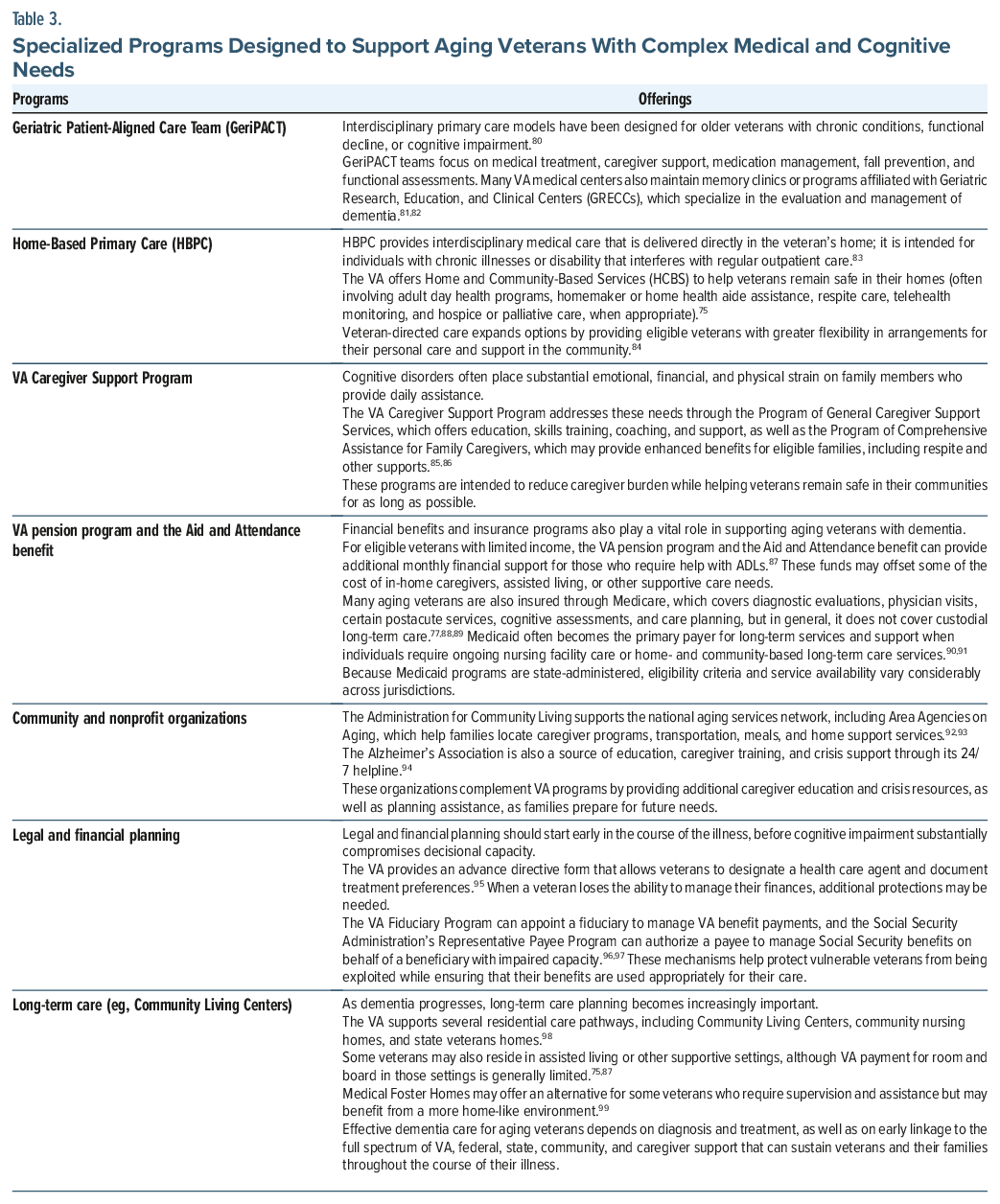
VA health care services for older adults with cognitive impairments are available to most enrolled veterans who served active military, naval, or air service and were not dishonorably discharged.100 Although a community-based physician cannot directly order services within the VA, the community-based physician could assist a veteran in accessing specialized services through care coordination with the veteran’s VA provider.101
Which Medications Can Mitigate the Signs and Symptoms of MCI, and What Are Their Adverse Effects?
Currently, there are no US Food and Drug Administration (FDA)–approved medications for the treatment of MCI. Systematic reviews examining commonly prescribed medications such as donepezil,102 galantamine,103 and rivastigmine 104 have demonstrated no meaningful benefit in delaying or preventing the progression to dementia with minimal improvement in cognitive function.104 These limited benefits have been accompanied by a significant side effect burden (eg, GI distress, dizziness, weight loss, and insomnia) that frequently leads to treatment discontinuation.105 Among these agents, donepezil has the strongest evidence for use, demonstrating modest symptomatic benefit in MCI; however, the choice to initiate donepezil should be guided by a careful risk-benefit discussion given its low likelihood of clinical improvement, potentially burdensome adverse effects, and overall low-level recommendation in MCI clinical guidelines.104
Within the last few years, antiamyloid monoclonal antibody therapies (lecanemab and donanemab) have been FDA approved for patients with MCI due to AD. These immunotherapies, currently covered by Medicare, target and facilitate the clearance of amyloid-β plaques and are indicated only for patients with confirmed cerebral amyloid pathology via PET scan, lumbar puncture, or plasma biomarkers. Clinical trials suggest that these agents slow the cognitive decline associated with AD rather than improving existing cognitive deficits.106,107 Both, lecanemab and donanemab are initially administered intravenously, though lecanemab does allow for subcutaneous administration after 18 months of treatment.108 Infusion-related reactions are common (Table 4) and occur in roughly one-fourth (26%) of patients receiving lecanemab108 and approximately 9% of those receiving donanemab,109 most often during the first infusion or within 30 minutes of its administration. Infusion reactions include fever and flu-like symptoms (eg, chills, myalgias, and arthralgias), nausea, vomiting, blood pressure fluctuations, hypoxia, dyspnea, headache, diaphoresis, chest discomfort, and skin irritation.108,109
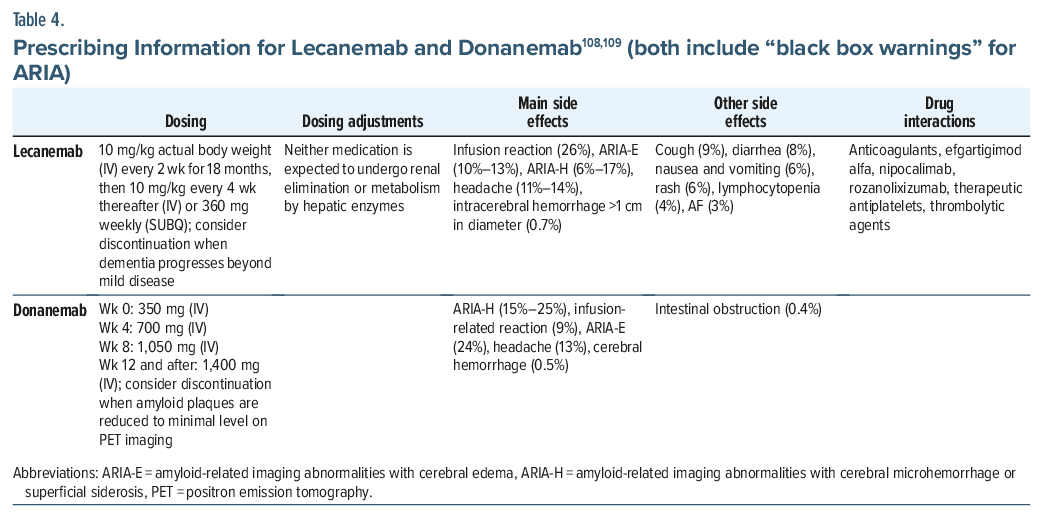
The most notable complication of antiamyloid therapies is amyloid-related imaging abnormalities (ARIAs),108–110 which are changes found on brain MRI.108–110 ARIAs may manifest as cerebral edema (ARIA-E) or cerebral microhemorrhages and hemosiderosis (ARIA-H).110 ARIA-E is thought to result from increased permeability of cerebral capillary endothelial cells to serum proteins,111 while ARIA-H may result from disruption of the BBB following amyloid-β plaque clearance.112 Although most cases of ARIA are asymptomatic, some patients experience headache, confusion, dizziness, visual disturbances, nausea, gait instability, seizures, or symptoms that mimic ischemic strokes.108 Because ARIA occurs most frequently within the first 14 weeks of treatment, brain MRI is recommended during this period for monitoring.108 Risk for developing ARIA is increased among patients receiving anticoagulant or antithrombotic therapy, those with baseline cerebral microbleeds, and patients carrying 1 or 2 copies of the APOE ε4 allele.113 Although they are rare, some intracranial hemorrhages associated with these therapies have been fatal.
Additional class-related adverse events (AEs) continue to be investigated. Emerging data suggest there is an association of the antiamyloid therapies with accelerated brain volume loss, including ventricular enlargement and reductions in hippocampal or whole-brain volume, which may be due to ARIAs.114 The long-term implications of ARIA and treatment-associated brain volume changes on cognitive outcomes remain unclear and warrant future study, given the established relationship between reduced brain volume and cognitive decline. The relatively high cost of these infusions, as well as the complex diagnostic and monitoring requirements, evolving side effect burden, and significant yet transient increase in time spent in the MCI stage, raises questions regarding their contribution to value-based health care.
Other pharmacologic and interventional approaches have shown preliminary benefits but remain unproven. Methylphenidate administration has been associated with improvements in nonverbal memory in individuals with MCI.115 In addition, a systematic review and meta-analysis of 143 studies examining transcranial magnetic stimulation in MCI and AD demonstrated improvements on the MMSE, MoCA, and Alzheimer’s Disease Assessment Scale-Cognitive Subscale, with generally good tolerability and infrequent serious AEs.116 A double-blind randomized controlled trial (RCT) found that transcutaneous auricular vagus nerve stimulation improved performance across multiple cognitive measures in patients with MCI.117 Finally, a recent RCT was the first to establish feasibility, confirm tolerability, and examine the effects of low-dose lithium supplementation in MCI from any etiology on several cognitive parameters, plasma biomarkers, and neuroimaging, supporting continued investigation.118
Sleeping difficulties are more frequent with age, and the management of insomnia in individuals with MCI and mild dementias should initially involve nonpharmacologic interventions. Optimization of sleep hygiene, decreasing daytime napping, and treating comorbidities such as OSA with CPAP, pain, nocturia, depression, and anxiety are the recommended first-line interventions. Cognitive behavioral therapy for insomnia has demonstrated improvement in multiple outcome measures of insomnia. The use of orexin receptor antagonists, such as suvorexant, has been found to help increase total sleep time and sleep efficiency (SE) and decrease wake after sleep onset.119 The data on melatonin have been less robust, but small studies have shown that it reduces sleep latency and sleep to wakefulness transitions.119 Insufficient data are available to support other medications like trazodone and mirtazapine in older adults with insomnia.120 However, other studies support the use of trazodone at 50 mg at bedtime to improve total nocturnal sleep time and SE in individuals with moderate to severe AD.121
Growing interest continues to emerge in targeting chronic inflammation and metabolic dysfunction to prevent neurocognitive disorders. Diabetes is a well-known risk factor in the development of dementia. In individuals with diabetes, RCT studies have found that glucagon-like peptide-1 receptor agonist drugs reduce the risk of developing dementia by 53%.122 Although most of the evidence is from observational and preclinical studies, the proposed mechanism of action includes its neuroprotective and anti-inflammatory effects, in addition to its ability to restore metabolic function and activate of prosurvival pathways.122,123 Although recent clinical trials in symptomatic AD show no benefits of oral semaglutide in patients with early AD, a proposed hypothesis for repurposing the drugs focuses on their prevention model rather than reversal of the disease.122,123
Which Lifestyle Changes Might Improve the Quality of Life of Aging Veterans With MCI?
For aging veterans with MCI, lifestyle management should be considered a practical strategy to preserve function, independence, mood, and overall quality of life, rather than focusing solely on a single intervention for brain health. Current evidence supports a multidomain approach that combines regular physical activity, healthy dietary patterns, sleep optimization, and structured supports that improve adherence. In primary care, it is essential to consider not only which interventions may be beneficial but also which interventions veterans can realistically initiate and maintain. Table 5 outlines lifestyle changes that may improve the quality of life for aging veterans with MCI.
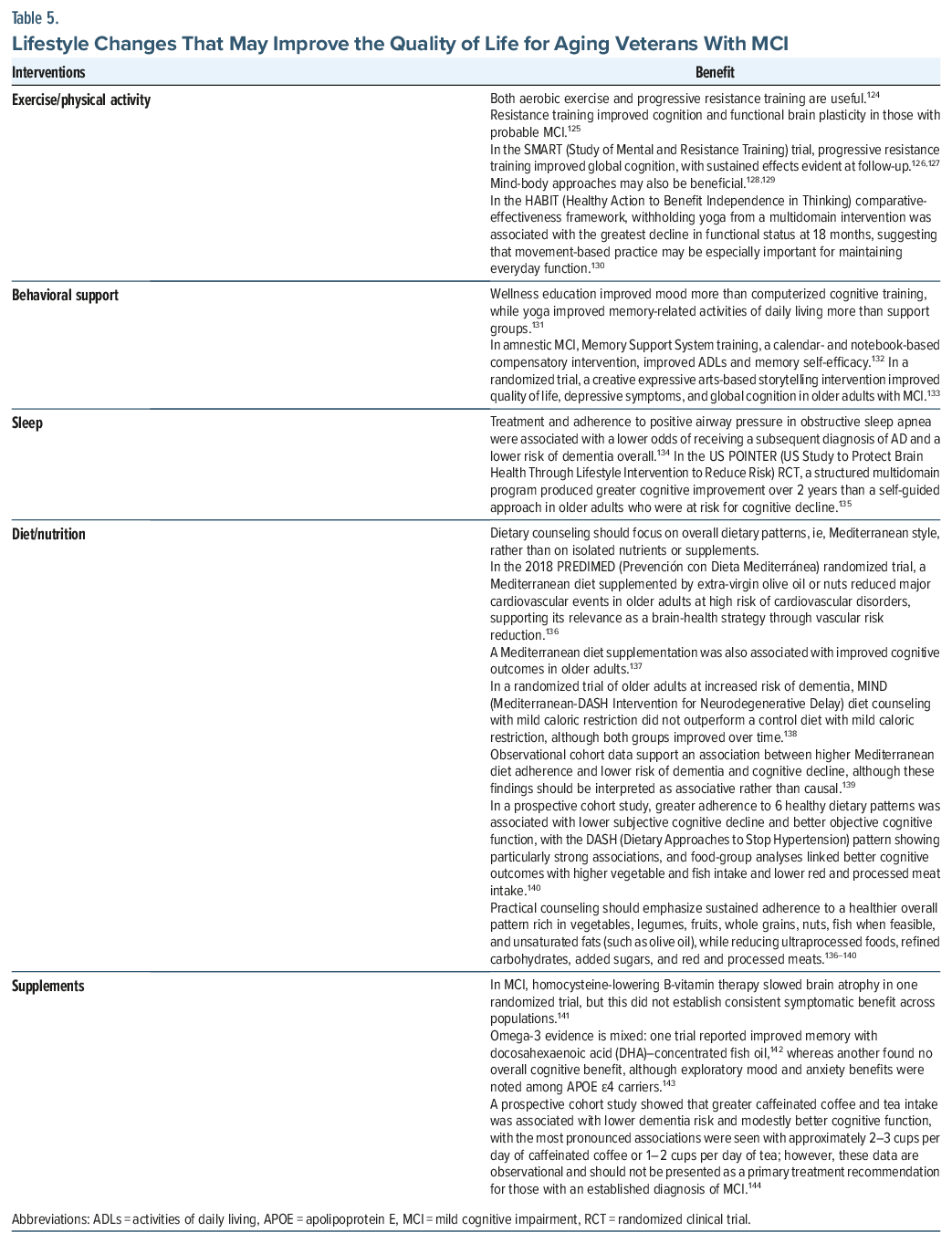
Barriers limiting the implementation of lifestyle changes in veterans with MCI generally fall into 3 broad categories: limited capability, reduced motivation or self-efficacy, and environmental or program-level obstacles. For instance, physical limitations, pain, disability, and multimorbidity commonly interfere with exercise and dietary change. In a VA clinical sample, fewer days of poor physical or mental health and less depressive symptom burden were associated with meeting physical activity recommendations.145 Veteran-specific qualitative studies similarly identify illness and injury burden, challenges with prosthesis or limb loss, low confidence, and limited resources as barriers to physical activity.146,147 MCI itself adds further difficulty by impairing planning, prospective memory, and self-initiation. In a qualitative study of community-dwelling older adults with MCI, barriers to self-management included low perceived control, self-neglect, and lack of accessible information or support services.148 Social and environmental elements are also influential. In the VA sample above, activity-related social involvement and enhanced neighborhood aesthetics were associated with a greater likelihood of meeting physical activity goals.145 Looking specifically at women veterans in VA MOVE! (Motivating Overweight/Obese Veterans Everywhere), common barriers included long travel distance, limited exercise space, difficulty translating group lessons into everyday routines, and group settings that could trigger PTSD symptoms.149 Finally, program design can also restrict participation. Primary care clinicians may be unfamiliar with key features of MOVE!,150 and qualitative work with VA staff suggests that workflow, implementation targets, and program fit are modifiable determinants of success.151
Overall, literature supports an individualized lifestyle approach for aging veterans with MCI. The strongest foundation is regular aerobic and resistance exercise, preferably combined with a structured program that includes education, healthy eating patterns, sleep optimization, and attention to mood and social engagement. Because disability, psychiatric symptoms, cognitive impairment, and access barriers can all derail adherence, clinicians should keep recommendations simple and concrete and connect veterans to supports that make behavior change more practical. The goal is not only to slow decline but also to preserve function, confidence, and quality of life for as long as possible.
What Happened to Mr A?
MRI of the brain (without contrast) was ordered and showed atrophic parahippocampal gyri (often considered a “biomarker” of AD), and the probable diagnosis of AD was discussed with Mr and his wife. The MRI also showed atrophic bilateral cerebellar hemispheres (worse on the left than on the right) with superimposed probable old infarct/injury in the left cerebellum. Neurology was consulted (virtually) for review of his chart and imaging studies, and they favored a diagnosis of early AD.
Mr A was begun on donepezil, and then he was prescribed galantamine (8 mg once a day by mouth with food), but he was unable to continue them due to GI side effects. A rivastigmine patch (13.3 mg/24 hours) was tried and was well tolerated. He continued to drive without safety concerns. He conducted ADLs and IADLs well, except for bill-paying (which his wife had always done).
CONCLUSION
Compared to their civilian peers, veterans frequently face higher rates of chronic and complex physical and mental health conditions, and they develop them earlier in life. Moreover, older veterans suffer from a higher comorbidity burden (eg, CAD, AF, CVAs, hypertension, hypercholesterolemia, diabetes mellitus, COPD, chronic pain, and tobacco and alcohol use) than those in the general population, and this can result in a greater use of polypharmacy than their civilian counterparts. Unfortunately, the diagnosis of MCI remains a clinical one. Nevertheless, MCI reflects a modest decline from a person’s prior performance in one or more cognitive domains (eg, attention, executive functioning, learning and memory, language, perceptual-motor skills, and social cognition) based on a patient’s concerns or those of a knowledgeable informant, or their clinician. Impairments should be documented through use of standardized neuropsychological tests or some other quantifiable clinical assessment. In addition, caregiver support is a central component of dementia care within the VA system.
Article Information
Published Online: November 19, 2026. https://doi.org/10.4088/PCC.26f04264
© 2026 Physicians Postgraduate Press, Inc.
Submitted: April 30, 2026; accepted July 17, 2026.
To Cite: Bobonis-Babilonia M, Rustad JK, Boone LD, et al. Managing the rising tide of mild cognitive impairment among veterans: the sequelae of the silver tsunami. Prim Care Companion CNS Disord 2026;28(6):26f04264.
Author Affiliations: Department of Mental Health and Behavioral Sciences, James A. Haley Veterans Hospital, Tampa, Florida (Bobonis-Babilonia, Reavis); Department of Psychiatry and Behavioral Neurosciences, University of South Florida, Morsani College of Medicine, Tampa, Florida(Bobonis-Babilonia, Reavis) ; White River Junction Veterans Affairs Medical Center, White River Junction, Vermont (Rustad, McWilliams); Department of Psychiatry, Geisel School of Medicine, Dartmouth, Lebanon, New Hampshire (Rustad, McWilliams); Department of Psychiatry, Larner Collage of Medicine, University of Vermont, Burlington, Vermont (Rustad); Harry S. Truman Veterans Affairs Hospital, Columbia, Missouri (Boone); Department of Psychiatry, University of Missouri Medical School in Columbia, Missouri (Boone); Veterans Affairs Palo Alto Health Care System, Palo Alto, California (Raffoul); Department of Psychiatry and Behavioral Sciences, Stanford University School of Medicine, Stanford, California (Raffoul); Department of Psychiatry, Bayhealth Medical Center, Dover, Delaware (DeSimone); Department of Psychiatry, Massachusetts General Hospital, Boston, Massachusetts (Stern); Harvard Medical School, Boston, Massachusetts (Stern).
Corresponding Author: Margarita Bobonis-Babilonia, MD, Department of Mental Health and Behavioral Sciences, James A. Haley Veterans Hospital, Tampa, Florida ([email protected])
Bobonis-Babilonia, Rustad, Boone, McWilliams, Reavis, Raffoul, and DeSimone are co-first authors; Stern is the senior author.
Financial Disclosure: Drs Rustad and Raffoul are employed by the US Department of Veterans Affairs, but the opinions expressed in this presentation do not necessarily reflect the position or policy of the Department of Veterans Affairs or the US government. Dr Stern has received royalties from Elsevier for editing textbooks on psychiatry. Drs Bobonis-Babilonia, Boone, McWilliams, Reavis, and DeSimone have no disclosures or conflicts of interest.
Funding/Support: None.
Clinical Points
- Mild cognitive impairment (MCI) occupies a pivotal space in veterans’ health care; it serves as an early marker of neurodegenerative risk and as a signal for the broader demographic wave that is reshaping health care systems, that is, the so-called “silver tsunami.”
- Unfortunately, individuals with MCI are at increased risk of developing Alzheimer disease (AD) and other dementias, and nearly half of Veterans Health Administration (VHA) patients are currently aged 65 years or older, and age remains the strongest risk factor for AD, AD-related dementia, and MCI.
- A comprehensive clinical history from the patient and an informant is essential to characterize the onset, progression, and severity of deficits across cognitive, neuropsychiatric, sensory, motor, and functional domains.
- Fortunately, not everyone with MCI develops dementia. MCI can revert to normal cognition, remain stable, or progress to dementia.
- The VHA provides integrated multidisciplinary care through primary care, geriatrics, neurology, mental health, and home-based services that combine regular physical activity, healthier dietary patterns, compensatory strategies, and sleep optimization that are particularly relevant for veterans with cognitive impairment and that improve adherence to healthier lifestyles.
References (151)

- Folstein MF, Folstein SE, McHugh PR. “Mini-mental state.” A practical method for grading the cognitive state of patients for the clinician. J Psychiatr Res. 1975;12(3):189–198. PubMed CrossRef
- US Census Bureau. Aging Veterans: America’s Veteran Population in Later Life. American Community Survey Reports. US Department of Commerce;2023. Accessed March 29, 2026. https://www.census.gov/content/dam/Census/library/publications/2023/acs/acs-54.pdf
- O’Malley K, Vinson L, Kaiser A, et al. Mental health and aging veterans: how the Veterans Health Administration meets the needs of aging veterans. Public Pol Aging Rep. 2020;30(1):19–23.
- Betancourt JA, Dolezel DM, Shanmugam R, et al. The health status of the US veterans: a longitudinal analysis of surveillance data prior to and during the COVID-19 pandemic. Healthcare. 2023;11(14):2049. CrossRef
- Matta SE, Bonvie JL, Rustad JK, et al. Screening for, and managing the sequelae of toxic exposures in veterans. Prim Care Companion CNS Disord. 2025;27(60):25f04018.e1–e14.
- Norman S, Maguen S. Moral injury. 33. National Center for PTSD;2022:1050–1835.PTSD Res Q1
- Mattson SA, King F, Tanev KS, et al. Moral injury: appreciating its impact and managing its sequelae. Prim Care Companion CNS Disord. 2026;28(1):25f0410.e1–e9.
- Fryar CD, Herrick K, Afful J, et al. Cardiovascular disease risk factors among male veterans, U.S., 2009-2012. Am J Prev Med. 2016;50(1):101–105.
- Liu Y, Sayam S, Shao X, et al. Prevalence of and trends in diabetes among veterans, United States, 2005-2014. Prev Chronic Dis. 2017;14:E135.
- Fallon E, Boring M, Foster A, et al. Arthritis prevalence among veterans — United States, 2017–2021. MMWR. 2023;72(45):1209–1216.
- Assari S. Veterans and risk of heart disease in the United States: a cohort with 20 years of follow up. Int J Prev Med. 2014;5(6):703–709. PubMed
- Odani S, Agaku IT, Graffunder CM, et al. Tobacco product use among military veterans — United States, 2010–2015. MMWR. 2018;67(1):7–12.
- Bamonti P, Robinson S, Wan ES, et al. Improving physiological, physical, and psychological health outcomes: a narrative review in US veterans with COPD. Int J Chron Obstruct Pulmon Dis. 2022;17:1269–1283. CrossRef
- Raut S, Mellor R, Meurk C, et al. Prevalence and factors associated with polypharmacy in military and veteran populations: a systematic review and meta-analysis. J Affect Disord. 2025;369:411–420. CrossRef
- Goldstein LA, Bernhard PA, Hoffmire CA, et al. Prevalence of obstructive sleep apnea among veterans and nonveterans. AJHP. 2025;39(2):215–223. CrossRef
- Panza KE, Kline AC, Na PJ, Potenza MN, Norman SB, Pietrzak RH. Epidemiology of DSM-5 alcohol use disorder in U.S. Military veterans: results from the national health and resilience in veterans study. Drug Alcohol Dependence. 2022;231:109240. CrossRef
- Schneider A, Pelz C, Lee Y, et al. Traumatic brain injury and long-term risk of stroke among US military veterans. Stroke. 2023;8(54):2059–2068.
- Jasuja GK, Li X, Aguilar BJ, et al. Estimating the prevalence of mild cognitive impairment from clinical notes in U.S. Veterans. Alzheimer’s Dement. 2023;19:e075629. CrossRef
- Dinesh D, Shao Q, Palnati M, et al. The epidemiology of mild cognitive impairment, Alzheimer’s disease and related dementia in U.S. veterans. Alzheimer’s Dementia J Alzheimer’s Assoc. 2023;19(9):3977–3984. CrossRef
- Moye J, Kaiser AP, Cook J, et al. Post-traumatic stress disorder in older U.S. military veterans: prevalence, characteristics, and psychiatric and functional burden. Am J Geriatr Psychiatry. 2022;30(5):606–618. CrossRef
- Desmarais P, Weidman D, Wassef A, et al. The interplay between post-traumatic stress disorder and dementia: a systematic review. Am J Gen Psychiatry. 2010;67(6):608–613.
- US Dept of Veteran Affairs. Statistical projections of all types of dementia for VA patients, VA enrollees and U.S. veterans. Fiscal Years 2021 and 2033. https://va.gov/GERIATRICS/docs/VHA_ALL_DEMENTIA_Statistical_Projections_FY21_and_FY33_sgc121820.pdf. Accessed February 24, 2026
- Jack CR, Andrews JS, Beach TG, et al. Revised criteria for diagnosis and staging of Alzheimer’s disease: Alzheimer’s Association Workgroup. Alzheimer’s Dementia. 2024;20(8):5143–5169. CrossRef
- Perez PN, Trejo Ortega B, Joshi P. Cognitive impairment in older adults: epidemiology, diagnosis, and treatment. Psychiatr Clin North Am. 2022;45(4):639–661.
- Atri A, Dickerson B, Clevenger C, et al. Alzheimer’s association clinical practice guideline for the diagnostic evaluation, testing, counseling, and disclosure of suspected Alzheimer’s disease and related disorders (DETeCD-ADRD): executive summary of recommendations for primary care. Alzheimer’s Dement. 2025;21(6):1–32.
- Zhuang L, Yang Y, Gao J. Cognitive assessment tools for mild cognitive impairment screening. J Neurol. 2021;268(5):1615–1622.
- Owens DK, Davidson KW, Krist AH, et al; US Preventive Services Task Force. Screening for cognitive impairment in older adults US preventive services task Force recommendation statement. JAMA. 2020;323(8):757–763.
- Jongsiriyanyong S, Limpawattana P. Mild cognitive impairment in clinical practice: a review article. Am J Alzheimer Dis Other Dement. 2018;33(8):500–507.
- Institute for Healthcare Improvement. Age-friendly health systems. Accessed March 15, 2026. https://www.ihi.org/partner/initiatives/age-friendly-health-systems
- Veterans Health Administration. Accessed March 15, 2026. https://www.va.gov/geriatrics/pages/VA_Age_Friendly_Health_Systems_Initiative.asp
- Wershof Schwartz A, Munro S, Echt K, et al. Scaling and spreading age-friendly care: early lessons from the VA national age friendly action community. J Am Geriatr Soc. 2025;73(2):583–591.
- Arvanitakis Z, Shah R, Bennett D. Diagnosis and management of dementia: review. JAMA. 2019;322(16).
- American Psychiatric Association. Neurocognitive disorders. In: Diagnostic and Statistical Manual of Mental Disorders, Fifth Edition (DSM-5). 591-595. Arlington, VA: American Psychiatric Association;2013:602–611.
- Hugo J, Ganguli M. Dementia and cognitive impairment. Epidemiology, diagnosis and treatment. Clin Geriatr Med. 2014;30(3):421–442. PubMed CrossRef
- Visser PJ, Kester A, Jolles J, et al. Ten-year risk of dementia in subjects with mild cognitive impairment. Neurology. 2006;67(7):1201–1207. PubMed CrossRef
- Campbell NL, Unverzagt F, LaMantia MA, et al. Risk factors for the progression of mild cognitive impairment to dementia. Clin Geriatr Med. 2013;29(4):873–893. PubMed CrossRef
- Besser LM, Gill DP, Monsell SE, et al. Body mass index, weight change, and clinical progression in mild cognitive impairment and Alzheimer disease. Alzheimer Dis Assoc Disord. 2014;28(1):36–43. PubMed CrossRef
- Chen M, Hu C, Dong H, et al. Alzheimer’s Disease Neuroimaging Initiative. A history of cigarette smoking is associated with faster functional decline and reduction of entorhinal cortex volume in mild cognitive impairment. Aging (Albany NY). 2021;13(4):6205–6213. CrossRef
- Office of Research & Development, Hearing loss. Accessed March 29, 2026. https://www.research.va.gov/topics/hearing.cfm
- Bucholc M, Bauermeister S, Kaur D, et al. The impact of hearing impairment and hearing aid use on progression to mild cognitive impairment in cognitively healthy adults: an observational cohort study. Alzheimers Dement (N Y). 2022;8(1):e12248. CrossRef
- Sartori AC, Vance DE, Slater LZ, et al. The impact of inflammation on cognitive function in older adults: implications for healthcare practice and research. J Neurosci Nurs. 2012;44(4):206–217. PubMed CrossRef
- Apolloni S, D’Ambrosi N. Inflammation in the CNS and PNS: from molecular basis to therapy. Int J Mol Sci. 2023;24(11):9417.1–3.
- Nunez SG, Rabelo SP, Subotic N, et al. Chronic stress and autoimmunity: the role of HPA axis and cortisol dysregulation. Int J Mol Sci. 2025;26(20):9994. 2–19.
- Hoge EA, Brandstetter K, Moshier S, et al. Broad spectrum of cytokine abnormalities in panic disorder and posttraumatic stress disorder. Depress Anxiety. 2009;26(5):447–455. PubMed CrossRef
- Maloley PM, England BR, Sayles H, et al. Post-traumatic stress disorder and serum cytokine and chemokine concentrations in patients with rheumatoid arthritis. Semin Arthritis Rheum. 2021;49(2):229–235.
- Gnoni V, Ilic K, Drakatos P, et al. Obstructive sleep apnea and multiple facets of a neuroinflammatory response: a narrative review. J Thor Dis. 2022;14(2):564–574. CrossRef
- Kheirandish - Gozal L, Gozal D. Obstructive sleep apnea and inflammation: proof of concept based on two illustrative cytokines. Int J Mol Sci. 2019;20(3):459.
- Lee DH, Lee JY, Hong DY, et al. Neuroinflammation in post-traumatic stress disorder. Biomedicines. 2022;10(5):953.
- Su C, Zhao K, Xia H, et al. Peripheral inflammatory biomarkers in Alzheimer’s disease and mild cognitive impairment: a systematic review and meta-analysis. Psychogeriatrics. 2019;19(4):300–309. PubMed CrossRef
- vom Hofe I, Stricker BH, Ikram MK, et al. Long-term exposure to non-steroidal anti-inflammatory medication in relation to dementia Risk. J Am Geriatr. 2025;73(5):1484–1490. CrossRef
- By the 2023 American Geriatrics Society Beers Criteria® Update Expert Panel. American Geriatrics Society 2023 updated AGS Beers Criteria® for potentially inappropriate medication use in older adults. J Am Geriatr Soc. 2023;71(7):2052–2081. CrossRef
- Jones A, Ali MU, Mayhew A, et al. Environmental risk factors for all-cause dementia, Alzheimer’s disease dementia, vascular dementia, and mild cognitive impairment: an umbrella review and meta-analysis. Environ Res. 2025;270:121007. PubMed
- Unverzagt FW, Hui SL, Farlow MR, et al. Cognitive decline and education in mild dementia. Neurology. 1998;50(1):181–185. PubMed
- Stavrou VT, Vavougios GD, Hadjigeorgiou GM, et al. The effect of physical exercise on patients with mild cognitive impairment: a scoping review. Cureus. 2024;16(11):e73265. PubMed
- Dotson VM, Beydoun MA, Zonderman AB. Recurrent depressive symptoms and the incidence of dementia and mild cognitive impairment. Neurology. 2010;75(1):27–34. PubMed CrossRef
- Sanford AM. Mild cognitive impairment. Clin Geriatr Med. 2017;33(3):325–337. PubMed
- Modrego PJ, Ferrández J. Depression in patients with mild cognitive impairment increases the risk of developing dementia of Alzheimer type: a prospective cohort study. Arch Neurol. 2004;61(8):1290–1293. PubMed CrossRef
- Beaudreau SA, O’Hara R. Late-life anxiety and cognitive impairment: a review. Am J Geriatr Psychiatry. 2008;16(10):790–803. PubMed
- Alves de Araujo Junior D, Sair HI, Peters ME, et al. The association between post-traumatic stress disorder (PTSD) and cognitive impairment: a systematic review of neuroimaging findings. J Psychiatr Res. 2023;164:259–269. PubMed
- Yaffe K, Vittinghoff E, Lindquist K, et al. Posttraumatic stress disorder and risk of dementia among US veterans. Arch Gen Psychiatry. 2010;67(6):608–613. PubMed CrossRef
- Barnes DE, Byers AL, Gardner RC, et al. Association of mild traumatic brain injury with and without loss of consciousness with dementia in US military veterans. JAMA Neurol. 2018;75(9):1055–1061. PubMed
- Perry DC, Sturm VE, Peterson MJ, et al. Association of traumatic brain injury with subsequent neurological and psychiatric disease: a meta-analysis. J Neurosurg. 2016;124(2):511–526. PubMed CrossRef
- Nedergaard M, Goldman S. Glymphatic failure as a final common pathway to dementia. Science. 2020;370(6512):50–56.
- Gottesman R, Lutsey P, Benveniste H, et al. Impact of sleep disorders and disturbed sleep on brain health: a scientific statement from the American Heart Association. Stroke. 2024;55(3):e61–e76. PubMed
- Hughes JM, Ulmer CS, Gierisch JM, et al. Insomnia in United States military veterans: an integrated theoretical model. Clin Psychol Rev. 2018;59:118–125. PubMed CrossRef
- Irwin C, Tjandra D, Hu C, et al. Predicting 5-year dementia conversion in veterans with mild cognitive impairment. Alzheimer’s Dement. 2024;16(1):e12572. CrossRef
- MacLennan RJ, Chapin BA, Solberg LM, et al. Cognitive decline in U.S. military veterans: risk factors and clinical implications. Front Dement. 2026;5:1704367. PubMed
- Farias ST, Mungas D, Reed BR, et al. Progression of mild cognitive impairment to dementia in clinic-vs community-based cohorts. Arch Neurol. 2009;66(9):1151–1157. PubMed CrossRef
- Petersen RC, Lopez O, Armstrong MJ, et al. Practice guideline update summary: mild cognitive impairment [RETIRED]: report of the guideline development, dissemination, and implementation subcommittee of the American academy of neurology. Neurology. 2018;90(3):126–135. PubMed CrossRef
- Mitchell AJ, Shiri-Feshki M. Rate of progression of mild cognitive impairment to dementia–meta-analysis of 41 robust inception cohort studies. Acta Psychiatr Scand. 2009;119(4):252–265. PubMed CrossRef
- Salemme S, Lombardo FL, Lacorte E, et al. The prognosis of mild cognitive impairment: a systematic review and meta-analysis. Alzheimer’s Dement. 2025;17(1):e70074. CrossRef
- S. Department of Veterans Affairs. Geriatrics and extended care. Alzheimer’s and Dementia Care. Accessed March 29, 2026. https://www.va.gov/geriatrics/alzheimers_and_dementia_care.asp
- S. Department of Veterans Affairs. Health care eligibility. Accessed March 29, 2026. https://www.va.gov/health-care/eligibility/
- S. Department of Veterans Affairs. Find VA locations. Accessed March 29, 2026. https://www.va.gov/find-locations/
- S. Department of Veterans Affairs. Home and community based services. Accessed March 29, 2026. https://www.va.gov/geriatrics/pages/Home_and_Community_Based_Services.asp
- Centers for Medicare & Medicaid Services. Cognitive assessment and care plan services. Accessed March 29, 2026. https://www.cms.gov/medicare/payment/fee-schedules/physician/cognitive-assessment
- Medicare.gov. Cognitive assessment and care plan services. Accessed March 29, 2026. https://www.medicare.gov/coverage/cognitive-assessment-care-plan-services
- VHA DIRECTIVE 1004.03. Accessed June 7, 2026. https://www.ethics.va.gov/asp
- Amaral AS, Afonso RM, Simões MR, et al. Decision-making capacity in healthcare: instruments review and reflections about its assessment in the elderly with cognitive impairment and dementia. Psychiatry Q. 2022;93(1):35–53. CrossRef
- S. Department of Veterans Affairs. Geriatric Patient Aligned Care Team (GeriPACT). Accessed March 29, 2026. https://www.va.gov/GERIATRICS/pages/Geriatric_Patient_Aligned_Care_Team_GeriPACT.asp
- S. Department of Veterans Affairs. Memory loss/dementia clinic. Accessed March 29, 2026. https://www.va.gov/northport-health-care/programs/memory-loss-dementia-clinic/
- S. Department of Veterans Affairs. Geriatric Research, Education and Clinical Centers (GRECC). Accessed March 29, 2026. https://www.va.gov/geriatrics/
- S. Department of Veterans Affairs. Home-based primary care. Accessed March 29, 2026. https://www.va.gov/geriatrics/pages/Home_Based_Primary_Care.asp
- S. Department of Veterans Affairs. Veteran-directed care. Accessed March 29, 2026. https://www.va.gov/geriatrics/pages/Veteran-Directed_Care.asp
- S. Department of Veterans Affairs. Caregiver support. Accessed March 29, 2026. https://www.caregiver.va.gov/
- S. Department of Veterans Affairs. Comprehensive assistance for family caregivers. Accessed March 29, 2026. https://www.va.gov/family-and-caregiver-benefits/health-and-disability/comprehensive-assistance-for-family-caregivers/
- S. Department of Veterans Affairs. Aid and attendance and housebound benefits. Accessed March 29, 2026. https://www.va.gov/pension/aid-attendance-housebound/
- Medicare.gov. Long-term care. Accessed March 09, 2026. https://www.medicare.gov/coverage/long-term-care
- Medicare.gov. Nursing home care. Accessed March 09, 2026. https://www.medicare.gov/coverage/nursing-home-care
- Medicare.gov. Home & community-based services. Accessed March 09, 2026. https://www.medicaid.gov/medicaid/home-community-based-services
- Medicare.gov. Long-term services and supports. Accessed March 09, 2026. https://www.medicaid.gov/medicaid/long-term-services-supports
- Administration for Community Living. Area agencies on aging. U.S. Department of Health and Human Services. Accessed March 09, 2026. https://acl.gov/programs/aging-and-disability-networks/area-agencies-aging
- Administration for Community Living. Eldercare Locator. Accessed March 09, 2026. https://eldercare.acl.gov/home
- Alzheimer’s Association. Helpline. Accessed March 09, 2026. https://www.alz.org/help-support/resources/helpline
- S. Department of Veterans Affairs. VA form 10-0137: VA advance directive. Accessed March 09, 2026. https://www.va.gov/forms/10-0137/
- Social Security Administration. Representative payee program. Accessed March 09, 2026. https://www.ssa.gov/payee/
- S. Department of Veterans Affairs. Fiduciary program. Accessed March 09, 2026. https://www.benefits.va.gov/fiduciary/
- S. Department of Veterans Affairs. State veterans homes. Accessed March 29, 2026. https://www.va.gov/geriatrics/pages/State_Veterans_Homes.asp
- S. Department of Veterans Affairs. Medical foster homes. Accessed March 29, 2026. https://www.va.gov/geriatrics/pages/Medical_Foster_Homes.asp
- Eligibility for VA health care. Accessed May 7, 2025. https://www.va.gov/health-care/eligibility.
- Mattoks KM, Cunningham K, Elwy AR, et al. Recommendations for the evaluation of cross-system care coordination from the VA state-of-the-art working group on VA/Non-VA care. J Gen Intern Med. 2019;34(Suppl 1):18–23.
- Zhang X, Lian S, Zhang Y, et al. Efficacy and safety of donepezil for mild cognitive impairment: a systematic review and meta-analysis. Clin Neurol Neurosurg. 2022;213:107134. PubMed
- Lim AWY, Schneider L, Loy C. Galantamine for dementia due to Alzheimer’s disease and mild cognitive impairment. Cochrane Database Syst Rev. 2024;11(11):CD001747. PubMed
- Matsunaga S, Fujishiro H, Takechi H. Efficacy and safety of cholinesterase inhibitors for mild cognitive impairment: a systematic review and meta-analysis. J Alzheimer’s Dis. 2019;71(2):513–523. CrossRef
- Russ TC, Morling JR. Cholinesterase inhibitors for mild cognitive impairment. Cochrane Database Syst Rev. 2012;2012(9):CD009132. PubMed
- van Dyck CH, Swanson CJ, Aisen P, et al. Lecanemab in early Alzheimer’s disease. N Engl J Med. 2023;388(1):9–21. PubMed
- Mintun MA, Lo AC, Duggan EC, et al. Donanemab in early Alzheimer’s disease. New Engl J Med. 2021;384(18):1691–1704.
- Eisai Inc. LYQEMBI Prescribing Information. 2026. Accessed April 17, 2026. https://www.leqembi.com/-/media/Files/Leqembi/Prescribing-Information.pdf?hash=77aa4a86-b786-457a-b894-01de37199024
- Eli Lilly & Company. KISUNLA Prescribing Information; 2026. Accessed April 17, 2026. https://uspl.lilly.com/kisunla/kisunla.html#pi
- Liu KY, Villain N, Ayton S, et al. Key questions for the evaluation of anti-amyloid immunotherapies for Alzheimer’s disease. Brain Commun. 2023;5(3):fcad175. PubMed
- Sperling RA, Jack CR Jr, Black SE, et al. Amyloid-related imaging abnormalities in amyloid-modifying therapeutic trials: recommendations from the Alzheimer’s Association Research Roundtable Workgroup. Alzheimer’s Dementia J Alzheimer’s Assoc. 2011;7(4):367–385. PubMed CrossRef
- Atwood CS, Bowen RL, Smith MA, et al. Cerebrovascular requirement for sealant, anti-coagulant and remodeling molecules that allow for the maintenance of vascular integrity and blood supply. Brain Res Rev. 2003;43(1):164–178. PubMed CrossRef
- Filippi M, Cecchetti G, Spinelli EG, et al. Amyloid-related imaging abnormalities and β- amyloid-targeting antibodies: a systematic review. JAMA Neurol. 2022;79(3):291–304. PubMed
- Alves F, Kalinowski P, Ayton S. Accelerated brain volume loss caused by anti-β-amyloid drugs: a systematic review and meta-analysis. Neurology. 2023;100(20):e2114–e2124.
- Press Y, Punchik B, Kagan E, et al. Methylphenidate for mild cognitive impairment: an exploratory 3-day, randomized, double-blind, placebo-controlled trial. Front Med. 2021;8:594228. CrossRef
- Pagali SR, Kumar R, LeMahieu AM, et al. Efficacy and safety of transcranial magnetic stimulation on cognition in mild cognitive impairment, Alzheimer’s disease, Alzheimer’s disease-related dementias, and other cognitive disorders: a systematic review and meta-analysis. Int Psychogeriatrics. 2024;36(10):880–928. CrossRef
- Wang L, Zhang J, Guo C, et al. The efficacy and safety of transcutaneous auricular vagus nerve stimulation in patients with mild cognitive impairment: a double blinded randomized clinical trial. Brain Stimul. 2022;5(6):1405–1414.
- Gildengers AG, Ibrahim TS, Anderson SJ, et al. Low-dose lithium for mild cognitive impairment: a pilot randomized clinical trial. JAMA Neurol. 2026;83(4):310–319. PubMed
- Blackman J, Swirski M, Clynes J, et al. Pharmacological and non- pharmacological interventions to enhance sleep in mild cognitive impairment and mild Alzheimer’s disease: a systematic review. J Sleep Res. 2021;30:e13229. PubMed
- Steinman MA, Steinman MA. Alternative treatments to selected medications in the 2023 American geriatrics society Beers Criteria®. J Am Geriatr Soc. 2025;73(9):2657–2677. PubMed
- McCleery J, Sharpley AL. Pharmacotherapies for sleep disturbances in dementia. Cochrane Database Syst Rev. 2020;11:1–70.
- Hui E, Mukadam N, Kohl G, et al. Effect of diabetes medications on the risk of developing dementia, mild cognitive impairment, or cognitive decline: a systematic review and meta-analysis. J Alzheimer’s Dis. 2025;104(3):627–648. CrossRef
- Alhowail AH, Mouslem AK, Almatrafi MA, Aldubayan MA, et al. Semaglutide in cognitive dysfunction: neuroprotective potential, clinical trial limitations, and a prevention-focused framework. Front Aging Neurosci Neurocognitive Aging Behav. 2026:1–13.
- Baker LD, Frank LL, Foster-Schubert K, et al. Effects of aerobic exercise on mild cognitive impairment: a controlled trial. Arch Neurol. 2010;67(1):71–79. PubMed CrossRef
- Nagamatsu LS, Handy TC, Hsu CL, et al. Resistance training promotes cognitive and functional brain plasticity in seniors with probable mild cognitive impairment. Arch Intern Med. 2012;172(8):666–668. PubMed CrossRef
- Singh MAF, Gates NJ, Saigal N, et al. The Study of Mental and Resistance Training (SMART) study—resistance training and/or cognitive training in mild cognitive impairment: a randomized, double-blind, double-sham controlled trial. J Am Med Dir Assoc. 2014;15(12):873–880. PubMed
- Fairchild JK, Myers J, Louras P, et al. Multimodal exercise and cognitive training program improves cognitive function in amnestic mild cognitive impairment. Am J Geriatr Psychiatry. 2024;32(4):463–474. PubMed
- Li F, Harmer P, Eckstrom E, et al. Clinical effectiveness of cognitively enhanced tai chi training on global cognition and dual-task performance during walking in older adults with mild cognitive impairment or self-reported memory concerns: a randomized controlled trial. Ann Intern Med. 2023;176(11):1498–1507. CrossRef
- Eyre HA, Siddarth P, Acevedo B, et al. A randomized controlled trial of Kundalini yoga in mild cognitive impairment. Int Psychogeriatr. 2017;29(4):557–567. PubMed CrossRef
- Shandera-Ochsner AL, Chandler MJ, Locke DE, et al. Comparative effects of physical exercise and other behavioral interventions on functional status outcomes in mild cognitive impairment. J Int Neuropsychol Soc. 2021;27(8):805–812. PubMed
- Chandler MJ, Locke DE, Crook JE, et al. Comparative effectiveness of behavioral interventions on quality of life for older adults with mild cognitive impairment: a randomized clinical trial. JAMA Netw Open. 2019;2(5):e193016. PubMed
- Greenaway MC, Duncan NL, Smith GE. The memory support system for mild cognitive impairment: randomized trial of a cognitive rehabilitation intervention. Int J Geriatr Psychiatry. 2013;28(4):402–409. PubMed CrossRef
- Lin R, Luo YT, Yan YJ, et al. Effects of an art-based intervention in older adults with mild cognitive impairment: a randomised controlled trial. Age Ageing. 2022;51(7):afac144. PubMed
- Dunietz GL, Chervin RD, Burke JF, et al. Obstructive sleep apnea treatment and dementia risk in older adults. Sleep. 2021;44(9):zsab076. PubMed
- Baker LD, Espeland MA, Whitmer RA, et al. Structured vs self-guided multidomain lifestyle interventions for global cognitive function: the U.S. Study to Protect Brain Health through Lifestyle Intervention to Reduce Risk (U.S. POINTER) randomized clinical trial. JAMA. 2025;334(8):681–691. PubMed
- Estruch R, Ros E, Salas-Salvadó J, et al. Primary prevention of cardiovascular disease with a Mediterranean diet supplemented with extra-virgin olive oil or nuts. N Engl J Med. 2018;378(25):e34. PubMed
- Valls-Pedret C, Sala-Vila A, Serra-Mir M, et al. Mediterranean diet and age- related cognitive decline: a randomized clinical trial. JAMA Intern Med. 2015;175(7):1094–1103. PubMed
- Barnes LL, Dhana K, Liu X, et al. Trial of the MIND diet for prevention of cognitive decline in older persons. N Engl J Med. 2023;389(7):602–611. PubMed
- Charisis S, Ntanasi E, Yannakoulia M, et al. Mediterranean diet and risk for dementia and cognitive decline in a Mediterranean population. J Am Geriatr Soc. 2021;69(6):1548–1559. PubMed
- Chen H, Cortese M, Flores-Torres MH, et al. Dietary patterns and indicators of cognitive function. JAMA Neurol. 2026:e260062
- Smith AD, Smith SM, de Jager CA, et al. Homocysteine-lowering by B vitamins slows the rate of accelerated brain atrophy in mild cognitive impairment: a randomized controlled trial. PLoS One. 2010;5(9):e12244. PubMed CrossRef
- Lee LK, Shahar S, Chin AV, et al. Docosahexaenoic acid-concentrated fish oil supplementation in subjects with mild cognitive impairment: a 12-month randomised, double-blind, placebo-controlled trial. Psychopharmacol Berl. 2013;225(3):605–612. PubMed CrossRef
- Mengelberg A, Leathem J, Podd J, et al. The effects of docosahexaenoic acid supplementation on cognition and well-being in mild cognitive impairment: a 12-month randomised controlled trial. Int J Geriatr Psychiatry. 2022;37(5).
- Zhang Y, Liu Y, Li Y, et al. Coffee and tea intake, dementia risk, and cognitive function. JAMA. 2026:e2527259.
- Hoerster KD, Millstein RA, Hall KS, et al. Individual and contextual correlates of physical activity among a clinical sample of United States Veterans. Soc Sci Med. 2015;142:100–108. PubMed CrossRef
- Littman AJ, Bouldin ED, Haselkorn JK, et al. This is your new normal: a qualitative study of barriers and facilitators to physical activity in Veterans with lower extremity loss. Disabil Health J. 2017;10(4):600–606. PubMed CrossRef
- Littman AJ, Boyko EJ, Thompson ML, et al. Physical activity barriers and enablers in older Veterans with lower-limb amputation. J Rehabil Res Dev. 2014;51(6):895–906. PubMed CrossRef
- Sun J, Zhao Y, Wang A. Barriers to self-management engagement among community-dwelling older adults with mild cognitive impairment: a qualitative study. Front Psychiatry. 2025;15:1446344. PubMed
- Batch BC, Brown CS, Goldstein KM, et al. Women Veterans experience with the VA MOVE! weight management program. Women’s Health Rep New Rochelle. 2020;1(1):65–72. CrossRef
- Arigo D, Funderburk JS, Hooker SP, et al. Veterans Health Administration’s MOVE! weight management program: primary care clinicians’ perceptions of program implementation. Mil Med. 2015;180(10):1027–1033. PubMed
- Jay M, Gillespie C, Schlair S, et al. Barriers and facilitators to providing primary care-based weight management services in a patient centered medical home for Veterans: a qualitative study. BMC Fam Pract. 2015;16:94.
Please sign in or purchase this PDF for $40.