
Possession trance disorder is characterized by significant changes in consciousness, during which an individual’s identity is replaced by an external “possessing” agency. The person’s behaviors or movements are perceived as controlled by this agent.1 Here, we describe a case involving 4 children with this disorder.
Case Report
Three girls presented to the outpatient clinic with a 1-month history of recurrent fainting episodes accompanied by changes in speech, facial expression, and mannerisms. Two of the children, aged 10 and 12, were siblings, while the third, aged 10, was their cousin. All lived together in the same household.
The children belonged to a Muslim family living in a close-knit community. The family was not socioeconomically disadvantaged and had stable housing, with access to education and health care. Religious and cultural explanations for unusual behavioral experiences were familiar within their social environment, and faith healers were commonly consulted for possession-like symptoms. The only notable family history was the grandmother’s dementia; no other psychiatric illness was reported in the family.
The youngest child first experienced possession symptoms, which resolved within a day. Two months later, she had another brief episode. Twenty days after that, her symptoms recurred and persisted for over a month. She experienced frequent episodes of behavioral change (over 10 per day) each followed by brief fainting and a return to her baseline state. During these episodes, she claimed to be possessed by Hindu deities, spoke in a different tone, and referred to herself in the third person. Afterward, she had no memory of the events.
At the same time, the other 2 girls also had similar symptoms. Their altered identities used to talk among themselves. Their sleep and appetite were normal, and they did not attend school during this time. The parents had approached faith healers who had given paranormal explanations to explain these symptoms. The faith healers’ interventions did not bring any improvement in the symptoms.
We learned that their eldest sister, aged 15 years, had similar symptoms 1 year ago when she was in her 10th standard (equivalent to 10th grade in the US). At that time, she presented with poor appetite, low mood, and reduced sleep, along with multiple episodes of possession followed by fainting. She, too, claimed to be possessed by Hindu deities (“Chathan,” “Murthy”). She was treated with desvenlafaxine 25 mg for depressive symptoms, while the possession symptoms continued for 6 months before fully resolving. Her history revealed multiple stressors—her father had alcohol dependence syndrome, and she was frequently humiliated by her friends for her father’s inebriated behavior in public. The family also faced significant financial difficulties. Her possession state was witnessed by her 2 younger sisters, who were frightened by her behavior and would hide together in a closed room. This experience likely contributed to the development of their symptoms. In view of their repeated exposure to these events, a diagnosis of posttraumatic stress disorder (PTSD) was considered in the younger siblings. However, none of the children exhibited core PTSD features such as intrusive recollections, nightmares, persistent hyperarousal, or negative alterations in mood and cognition.
To improve the symptoms of the eldest child, the mother, along with her other 3 children, had moved to her brother’s house. She had also changed her children’s school. This was the house where their cousin, aged 10 years, was also living. The children started attending the school where their cousin was studying. The children found it difficult to adjust to the new school atmosphere initially, as they missed their former schoolmates but later started liking the school and their new friends. The eldest sister continued to have possession states occasionally in the new home, which was witnessed by the other children. It was in this house that the 3 younger children started exhibiting possession states.
The 3 sisters were evaluated in the clinic, where we observed multiple episodes of possession and fainting. The fainting lasted 1-2 minutes, after which they returned to their normal state. During the examination, each child reported seeing a black image approaching them but had no memory of what happened afterward.
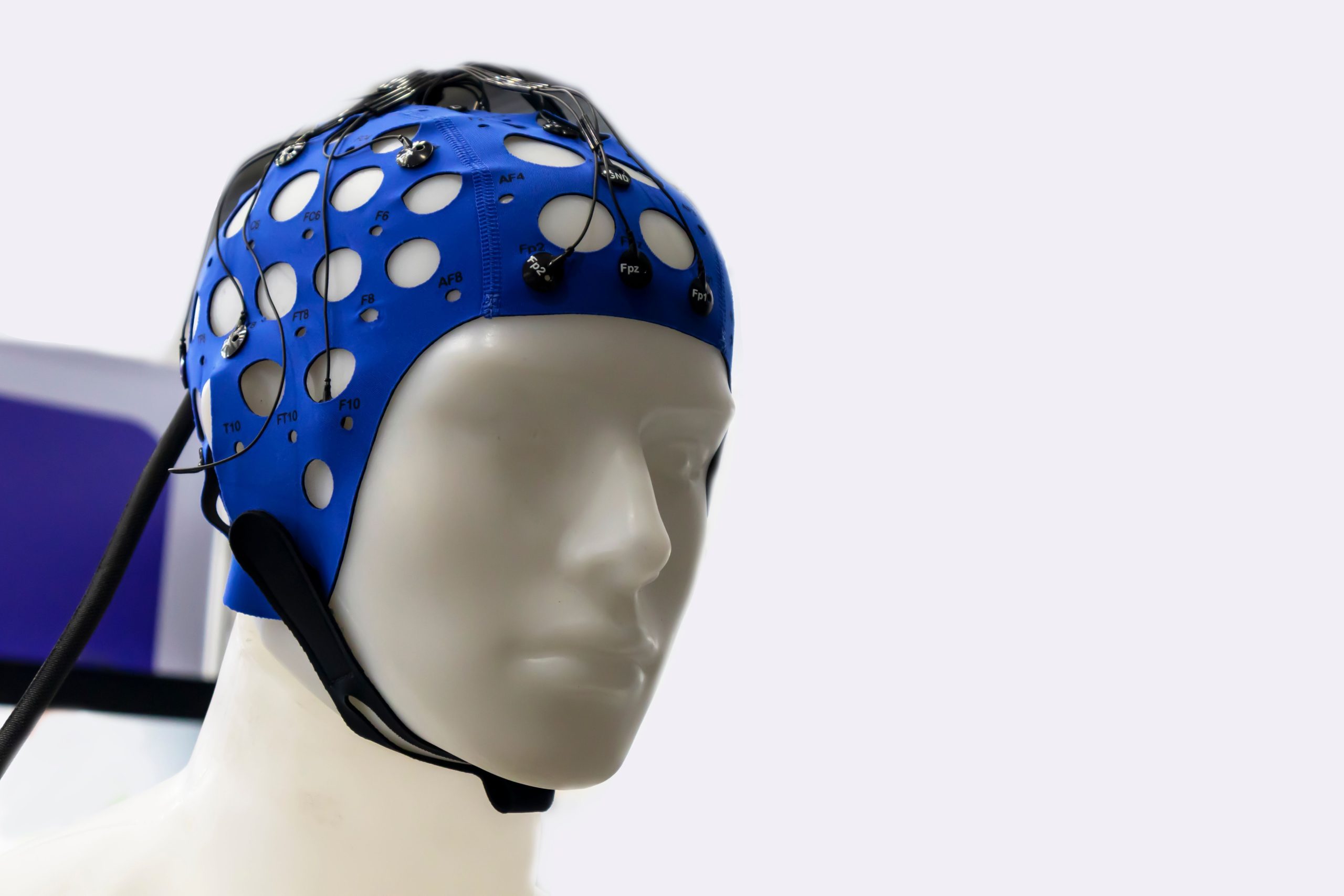
They had no auditory hallucinations, thought alienation, obsessions, or depressive cognitions. Their intelligence was normal. Electroencephalogram (EEG) recordings of the 2 sisters showed spike-and-wave patterns, but they were not temporally associated with the possession states. The spike-and-wave discharges showed no correlation with sleep, nor were they provoked or enhanced by photic stimulation. The EEG of the eldest sister had also shown similar abnormalities, while that of the fourth child (the cousin) was within normal limits.
We started them on clonazepam 0.25 mg, separated the children, and reassured the parents. Individual psychotherapy sessions were started. Grounding techniques were used to help the children return to the present moment. Breathing-based grounding, including simple breathing exercises, was used during the session. Activity-based techniques were also implemented during the post-episode phase, such as drawing, puzzles, and outdoor play. The parents were psychoeducated using the gain reduction model to reduce symptom reinforcement and illness behavior. Within a week, their symptoms eased, and they started going to their schools. A total of 6 sessions were conducted, and the children were followed up for 3 months.
Discussion
Trance and possession states are commonly observed in religious ceremonies across many parts of Asia and Africa. In this case, the children who belonged to a Muslim family reported being possessed by Hindu deities. Such cross-religious possession states, where the altered state of consciousness is attributed to deities outside one’s customary religious affiliation, have been described previously.2 Children may absorb these ideas through their exposure to mass media or broader cultural influences.
The sociocognitive model of dissociative disorders suggests that vulnerable persons may enact multiple identities under social and cultural pressures.3 In our case, the 2 children had witnessed their elder sister’s possession state and were frightened by it. Later, the stress of a school change may have acted on their prior emotional distress from witnessing their elder sister’s possession states. Together, these factors may have precipitated the onset of symptoms in the children.
The role of social learning is substantial in our case, as even the third child who had no identifiable stressors developed similar symptoms. This interpretation is further strengthened by the observation that the symptoms diminished once the children were separated. The altered states in these children may have reinforced such behaviors. The faith healers’ paranormal explanations and parental worries might have further strengthened the symptoms.
Trance and possession disorder is classified under dissociative disorders in the International Classification of Diseases, Eleventh Revision.1 The Diagnostic and Statistical Manual of Mental Disorders, Fifth Edition, describes dissociative trance disorder and dissociative identity disorder-possession form under this spectrum. The precise etiology remains unclear, though antecedent trauma and abuse are the most consistently studied risk factors of dissociative disorders. Several studies have found a high degree of dissociation in patients with trauma.3 Individuals use dissociation and autohypnosis as psychological mechanisms to buffer against their overwhelming traumatic experiences.3
Routine EEGs are typically normal in dissociative identity disorders, although changes in hemispheric activation, temporal slowing, and coherence were reported during identity switching.4 In this case, occasional generalized spikes were seen in 3 of the children, but these changes did not correspond with the switches. The possibility of phantom spike-and-wave discharges was considered but ruled out, as the spikes were observed during the awake state, which is not typical of phantom spike-and-wave activity.5 A neurology evaluation was done, and seizures were ruled out, as the clinical picture was not suggestive. Whether these EEG changes increase the risk of dissociations remains unclear and warrants further study.
The occurrence of dissociative symptoms in a group has been described as mass psychogenic illness.6 Such episodes are commonly reported in schools and in large public settings such as airports or musical events and typically present with anxiety and motor phenomena.6 In contrast, we observed trance and possession-form symptoms occurring within a single family involving a group of young children.
Whether a wider spread might have occurred had the children attended school during this period remains speculative. Our findings highlight that these symptoms could be effectively contained by temporarily separating the affected children and by educating parents to avoid reinforcing the behaviors.
Article Information
Published Online: May 28, 2026.
https://doi.org/10.4088/PCC.25cr04164
© 2026 Physicians Postgraduate Press, Inc.
Prim Care Companion CNS Disord 2026;28(3):25cr04164
Submitted: December 11, 2025; accepted February 2, 2026.
To Cite: Ravindren R, Mathew S. Shared possession trance disorder among four children in a household. Prim Care Companion CNS Disord 2026;28(3):25cr04164.
Author Affiliations: Department of Psychiatry, Institute of Mental Health and Neurosciences, Kozhikode, Kerala (Ravindren); Department of Psychology, Institute of Mental Health and Neurosciences, Kozhikode, Kerala (Mathew).
Corresponding Author: Rajith Ravindren, MD, Department of Psychiatry, Institute of Mental Health and Neurosciences, Kozhikode, Kerala, 673008, India ([email protected]).
Financial Disclosure: None.
Funding/Support: None.
References (6)

- World Health Organization. International Classification of Diseases 11th Revision (ICD-11). World Health Organization; 2019.
- Somasundaram D, Thivakaran T, Bhugra D. Possession states in northern Sri Lanka. Psychopathology. 2008;41(4):245–253. PubMed CrossRef
- Loewenstein RJ, Putnam FW. Dissociative Disorders. In: Sadock BJ, Sadock VA, Ruiz P. Kaplan & Sadock’s Comprehensive Textbook of Psychiatry. Wolters Kluwer; 2017:1866–1952.
- Hopper A, Ciorciari J, Johnson G, et al. EEG coherence and dissociative identity disorder: Comparing EEG coherence in DID hosts, alters, controls and acted alters. J Trauma Dissociation. 2002;3(1):75–88. CrossRef
- Amin U, Nascimento FA, Karakis I, et al. Normal variants and artifacts: importance in EEG interpretation. Epileptic Disord. 2023;25(5):591–648. CrossRef
- Sapkota RP, Brunet A, Kirmayer LJ. Characteristics of adolescents affected by mass psychogenic illness outbreaks in schools in Nepal: a case-control study. Front Psychiatry. 2020;11:493094. CrossRef
Please sign in or purchase this PDF for $40.