Advancing primary care with essential peer-reviewed research and insights into CNS disorders

Just Published




Rounds in the General Hospital
Rectal Insertion of Foreign Bodies
September 29, 2026
Psychiatric consultation can address the shame associated with hospitalization for rectal insertion of foreign objects, provide harm-reduction counseling, facilitate outpatient referral, and manage countertransference reactions among staff.


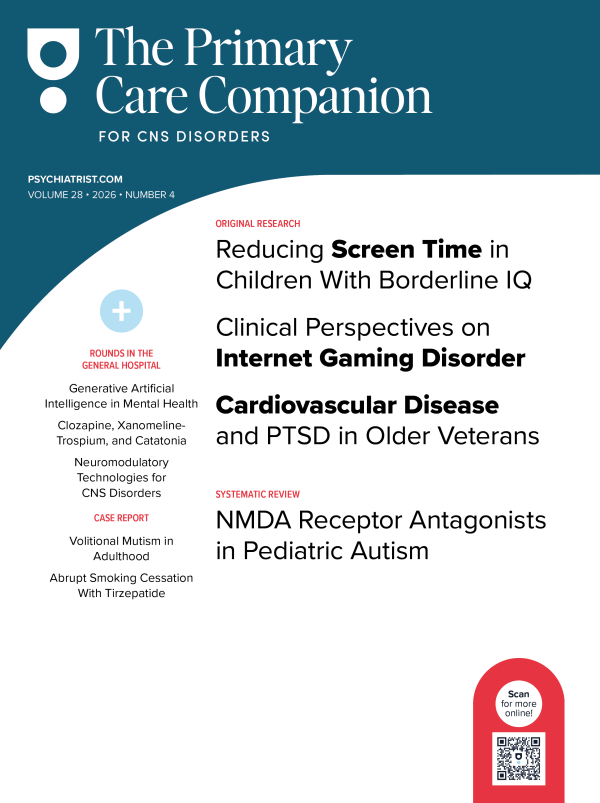
Vol 28 • 2026 • Number 4
Read the Current Issue
Original Research
Reducing Screen Time in Children With Borderline IQ
Original Research
Clinical Perspectives on Internet Gaming Disorder
Original Research
Cardiovascular Disease and PTSD in Older Veterans
Systematic Review
NMDA Receptor Antagonists in Pediatric Autism
Rounds in the General Hospital
Generative AI in Mental Health
Rounds in the General Hospital
Clozapine, Xanomeline-Trospium, and Catatonia
Explore Special Sections
View all topicsOriginal Research

Original Research
Bilateral tDCS Reduces Relief Craving During Alcohol Withdrawal
September 17, 2026
Ten sessions of bilateral transcranial direct current stimulation over the dorsolateral prefrontal cortex applied during the active withdrawal period and not modified by dependence severity significantly reduced relief craving…

Original Research
Vision Outcomes in Children With Mental, Emotional, Developmental, or Behavioral Problems
September 10, 2026
This study evaluated whether vision care utilization, screening/referral steps, and vision-related outcomes differ by mental, emotional, developmental, or behavioral disorder status in US children.

Original Research
Intrusive PTSD Symptoms and Elevated CRP in World Trade Center Responders
September 1, 2026
Intrusive PTSD symptoms may contribute to systemic inflammation in WTC responders, thus targeting both PTSD symptoms and obesity/dyslipidemia may help mitigate risk for elevated systemic inflammation.
Review Articles





Rounds in the General Hospital






Rounds in the General Hospital
Homelessness and Housing Insecurity
August 13, 2026
Individuals who experience homelessness have high rates of medical and psychiatric illness and face barriers to care; vulnerable populations include mothers with dependent children who have experienced domestic violence,…
Case Reports




Case Report
When Obsession and Psychosis Become Indistinguishable
September 8, 2026
Differentiating obsessions from delusions is essential for accurate diagnosis and management, as comorbid obsessive-compulsive symptoms in schizophrenia complicate treatment and may influence cognitive and affective outcomes.